Walmart to bring 'high-tech' robotics' to most of its US warehouses
High-speed robots will handle palletizing, managing 'Tetris for transit' at retailer's distribution centers
“Speed matters”
Walmart has announced plans to build two new high-tech facilities in the Dallas-Fort Worth area to support the retailer’s growing supply chain network — a 1,500,000 square-foot automated fulfillment center, set to open in 2023, and 730,000 square-foot automated grocery distribution center, set to open in 2024, are among Walmart’s largest automated fulfillment and distribution centers. The new Lancaster-based facilities will create approximately 1,000 full-time jobs across the region. 40 percent of the new jobs created will require STEM skills to support technical positions.
The facilities will play a critical role in Walmart’s supply chain to deliver on the retailer’s promise to get customers the items they want when they want them. Through the combination of Walmart associates and automation technology, the high-tech facilities will move more than two times the volume of a traditional fulfillment and grocery distribution center all while improving the accuracy, quality and speed of the fulfillment and distribution of products.
“Walmart is excited to welcome two new high-tech facilities in the Dallas-Fort Worth area to our expanding supply chain network,” said Joe Metzger executive vice president, supply chain operations at Walmart U.S. “These high-tech facilities will include game-changing innovations that are radically disrupting the supply chain, getting products onto store shelves and items shipped to our customers even faster, while saving time for our associates.”
“We are making a significant investment in this region because of the inclusive, diverse and qualified pipeline of local talent that reflect Walmart’s values,” said Karissa Sprague, SVP of supply chain human resources at Walmart U.S. “Our investment in technologies and high-tech facilities today pave the way for jobs of the future that are supported by automation and will allow opportunities for an upskilled workforce.”
Walmart’s high-tech facilities are part of a larger investment the retailer announced earlier this year to double down on the use of automation technology in its supply chain. It comes just months after the retailer announced its plans to add automation in more than half of its regional distribution centers and automated market fulfillment centers in select stores. The retailer has also made investments in drones and autonomous vehicles to support last mile deliveries.
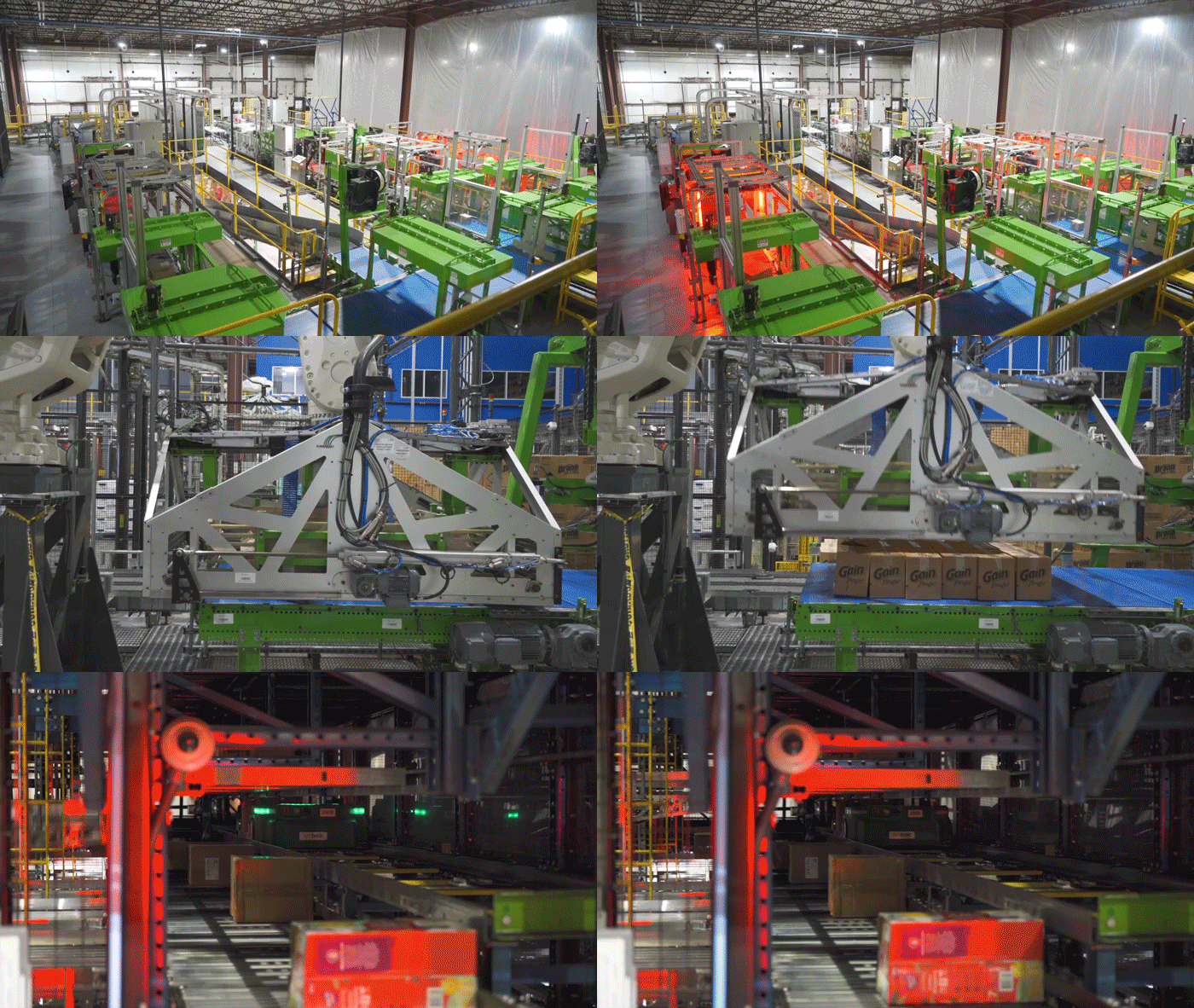
Walmart’s latest solution is an industry-leading technology system poised to transform our supply chain and make warehouse work easier for our associates. Since 2017, we’ve worked closely with Symbotic to optimize the system by testing it in our Brooksville, Florida, distribution center. The brand-new technology system works to sort, store, retrieve and pack freight onto pallets. We’re using automation to revolutionize intake, increase accuracy and change how freight is handled at our regional distribution centers (RDCs).
“Placing that final piece in a puzzle, or getting that sudden rush of insight, is so gratifying, because it represents a new idea and a new way forward. At Walmart, this isn’t just an analogy. We’re problem solving at scale, and we place new pieces every day. ”
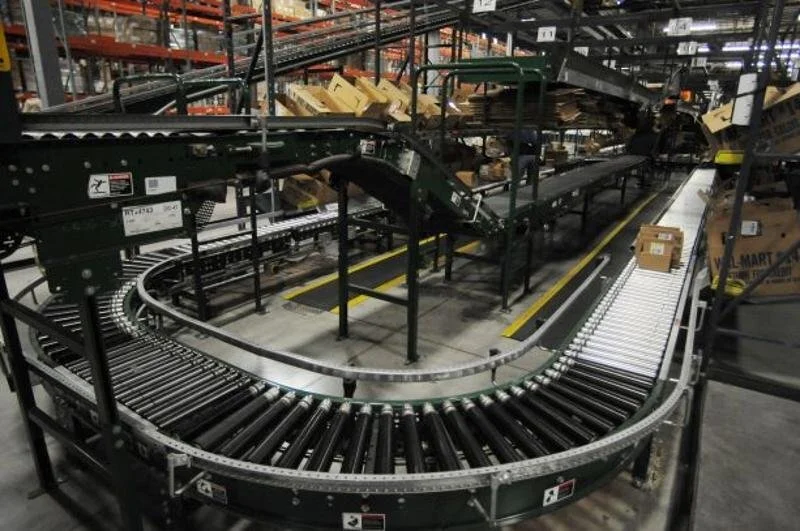
Walmart has announced plan to implement high-tech automation systems in 25 of our 42 regional distribution centers (RDCs). This move will fundamentally alter how products get to stores. But to understand exactly how that’ll work, and why it’s such a big deal, it’s helpful to understand a bit about how Walmart works now.
“Getting product unloaded, into backrooms and onto store shelves (rather than landing, still boxed, in the middle of store aisles) is a top priority for Walmart as it seeks to earn what McMillon has called “primary destination status” with customers who want to shop both in stores and online. A satisfying in-store experience depends not only on adequate inventory levels and easy-to-navigate departments but also having associates who are able and available to help customers.”
Right now, product arrives at one of the regional distribution centers and is either cross-docked or warehoused until products are needed. The products are moved or stored manually. When it’s time for the product to go to a store, employees are tasked with packing a 53-foot trailer in a human game of Tetris for transit. When the truck arrives at a store, Walmart associates unload it manually and get the items stocked on shelves in the various departments.
This widescale deployment follows testing and tweaking of the automation technologies in Walmart's Brooksville, Fla., distribution center since 2017
The new automated system uses a complex algorithm to store cases like puzzle pieces using high-speed mobile bots – operating with a precision that speeds the intake process and increases the accuracy of freight being stored for future orders. By using dense modular storage, it also expands building capacity. And by using high-speed palletizing robotics to organize and optimize freight, it creates custom store- and aisle-ready pallets, which take the guesswork out of unloading trucks.
In short, this is a game changer.
“The Walmart-tailored automation system operates “with a precision that speeds the intake process and increases the accuracy of freight being stored for future orders. And because it decreases the need for warehouse workers and associates to handle freight, the system eliminates the “human game of Tetris for transit” and reduces the literal heavy lifting for Walmart team members, he added.”
This first-of-its-kind tech when applied at scale is revolutionary because, it gets products onto shelves for customers even faster, while saving time associates. The new way of unloading store-friendly palletized trucks will make the process faster and simpler for our associates, allowing them to spend more time with our customers.
Along with saving time, limiting out-of-stocks and increasing the speed of stocking and unloading, we’ll also have the chance to train associates on how to use the new equipment, creating new skills and preparing them for jobs in the future. And because the technology decreases the need for our associates to handle freight, it removes one of the toughest aspects of supply chain work in material handling.
Though very few customers will ever see into Walmart warehouses, they’ll still be able to witness an industry-leading change, each time they find a product on shelves. There may be no way to solve all the complexities of a global supply chain, but Walmart is changing the game as they use technology to transform the way work is and lead their business into the future.