
S&S Activewear Brings Warehouse Robotics to Vancouver
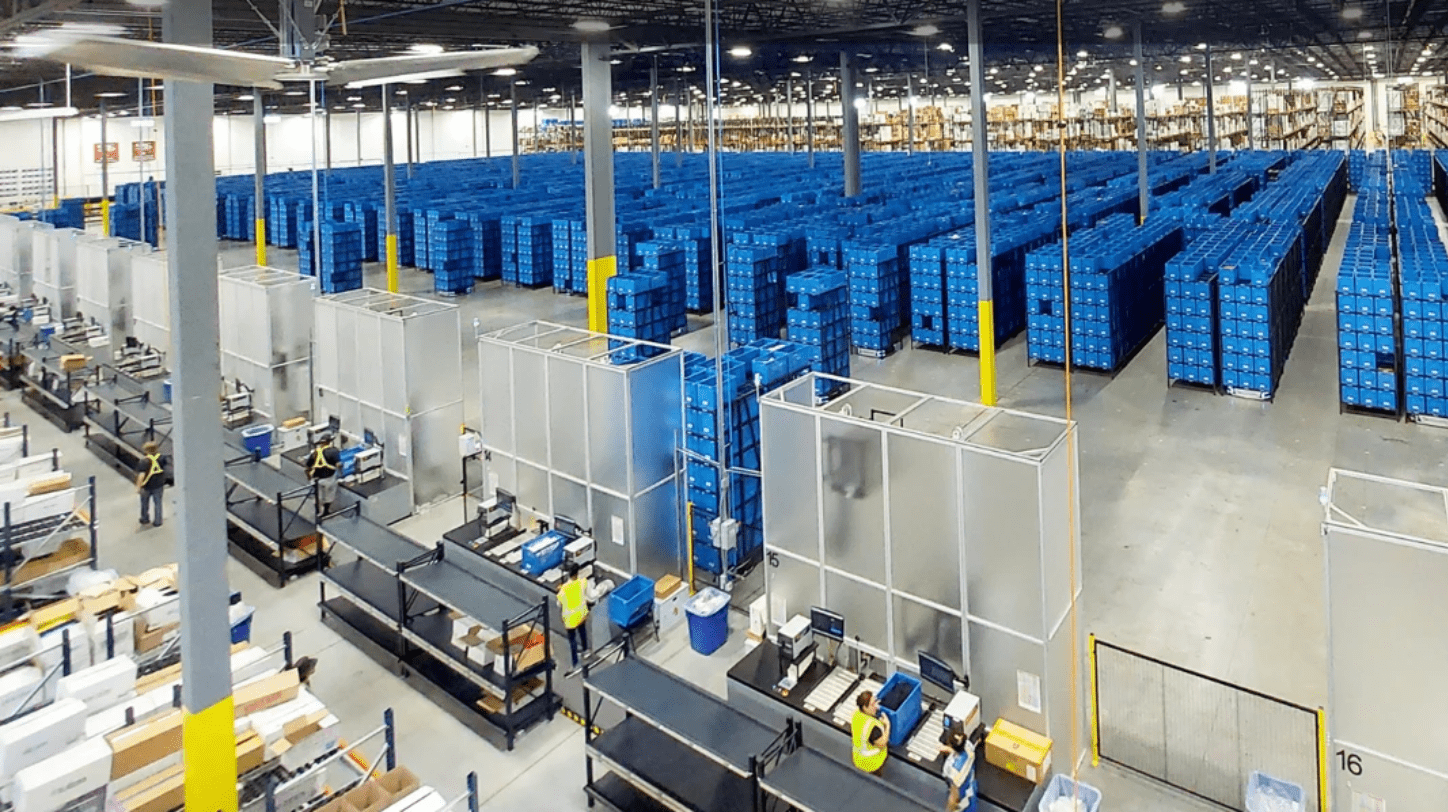
S&S Activewear is one of the more technology-forward companies in North America’s branded-apparel distribution market. It supplies blank apparel, headwear, bags, and promotional merchandise to decorators, print shops, embroidery companies, promotional-products distributors, and other businesses that depend on fast access to a very broad range of products.
For S&S, product availability means more than holding inventory somewhere in a warehouse. Its apparel decorators, print shops, embroidery companies, and promotional-products distributors need the right garment—by brand, colour, size, fabric, and quantity—available locally and ready to ship when they are fulfilling a retail launch, corporate program, sports season, trade show, or time-sensitive order.
S&S is now expanding that operating model to its customers in Western Canada with a new automated facility in Metro Vancouver.
The company is combining a 163,000-square-foot multi-tenant facility, to add approximately 20,000 additional SKUs, an estimated $50 million inventory investment, and will be implementing an autonomous mobile robots picking system into a larger fulfilment operation.
The S&S team is not new to warehouse automation and has built experience with robotics across multiple facilities. It started by inheriting a fleet of Locus mobile picking robots in parts of its network and has since expanded its automated fulfilment capabilities through several AMR shelf-to-person and tote-to-person solutions.
The Vancouver project will be the next stage of that longer-term operating strategy: using automation, better inventory positioning, and more scalable picking capacity to improve service for customers across Western Canada.
The Challenge in Apparel Distribution Is Complexity
Apparel distribution can look simple from the outside. Products are stored, picked, packed, and shipped.
In reality, it is a highly complex fulfilment environment.
A single garment style may be available in multiple colours, sizes, fabrics, fits, and brands. A basic T-shirt can quickly become dozens of separate SKUs. Add seasonal demand, branded products, customer-specific requirements, different packaging needs, and promotional deadlines, and the number of active inventory positions grows rapidly.
This creates a major challenge for any distributor trying to maintain fast and accurate service.
The company must have enough local inventory to support demand, enough forward-pick locations to make products accessible to the operation, and an effective replenishment process to prevent fast-moving items from becoming unavailable during the day.
That is where the planned 20,000 additional forward-pick locations become important.
A distribution centre may carry large amounts of inventory in reserve storage, but reserve inventory does not help much when products are not easily accessible to the picking operation. If the forward-pick area is too small, the warehouse can become dependent on constant replenishment activity. That creates congestion, additional labour, stock-outs in active pick locations, and a greater risk of missed or delayed order lines.
More forward-pick capacity gives S&S the ability to carry a broader assortment of products close to the picking operation while also holding deeper quantities of fast-moving SKUs.
For its customers, that can mean fewer stock-outs, faster fulfilment, and better access to the products they need when timing matters.
The Inventory Investment Matters as Much as the Robotics
S&S plans to invest approximately $50 million in inventory for the new Vancouver facility.
That is a major commitment to Western Canada.
Warehouse automation can improve productivity, order accuracy, and labour efficiency. But no automation system can ship a product that is not available. For a business supplying apparel decorators, promotional-product companies, and other time-sensitive customers, inventory availability is often the foundation of service.
A customer may need garments for a school program, a corporate uniform rollout, a sports team, a retail promotion, or an event with a fixed date. The ability to fulfil the order depends on whether the specific product is available in the required brand, colour, and size range.
Holding more inventory locally can reduce reliance on transfers from other regions and improve responsiveness for customers throughout British Columbia and Western Canada.
The new facility is therefore not simply about capacity. It is about creating a stronger regional inventory position that supports faster and more reliable fulfilment.
Mobile Robots Can Improve the Way Work Is Done
The planned use of autonomous mobile robots is also significant.
In a conventional warehouse picking operation, employees can spend a large part of the day walking between storage locations, pushing carts, moving order containers, and travelling between picking, packing, and replenishment areas.
That travel does not add value for the customer.
Mobile robots can reduce some of that wasted movement by transporting orders or totes between defined work areas while employees focus on picking, quality checks, exceptions, replenishment, and packing.
This can improve productivity, reduce employee fatigue, shorten training time, and make the operation easier to scale as volumes increase.
However, the robots themselves are not the operating model.
The actual performance of the Vancouver facility will depend on how well the robotics are integrated with the warehouse’s inventory accuracy, SKU slotting, replenishment rules, order batching, packing processes, warehouse software, and real-time order priorities.
This is where many automation projects fail to deliver their expected results.
Companies sometimes focus heavily on the visible technology while underinvesting in the process design, software controls, inventory discipline, and operational management needed to make the technology productive.
The most successful automation projects are not the ones with the most robots. They are the ones where the technology is applied to a clearly defined operational problem and supported by a well-designed process.
S&S’s experience using robotics in other facilities should be valuable as it develops the Vancouver operation. The company already understands that mobile robots must be part of a larger fulfilment model rather than simply an addition to the warehouse floor.
A Practical Example for Mid-Sized Companies
The broader lesson from this project is that automation is no longer limited to Amazon, Walmart, and the largest global retailers.
Those companies helped prove the value of large-scale warehouse automation, but many of the same operational pressures now affect mid-sized distributors, wholesalers, manufacturers, and retailers.
These companies are dealing with rising labour costs, warehouse hiring challenges, growing product assortments, increasing customer expectations, and the need to improve productivity without continuously adding more people and more floor space.
Autonomous mobile robots are particularly relevant because they can often be deployed in phases. They can work alongside conventional shelving, existing packing stations, and established warehouse processes. A company does not always need to build a highly fixed, fully automated system before it can begin improving its operation.
The more important question is not whether a company is large enough to automate.
The question is whether its existing fulfilment model can continue to scale without automation.
When employees are spending too much time travelling, picking productivity has reached a limit, order volumes are increasing, and customer expectations are becoming more demanding, automation becomes a practical business decision rather than a technology experiment.
S&S is a strong example of this approach.
It is not trying to build an Amazon-style fulfilment network in Vancouver. It is using inventory investment, forward-pick capacity, and mobile robotics to solve practical distribution challenges within its own business model.
A Significant Investment in Western Canada
The new Annacis Island facility will give S&S a substantially larger platform to serve customers across Western Canada.
It combines more local inventory, more active picking capacity, and automation experience that the company has already developed elsewhere in its network.
For customers, the result should be better product availability, faster fulfilment, and stronger order quality.
For the warehouse industry, the project is another example of how companies outside the very largest retail and e-commerce networks are using robotics and automation to improve the way their operations perform.
The new facility is expected to become operational in the fourth quarter of 2026.