
Alibaba’s logistics arm Cainiao is planning a new wave of robotic warehouses across Europe, North America and Asia as cross-border eCommerce increasingly demands faster local fulfilment.
The company plans to build automated sites in Hong Kong, China, the Netherlands, Spain, France, Germany and the United States. These facilities will deploy Cainiao’s next-generation warehouse robots alongside an AI-powered scheduling system designed to coordinate operations across robotic fleets and warehouse equipment.
The initiative reflects a broader shift within global logistics. As cross-border eCommerce volumes grow, marketplaces and logistics providers are increasingly positioning inventory closer to end customers through regional fulfilment hubs. Robotic warehouses are becoming a key enabler of this model by reducing labour intensity while maintaining high order throughput.
Market backdrop
Warehousing automation continues to rise on the priority list for retailers, marketplaces and logistics providers as delivery expectations tighten and cross-border order volumes expand.
According to Fortune Business Insights, the global warehouse robotics market is forecast to more than triple, growing from approximately USD $7.35 billion in 2026 to over USD $25.41 billion by 2034. The firm attributes the expansion to advances in autonomous mobile robots (AMRs), automated storage and retrieval systems (ASRS), and goods-to-person technologies.
Many modern distribution centres already combine conveyor systems, mobile robots and software platforms that manage inventory locations, picking routes and order flows. Increasing service-level targets—such as next-day delivery and precise delivery windows—are placing additional pressure on warehouse throughput and operational efficiency. Peak sales events further intensify these demands, often exposing labour shortages and operational bottlenecks.
Cainiao has positioned the robotic warehouse programme as part of a broader investment in its global supply chain network, aiming to improve storage density and operational efficiency compared with traditional automated warehouses.
Shuai Yong, Vice President of Cainiao and General Manager of its Global Supply Chain business, linked the initiative to wider shifts in logistics technology.
“As the AI era arrives, we are accelerating the application of AI and robotics across our global supply chain network to enhance the consumer experience,” Shuai Yong said.
The company aims to significantly expand next-day and two-day delivery coverage through these facilities.
Robots and software
Cainiao describes the initiative as more than simply adding automation to existing processes. Instead, the company is redesigning logistics operations around AI-enabled automation across how goods are stored, moved and delivered throughout the supply chain.
On the warehouse floor, Cainiao is accelerating development of next-generation logistics robots designed for high-density storage, picking and goods movement. These functions sit at the centre of warehouse productivity because they determine how quickly items can be retrieved and orders consolidated for dispatch.
The programme also introduces an AI-driven scheduling system for warehouse operations. In robotic environments, scheduling software assigns tasks across robots and equipment to maintain continuous workflow while minimizing congestion and downtime.
Cainiao says its approach uses AI for real-time task allocation, collision avoidance and routing across fleets of autonomous robots and other automated equipment.
Beyond warehouse operations, the company is expanding the use of AI across the broader logistics chain. This includes demand forecasting models that use machine learning to predict sales patterns and reduce both overstock and stockouts. Cainiao is also applying AI to customs processes through automated compliance checks and documentation management.
Service expansion
Alongside the warehouse build-out, Cainiao is expanding its service portfolio to support more complex logistics requirements.
The company plans to introduce specialised warehouses for bulky goods, which require different storage and handling processes compared with small-parcel eCommerce operations.
It will also offer container loading services at factories worldwide. This upstream process can significantly influence downstream warehouse operations, affecting receiving, inventory recording and putaway efficiency.
Additional services include bundled shipments, direct inbounding of unpackaged goods and secondary assembly inside fulfilment centres.
Bundled shipments allow multiple orders from the same customer to be consolidated into a single parcel. Direct inbounding enables bulk or loose items to enter warehouses without individual packaging, while secondary assembly includes kitting and light assembly operations performed inside the facility.
Cainiao says these capabilities can reduce packaging waste, simplify customs handling and lower overall logistics costs while maintaining delivery speed and service reliability.
Existing footprint
Cainiao Global Supply Chain currently operates more than 40 overseas warehouses across 18 countries and regions spanning Europe, North America and the Asia-Pacific.
The network supports international brands and merchants with end-to-end supply chain services including warehousing, fulfilment and cross-border logistics management.
The company works with brands across sectors such as automotive parts, home goods, consumer electronics and furniture.
The planned expansion signals continued investment in physical logistics infrastructure as marketplaces and merchants increasingly position inventory closer to customers across multiple regions.
As competition intensifies around delivery speed and reliability, robotic fulfilment centres are becoming a central component of global logistics networks. Cainiao’s expansion suggests that large-scale warehouse automation is increasingly viewed as a foundational capability for supporting cross-border eCommerce at scale.
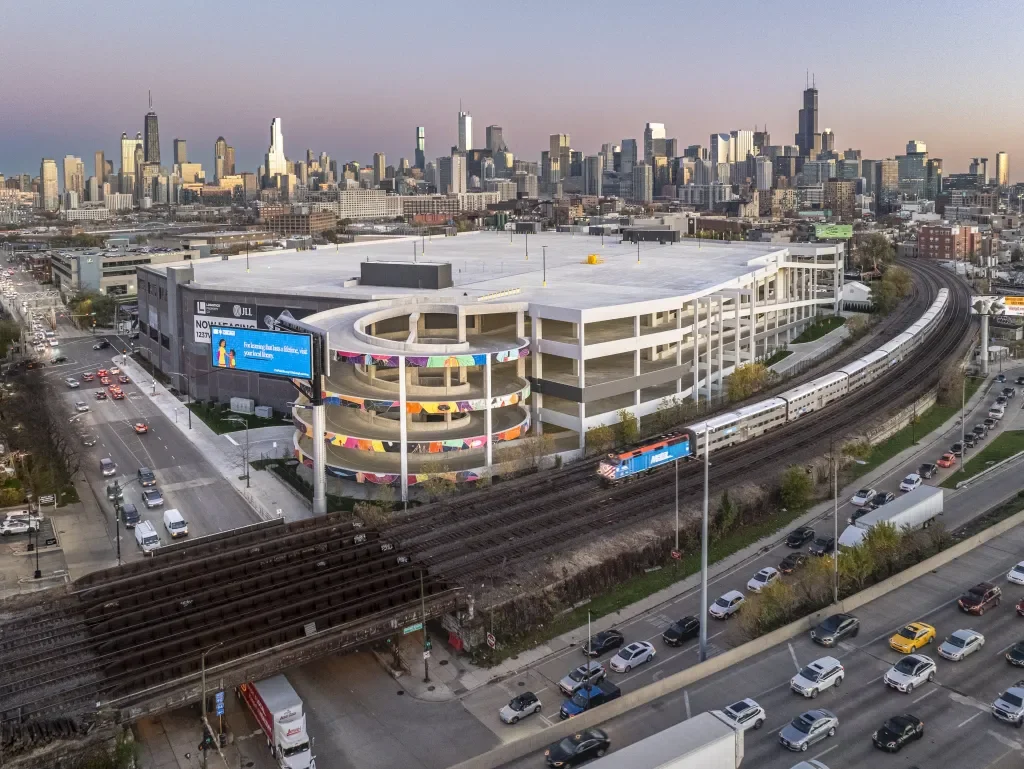
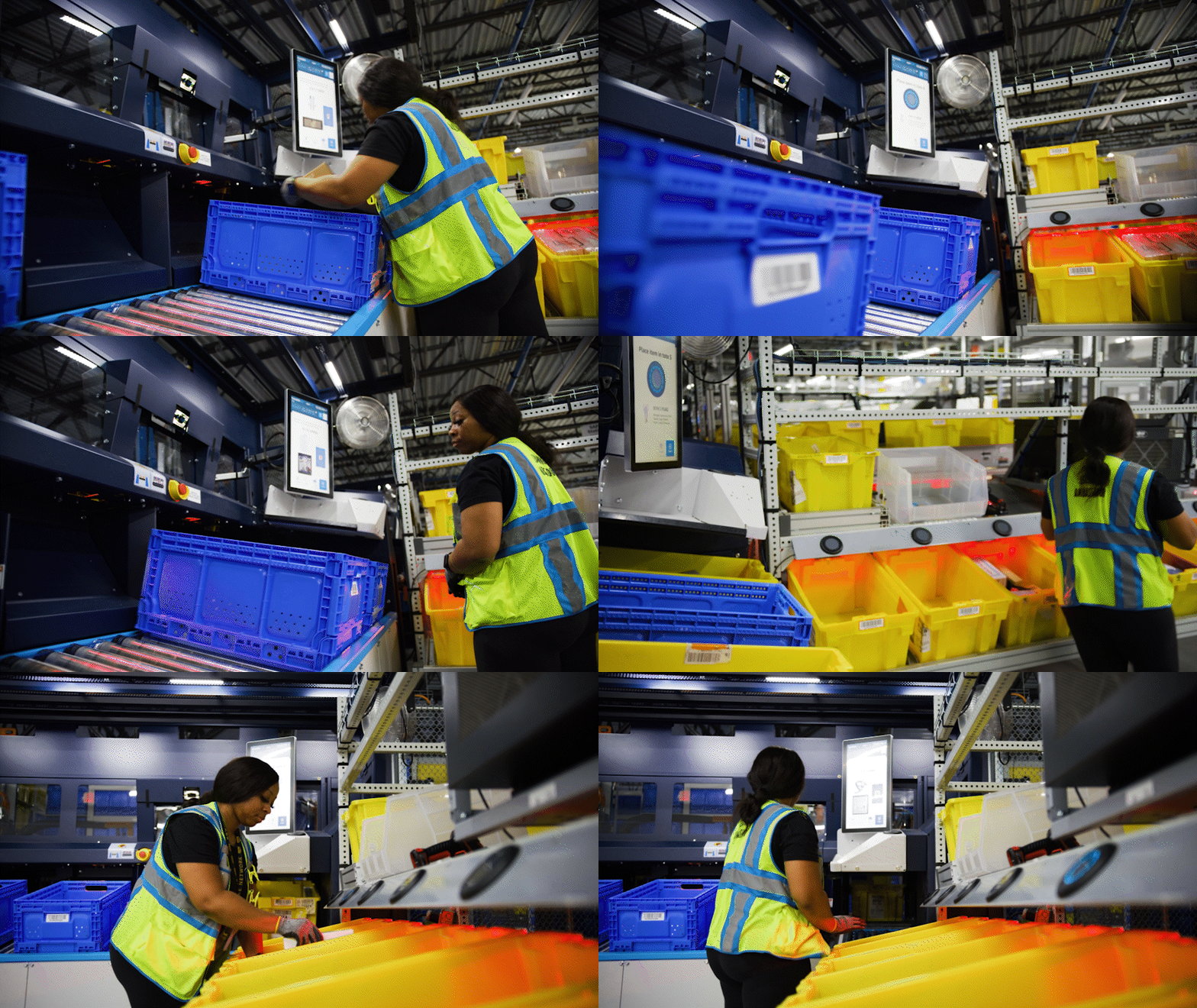

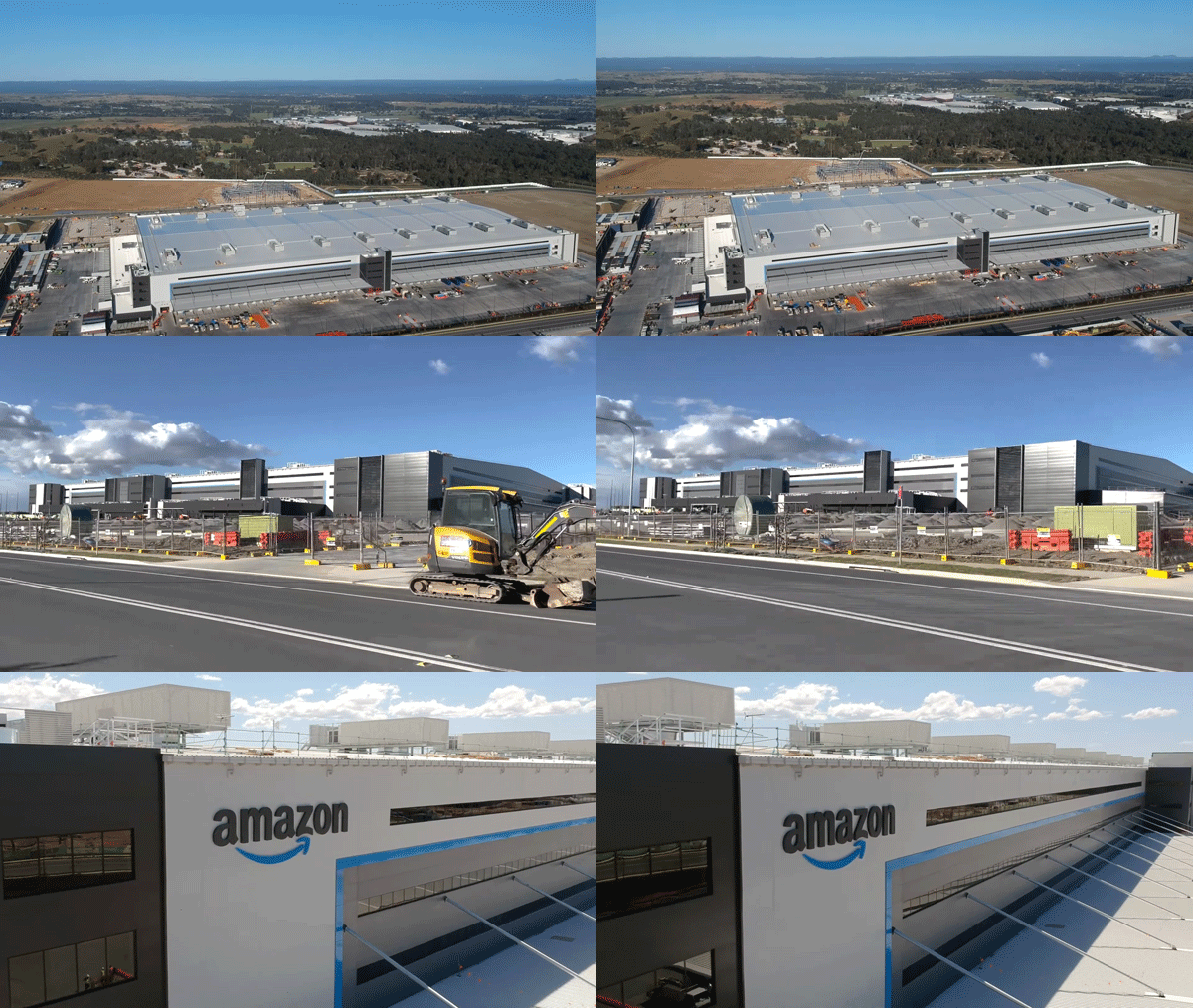
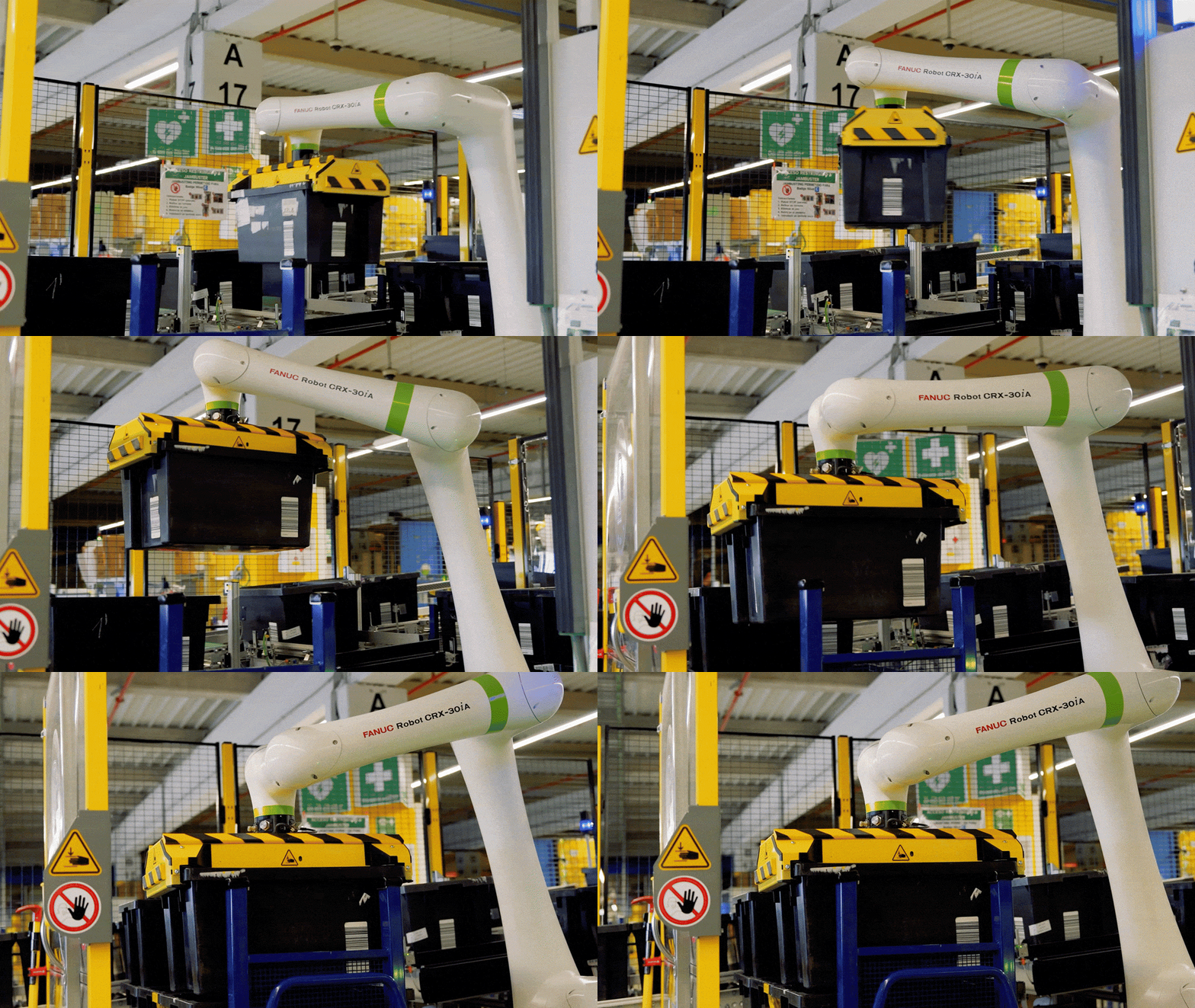








Amazon just announced the expansion of one-hour and three-hour delivery across the U.S.