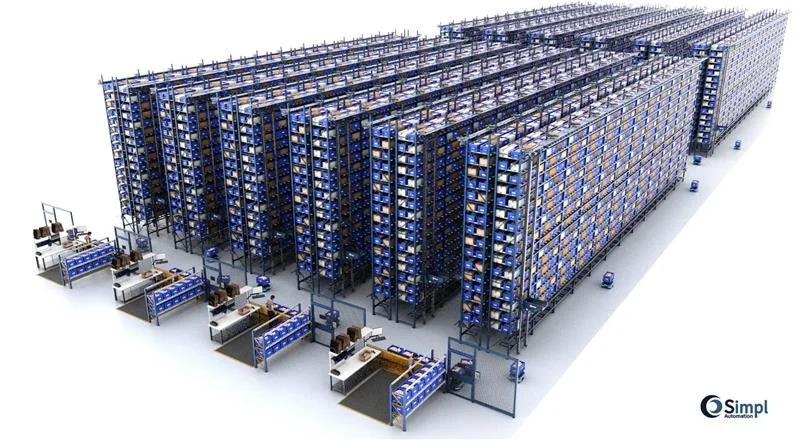
75% of Amazon Runs on Robots
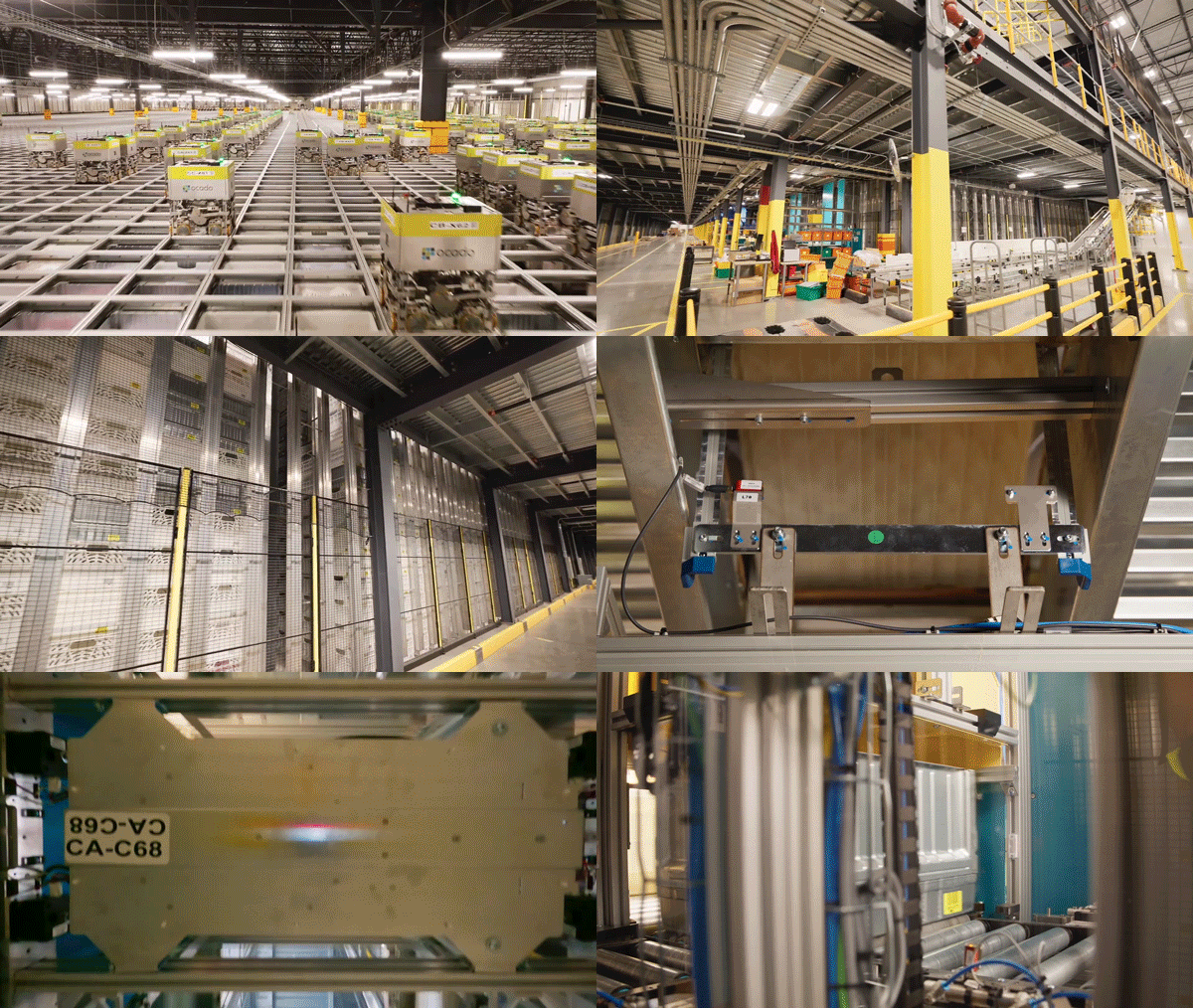
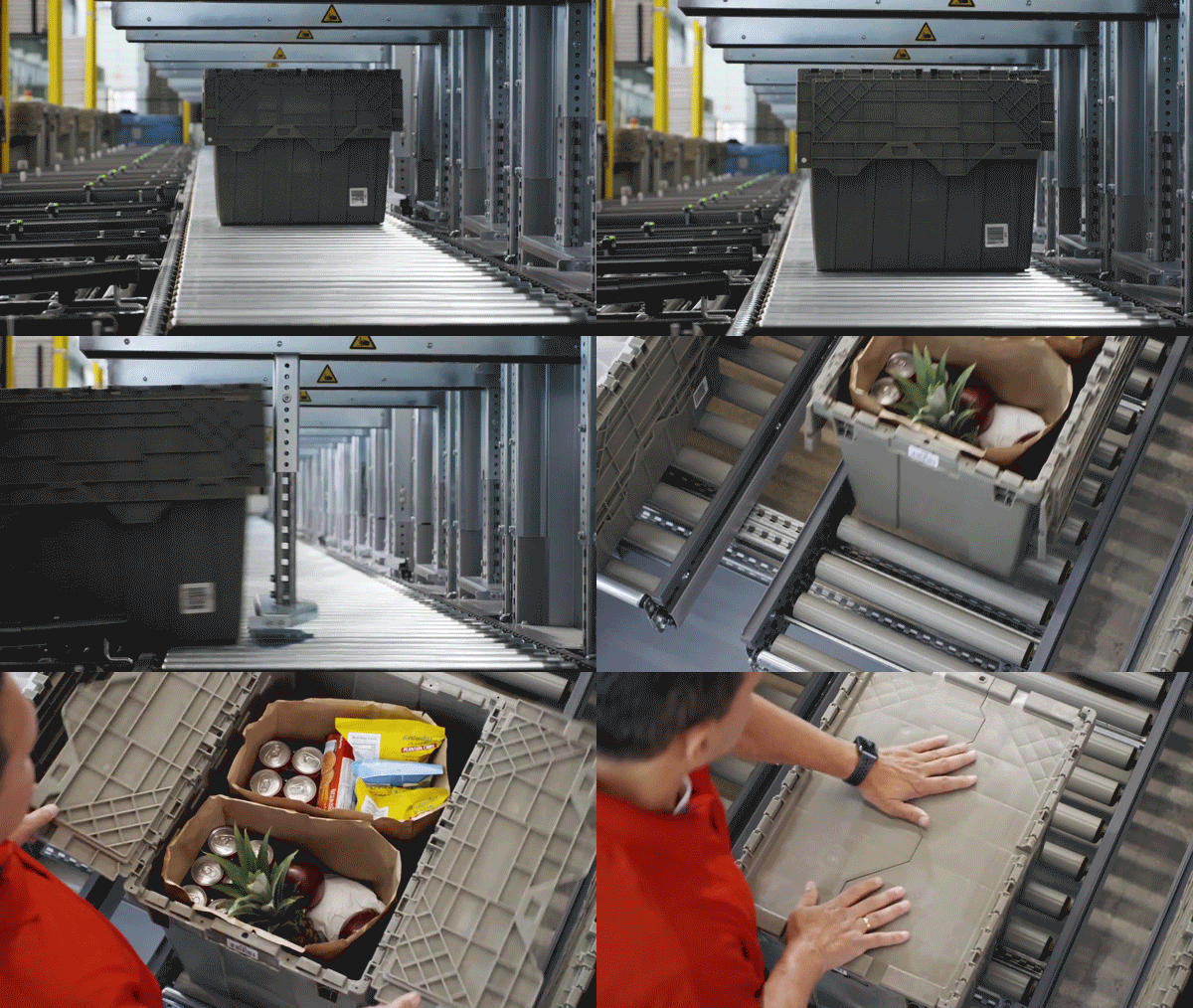
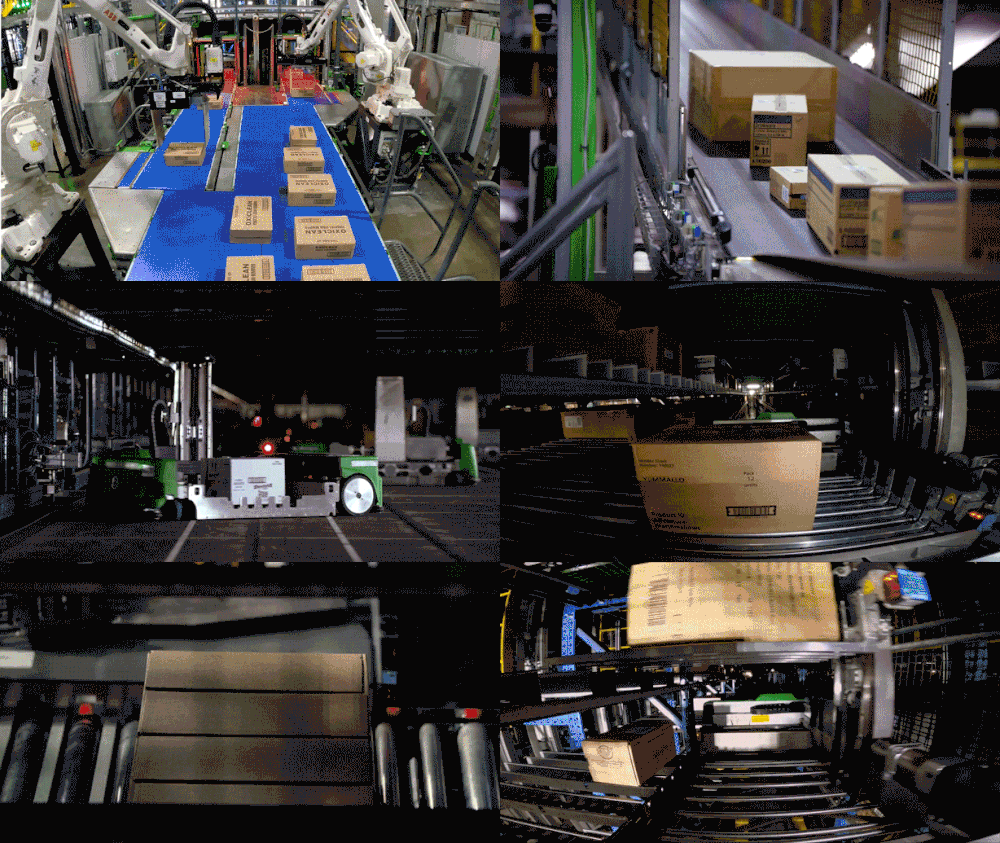
Ever wondered how that Amazon package arrives on your doorstep with remarkable speed? Clicking "buy" triggers a sophisticated, high-tech chain reaction inside Amazon's vast fulfillment centers, revealing an intricate dance between human workers and cutting-edge robotics designed to meet staggering demand.
"We deliver billions of packages every year, and technology plays a key part behind that," says Tye Brady, Chief Technologist for Robotics at Amazon.
Far from just assisting, robots are now central to the operation. Brady explained that automation is deeply integrated into the process.
"In fact, 75 percent of all the packages that are delivered come through our robotics and automation systems," Brady stated.
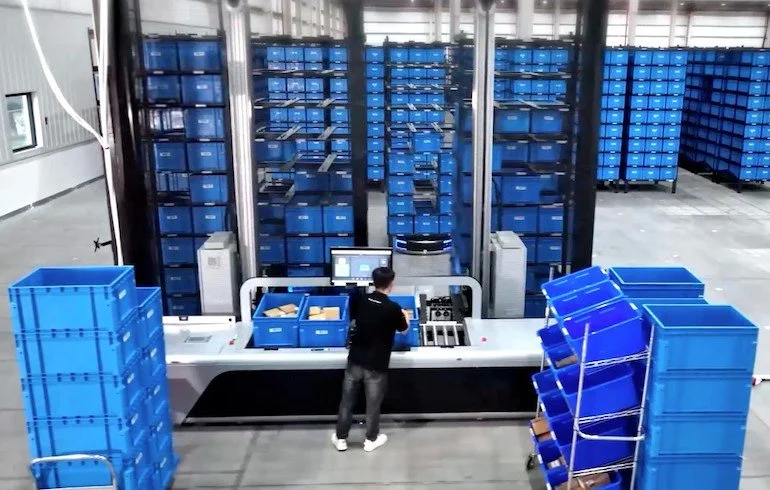
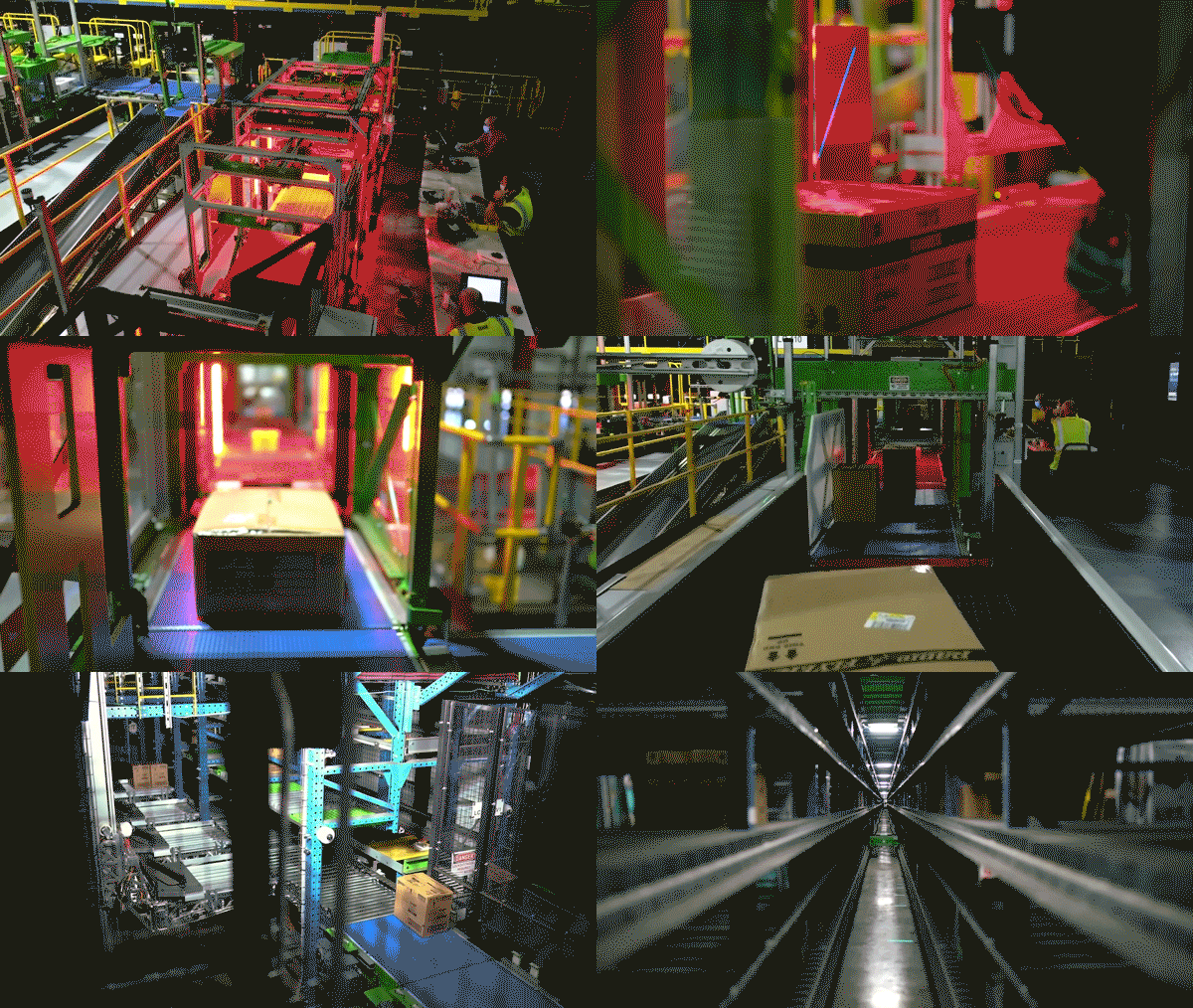
Amazon utilizes innovation hubs, including facilities in Texas, as crucial testing grounds for deploying new robotic systems. These aren't just automated arms replacing humans; they are designed from the ground up to collaborate with people. The goal, according to Brady, is clear: "I aim to eliminate the menial, the mundane, and the repetitive."
This focus on human-robot collaboration is yielding significant results in both efficiency and worker well-being. Brady shared compelling data indicating that robotics-enabled facilities process packages 25 percent faster, reduce operational costs by 25 percent, and boast a 30 percent lower rate of recordable safety incidents.
"It really gets to the heart of allowing our machines to enable more productivity, more creativity, more intelligence from our amazing frontline employees," Brady emphasized.
Amazon’s Physical AI
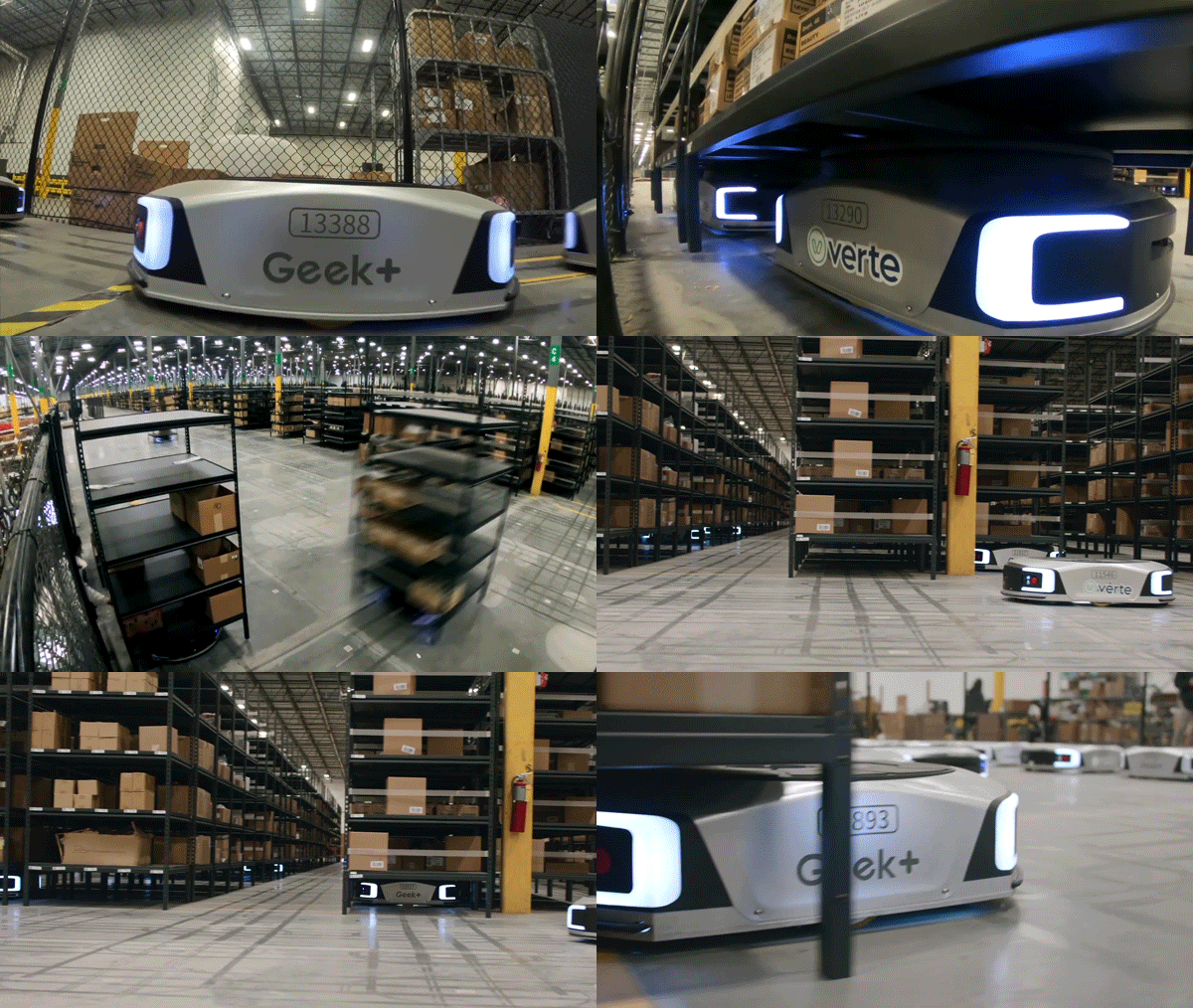
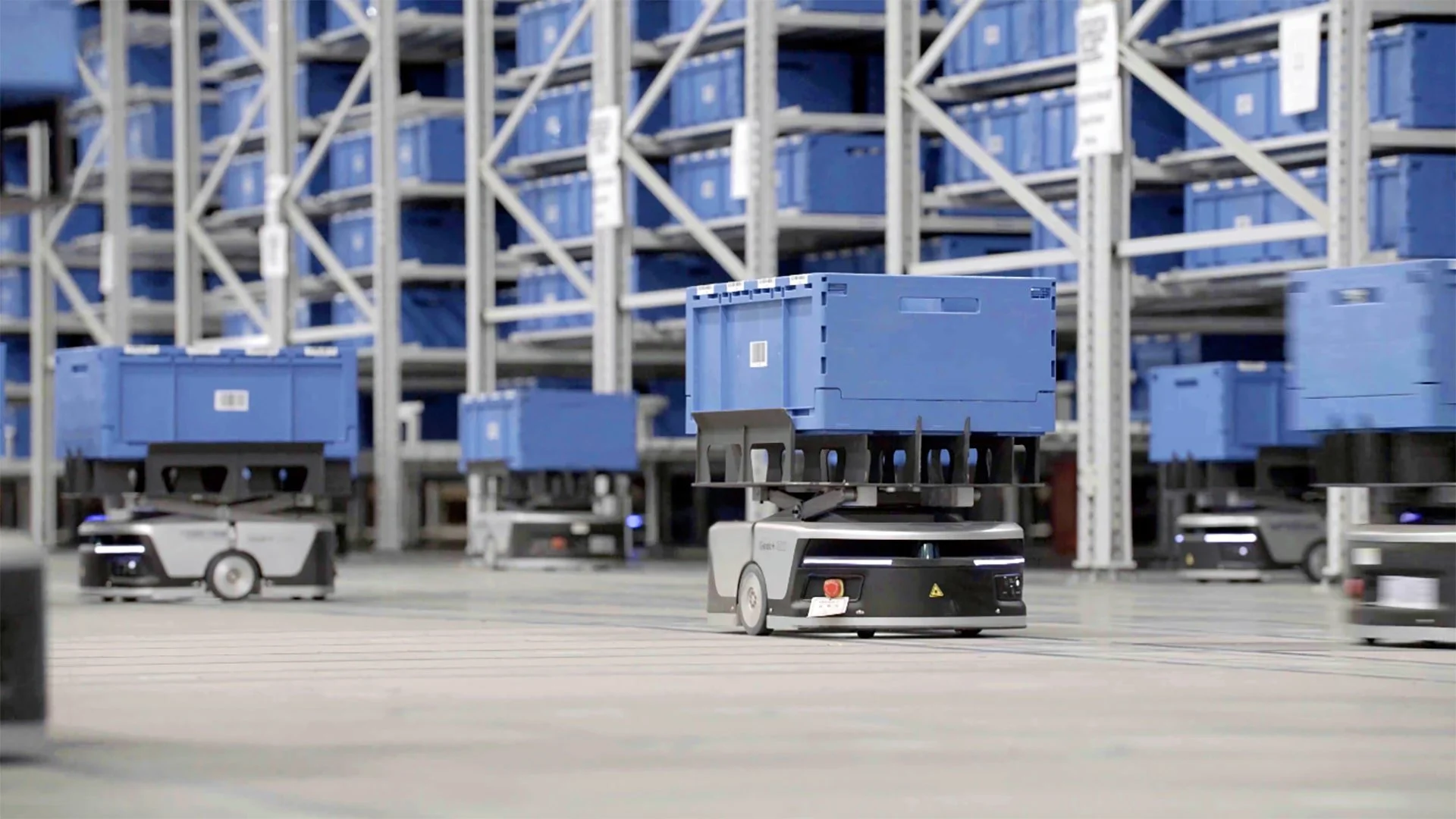
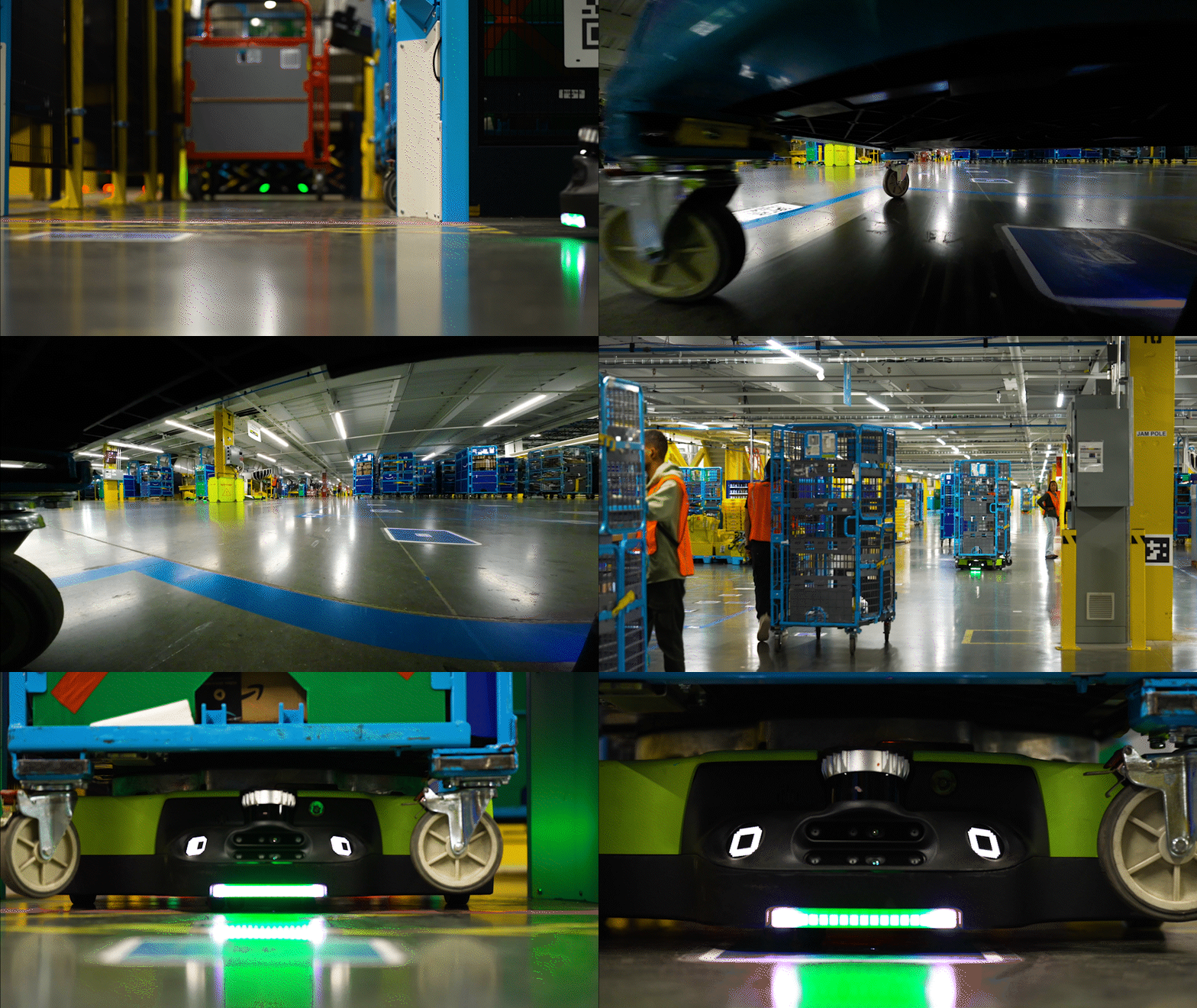
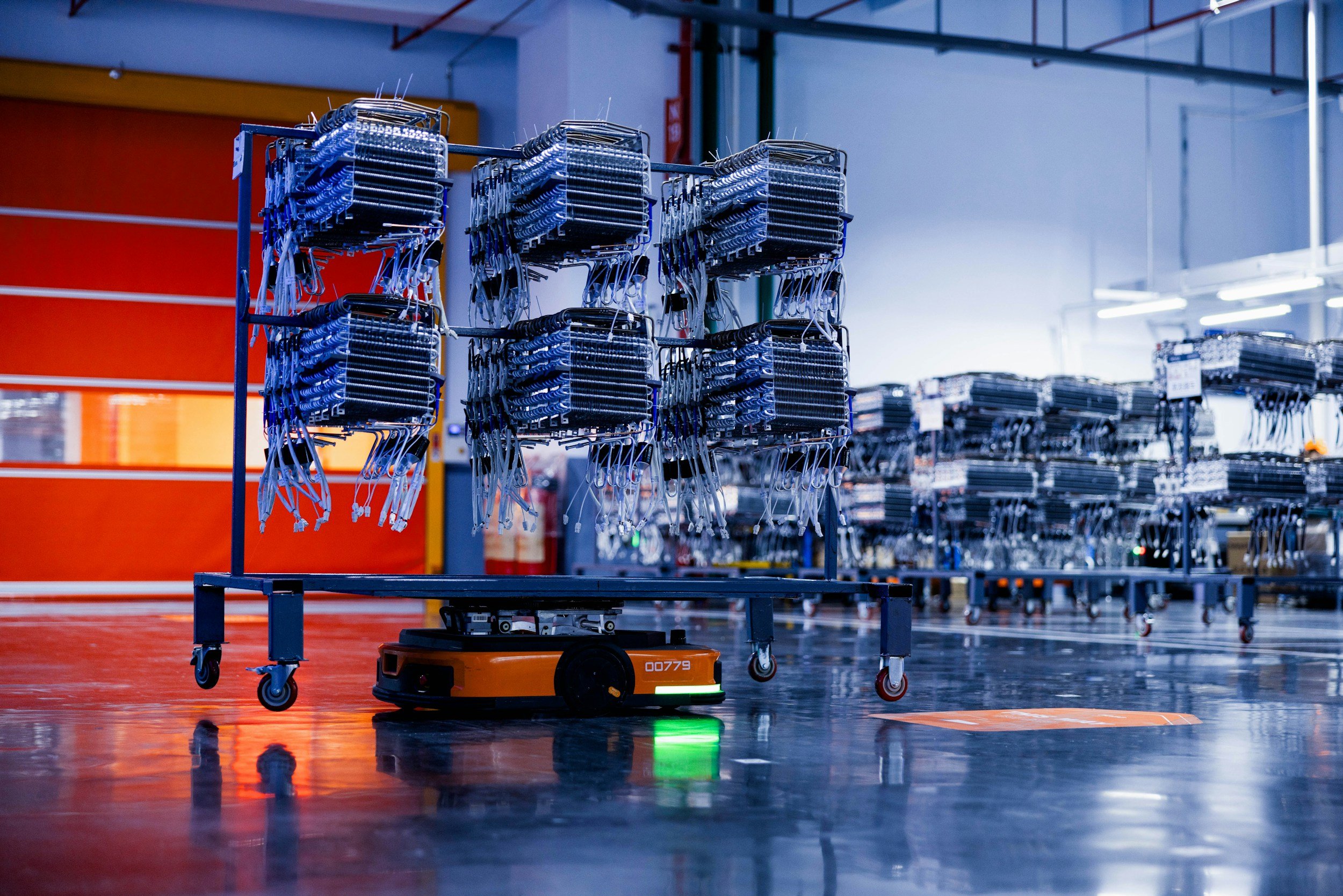
Amazon is pioneering what Brady terms "Physical AI." This involves managing a complex, controlled chaos of autonomous robots moving goods throughout the facility, all navigating safely alongside their human colleagues.
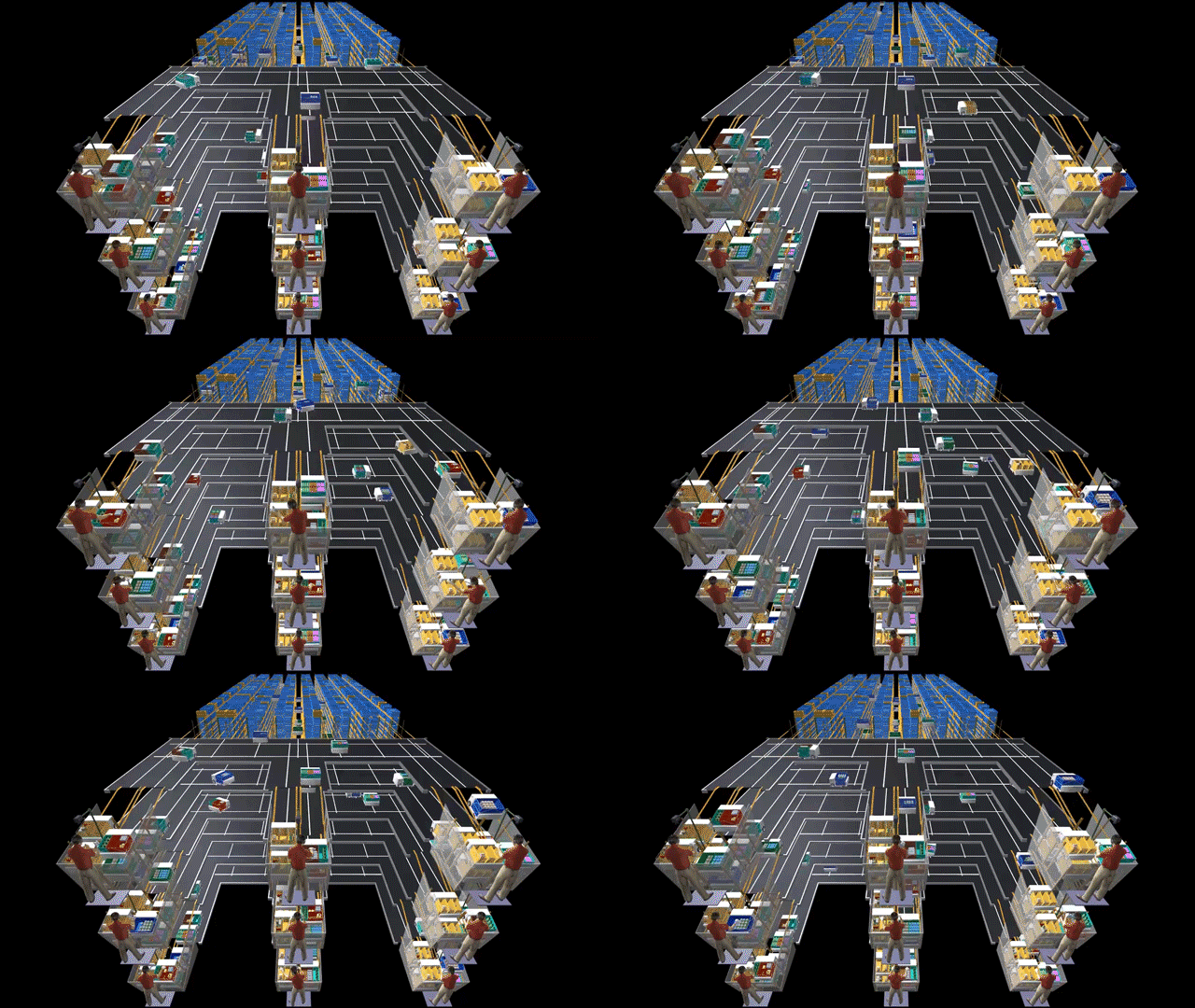
"Think of an air traffic controller that are controlling thousands of robots at the same time," Brady illustrated. "Allowing the bots to move goods at will to facilitate the jobs of our employees."
And the technology isn't standing still. Brady noted that these robots are continually becoming smarter, faster, and more adept. The future involves even greater automation capabilities.
"We want to be able to pick up objects, identify those objects, and pack those objects automatically," he said.
This powerful fusion of human expertise and advancing artificial intelligence is constantly reshaping the landscape of logistics, driving the speed and efficiency that defines Amazon's delivery promise.
Looking to hire automation or robotics talent?
We help companies find top-tier engineers, integrators, and developers — and provide upskilling support where needed. Contact us to build your team.
Kroger has announced a brand-new, $391 million automated distribution center in Franklin, Kentucky.
Kroger has taken another decisive step away from the automated fulfillment strategy it launched with Ocado in 2018.
The site in Wilcza Góra was taken from groundbreaking to operational readiness in roughly a year — significantly faster than the large Ocado CFCs launched elsewhere.
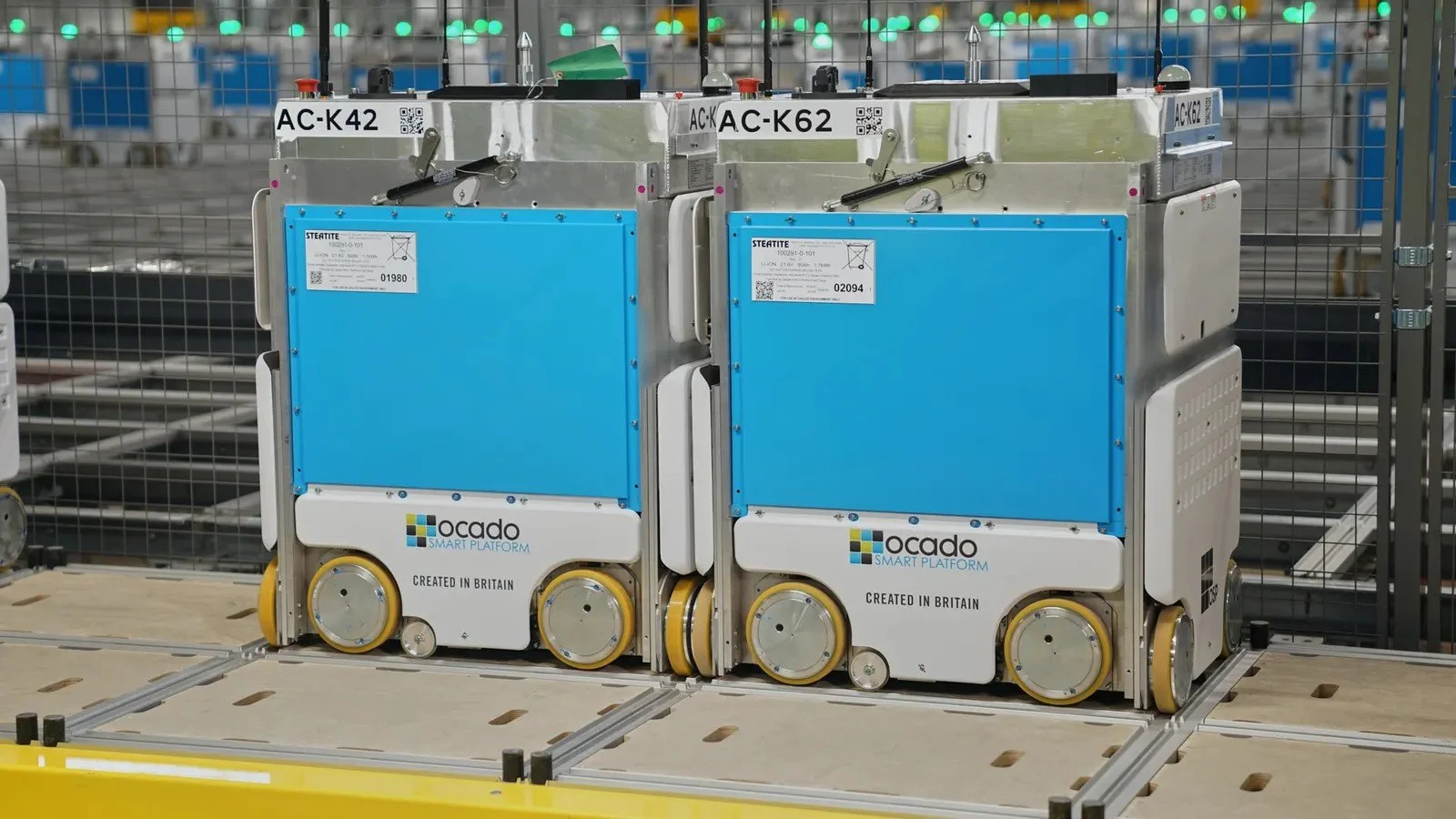
Offering high performance and excellent payload capacities, these robots makes the perfect solution for a multitude of high-payload applications.
Kroger cancels plans for additional CFCs, to pay $350M to Ocado.
Walmart is using next-gen automation to cut a 12-step process to five and challenge Amazon on delivery speed.
Walmart’s engineers are moving away from writing every line of code and toward guiding AI-driven processes.
Watch how a full-store inventory scan can now be completed by one person in 18 minutes or less, with 100% accuracy.
Walmart’s leadership credits its momentum to one thing: using data aggressively.
The AI-supported system factors in live traffic and driver location to give customers a more accurate delivery timetable.
Why is automation underperforming? DHL’s latest data reveals the core issues.
Ocado Responds to Kroger’s CFC Closures — What Their New Statement Reveals (and What It Doesn’t).
Kroger announced that it will close three of its Ocado-powered CFCs — as it restructures its e-commerce operations.
DHL’s Insight 2030 report provides one of the most comprehensive snapshots of how supply chain leaders in North America view the next five years.
The first shipment of Locus Robotics’ new Locus Array robots has officially reached a DHL facility in Columbus, Ohio.
The super-deduction consists of a set of enhanced tax incentives meant to encourage productivity improvements, including automated and robotic equipment.
Global logistics giant DHL has opened a $90 million health logistics warehouse in Auckland.
Macy’s newest customer fulfillment and store replenishment center is a highly automated, state-of-the-art facility and the company’s largest and most advanced.
World’s largest food company is cutting 16,000 jobs due partly to automation.
Ekol Logistik, a Turkish 3PL, will build an automated mini-load warehouse on the outskirts of Istanbul.
The automation technology allows products to be retrieved from a 125,000-square-foot grid and delivered directly to employees, improving fulfillment speed, accuracy and efficiency.
The new facility will feature a cutting-edge case-picking and pallet-building system.
The offer builds on Amazon fulfillment service for merchants on other sales channels, including eBay, Etsy, Temu and TikTok Shop.
Spend 24 hours inside a DHL warehouse and experience how robotics is transforming its logistics.
LAPP USA partnered with Corvus Robotics to solve a long-standing supply chain challenge:.
After invested billions of dollars into automated e-commerce Kroger will now depend on its stores for digital growth.
More retailers are improving their 'Click and Collect' services, with one new trial using mini robots to speed up the process.
Walmart is now deploying automated packaging technology across multiple centers in Pennsylvania, Illinois, Texas, and California.
96% of Target’s online orders is fulfilled by its stores rather than warehouses
Host Evan Reiser welcomes Sally Miller, Global Chief Information Officer at DHL Supply Chain.