
Why Amazon Is Testing a 30-Minute Micro-Fulfillment Strategy — and What It Means for Retailers
How a proximity-based micro-fulfillment model could reshape delivery speed, cost efficiency, and consumer expectations.
When Amazon announced it is now testing 30-minute delivery for essentials and groceries in parts of Seattle and Philadelphia, it wasn’t simply another expansion of Prime convenience. It signaled something larger: Amazon and Walmart are entering a delivery war the U.S. market has never seen before.
This isn’t about offering “fast delivery” anymore.
This is about minute-level logistics, new micro-fulfillment models, and two retail giants racing to redefine how quickly a household can receive milk, medication, snacks, pet food, or a forgotten cable.
And the race is accelerating.
Amazon’s Latest Move: Delivery in ~30 Minutes
Amazon’s new service — Amazon Now — offers thousands of essential products with delivery times measured in minutes:
Fresh groceries (milk, eggs, produce)
Household goods
OTC medications
Paper products
Cosmetics
Pet items
Electronics and seasonal items
Key details:
Available today in select areas of Seattle and Philadelphia
Prime members see fees starting at $3.99
Non-Prime fees begin at $13.99
Orders under $15 add a $1.99 basket fee
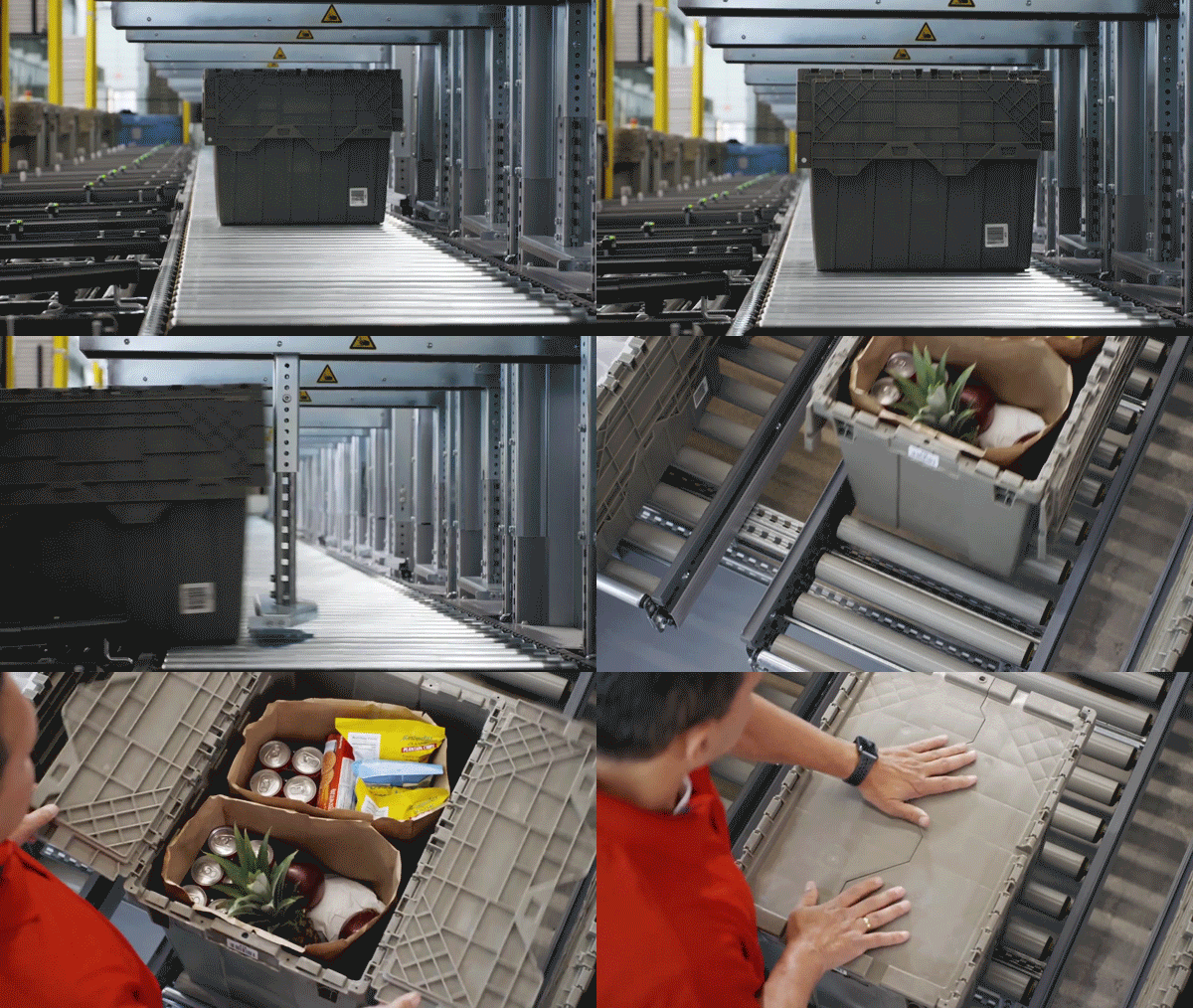
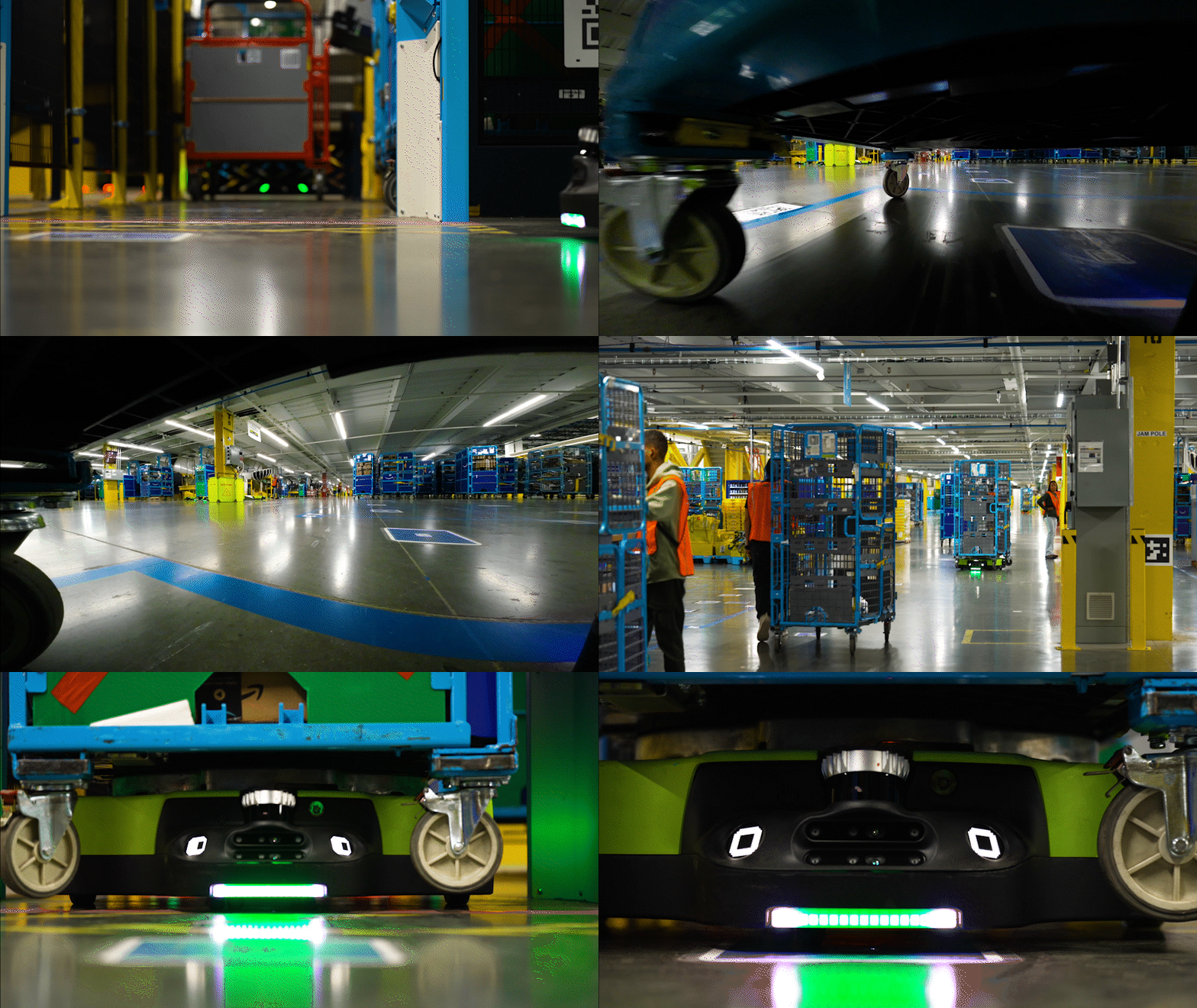
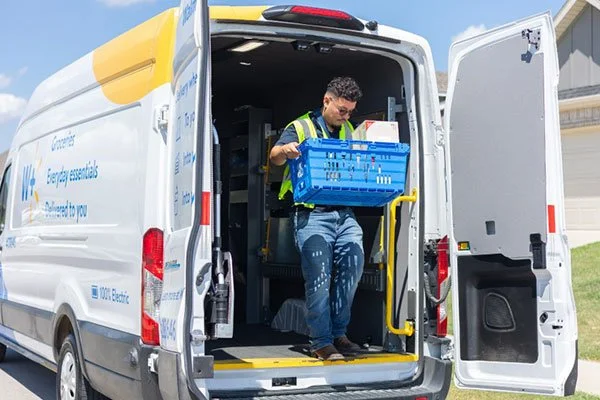
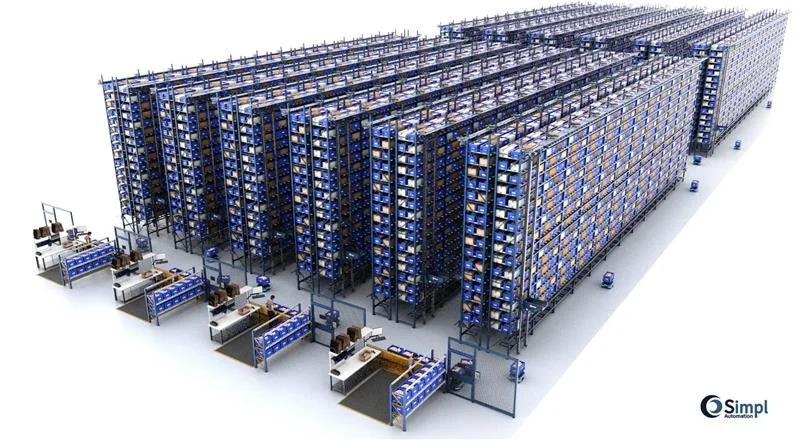
Fulfilled from specialized, small-format facilities located very close to residential clusters
Staffed and routed as Amazon’s “fastest delivery operation”
Fully integrated inside the standard Amazon app (look for the “30-Minute Delivery” option)
The model is specifically built for single-item, impulse, and urgent purchases, a category with high repeat potential and strong margin dynamics once density is optimized.
Why Amazon Is Doing This Now
The clues are in their recent logistics strategy:
Over 1,000 cities already have same-day perishable grocery delivery
Expansion planned to reach 2,300 cities by year-end
Increased investments in predictive AI, routing, and regionalized fulfillment
Rapid placement of smaller, proximity-based facilities
Amazon is betting that the future of delivery will look less like “order a cart of groceries once a week” and more like:
“I need two things right now — and I want them at my door in under 30 minutes.”
That is the battlefield Amazon wants to dominate.
Meanwhile: Walmart Has Quietly Been Building Its Own Minute-Level Delivery Capabilities
This launch comes at a moment when Walmart is aggressively reshaping its own delivery infrastructure:
Walmart is testing minute-level delivery windows
Rolling out live, real-time order updates
Expanding store-based fulfillment at unprecedented speed
Using vibe coding and AI-assisted engineering to develop new workflows within hours
Building deeper integrations between Walmart+, robotics, and in-store automation
Scaling delivery density powered by 7,000+ stores, many positioned closer to customers than Amazon’s FC network
Walmart has a structural advantage almost no other retailer has:
their stores effectively function as micro-fulfillment centers in every major city and town.
And they are now fully leveraging that advantage.
Why This Is Becoming a Delivery War
For the first time, both companies are pushing toward the same endpoint:
1. Delivery measured in minutes
Not days, not hours — minutes.
2. Ultra-dense micro-fulfillment infrastructure
Smaller hubs, closer to customers, optimized for 1–4 items.
3. Real-time visibility
Amazon offering minute-by-minute tracking.
Walmart testing up-to-the-minute delivery time updates.
4. System-level automation and AI
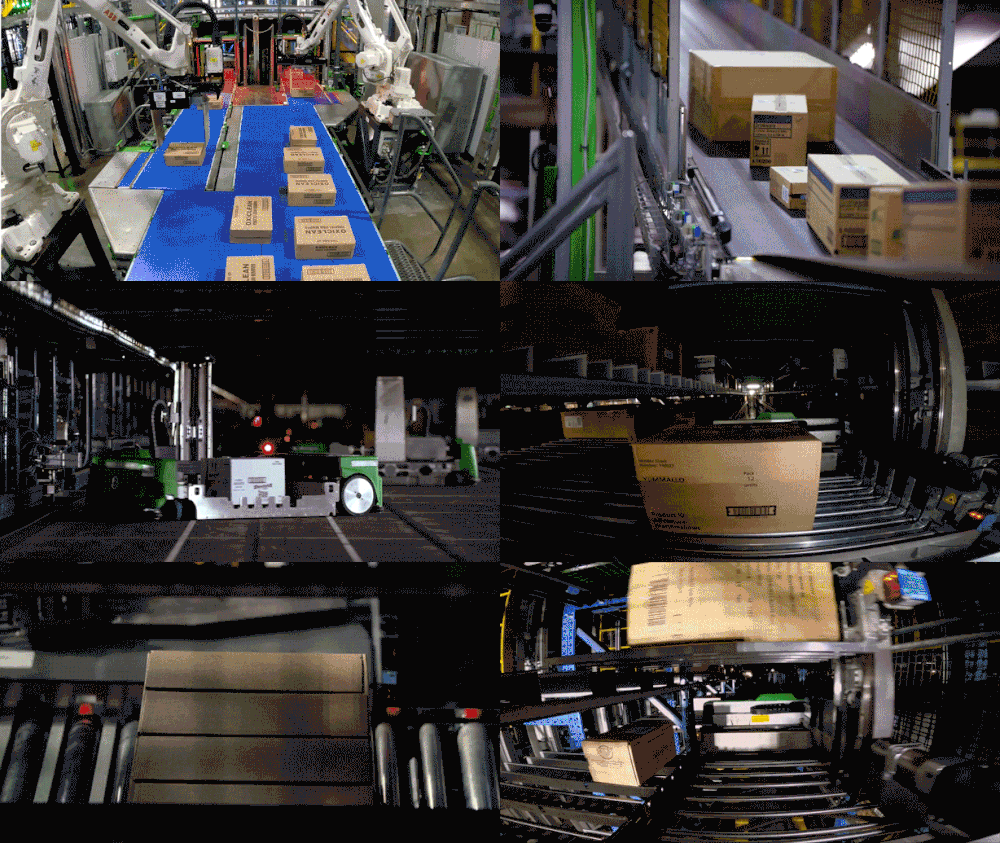
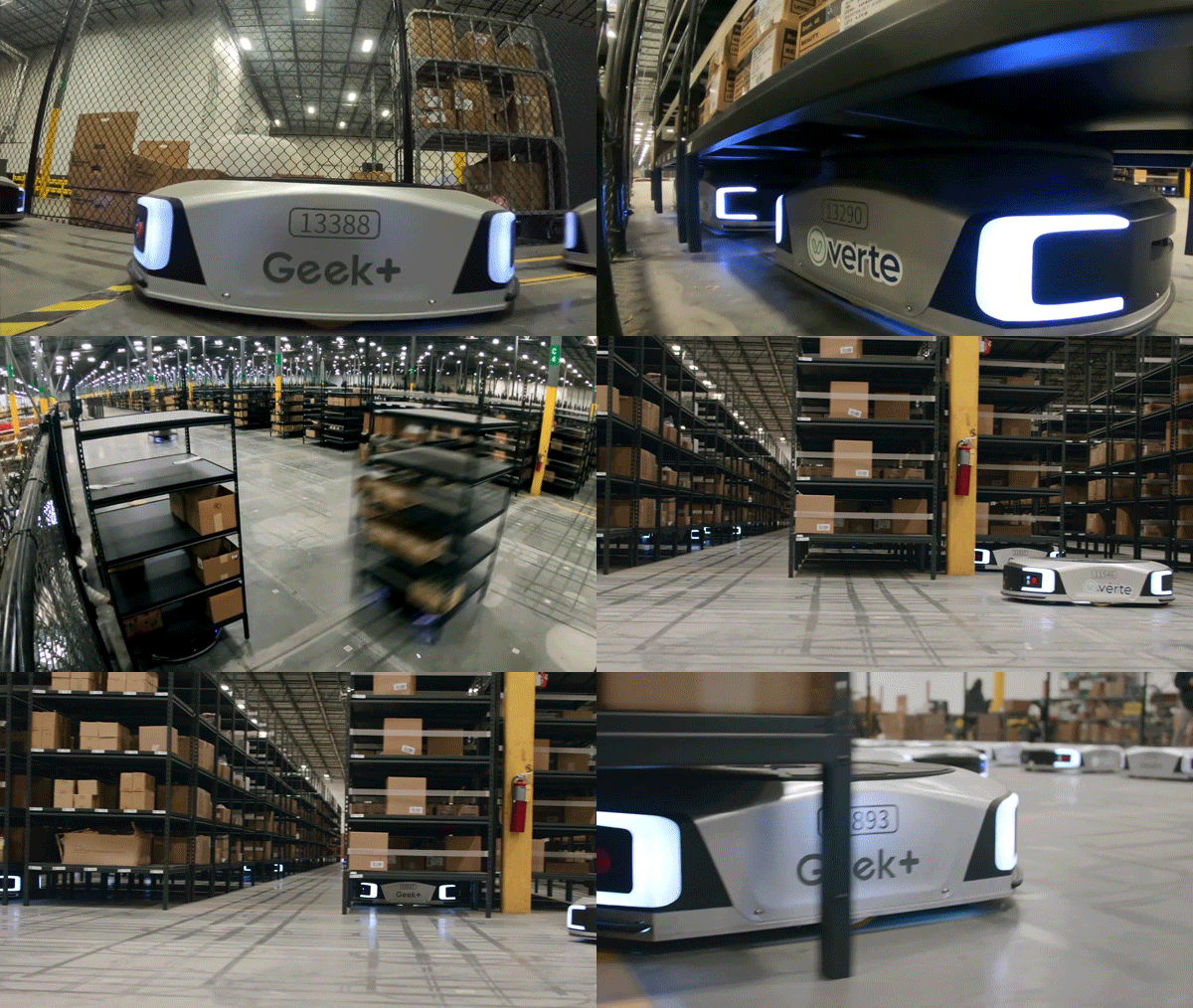
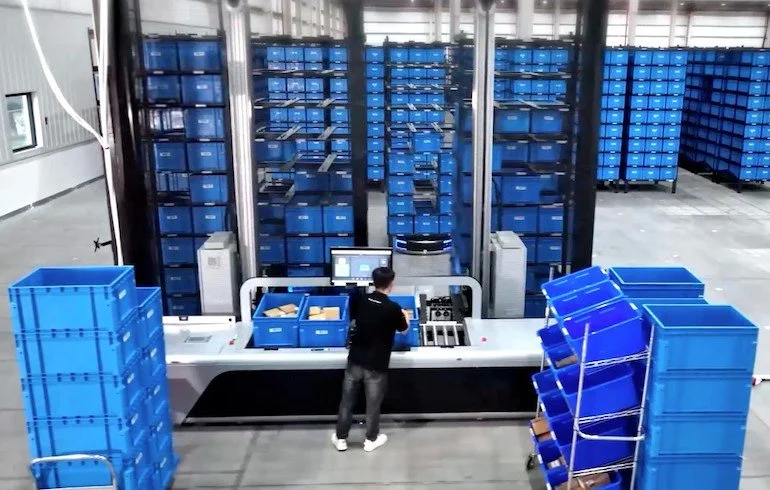
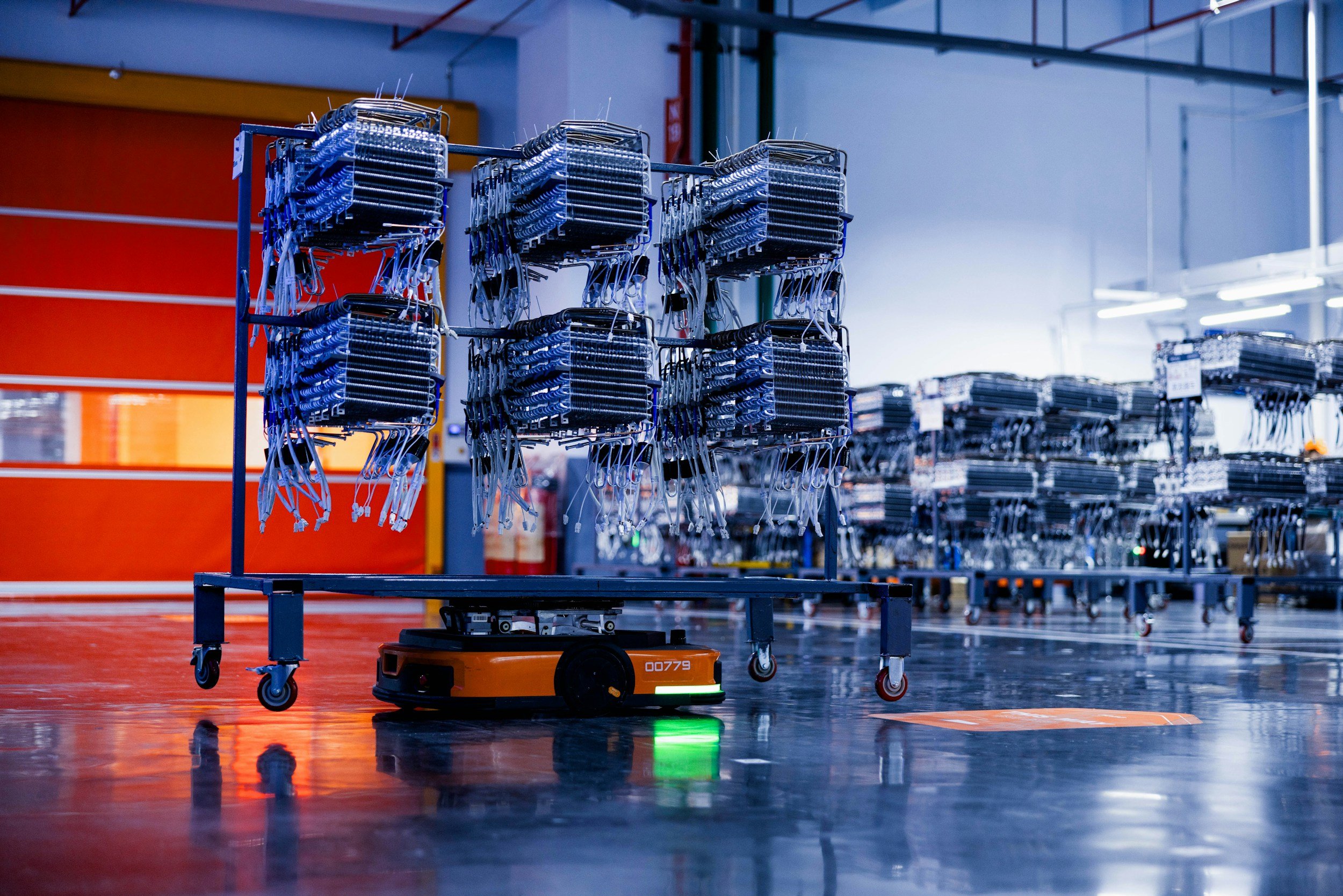
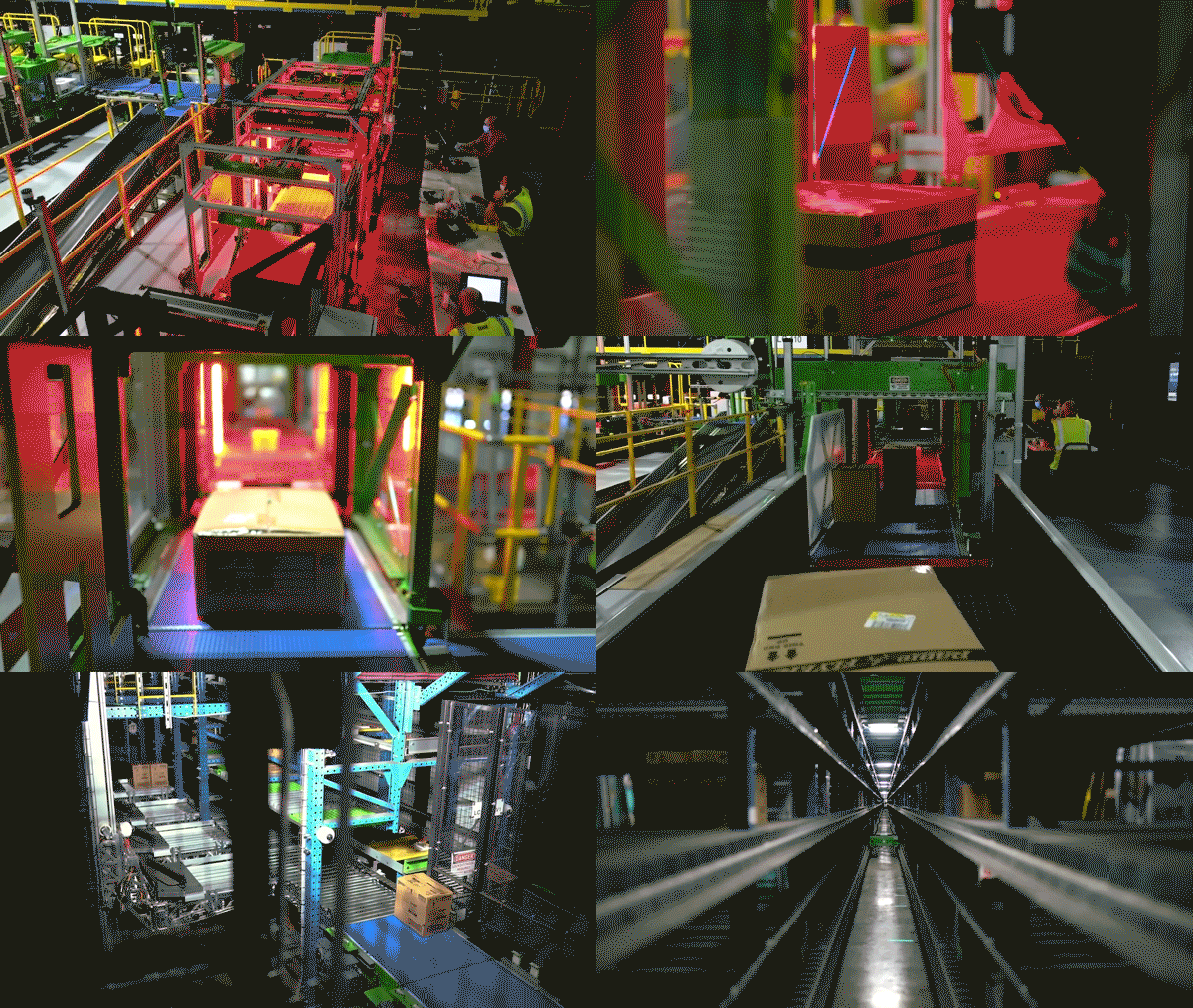
Both companies are deploying automation, robotics, orchestration layers, and predictive AI to raise throughput and reduce cost per order.
5. A fight for habitual buying behavior
If customers get used to “I tap a button, and it arrives in 20–30 minutes,” the winner becomes the default channel for essential goods.
This isn’t just a convenience race.
It’s a fight for the future shape of household purchasing behavior.
What This Means for Other Retailers
Most retailers cannot match:
Amazon’s logistics footprint
Walmart’s store density
Either company’s automation and engineering capability
But the shift still affects everyone.
Consumers will begin expecting:
Real-time delivery windows
Faster service for small baskets
Consistent accuracy
A seamless, app-native experience
Inventory visibility they can rely on
Retailers that cannot meet these expectations will fall behind — not because they lack products, but because they lack infrastructure, orchestration, and delivery precision.
Closing Thoughts
Amazon’s 30-minute “Amazon Now” test is more than a pilot.
It’s a sign that the largest retailers in the U.S. are preparing for a logistics landscape defined by:
proximity fulfillment
hyper-fast last-mile
tightly orchestrated automation
and service measured in minutes
Walmart is already signaling similar capabilities.
Amazon is pushing hard in the same direction.
A delivery war is underway — and the winner will shape how North Americans shop for everyday essentials.






At Hannover Messe 2026, SAP and Vodafone showcased a pilot conducted at Vodafone’s warehouse in Duisburg,