
Amazon’s First Big-Box Online Fulfillment Store
What the Orland Park retail proposal reveals about Amazon’s push into Walmart-scale physical retail
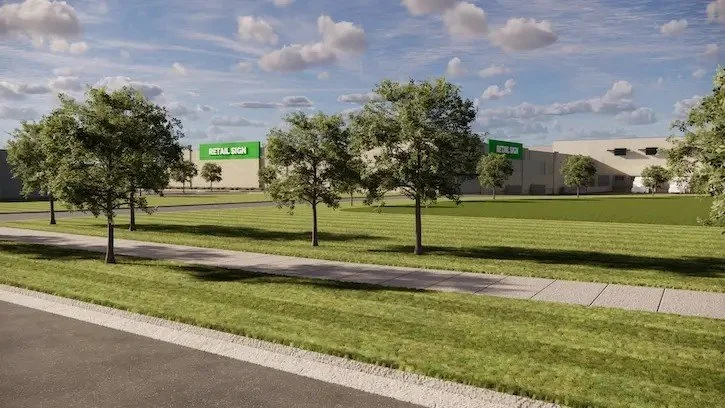
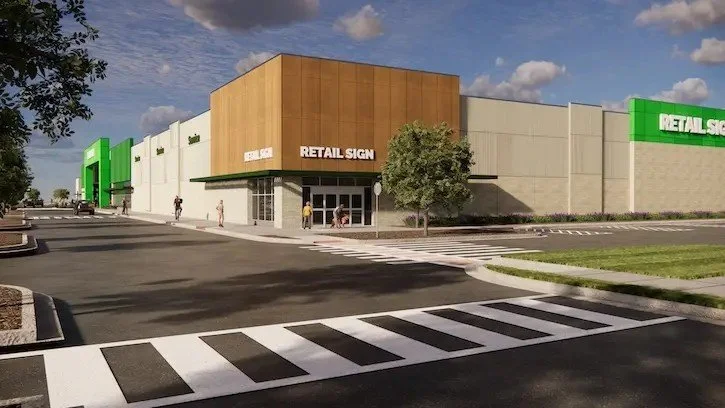
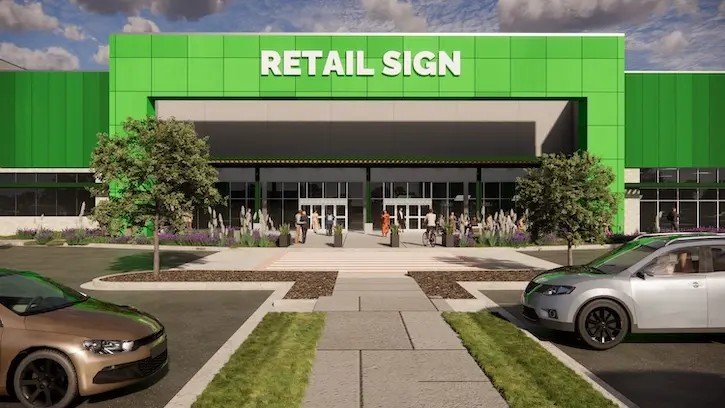
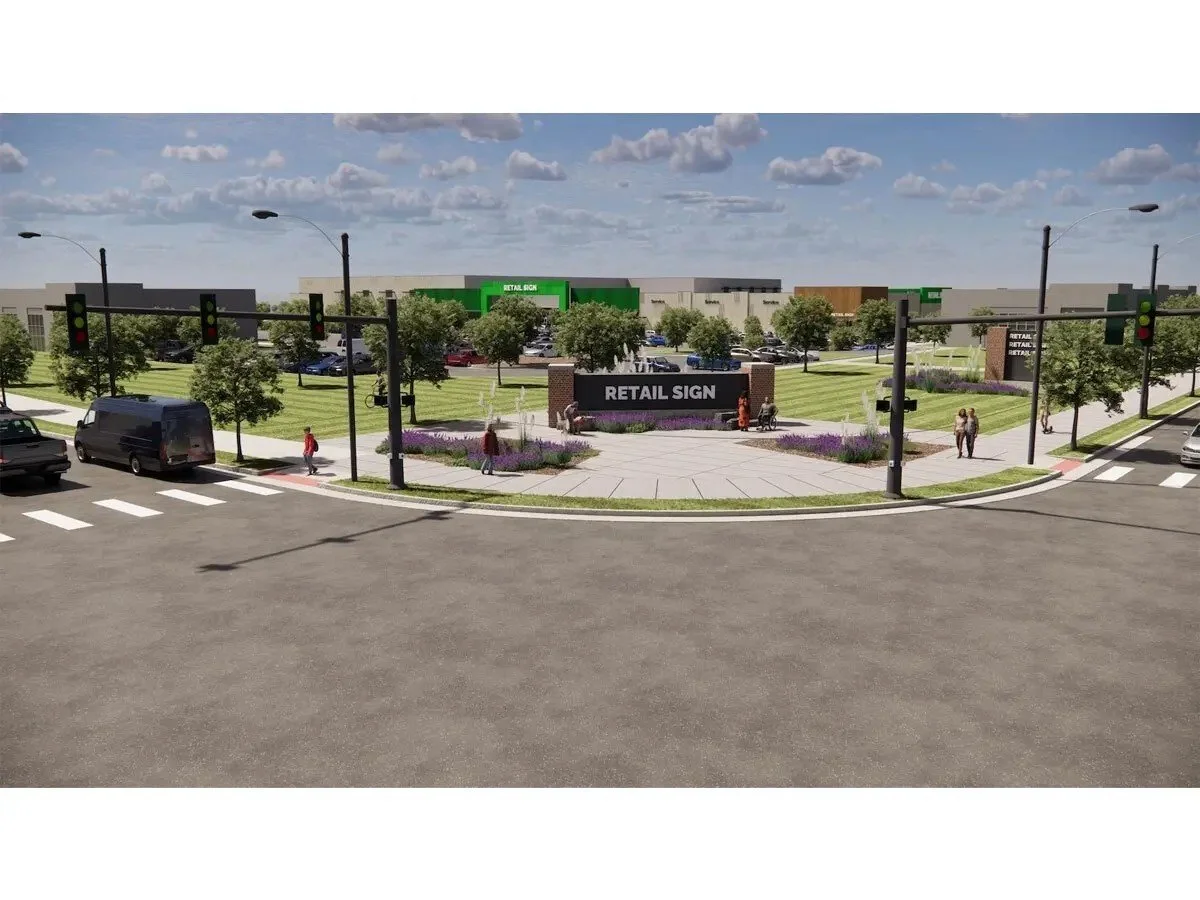
Last week, Amazon presented plans to the Plan Commission in Orland Park for a proposed retail development at the intersection of 159th Street and LaGrange Road. The project calls for a roughly 225,000-square-foot, one-story big-box retail store situated on a 35-acre site, offering groceries, general merchandise, and prepared food options. While local officials emphasized that the project is retail in nature, the design includes a limited on-site warehouse component intended to support store operations and online order fulfillment.
What makes the proposal notable is not the size of the building, but how the store is intended to function. Amazon described a retail experience in which customers can shop in person while also accessing a much broader assortment through their phones or in-store kiosks. Items not physically stocked on the sales floor can be ordered and brought directly to a customer’s vehicle, either at the front of the store or in designated pickup areas. The store effectively serves as both a traditional retail destination and a local fulfillment point for online orders, without being positioned as a regional distribution facility.
This approach represents a meaningful shift in how Amazon is thinking about physical retail. Rather than treating stores as standalone destinations or as lightweight pickup points, the Orland Park proposal integrates retail and fulfillment into a single, purpose-built format. Inventory visibility, customer access, curbside pickup, and back-of-house operations are all designed together, suggesting that fulfillment is being treated as core infrastructure rather than a secondary add-on.
At this scale, the strategy directly overlaps with a model that Walmart has refined over decades. Walmart’s advantage has long been its ability to use large-format stores as both shopping destinations and fulfillment nodes for e-commerce. Amazon has experimented with many physical formats in the past, but this proposal marks one of the first attempts to challenge that advantage using a full big-box footprint rather than smaller, specialized concepts.
The understated nature of the proposal is also worth noting. There are no claims about breakthrough technology or radical new operating models. Instead, the focus is on circulation, access management, separation of customer and delivery traffic, and on-site operations that support both walk-in shoppers and online customers. That restraint suggests a recognition that store-based fulfillment only works when it is designed into the building and remains largely invisible to the customer experience.
If approved, construction could begin as early as this spring, but the broader implications extend well beyond a single location in suburban Illinois. The Orland Park project provides a clear view into how Amazon may approach physical retail going forward: large-format stores designed from the outset to serve both in-store demand and local online fulfillment, without forcing one to dominate the other.


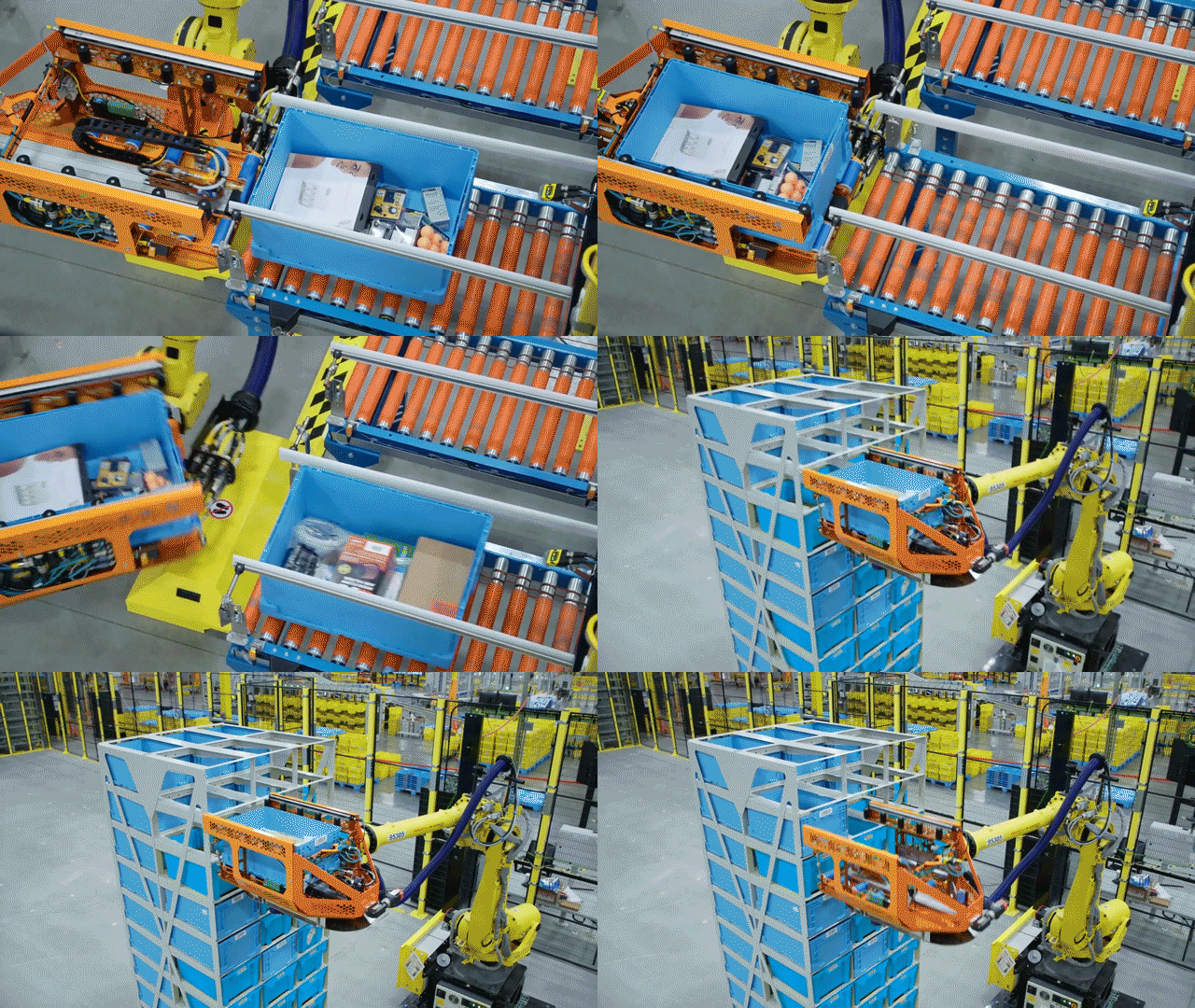
At Hannover Messe 2026, SAP and Vodafone showcased a pilot conducted at Vodafone’s warehouse in Duisburg,