
Small third-party operated hubs may provide a new way to extend fast delivery into low-density markets.
The recent launch of new Amazon logistics hubs in Lethbridge, Alberta and Owen Sound, Ontario has been presented in mainstream media largely as a routine expansion of last-mile delivery capacity.
However, a closer look suggests that something more interesting may be taking place. Canada could be serving as a test environment for a third-party operated micro-fulfillment model that extends Amazon’s logistics network into smaller and more remote markets.
While the facilities themselves are modest in size, the operating model behind them may signal a broader shift in how large fulfillment networks solve the challenge of serving low-density regions.
Beyond the Van: The 3P-Operated Node
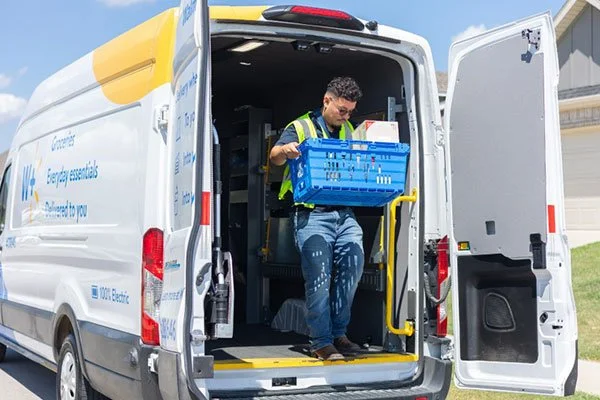
In Amazon’s traditional operating model, the company owns and operates the fulfillment centers while Delivery Service Partners (DSPs) handle last-mile van delivery.
The emerging structure appearing in parts of Canada appears to extend the role of the third party further into the network. Instead of operating only the delivery vehicles, the partner may also be responsible for running the local logistics facility itself.
Independent operators—such as RHAY Logistics—are managing hubs typically ranging from 7,500 to 20,000 square feet. These facilities function as localized inventory and dispatch nodes, enabling Amazon to stage products closer to customers in regions that would otherwise be served from distant fulfillment centers.
These sites are therefore more than staging areas for delivery vans. They represent small, distributed inventory nodes that allow Amazon to maintain same-day or next-day delivery coverage in markets that might otherwise require two days or more.
Why Canada? A Natural Test Environment
Canada’s geography presents a unique challenge for fulfillment network design.
The country combines a large landmass with population centers that are often separated by significant distances. While major metropolitan regions can support large automated fulfillment centers, many smaller cities and rural regions do not have the population density required to justify such infrastructure.
For Amazon, this creates a familiar problem:
Building large automated facilities in every secondary market is economically unrealistic.
A distributed model using smaller partner-operated hubs offers a possible solution.
By allowing local logistics operators to manage small micro-fulfillment sites, Amazon can extend fast delivery coverage into regions that would otherwise sit outside the optimal service radius of major fulfillment centers.
If this model proves effective in Canada, it could provide a blueprint for expanding delivery coverage in other low-density markets around the world—from the American Midwest to regional Australia.
The Automation Gap
From a technical perspective, these hubs represent a notable departure from Amazon’s well-known robotics-driven fulfillment model.
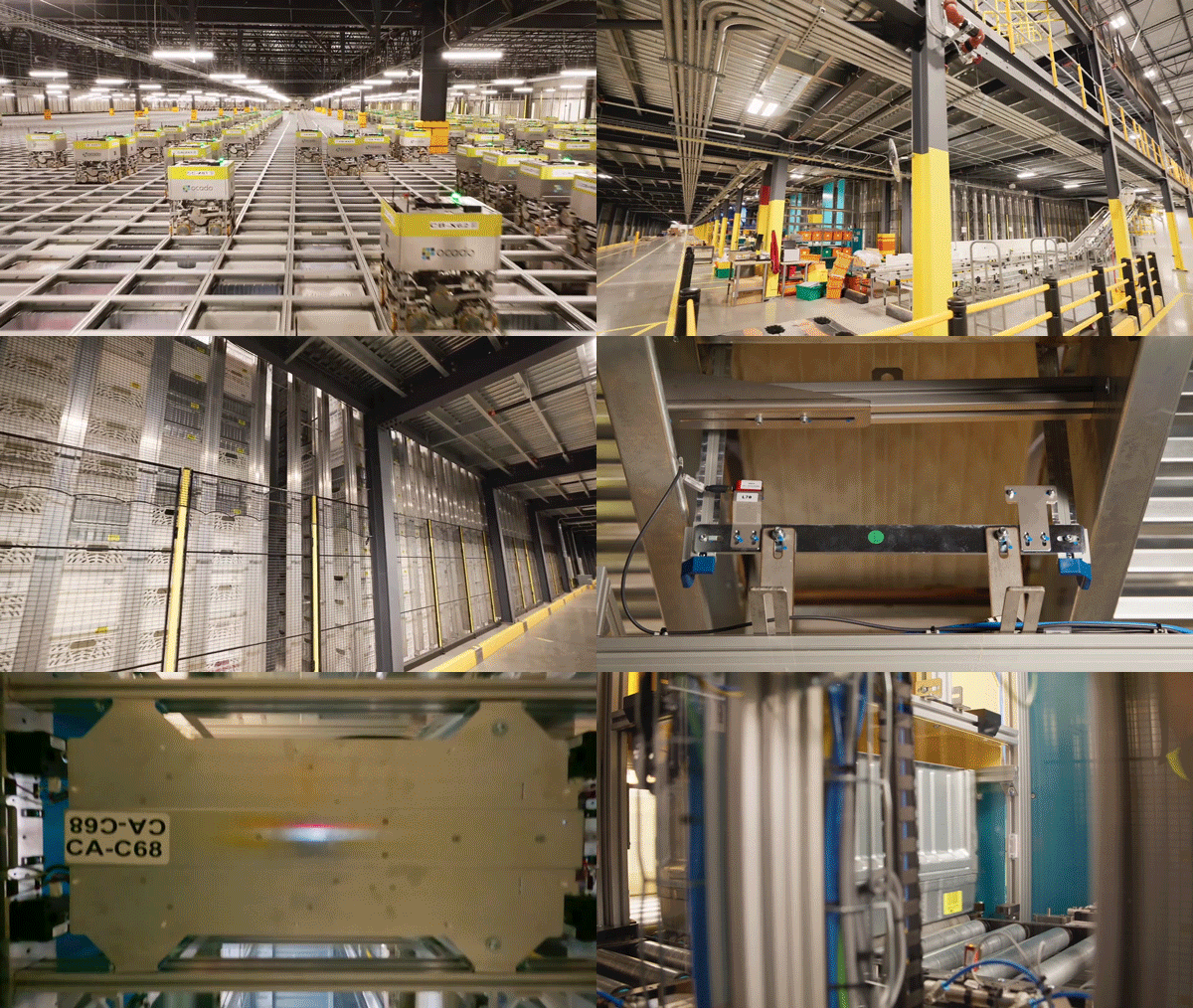
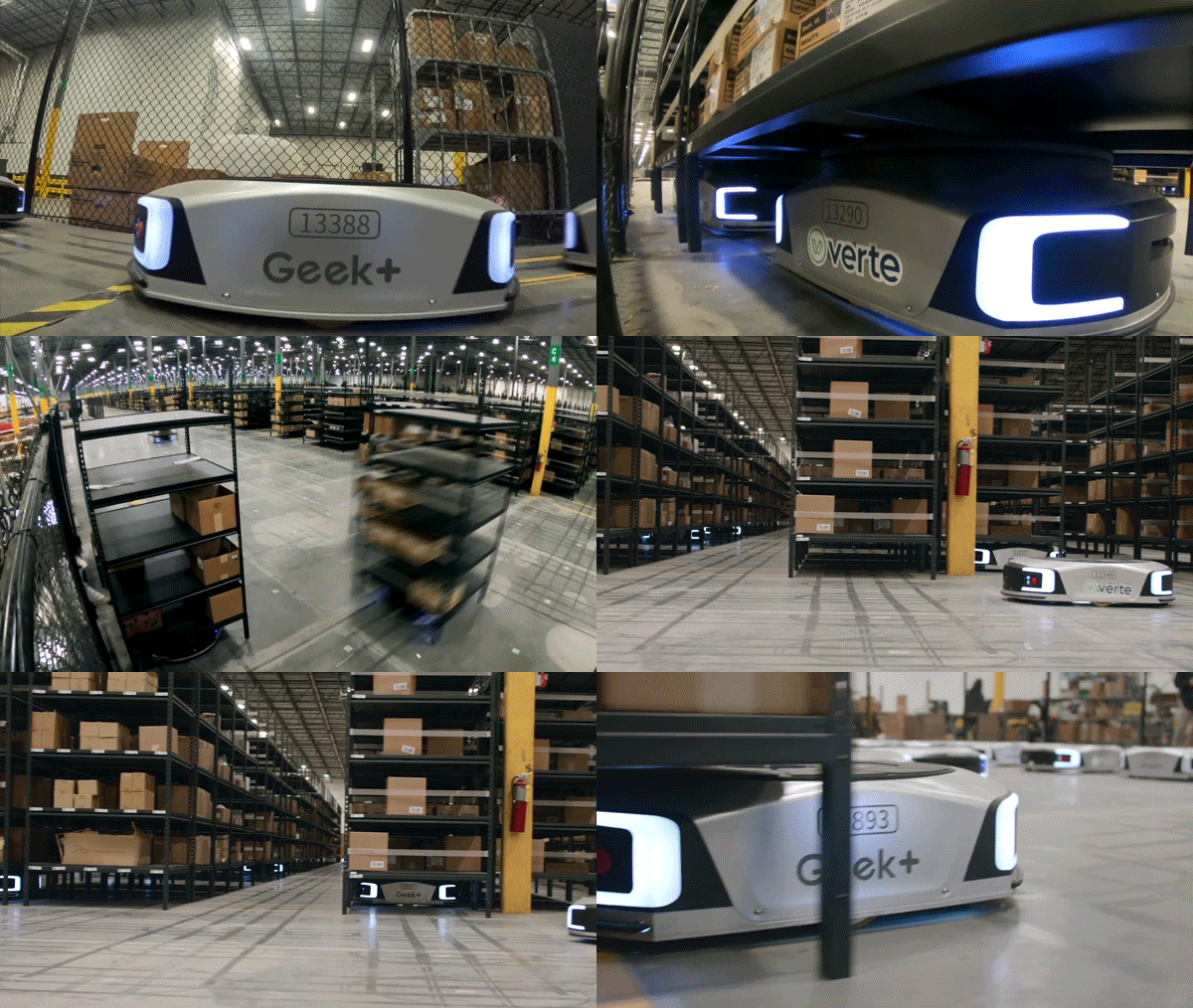
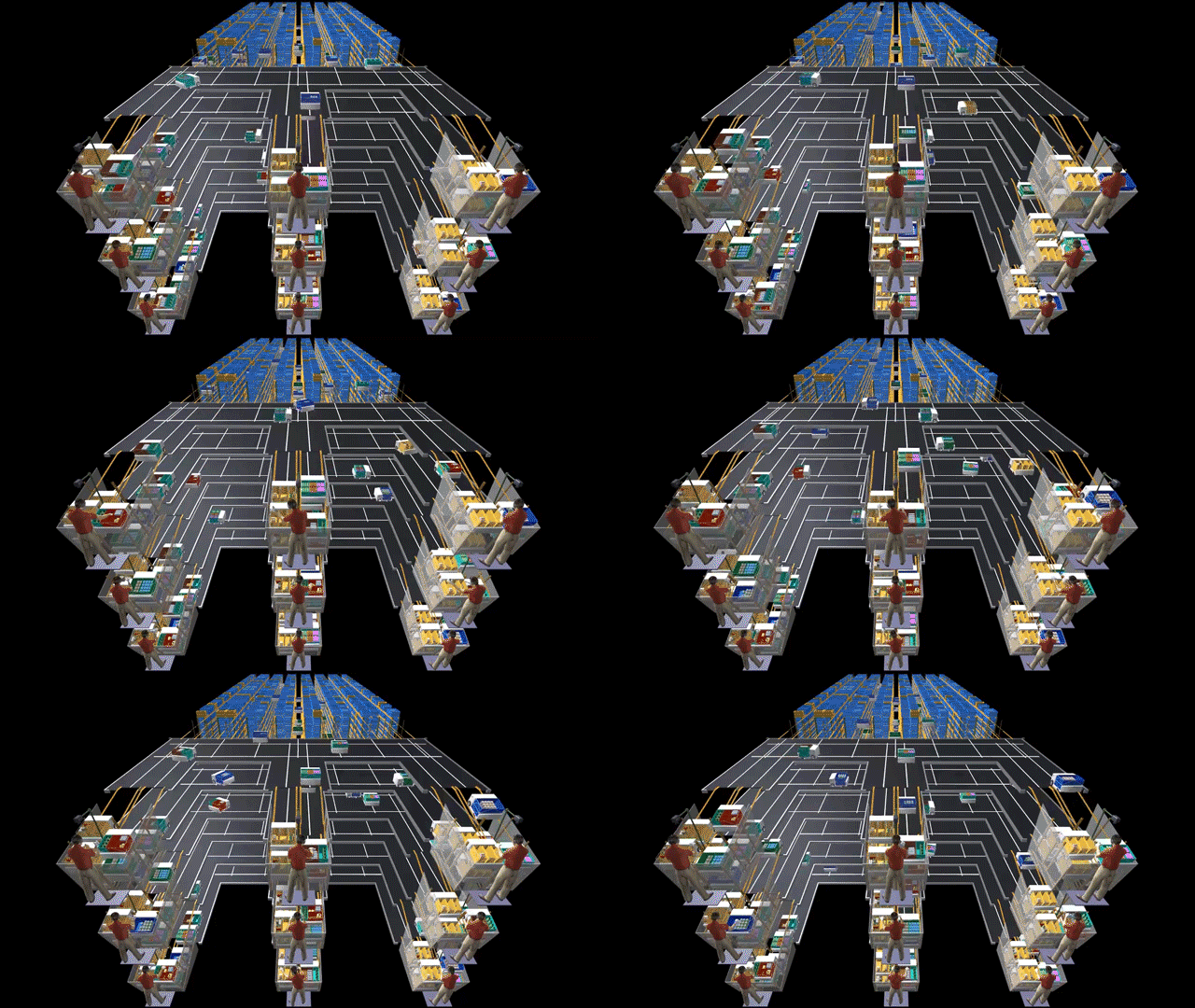
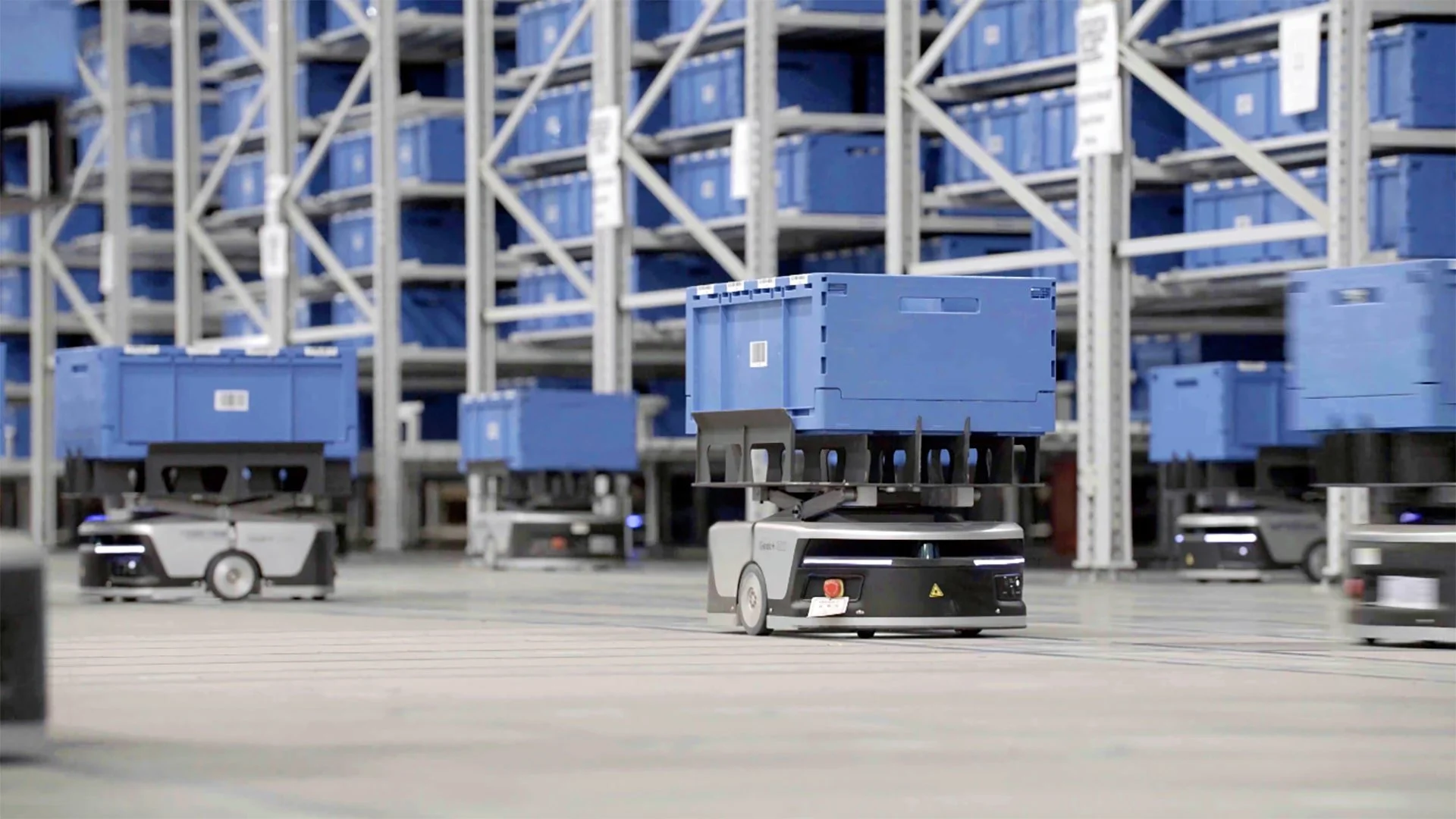
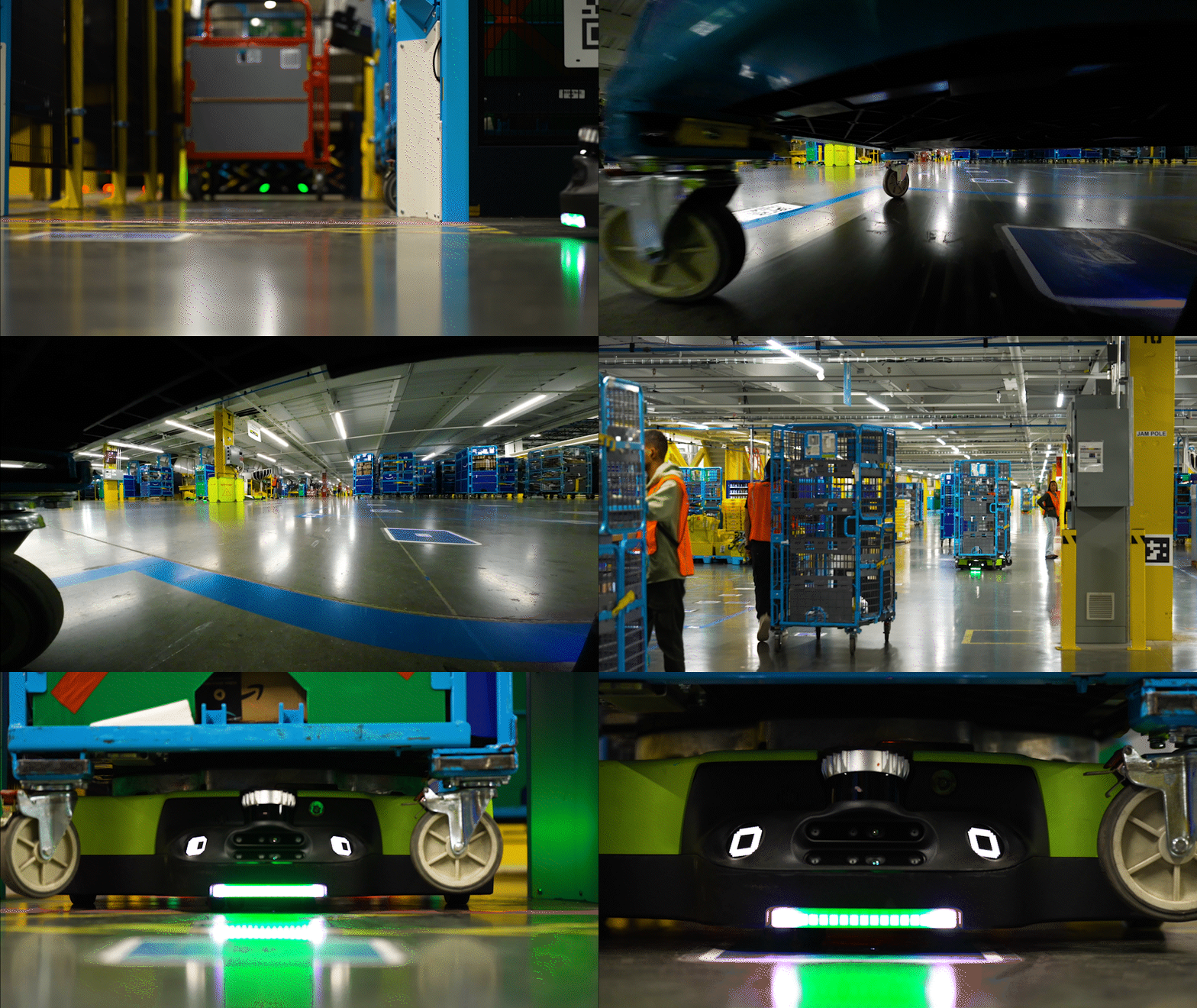
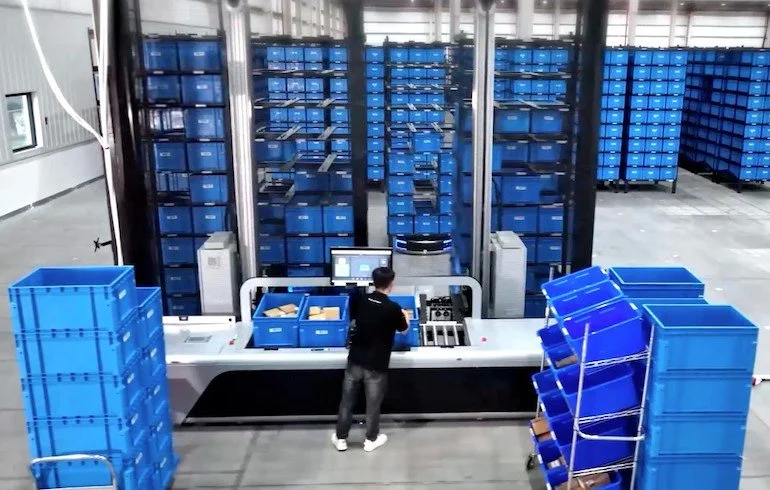
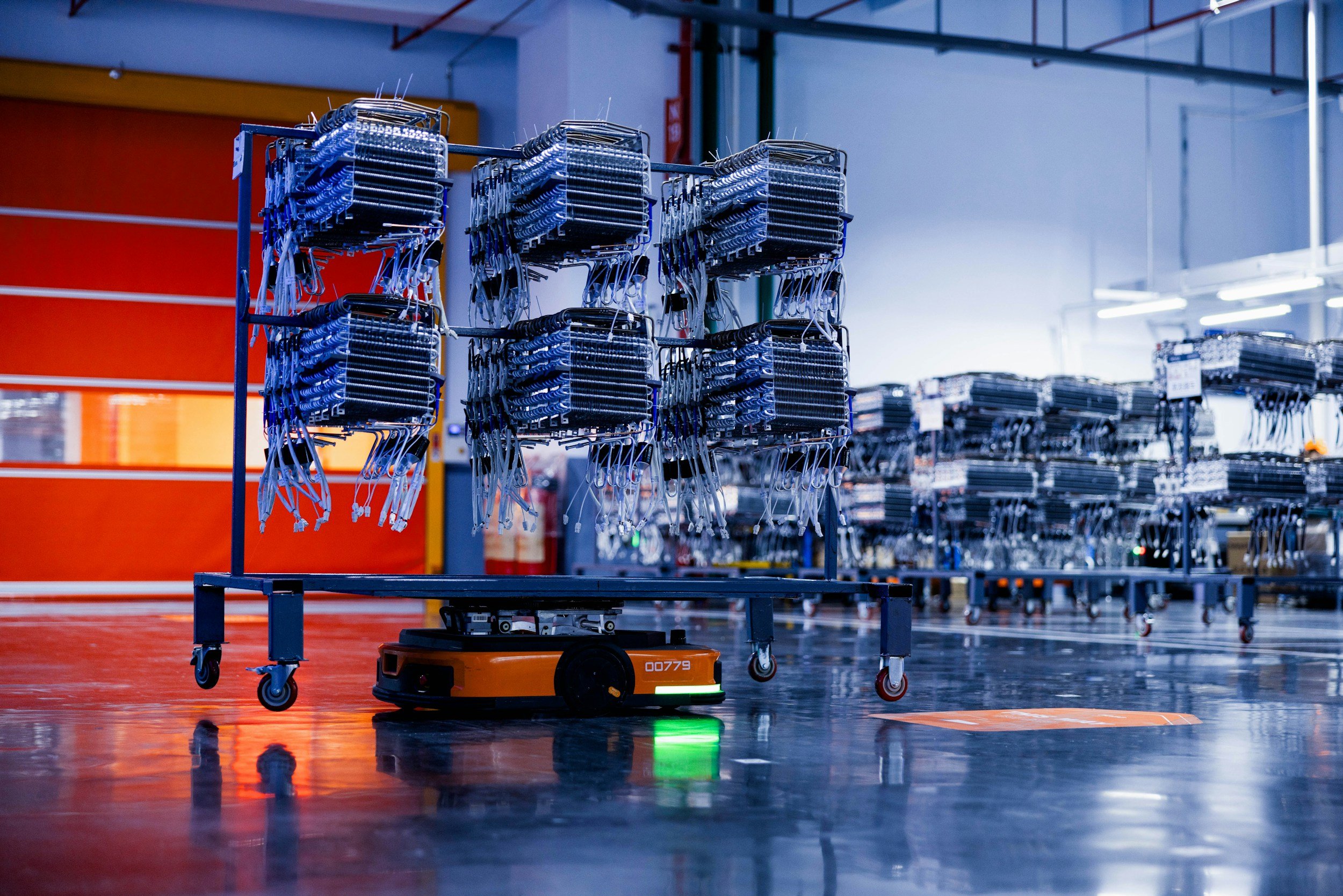
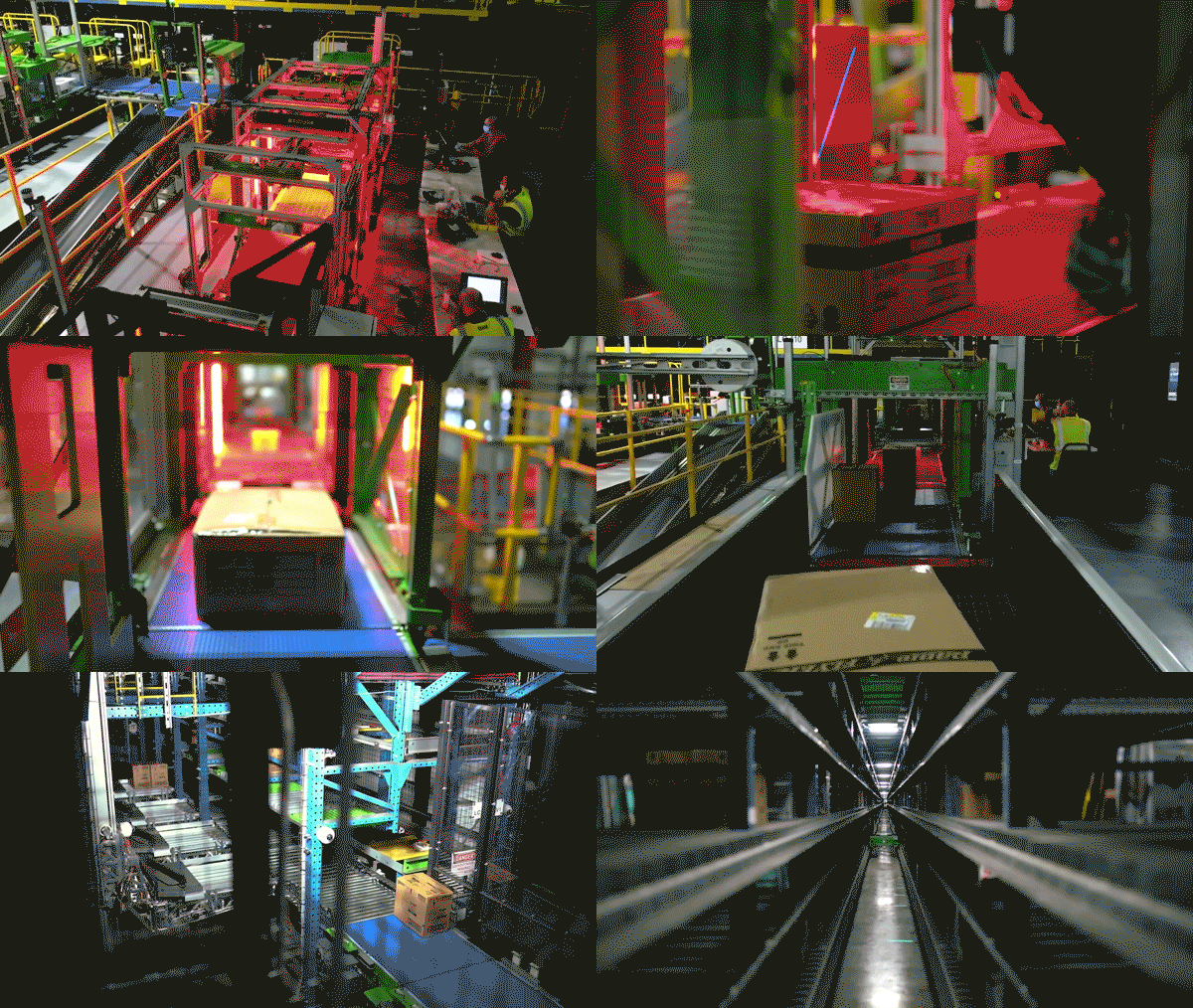
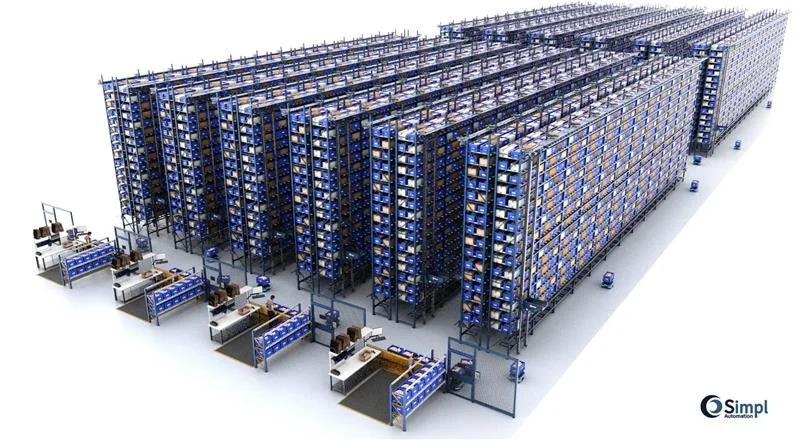
Large Amazon fulfillment centers typically rely heavily on automation, including mobile robotics, automated sortation systems, and advanced picking workflows designed to process extremely high order volumes.
Smaller rural nodes operate under very different constraints.
Automation systems generally require high order density and stable throughput to justify their capital investment. In facilities measuring only a few thousand square feet and serving relatively small regional markets, the economics of robotics become much less favorable.
As a result, these micro-fulfillment sites appear to be designed around human-centric operations, prioritizing flexibility and speed rather than maximum automation density.
In this context, labor remains the most adaptable tool for handling fluctuating demand in small regional markets.
Trust and Network Integration
For this model to work, Amazon must extend its operational standards beyond facilities it directly owns and operates.
This requires a high degree of trust in third-party partners to maintain the performance levels expected from the Amazon brand, including:
consistent picking accuracy
reliable order staging
adherence to strict delivery timelines
While Amazon has experimented in the past with programs such as Hub Delivery, where small businesses assist with final-mile delivery, the Canadian hubs appear to represent a deeper level of operational integration.
Here, the partner is not only delivering packages but also managing the physical micro-fulfillment operation itself, operating under Amazon’s technology platform and operational procedures.
A Distributed Fulfillment Architecture
If the Canadian pilot proves successful, it may point toward a broader evolution in fulfillment network design.
Rather than relying exclusively on large centralized fulfillment centers, future logistics networks may increasingly combine:
large automated regional hubs, and
smaller distributed micro-fulfillment nodes located closer to customers.
In effect, Amazon may be experimenting with a layered fulfillment architecture, where localized micro-nodes extend the reach of larger facilities into lower-density regions.
For supply-chain strategists, the implications are significant. The challenge of serving rural and secondary markets may not be solved by building more mega-warehouses, but by developing flexible edge nodes that complement the existing network.
Canada, with its unique geographic constraints, may simply be the ideal place to test that idea.







At Hannover Messe 2026, SAP and Vodafone showcased a pilot conducted at Vodafone’s warehouse in Duisburg,