
Amazon’s Next Robotics Challenge Is Called Tetromino
Amazon’s Project Tetromino Takes Aim at the Last Mile’s Hardest Automation Problem
Amazon has spent decades automating fulfillment. Its reported Project Tetromino may now target the stubbornly manual final stop before packages reach the customer
Amazon may be preparing to attack one of the last major manual bottlenecks in its logistics network: the delivery station.
Amazon is developing a new generation of highly automated delivery stations under the internal name Project Tetromino. The concept would use artificial intelligence, robotics and advanced package sequencing to automate more of the work performed after packaged orders arrive from fulfillment centers and before delivery vehicles leave for customers.
The reported ambition is significant. The planning document outlined a $103 million pilot in 2028, followed by five sites in 2029 and another 10 in 2030. The five 2029 facilities were reportedly expected to cost approximately $85 million each, bringing the proposed investment to more than $530 million by the end of 2029. Even more striking, the new design was projected to process packages at approximately 2.5 times the rate of Amazon’s existing delivery stations.
Amazon has cautioned that Tetromino remains an early-stage concept and said the specific investment figures and rollout schedule reported from the internal document are inaccurate and do not reflect its current plans. That qualification is important. Large automation programs frequently change as concepts move through simulation, prototyping, operational testing and capital approval.
However, whether or not Tetromino follows the exact timetable described in the document, the project reveals something important about Amazon’s automation strategy: the company is moving its attention downstream from fulfillment and toward the final, highly variable stage of the distribution network.
Why Delivery Stations Remain Difficult to Automate
Modern fulfillment centers have become highly automated because much of the work takes place within a relatively controlled environment. Inventory can be stored in standardized totes, transported by mobile robots and presented at fixed workstations. Package sortation can be supported by conveyors, scanners and destination-based routing logic.
Delivery stations present a different problem.
Packages arrive in many sizes, shapes and weights. They must be inducted, identified, sorted by delivery route, grouped into the correct dispatch wave, staged and ultimately loaded into vehicles. The system must also absorb late arrivals, damaged labels, oversized items, route changes, missing packages and constantly shifting departure priorities.
The objective is not simply to move a parcel from one conveyor to another. Every package must be available at the correct time, in the correct route sequence and at the correct vehicle - without allowing one exception to disrupt the rest of the dispatch operation.
That is why the Tetromino name is so appropriate. A tetromino is one of the geometric pieces used in Tetris. But Amazon’s challenge is more complex than fitting boxes together inside a delivery vehicle. It must continuously fit packages, routes, departure windows, storage capacity, equipment availability and labor into a plan that changes in real time.
This is as much a software-orchestration problem as it is a robotics problem.
Boxbot Could Provide the Missing Link
One of the most interesting elements of the reported concept is the potential involvement of Boxbot, a supply-chain robotics company developing automated storage, buffering, sortation and sequencing technology for parcels and other variable-sized items.
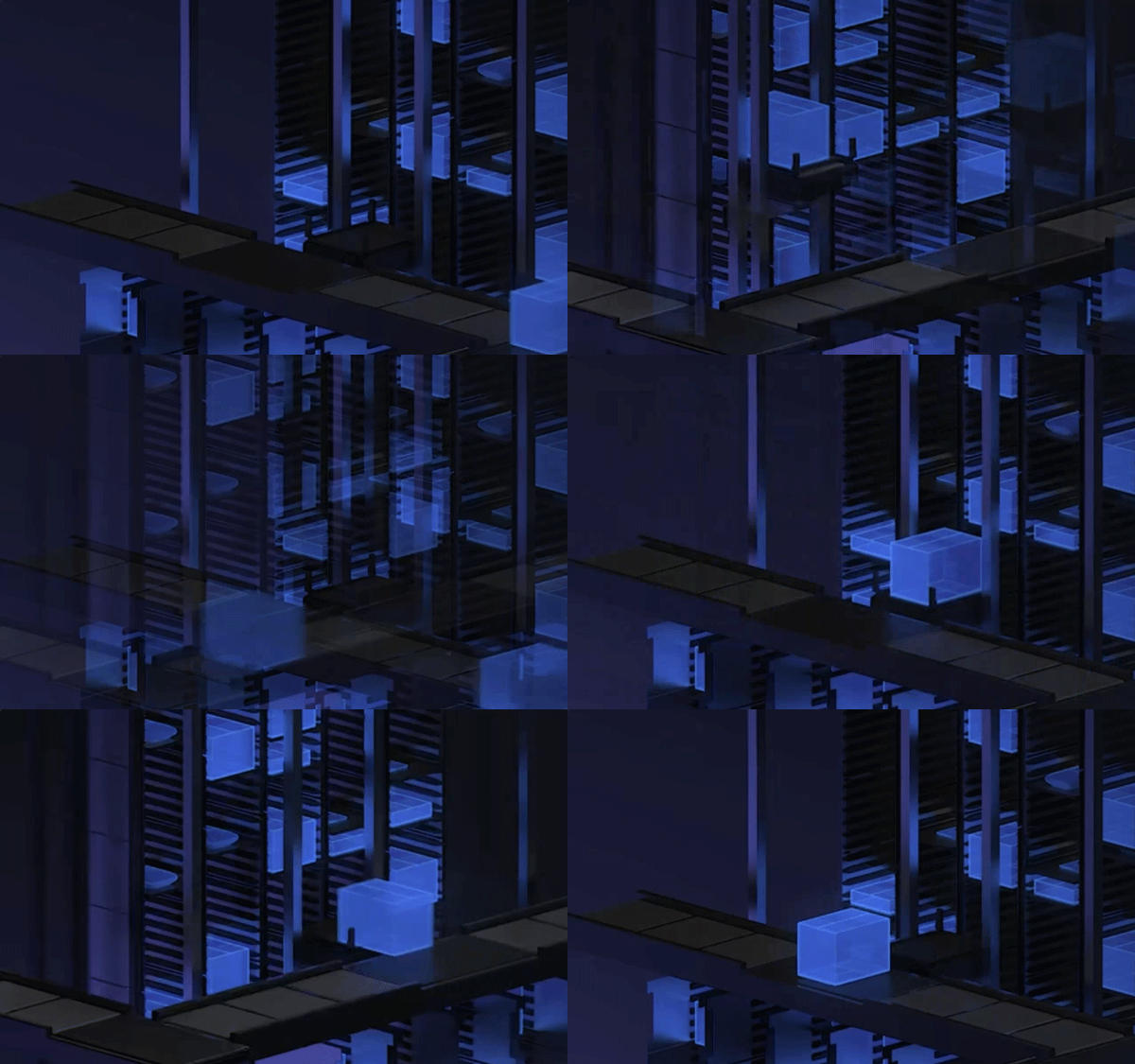
Rather than sending every parcel directly from induction to a large manual staging area, the Boxbot system places items onto trays and stores them within a modular, three-dimensional buffer. Its operating software can then retrieve, batch and sequence packages according to downstream requirements.
In a delivery station, this could fundamentally change the process. Packages would not simply be sorted to a route and left for employees to organize. They could be buffered and released in the sequence needed for a particular dispatch wave or delivery vehicle.
Boxbot says its system can support throughput ranging from 250 to more than 4,000 pieces per hour, depending on its configuration, and claims vehicle loading can be performed up to 10 times faster. Those are Boxbot’s own performance claims and would need to be validated under Amazon’s actual package mix, operating peaks and exception rates. Nevertheless, the architecture addresses a critical weakness in traditional parcel sortation: conveyors move packages efficiently, but they do not naturally provide intelligent, high-density buffering and precise on-demand sequencing.
The buffer may therefore be more strategically important than the robot. By decoupling inbound package flow from outbound vehicle loading, Amazon could smooth volume peaks, reduce large staging areas and release packages according to real-time route priorities.
Tetromino Appears to Be the Next Step, Not a Sudden Leap
Amazon has already been laying the foundation for greater delivery-station automation.
In 2025, the company announced that it expected to have invested more than €700 million in delivery-station technology across Europe between 2021 and the end of that year. Its Last Mile Innovation Center in Dortmund demonstrated several technologies intended to reduce repetitive manual handling:
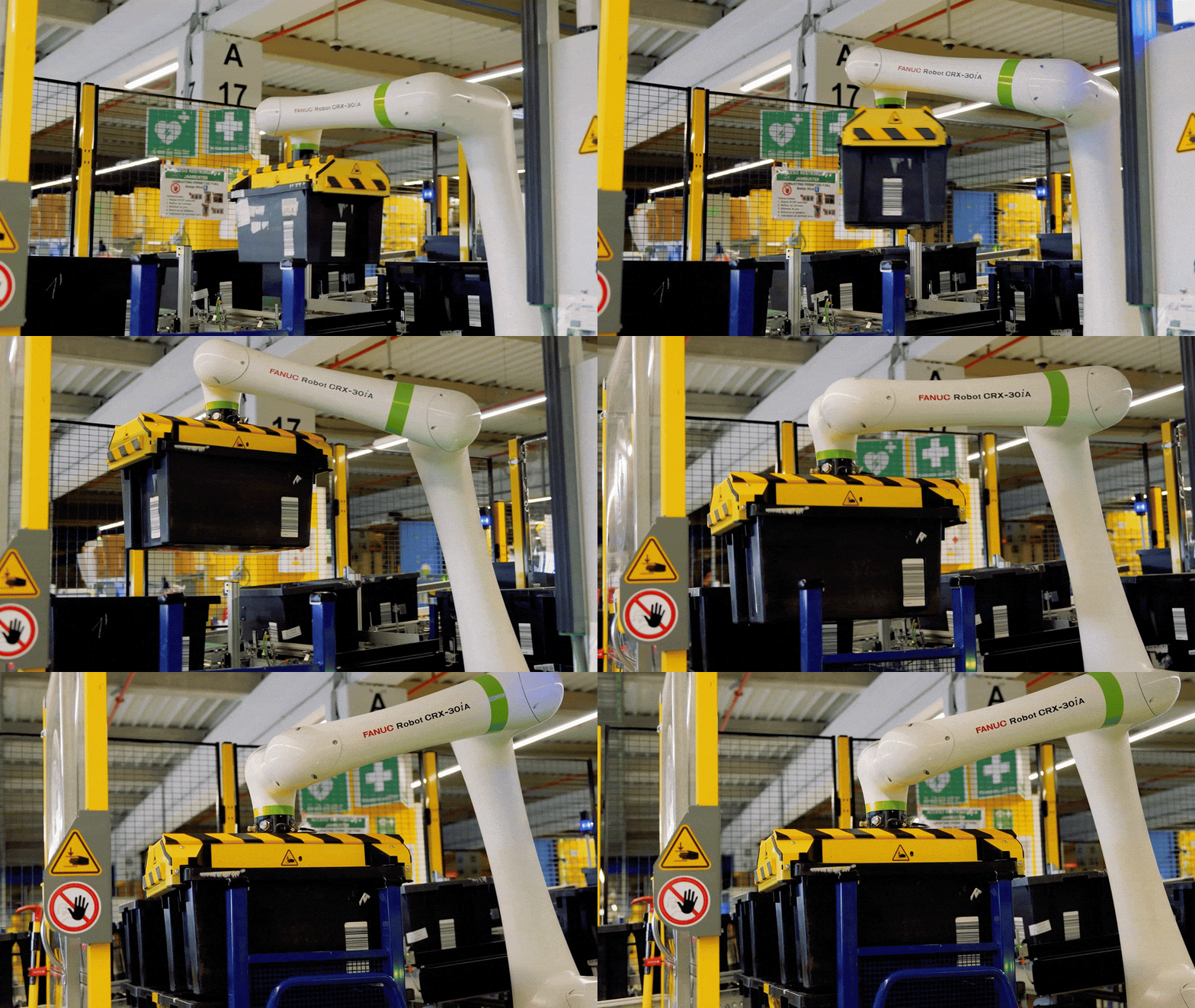
· Tipper automatically transfers packages from carts onto conveyors.
· Echelon manages package flow while six-sided scanners capture package information without manual scanning.
· Agility and Matrix determine package-sortation paths.
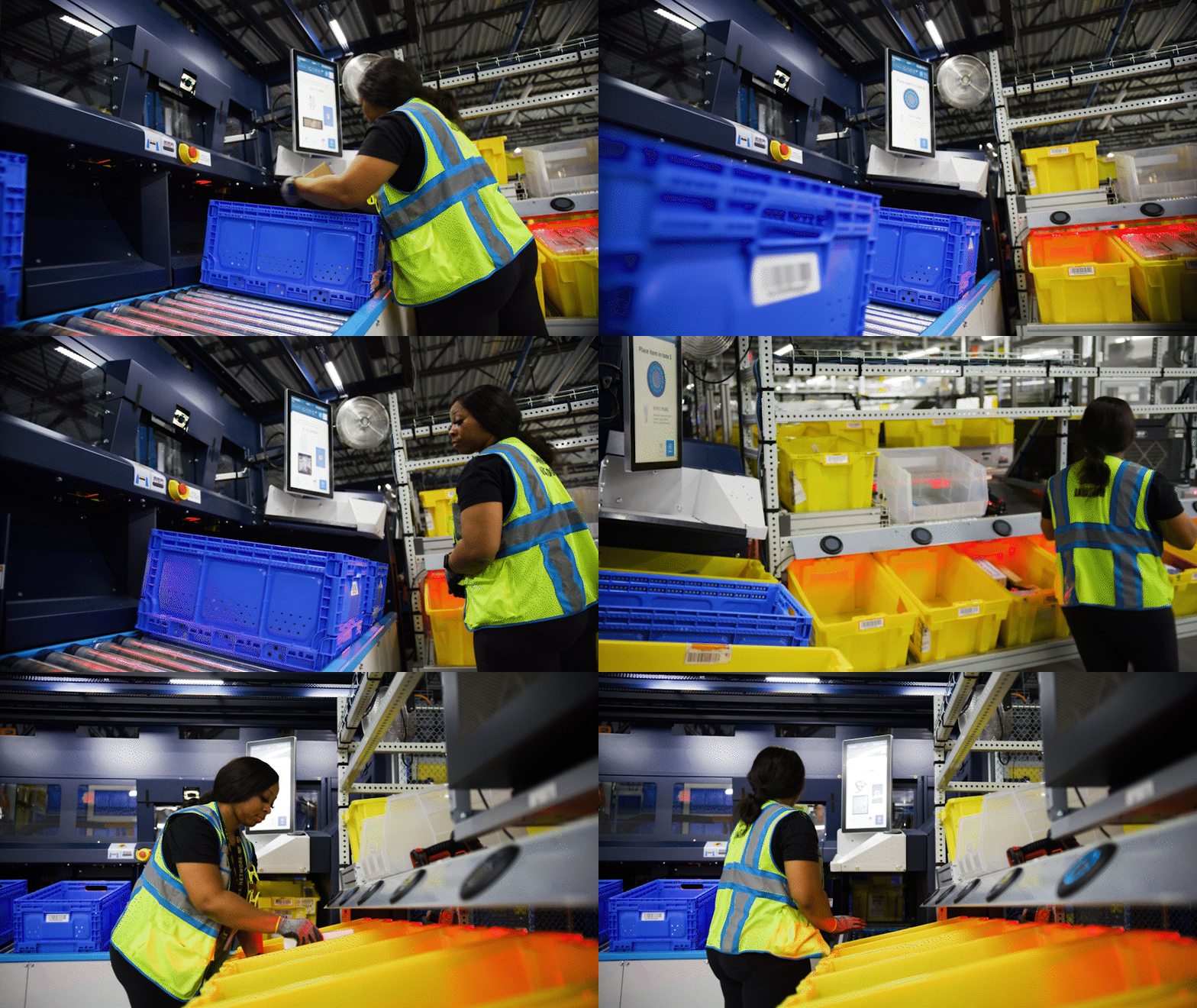
· ZancaSort brings packages and their assigned delivery bags directly to employees.
· Vision Assisted Sort Station uses computer vision and projection to guide manual sortation.
These systems automate or assist individual processes. Tetromino appears to represent a more ambitious objective: connecting those functions into a far more integrated delivery station with fewer manual handoffs.
That distinction matters. Installing several robots inside a building does not create a fully automated operation. The real challenge is coordinating every device and process as one system while maintaining throughput when equipment is unavailable, package data is incomplete or the operating plan changes.
The Software Will Determine Whether It Works
The success of Tetromino will depend less on whether a robot can move an individual package and more on whether the complete system can make thousands of correct decisions every minute.
The control architecture would need to coordinate:
· inbound package induction and identification;
· dynamic storage-location assignment;
· route, wave and vehicle priorities;
· package batching and retrieval sequence;
· oversized and non-conveyable items;
· late packages and other operational exceptions;
· robotic and conveyor availability;
· vehicle arrival and departure schedules; and
· real-time recovery when the original plan changes.
This is where AI could make a meaningful operational contribution. A rules-based system can manage predictable package flows. A more advanced orchestration platform may be able to continually reoptimize the operation as volumes, routes and equipment conditions change.
It must also remain explainable and controllable. Delivery stations operate against hard dispatch deadlines. If an optimization engine makes a poor decision, operators need to understand what happened, override the plan where necessary and recover quickly. High theoretical throughput will mean little if the system cannot manage real-world exceptions or operate reliably through peak periods.
Parcel Automation Is Becoming the Industry’s Next Battleground
Amazon is not alone in pursuing this opportunity. In July 2026, FedEx and Dexterity announced an expanded deployment of AI-powered robotic trailer-loading systems at FedEx’s Hagerstown, Maryland hub. Dexterity’s technology uses vision, depth and touch to make real-time decisions about how packages should be placed for space utilization, stability and speed.
The difference in approach is revealing. Dexterity is applying physical AI directly to the difficult task of building a stable load inside a trailer. Boxbot focuses on buffering, sorting and sequencing variable-sized parcels before loading. Amazon’s potential advantage could come from combining multiple technologies within an end-to-end operating model rather than treating each difficult task as an isolated automation cell.
The industry is moving beyond conventional conveyor sortation toward systems that can perceive, decide, sequence and adapt. The competitive question will not be who can demonstrate the most impressive robot. It will be who can integrate these technologies into a reliable operation that improves the economics of the entire delivery network.
A New Operating Model for the Final Mile
Project Tetromino should not yet be viewed as a confirmed 16-site rollout. Amazon has explicitly described it as one of many early-stage concepts under evaluation, and the reported capital plan may change substantially - or never proceed in its current form.
But the underlying direction is difficult to ignore.
Amazon has already transformed goods-to-person fulfillment through robotics. It is now exploring how the same combination of automation, AI and tightly integrated software controls could transform the delivery station from a largely manual sort-and-stage operation into an intelligent, dynamically sequenced package buffer.
If Tetromino can truly deliver 2.5 times the throughput of today’s delivery-station design, its impact will extend beyond labor reduction. It could reduce staging space, compress dispatch windows, improve vehicle turnaround, support later order cutoffs and allow Amazon to move more volume through each last-mile facility.
The most important lesson is that the next frontier of warehouse automation will not be won by robotics alone. It will be won by the companies that can orchestrate robots, packages, people, vehicles and constantly changing priorities as one integrated system.
That is the real Tetris problem Amazon is trying to solve.








Amazon just announced the expansion of one-hour and three-hour delivery across the U.S.