
Amazon Unveils Next-Generation of Robots
Amazon Unveils Next-Gen Proteus in €10 Billion European Automation Push
At its Delivering the Future event in London, Amazon announced a €10 billion investment to expand and modernize its European fulfillment network.
The announcement includes plans to grow Amazon’s European fulfillment center workforce by 25,000 people over the coming years. It also highlights several robotics systems that Amazon is developing or expanding across its operations.
The main technologies mentioned are next-generation Proteus, STARK, and Vulcan.
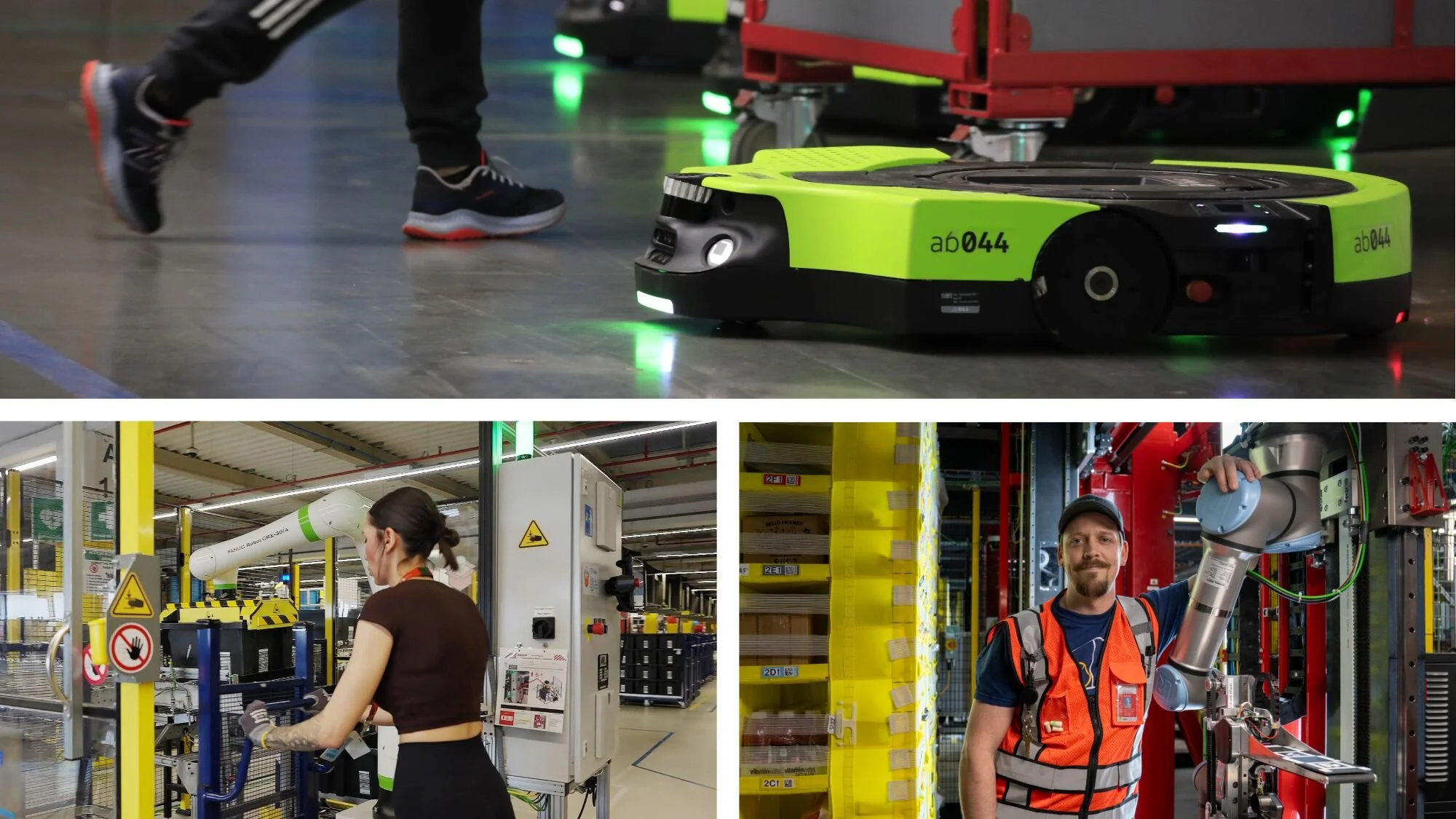
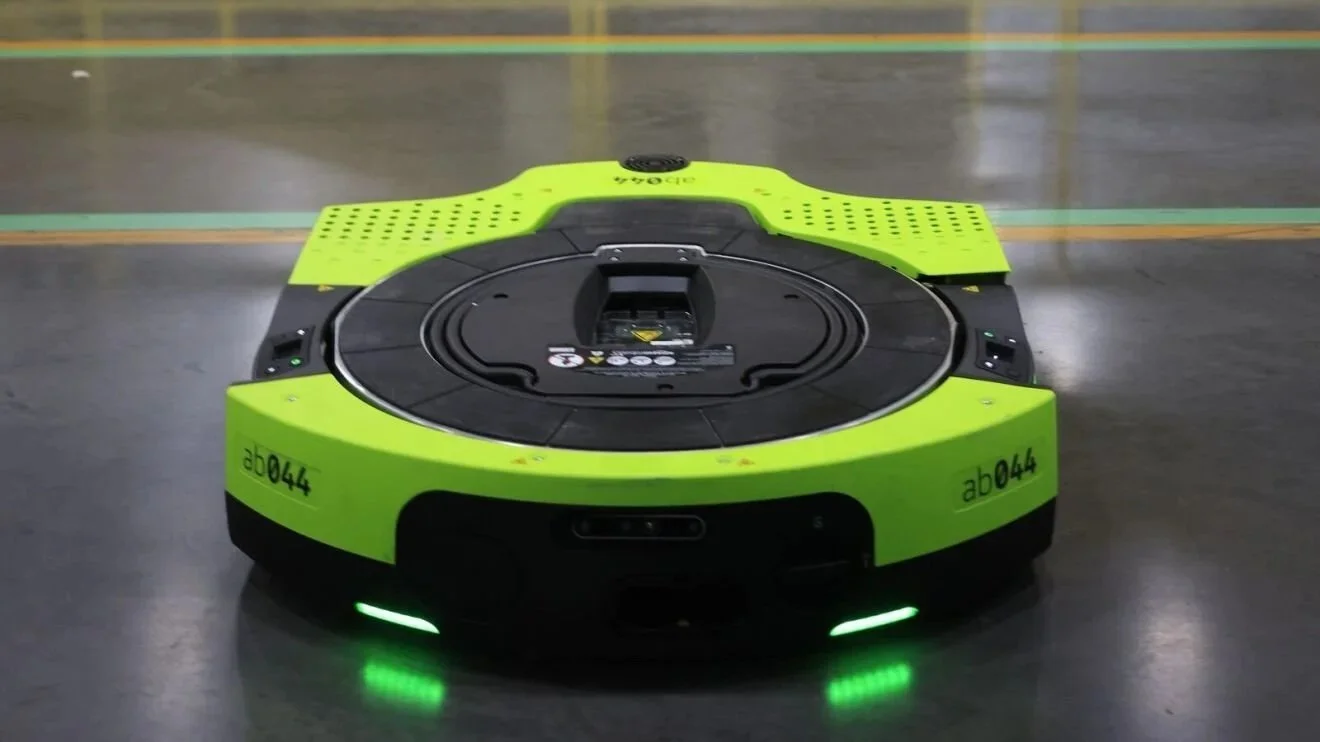
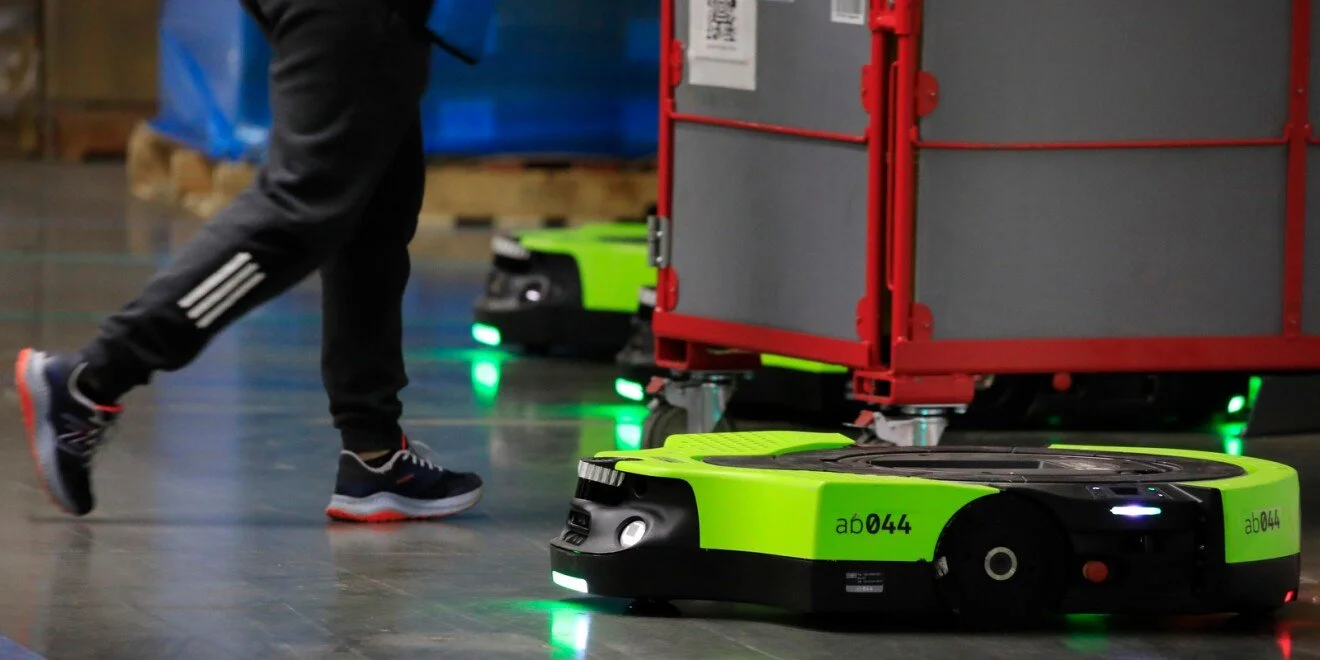
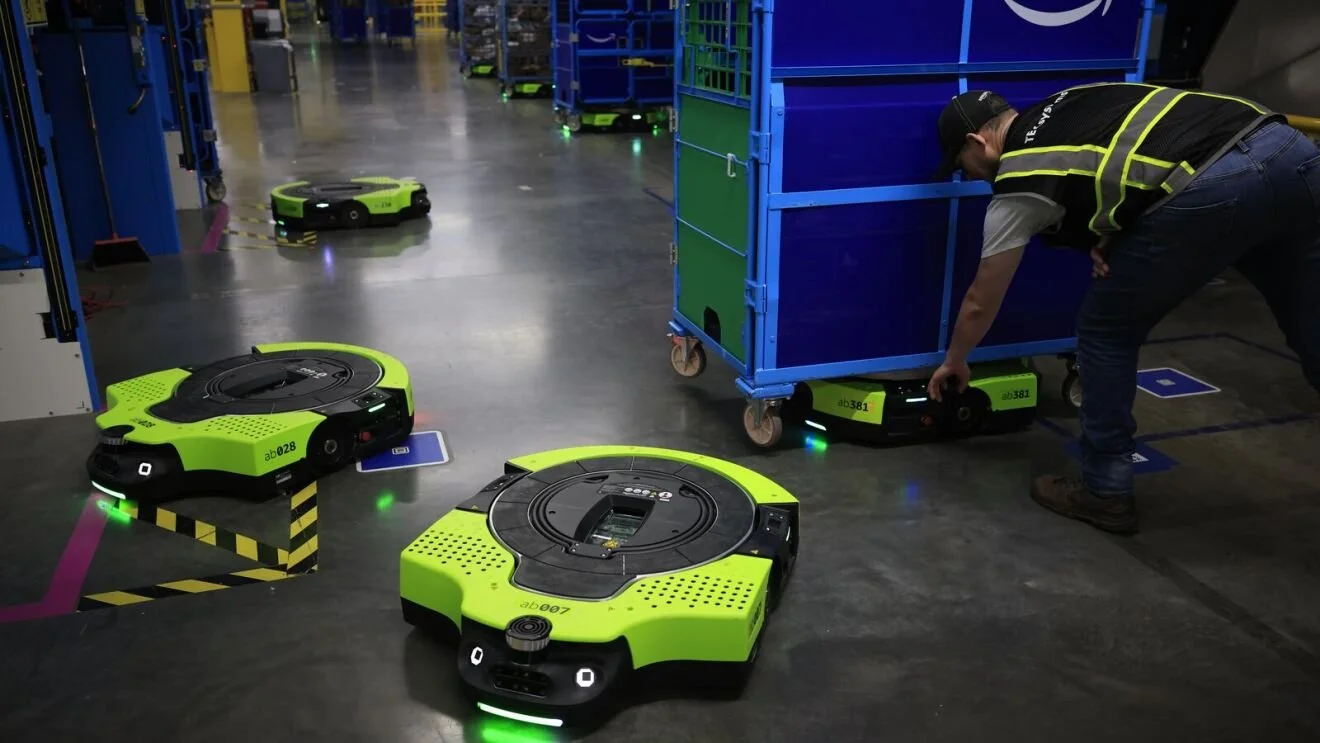
Next-Gen Proteus: Moving Beyond the Dock Area
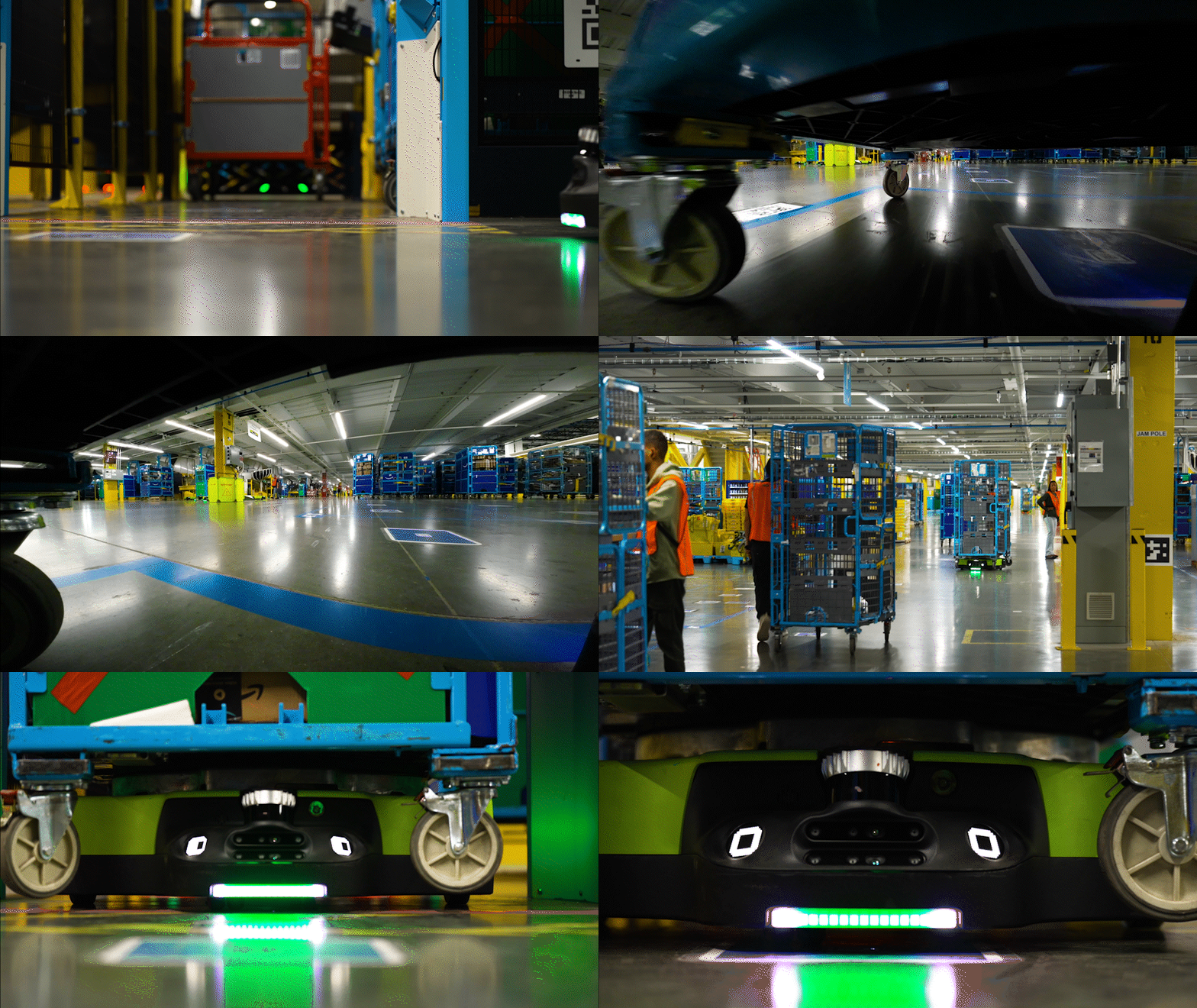
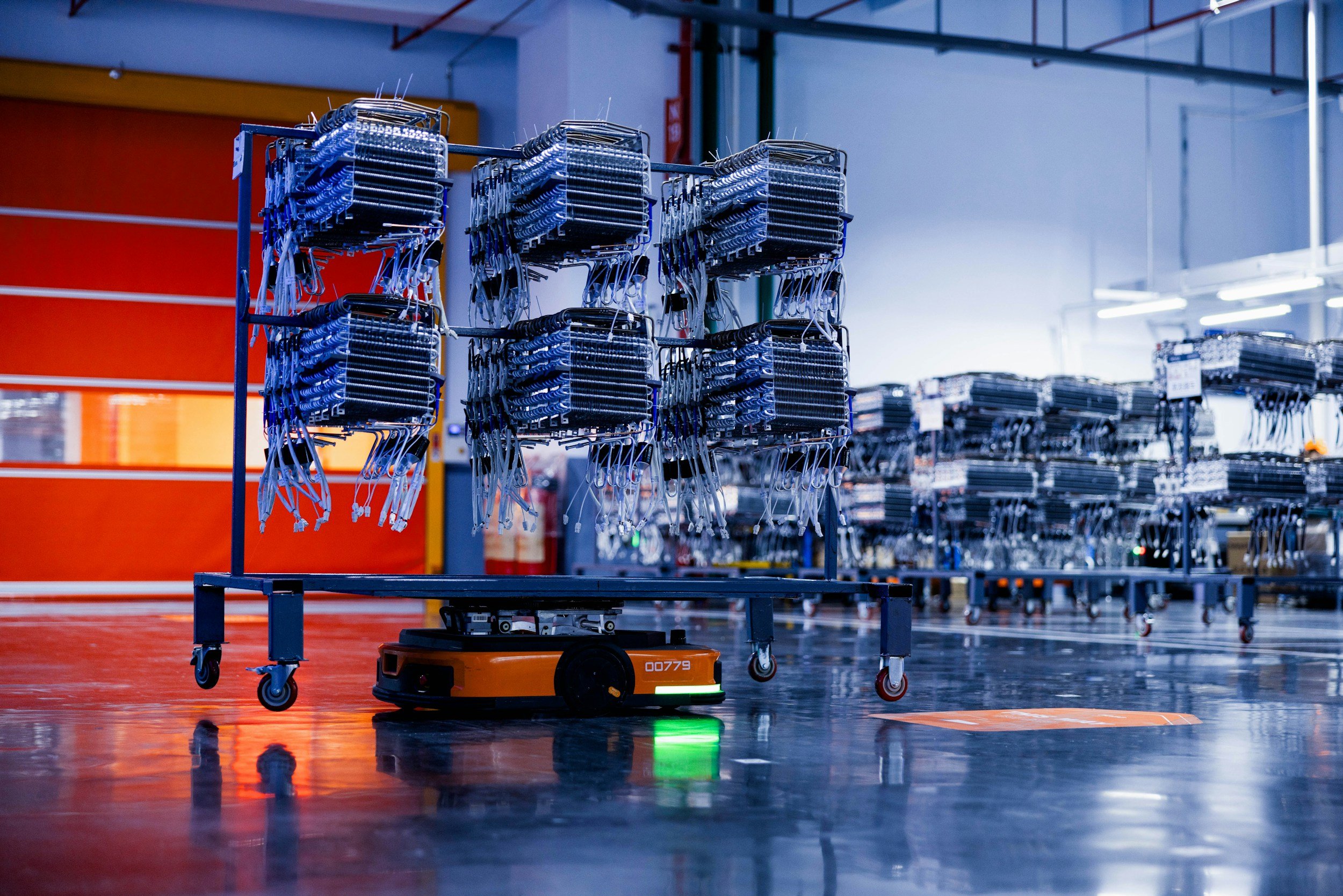
Amazon’s original Proteus autonomous mobile robot is currently used in dock areas across 25 fulfillment centers in the United States. Its role is to move heavy transport carts that can weigh close to 400 kilograms.
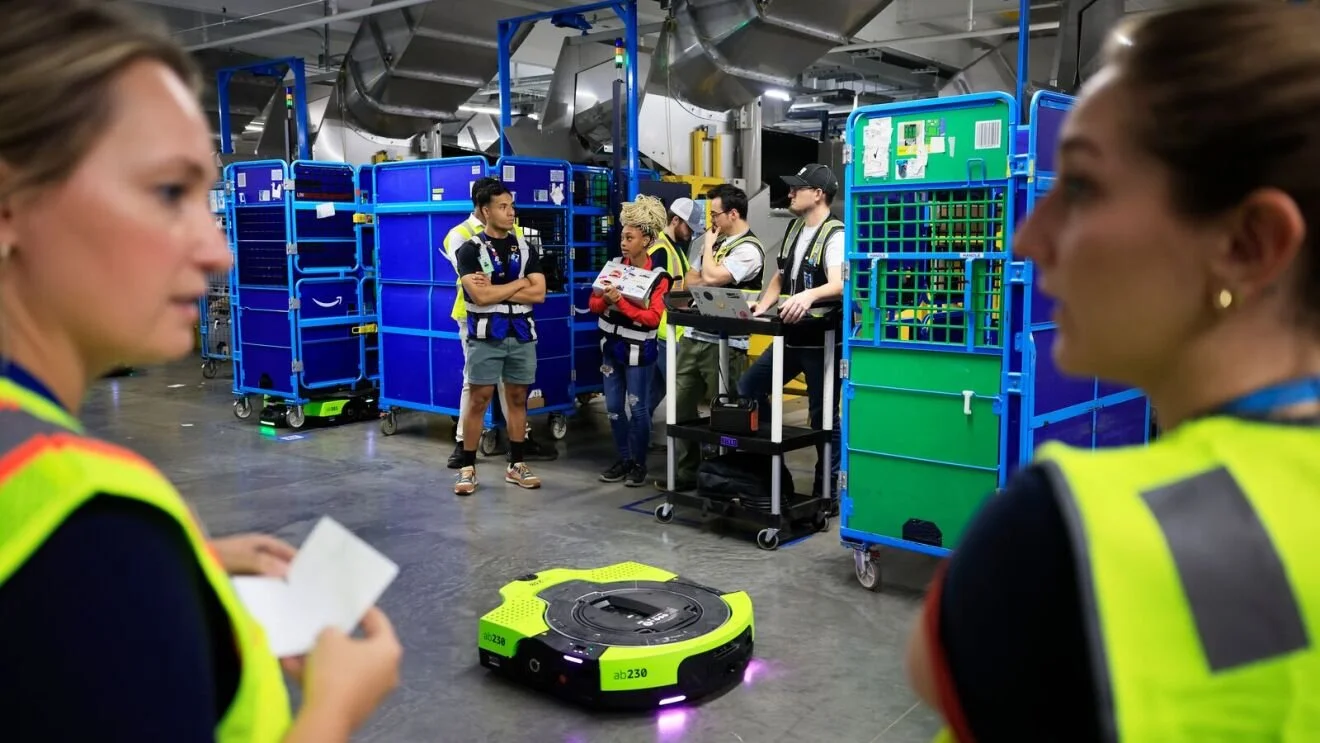
The next-generation Proteus is designed to take on a broader range of material movement tasks.
According to Amazon, the new system can support work anywhere items need to be moved. This includes transporting containers as they arrive at a site, transferring them between workstations, and assisting employees across both fulfillment centers and delivery sites.
One of the main changes is how employees will interact with the robot.
Amazon says the new Proteus will use advances in AI to understand natural language commands. Instead of using technical commands or a programming interface, employees will be able to assign tasks using plain, conversational language.
As Scott Dresser, vice president of Amazon Robotics, explained:
“You tell it what needs to be done. It figures out the priority, the route, the timing.”
Amazon says the system is currently being piloted in its labs, with deployment in Europe planned for the first half of 2027.
STARK: Conveyor-to-Cart Tote Handling
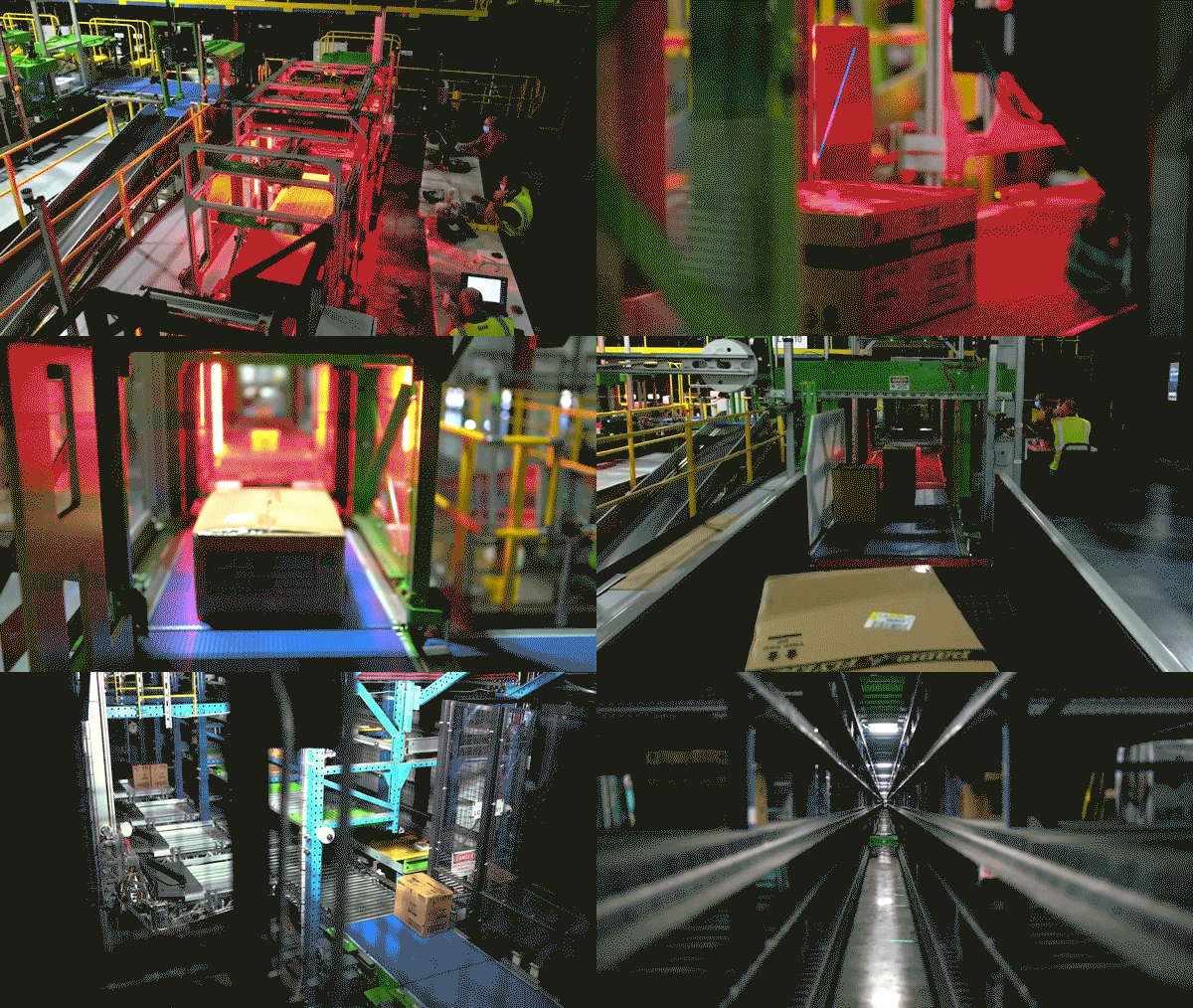
Amazon also highlighted STARK, a collaborative robotic tote-handling system.
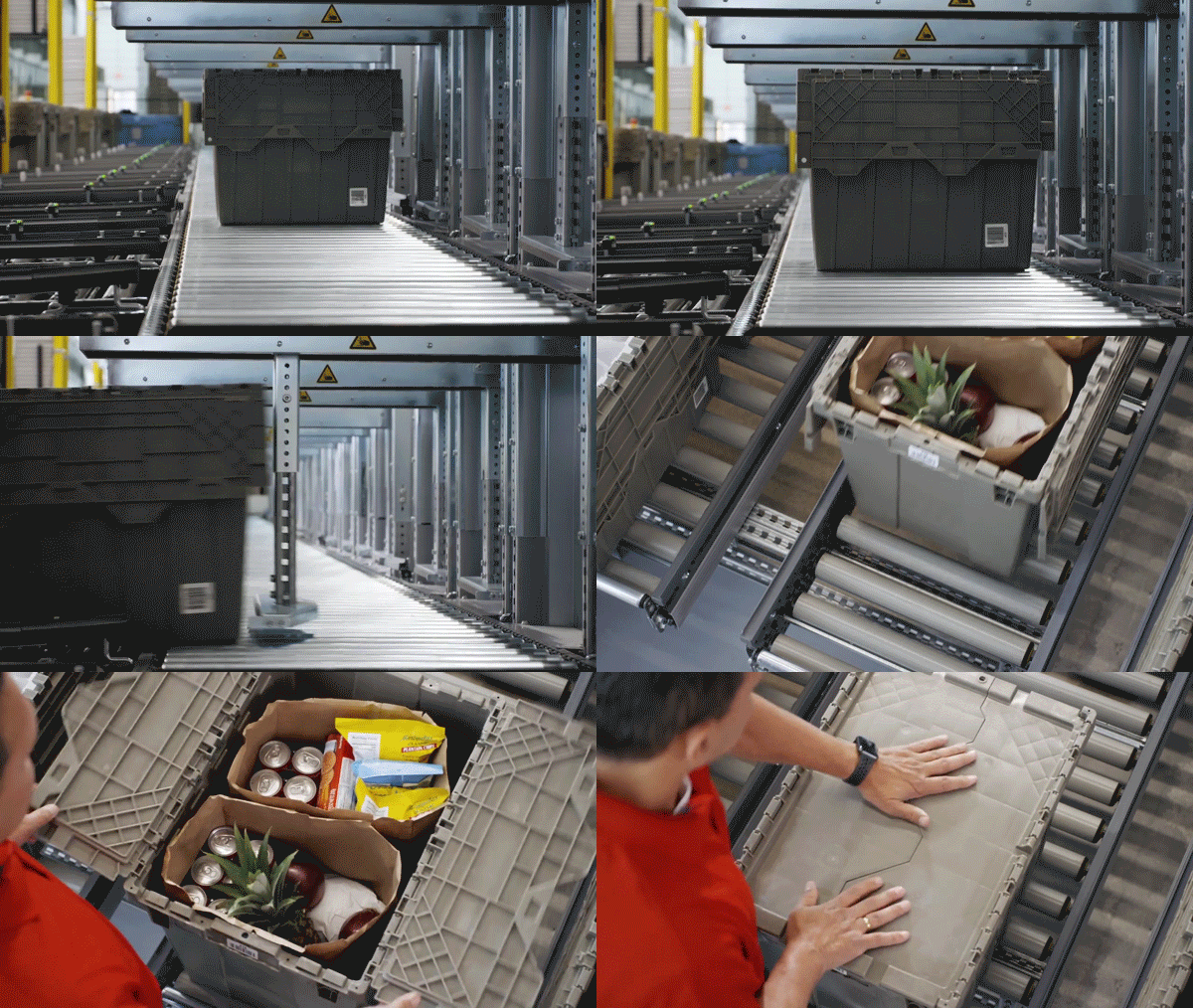
STARK was originally developed from an operations employee’s idea to improve a process and support site safety. The system works alongside employees by picking full totes from conveyors and placing them onto carts.
This targets a very specific but physically repetitive task in the fulfillment process: moving full totes from conveyor lines to transport carts.
Amazon says STARK was first piloted in Barcelona, Spain, and is planned to expand to 15 sites across Europe by 2027.
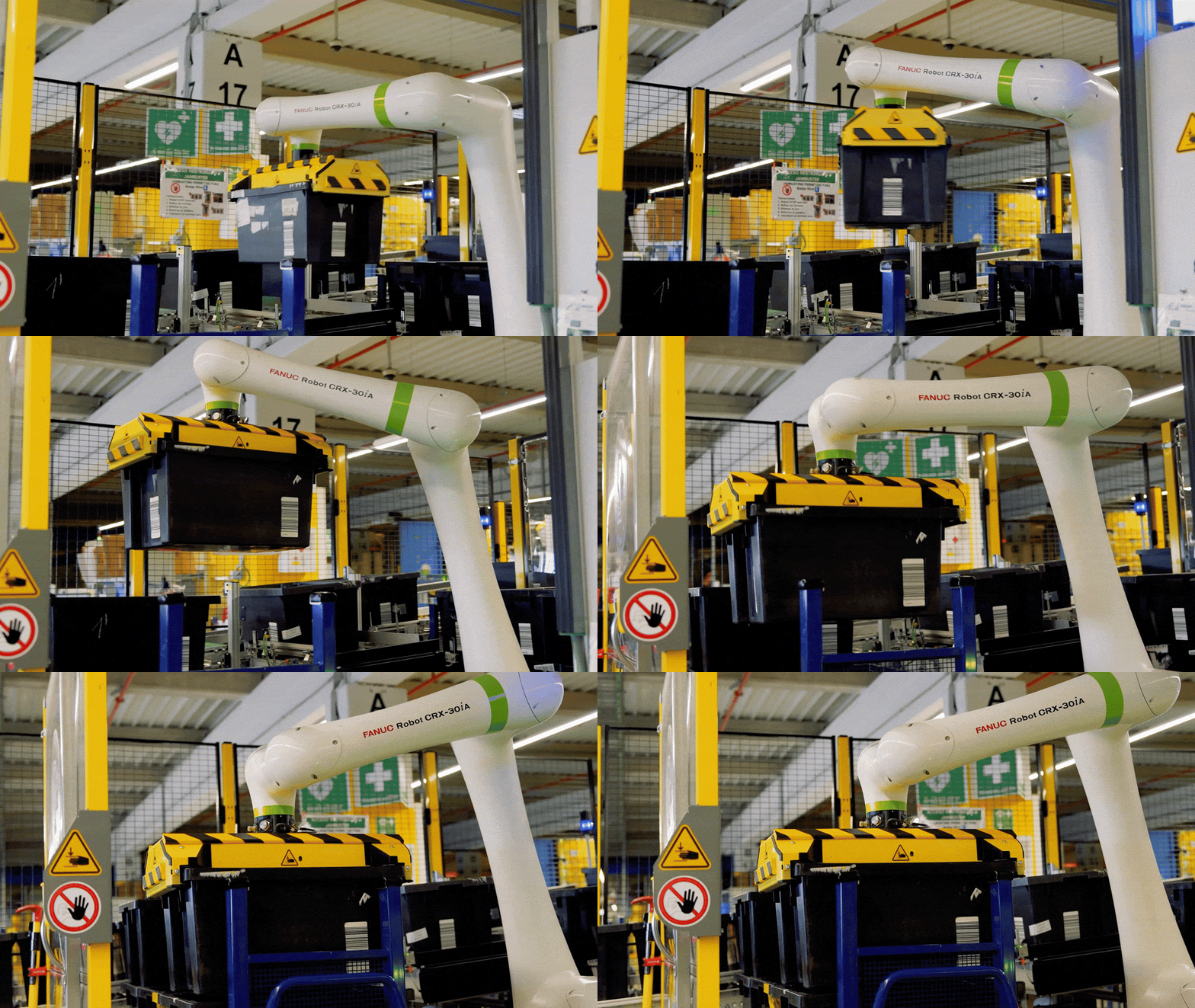
STARK is Amazon's collaborative robotic tote-handling system, designed to handle individual objects with precision.
Vulcan: Robotic Picking with a Sense of Touch
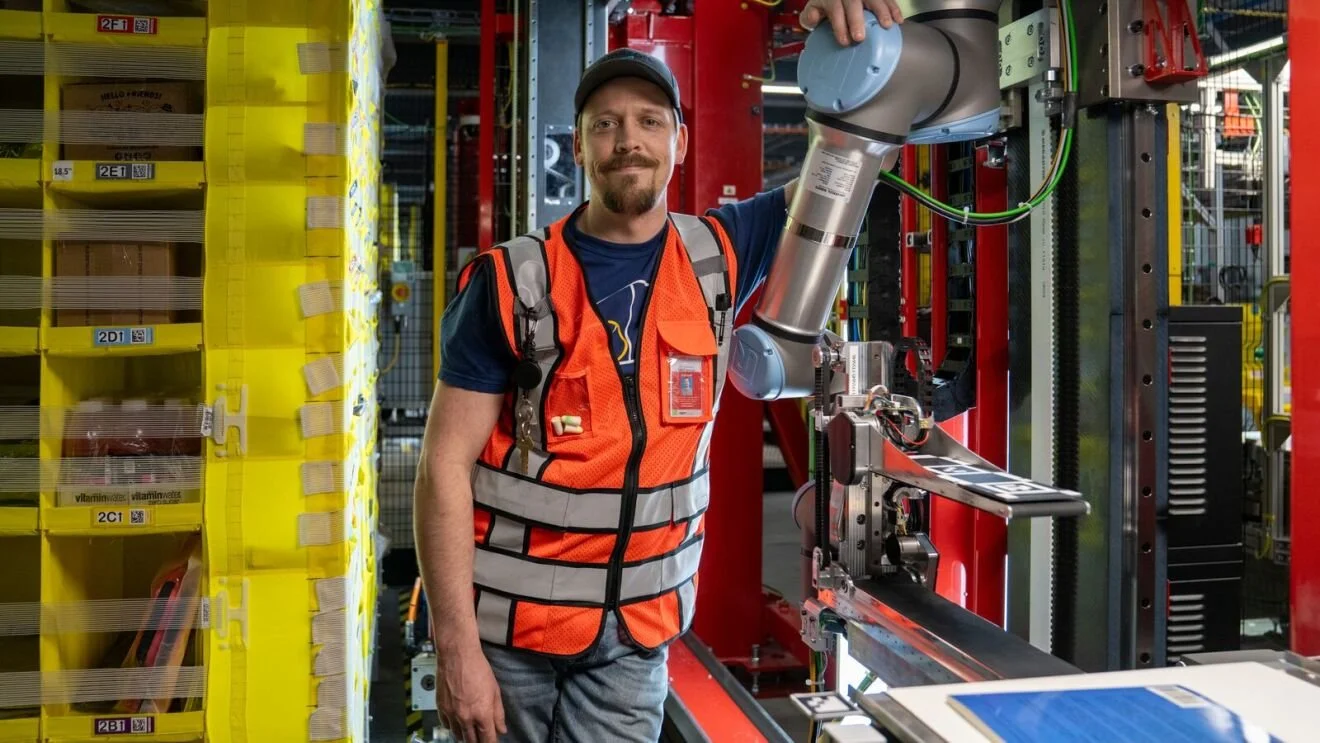
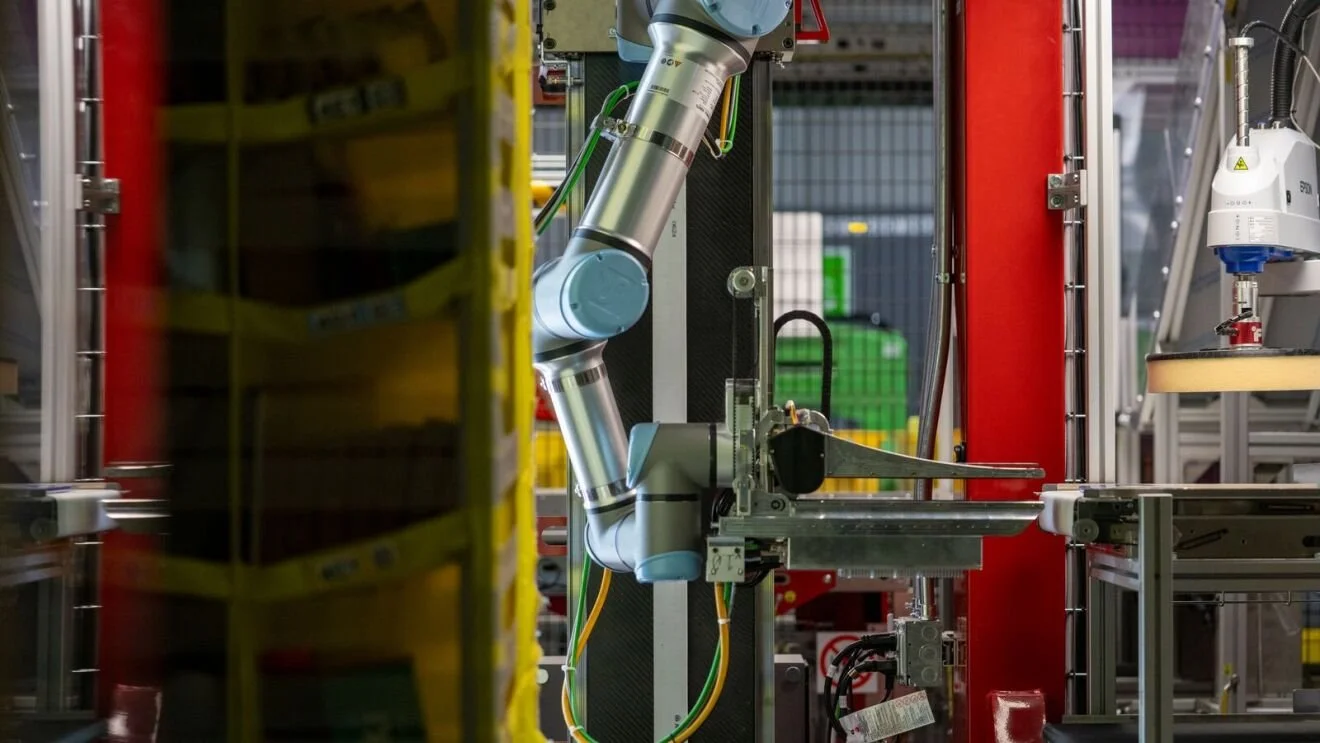
The third system Amazon highlighted is Vulcan, which it describes as its first robotic system with a sense of touch.
Vulcan combines vision and tactile sensing, allowing the robot to see and feel objects at the same time. This helps it operate in densely packed environments and handle more complex picking and stowing tasks.
Amazon says Vulcan was originally developed for a facility in Spokane, Washington, and has now expanded to its Hamburg facility in Germany.
The Operational Takeaway
The announcement shows Amazon continuing to invest in several different forms of robotics across its fulfillment network.
Proteus is focused on mobile material movement.
STARK is focused on repetitive tote handling.
Vulcan is focused on more complex picking and stowing tasks.
The most important update may be the next-generation Proteus interface. If the system works as described, employees will be able to assign robot tasks using normal language instead of relying on technical commands or fixed control screens.
That is an important direction for warehouse automation: robots that are not only more capable, but also easier for frontline employees to use in daily operations.





At Hannover Messe 2026, SAP and Vodafone showcased a pilot conducted at Vodafone’s warehouse in Duisburg,