
AutoStore’s Numbers Are Hard to Ignore
AutoStore’s 2025: Demand Is Back — and It’s Broadening
AutoStore’s 2025 update tells a clear story for anyone in the automation industry: projects that slowed early in the year started moving again — and by Q4, order intake accelerated meaningfully.
The most important number in the entire report isn’t revenue. It’s order intake hitting $194.2 million in Q4, up 35% year-over-year. That tells you customers resumed committing capital.
Backlog also expanded to over $540 million during the year. That’s pipeline visibility — real systems that still need to be delivered.
Automation didn’t stall. It paused. Then it restarted.
Who Is Buying?
From the vertical mix, we can see:
Industrial operators remain the largest segment.
Apparel and sports continue to invest.
Logistics providers (3PLs) are active.
Grocery and healthcare are increasing in relevance.
Cube systems used to show up mostly in apparel and clean e-commerce environments.
That’s changing.
The 2025 mix shows more activity in grocery, cold chain, and other operationally tougher settings. Those environments don’t tolerate theory — they expose throughput limits, temperature constraints, and workflow friction quickly.
If cube systems are gaining ground there, that’s a different conversation than fashion e-commerce.
The introduction of multi-temperature capability and mixed case handling isn’t random — it aligns with who is buying.
Where Is Growth Still Available?
Geographically, Europe remains dominant (around two-thirds of revenue in Q3), but North America and Asia are still underpenetrated relative to total warehouse footprint.
AS/RS penetration is still quoted around ~20%. Whether that exact figure is precise or not, the bigger takeaway is simple:
Most warehouses globally are still not automated.
That’s the runway.
Why the Product Expansion Matters
The October release wasn’t cosmetic.
AutoCase addresses mixed case + piece environments.
FlexBins introduce bin flexibility inside the grid.
Multi-Temperature opens freezer and cold-chain applications.
CarouselAI pushes pick performance.
These updates signal that AutoStore is positioning for:
Grocery chains
Cold storage operators
Healthcare distribution
Larger multi-flow facilities
In other words, the next wave of buyers isn’t just fashion e-commerce.
Who Might Buy in the Next Cycle?
Based on 2025 signals, the likely next buyers are:
Regional grocery chains modernizing DCs
Healthcare and pharma distributors facing labor constraints
Industrial spare-parts networks with SKU proliferation
3PLs trying to standardize high-density modular systems across clients
Multi-site retailers looking for repeatable automation templates
The backlog acceleration suggests many of these conversations are already happening.
The Ocado Variable
Now the competitive question.
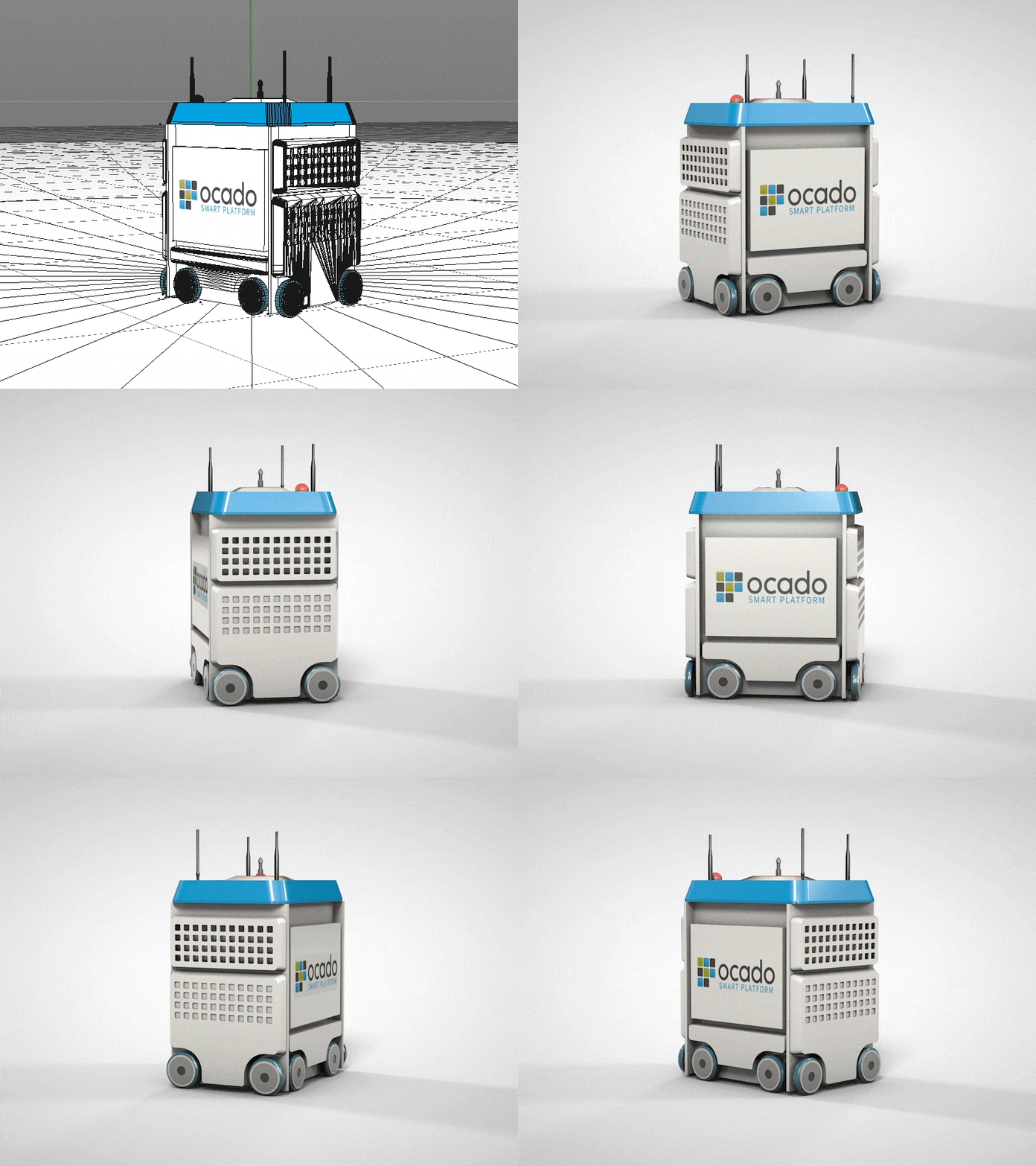
Ocado appears ready to re-enter the automation discussion with new energy and a technology announcement at Modex.
If that technology directly overlaps with high-density grid systems, we may see increased competitive pressure in a category that has largely been defined by AutoStore.
That doesn’t weaken the fact that demand is growing.
But it does mean future buyers will compare architectures more rigorously.
And comparison usually accelerates buying decisions — not slows them — because it clarifies trade-offs.
Cube-Based Systems: Where They Stand
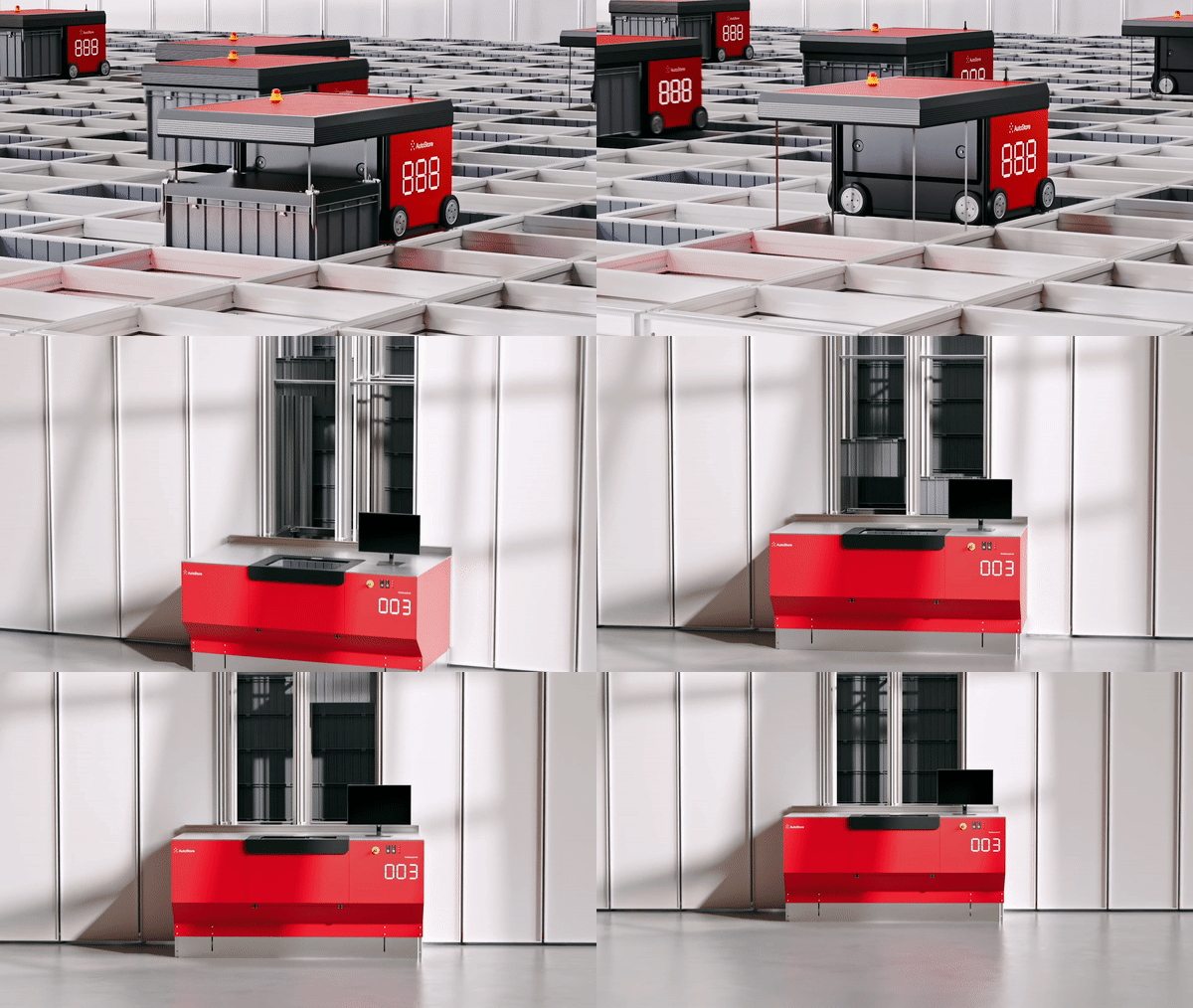
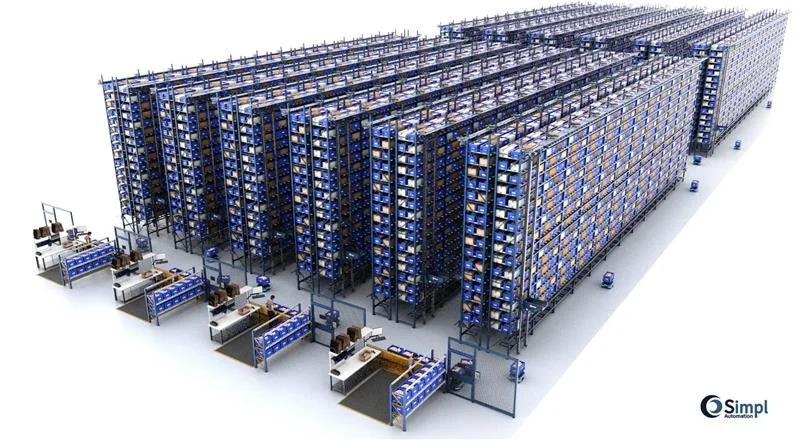
Cube robotics remain one of the most space-efficient and modular automation formats in the market. Thousands of installations validate that.
The next growth phase will depend on how well cube systems perform in:
Higher-velocity grocery flows
Mixed case complexity
Temperature-controlled environments
Tight labor markets
2025 shows that the buying cycle resumed.
2026 will show how the category evolves under broader competitive pressure.
For automation professionals, the key takeaway is simple:
Projects are moving again — and the buyer mix is expanding.




At Hannover Messe 2026, SAP and Vodafone showcased a pilot conducted at Vodafone’s warehouse in Duisburg,