
The AutoStore Density Assumption — Now Tested
The AutoStore Density Claim Meets Measured Reality
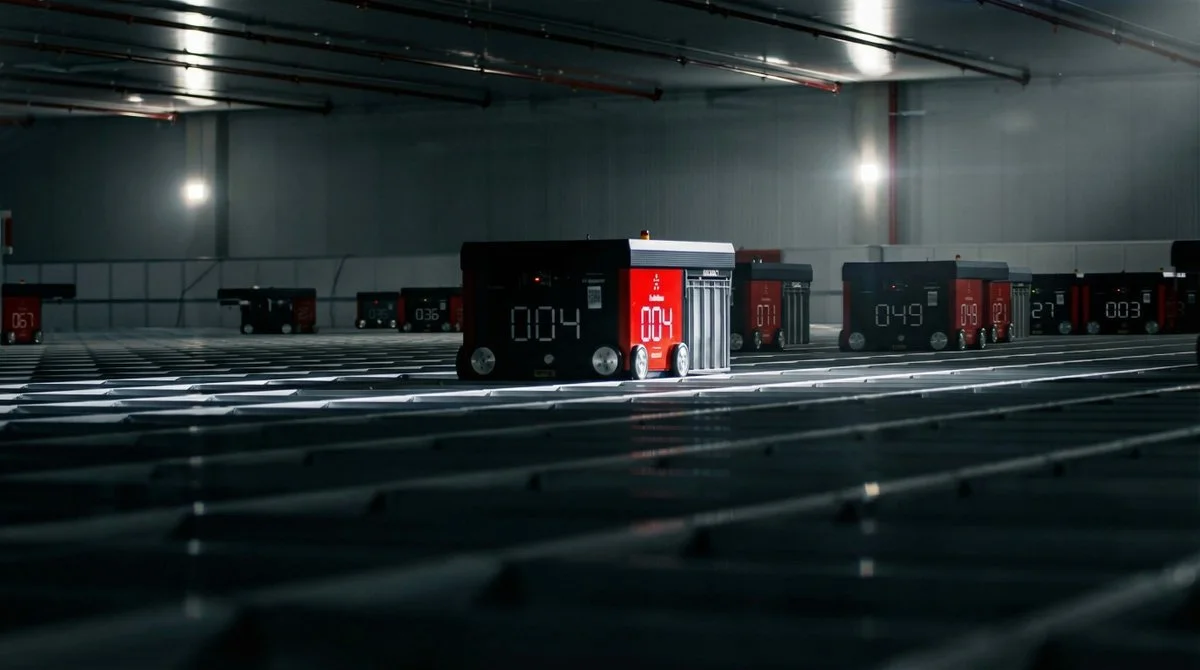
For years, cube-based ASRS systems — most notably AutoStore — have been positioned as the most space-dense storage solutions available. The claim has been repeated so consistently that it is now widely accepted as fait accompli, even by competitors across the industry.
Until recently, however, no one had the empirical data required to meaningfully challenge that assumption.
That has now changed.
A third-party robotics company conducted a comprehensive, empirical study on a live AutoStore installation, using direct visual inspection to measure how storage volume was actually being utilized. This was not a simulation. Not a benchmark. Not inferred WMS or configuration data.
It was direct observation of physical reality.
Approximately 66,000 bin images were analyzed from a live production system. The results are statistically robust, internally consistent, and — within the automation industry — extraordinarily rare in their level of accuracy.
The findings are unequivocal:
85.8% of total bin volume was empty
More than 93% of bins were filled less than 25%
Only a negligible fraction of bins approached high utilization
These numbers are not debatable. They are not opinions.
They are measurements of what is physically inside the bins.
At this point, the discussion about storage density can no longer remain theoretical.
Why this experiment cannot be dismissed
In warehouse automation, most performance claims rest on assumptions: simulations, design models, or idealized operating conditions. This experiment avoids every common mechanism vendors typically rely on to deflect scrutiny.
It cannot be disclaimed by AutoStore, nor by its global dealer network, for straightforward reasons:
The data comes from a live production system
It is based on direct visual evidence, not inferred metrics
The sample size is large enough to eliminate statistical anomalies
The methodology measures physical reality, not configuration intent
The results are internally consistent across tens of thousands of bins
There is no credible counterargument to what the bins actually contain.
Disagreement remains possible — but only at the level of interpretation, not fact.
What this data forces us to confront
The immediate conclusion is not that AutoStore is “inefficient.”
That would be both inaccurate and intellectually lazy.
The real conclusion is more uncomfortable:
Theoretical density and effective density are no longer the same thing.
Cube systems may still be structurally dense by design. But under modern operating conditions, their realized density can diverge dramatically from their design promise — and the system itself provides no native mechanism to see or continuously measure that divergence.
A system designed for the 1990s, operating in the 2020s
Cube-based ASRS architectures were conceived in an era characterized by:
Stable SKU catalogs
Predictable demand patterns
Batch-oriented fulfillment
Store replenishment and wholesale flows
Delivery SLAs measured in days
That design context matters.
Today’s commerce environment looks very different:
Exploding SKU counts and long-tail assortments
Social- and influencer-driven demand spikes
Continuous order release
Same-day and next-day delivery expectations
Constant re-prioritization and re-slotting pressure
The system did not become worse. The operating assumptions changed.
Why AutoStore operators may intentionally sacrifice density
The bin-level underutilization revealed by the experiment is not accidental.
Operators are not failing to use the system correctly. They are actively compensating for architectural constraints.
In practice, this often includes:
Leaving bins intentionally underfilled to avoid rehandling penalties
Spreading SKUs across storage bins to reduce digging, waiting time, and workstation dwell — in order to complete orders within SLA
Duplicating inventory to protect service levels
Introducing additional slack to absorb volatility
Explicitly trading space efficiency for predictability
What appears as wasted air is often deliberate operational insurance. The system rewards stability — so operators create it, even when doing so quietly erodes effective density.
The unavoidable implication for “best-in-class density”
Once bin-level utilization is measured empirically, the density claim can no longer be absolute.
The correct statement is no longer:
“AutoStore is the most space-dense ASRS.”
It becomes:
“AutoStore can be highly space-dense under specific operating assumptions.”
That distinction is irreversible once real-world data exists.
Where cube systems can still make sense
None of this invalidates cube-based ASRS.
They remain highly effective for:
Medium- to slow-moving SKUs
Long-tail inventory
Store replenishment
Applications with relaxed or predictable delivery SLAs
They become increasingly strained when forced to operate as ultra-responsive, high-volatility, consumer-facing fulfillment engines — a role they were never originally designed to serve.
The real question buyers — and operators — should now ask
For many past, current, and future buyers, the ASRS selection process begins with a widely held assumption:
Most tier-one ASRS vendors deliver broadly comparable productivity.
Throughput, pick rates, and labor efficiency are often viewed as roughly equivalent once systems are properly sized and engineered. As a result, final purchasing decisions frequently pivot to a different differentiator.
Space efficiency.
In that comparison, cube-based systems — most notably AutoStore — are almost universally positioned, promoted, and ultimately selected as the clear winner. They are widely perceived as the most space-efficient option among all ASRS technologies, and this perception alone has driven a large number of multi-million-dollar buying decisions.
The underlying logic appears sound:
If productivity is similar across systems, then the most space-dense solution must be the best long-term choice.
But this is precisely where risk enters the decision.
Because when that density advantage is assumed rather than measured — and when internal utilization cannot be clearly observed, measured, or actively managed — the foundational premise of the investment is never fully validated.
For customers making a career-defining, multi-million-dollar ASRS decision, discovering after go-live that storage density must be deliberately relaxed — bins underfilled, SKUs spread, inventory duplicated — simply to achieve the required speed, throughput, or service levels can be deeply disappointing.
Not because the system failed. But because the original decision was anchored to a density promise that could not be sustained under real operating conditions.
Which leads to a more important question than buyers have traditionally asked.
The question is no longer:
How dense is my grid?
It is:
Do I have clear visibility into how effectively my storage volume is actually being used — bin by bin, over time — especially as operational pressure increases?
Because empty space is expensive.
And low workstation productivity erodes expected ROI and directly impacts customer delivery performance.
Empty space that remains invisible during planning, expansion, and scaling decisions inevitably leads to poor outcomes — particularly premature grid expansions, unnecessary capital deployment, and long-term system oversizing.
This experiment does not merely challenge a marketing claim.
It exposes a blind spot that has quietly shaped ASRS purchasing decisions for years — and makes the cost of that blind spot visible for the first time.

Pattison Food Group Modernizes Langley Distribution Centre with Advanced Grocery Automation.
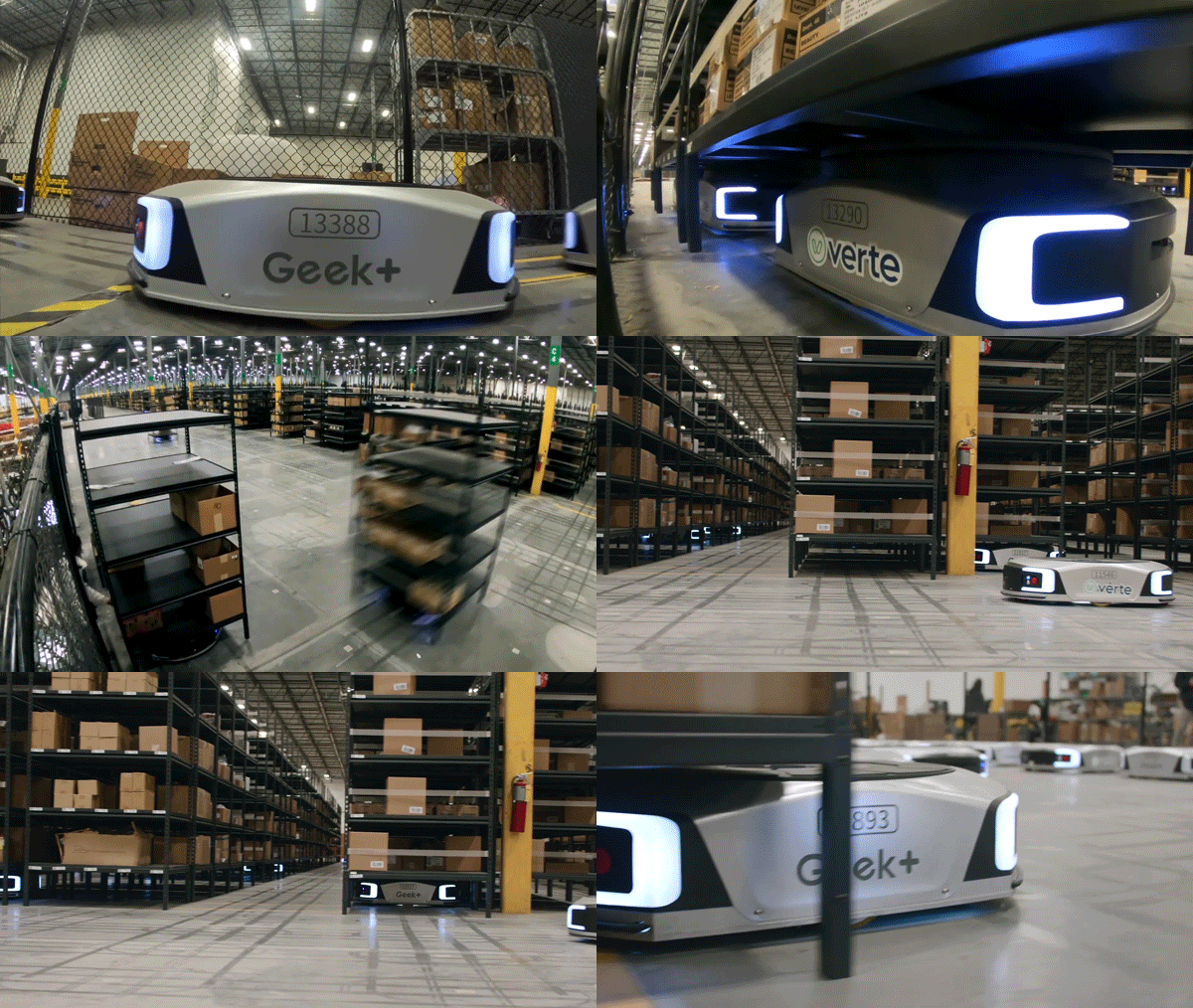
As part of an ongoing warehouse automation modernization project, a fleet of pre-owned ASRS robots is available for purchase.
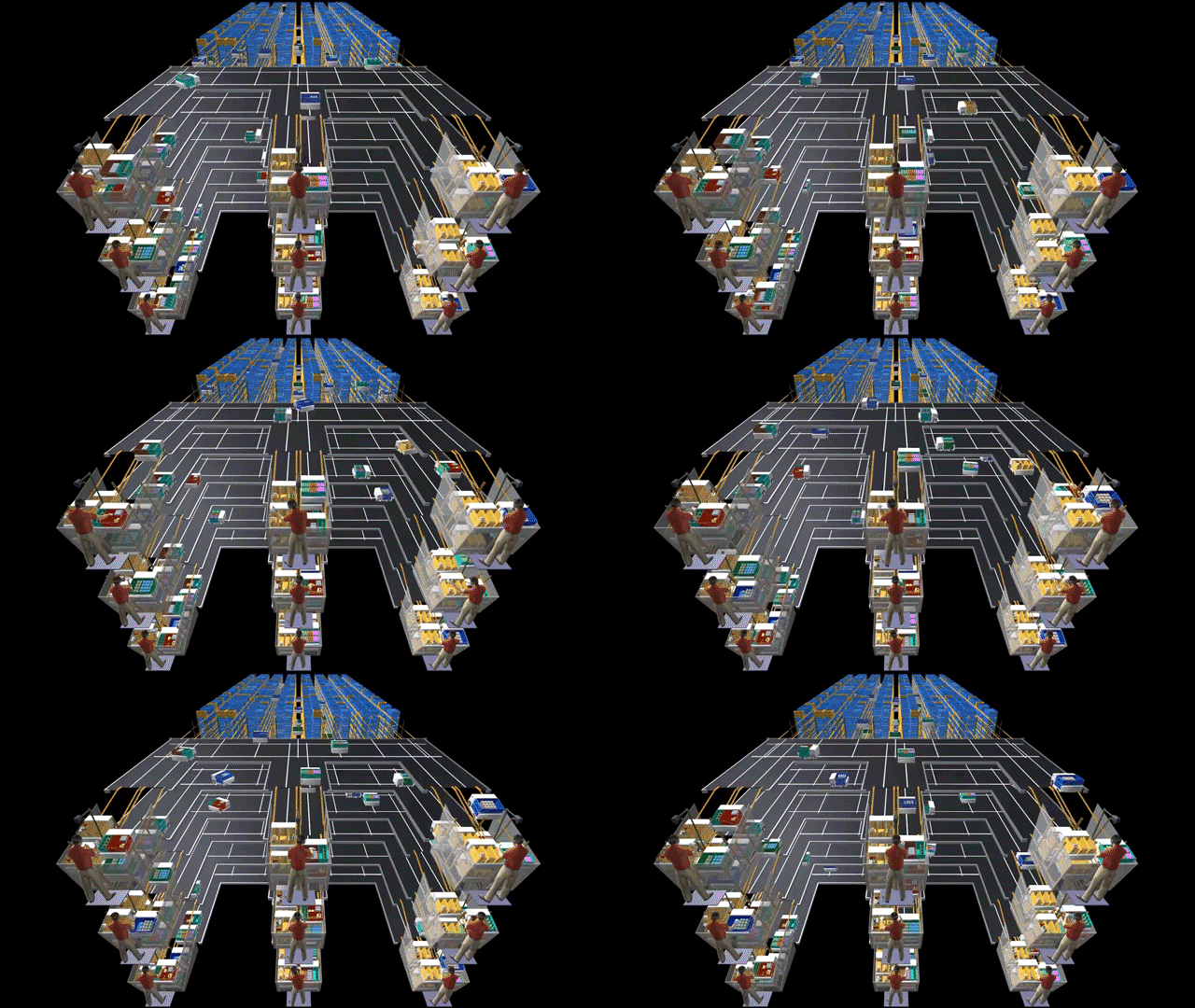
Symbotic’s new SymMicro system begins its first in-store installation, with the potential to expand to 400 Walmart locations.
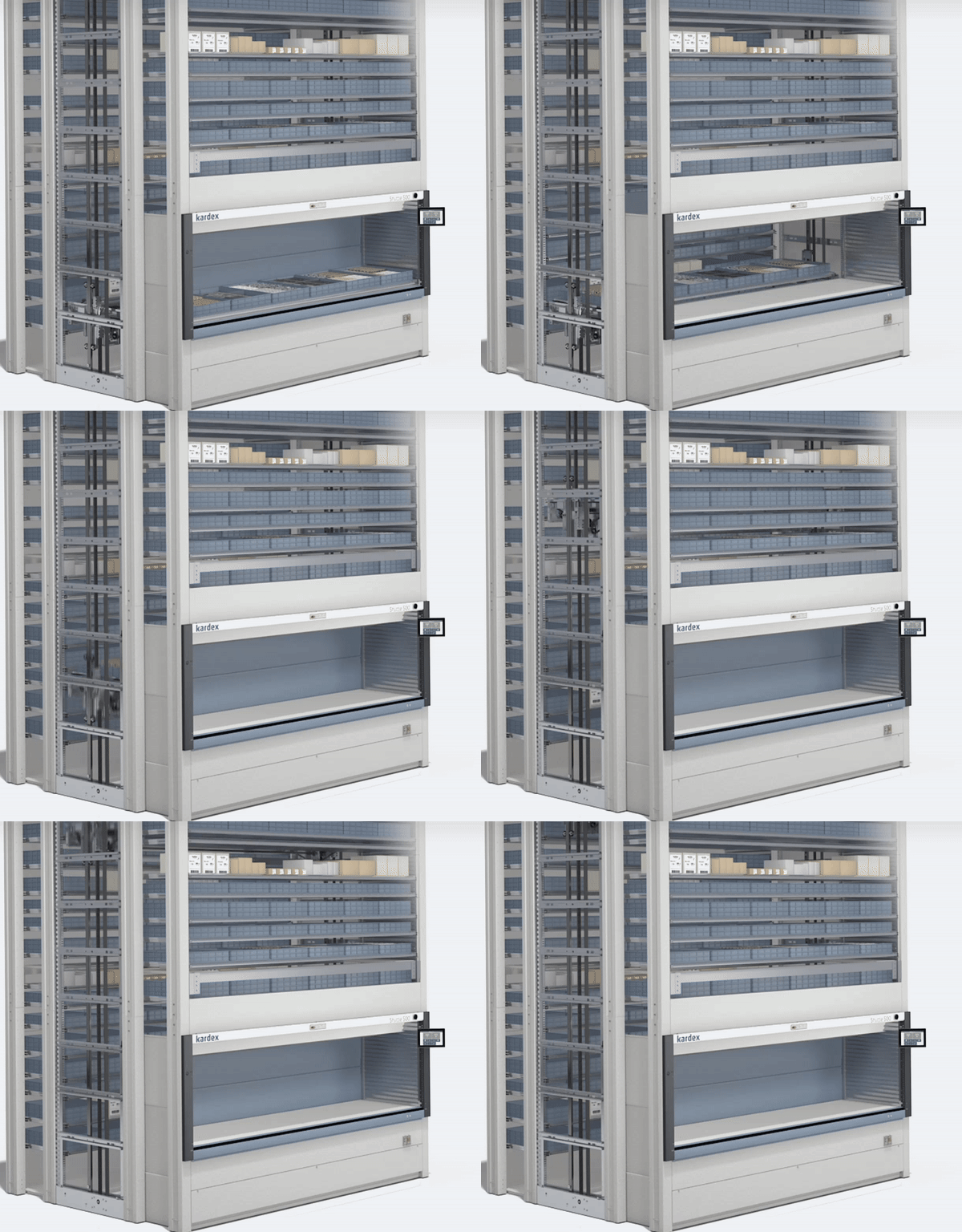
Two brand-new Kardex Shuttle XP 500 vertical lift modules are available for immediate delivery.
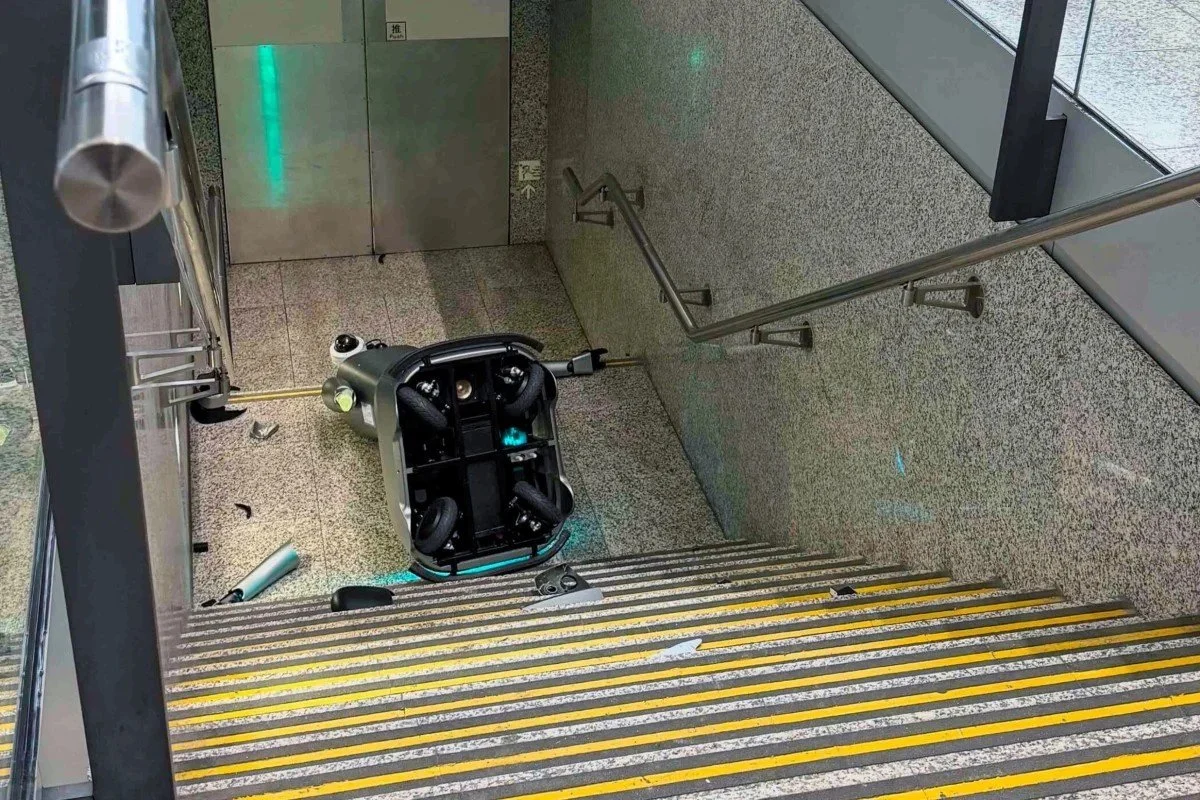
A robot accident at Hong Kong International Airport offers an important lesson about mobile robot safety
S&S Activewear is one of the more technology-forward apparel companies in North America’s branded-apparel distribution market.
Situated in Arvin, California, the new 700,000 square foot facility is described as its largest and most technologically sophisticated distribution center to date.

SoftBank is reportedly selling its remaining 9.65% stake in Boston Dynamics to Hyundai Motor Group for US$325 million.
The company had automation. It had robotics. It had government support, customer momentum, press attention, and a massive facility.
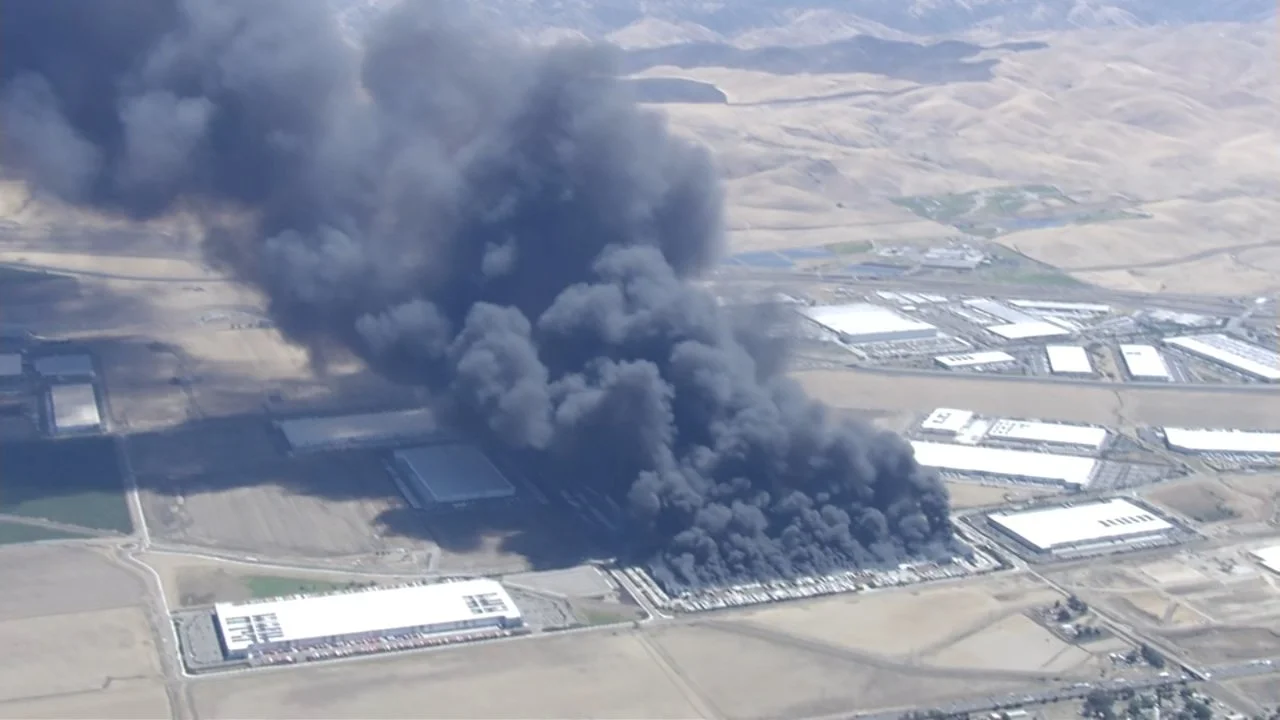
Massive fire destroys 1 million-square-foot Tracy Medline Industries distribution facility
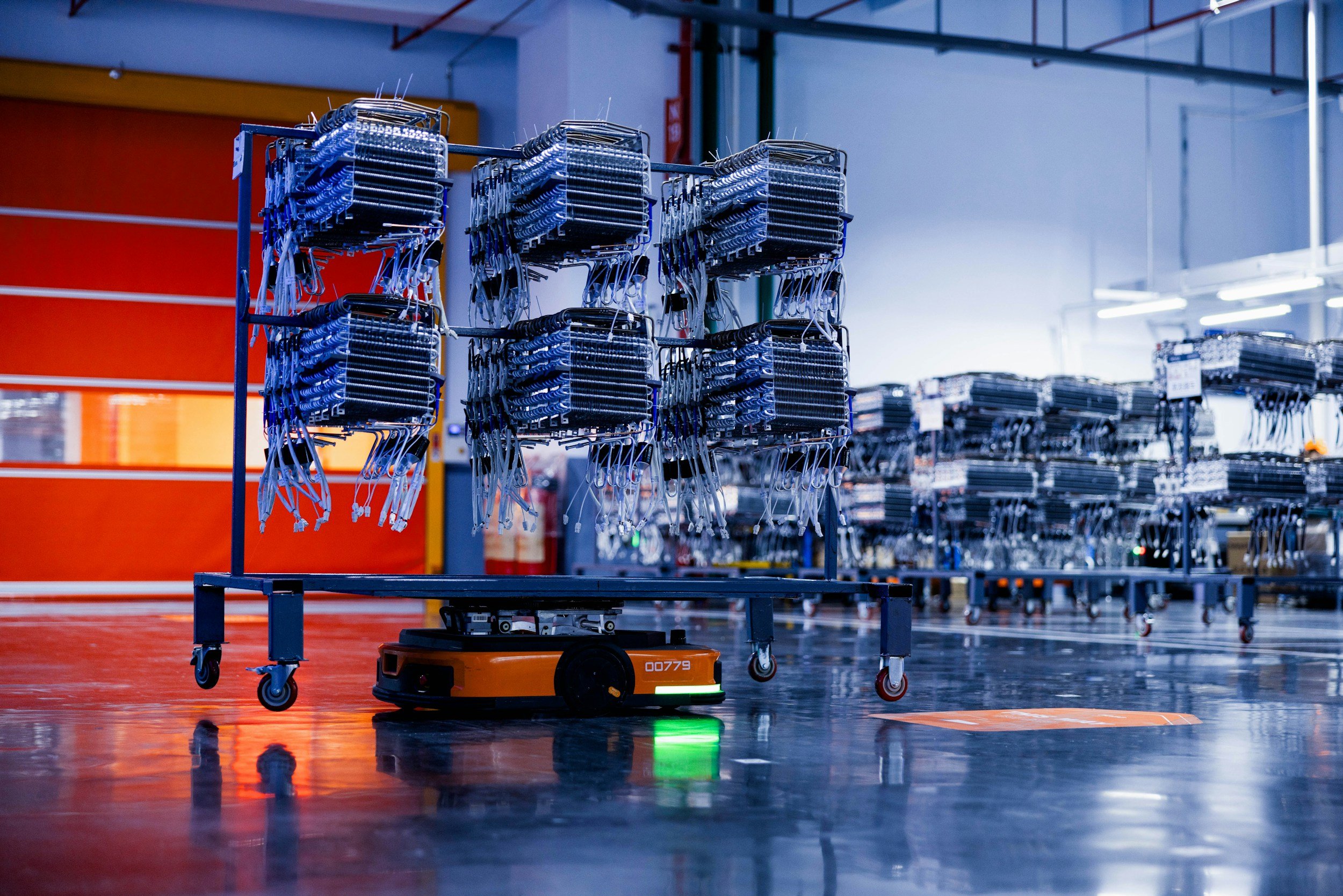
Artificial Intelligence and LLMs are currently being pushed aggressively into logistics, warehouse operations, robotics, and supply chain execution.
Walmart’s latest comments around same-day fulfillment, 30-minute delivery windows, AI-driven inventory positioning, and supply chain automation should be a wake-up call for the entire retail industry.
The promise made to Starbucks CEO Brian Niccol was enticing. To eliminate persistent product shortages that hurt sales, the company deployed an automated counting system.
The retail giant is using unlikely spaces to push against Amazon’s recent strategies to capture more customers.

Traditional WMS lacks the real-time visibility into the availability of automated materials handling equipment that a WES brings to the table.
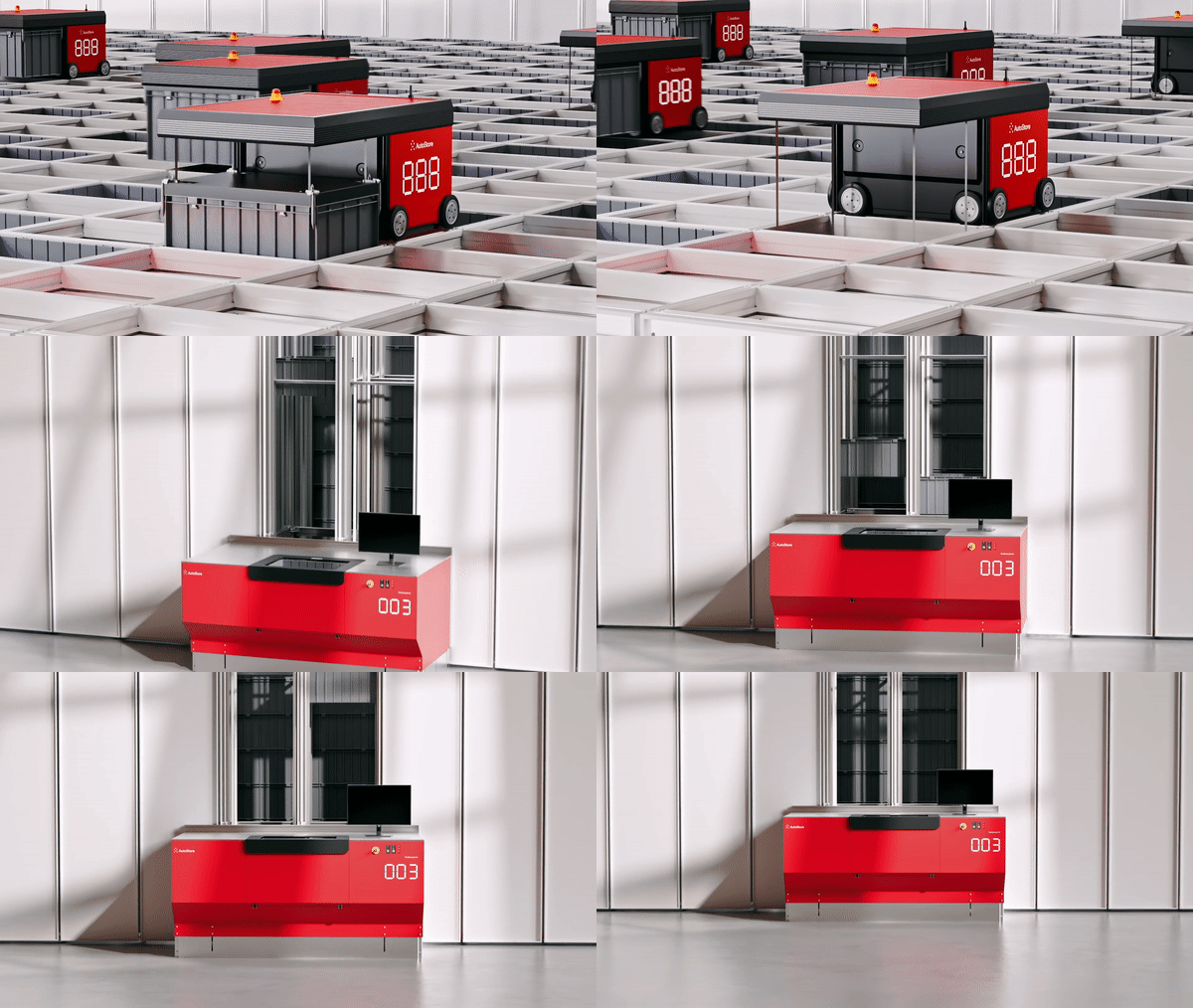
Ulta Beauty has selected AutoStore technology for its new Utah regional distribution hub supporting both stores and growing e-commerce fulfillment.
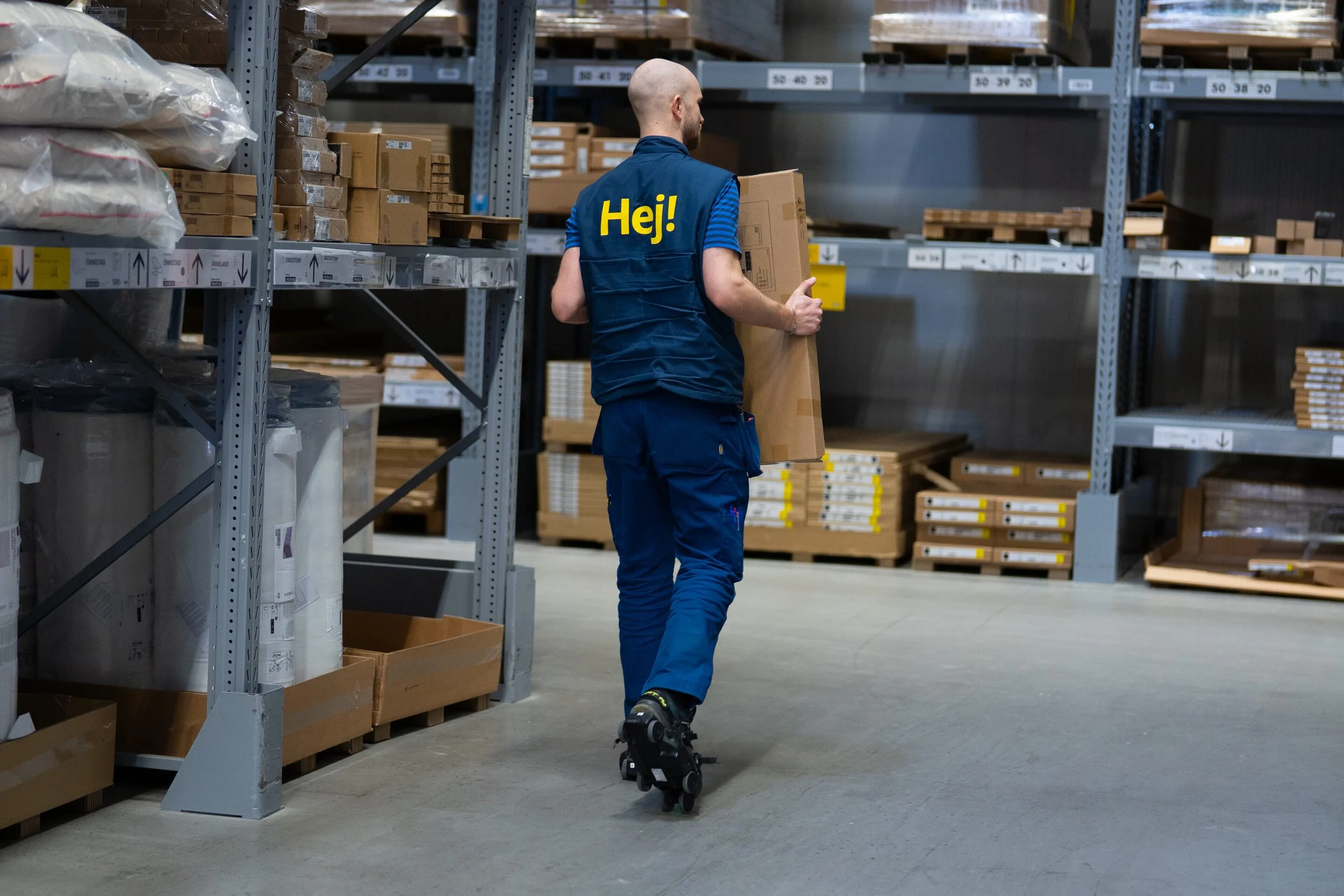
Ikea is testing robotic boots in Helsingborg, Sweden, to speed up order picking and reduce physical strain. Initial measurements showed that employees walked up to twice as fast, and average hourly picking productivity increased by 16%.
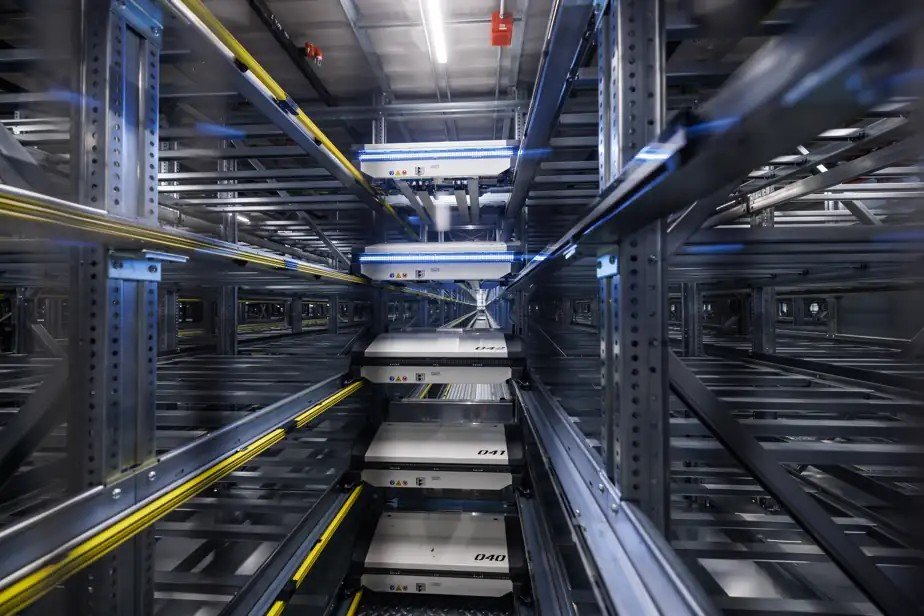
The cost of the SAQ's automated distribution center project, scheduled to begin operations next year, has gone from $48.5 million to $300 million in four years.
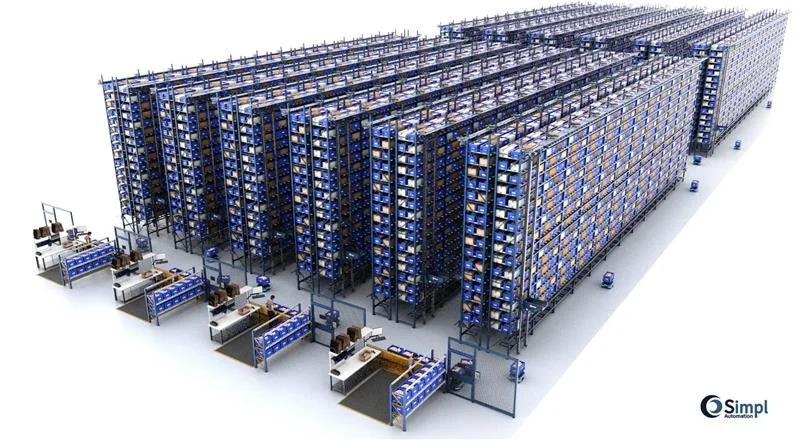
The Surrey facility will primarily serve British Columbia, while Calgary will cover Alberta, Saskatchewan, and surrounding regions.
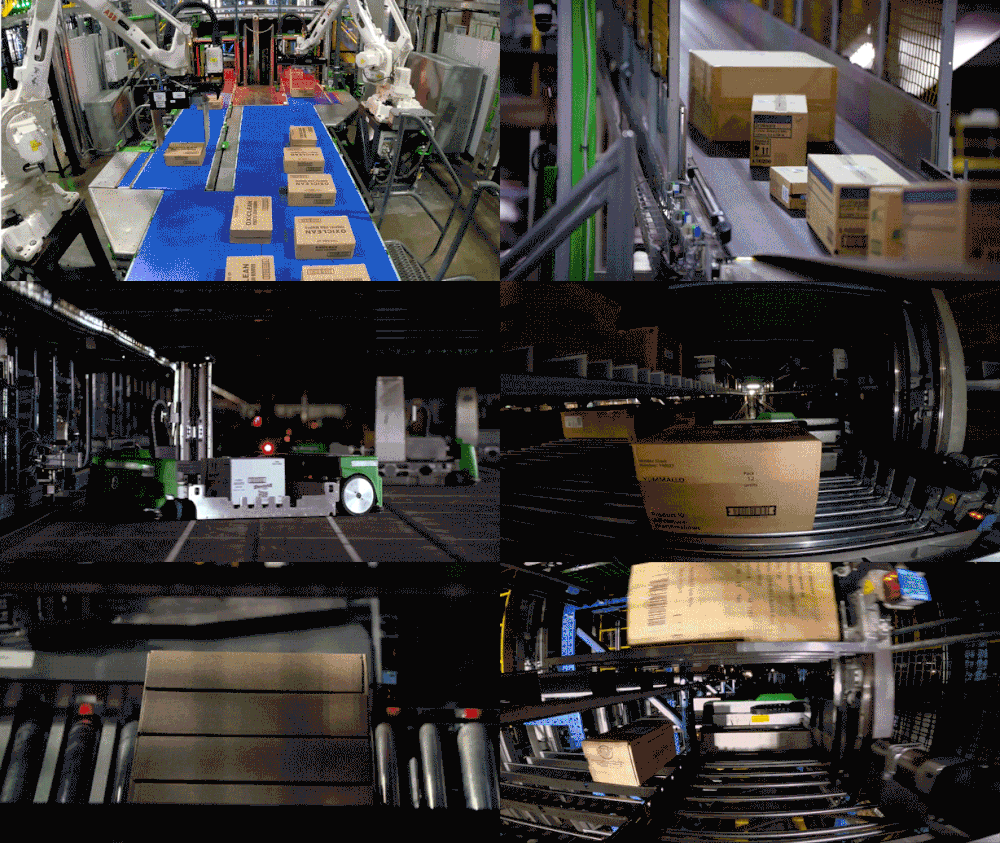
Today, a new layer is beginning to appear in highly automated facilities: the Warehouse Operating System (WOS).
Cainiao plans to build a large-scale global network of robotic warehouses in 2026 as it expands local fulfilment and delivery operations tied to cross-border eCommerce.
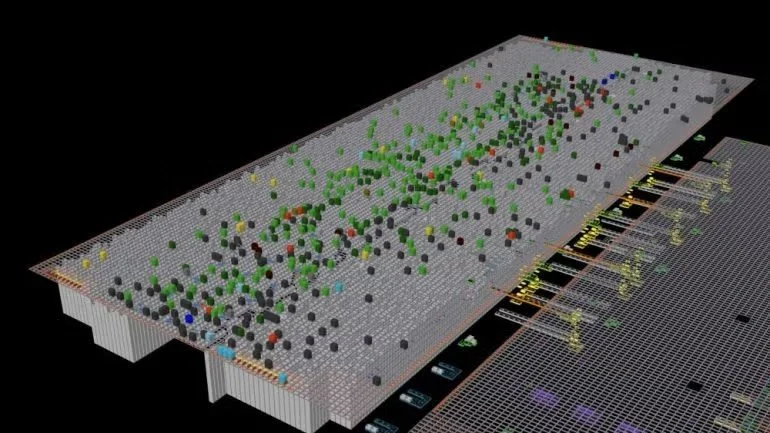
Ocado has delivered a cube-based automation system for McKesson Canada, representing a continued expansion of its technology beyond e-commerce grocery fulfilment.
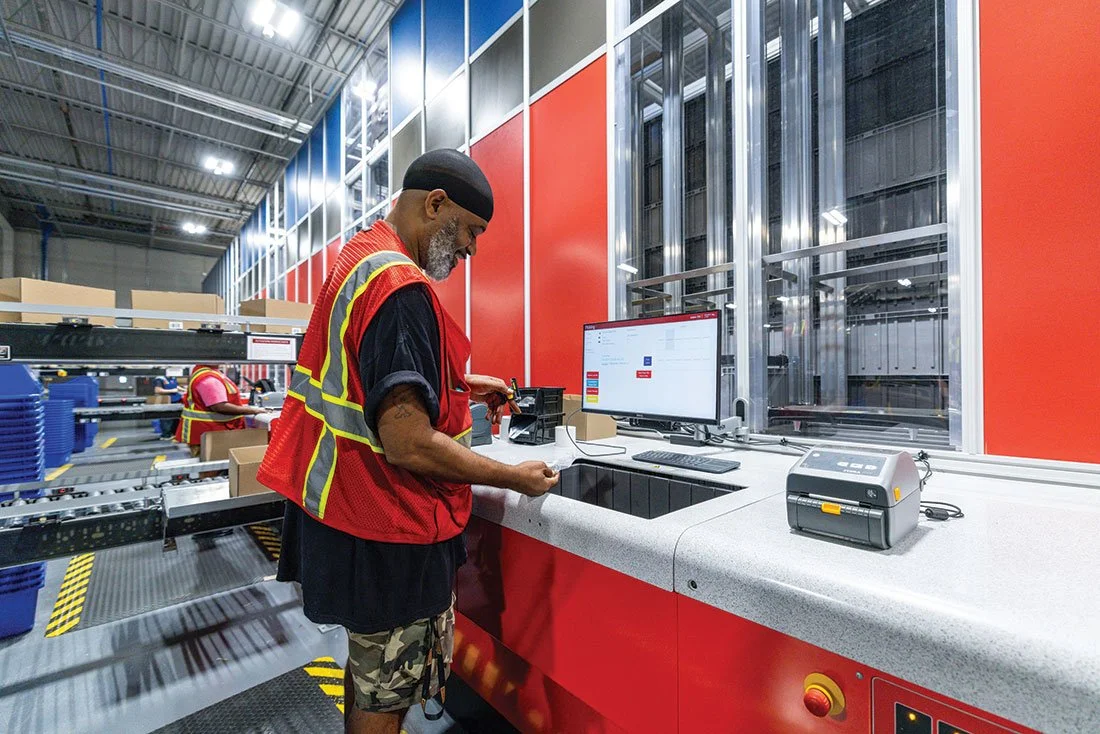
AutoStore reported its 2025 results this week, outlining a year that moved from early caution to clear second-half acceleration.

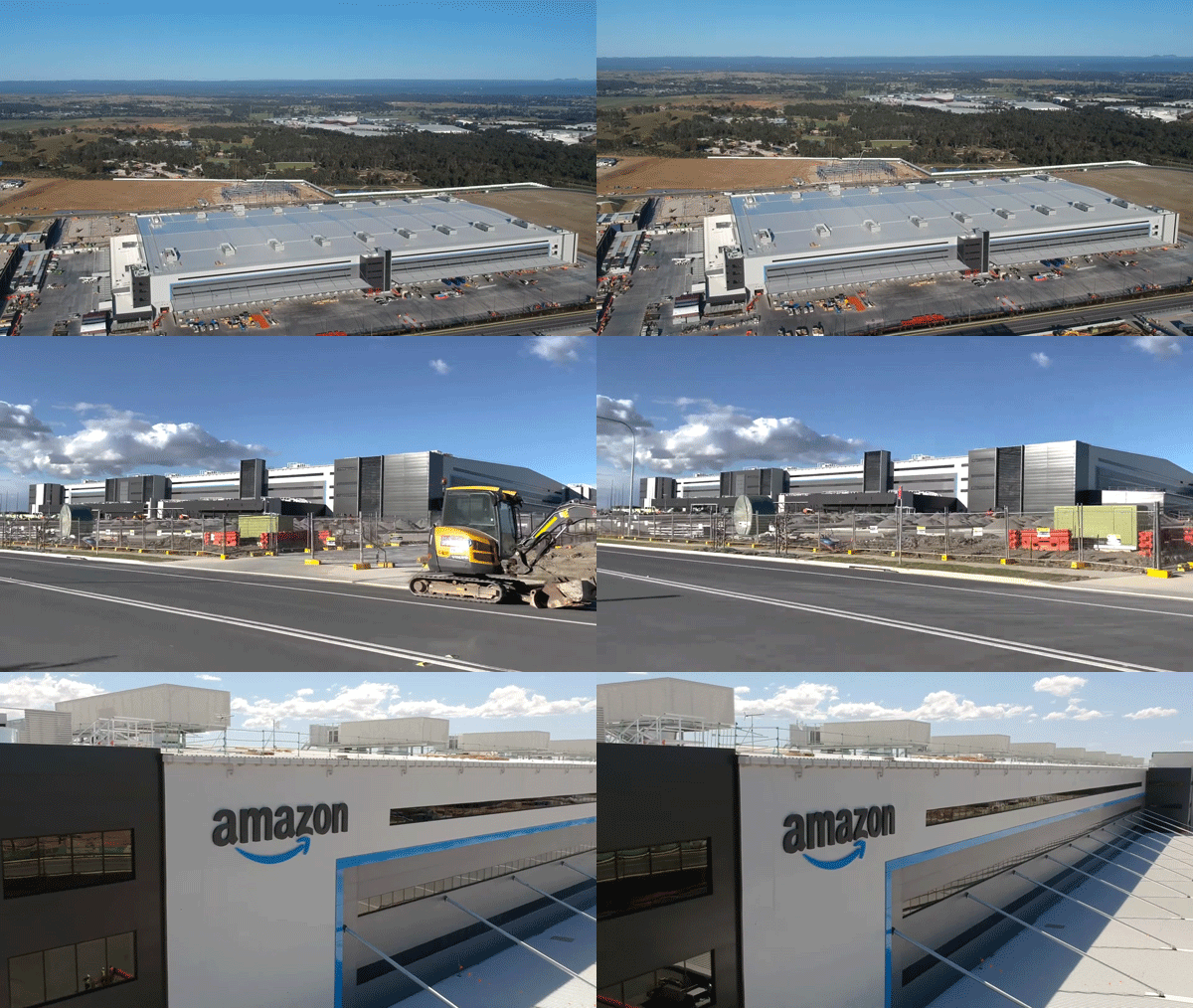
If you’ve ever wanted to see inside one of Amazon’s fulfilment centres, here’s your chance to see how your online shopping cart gets to your doorstep.
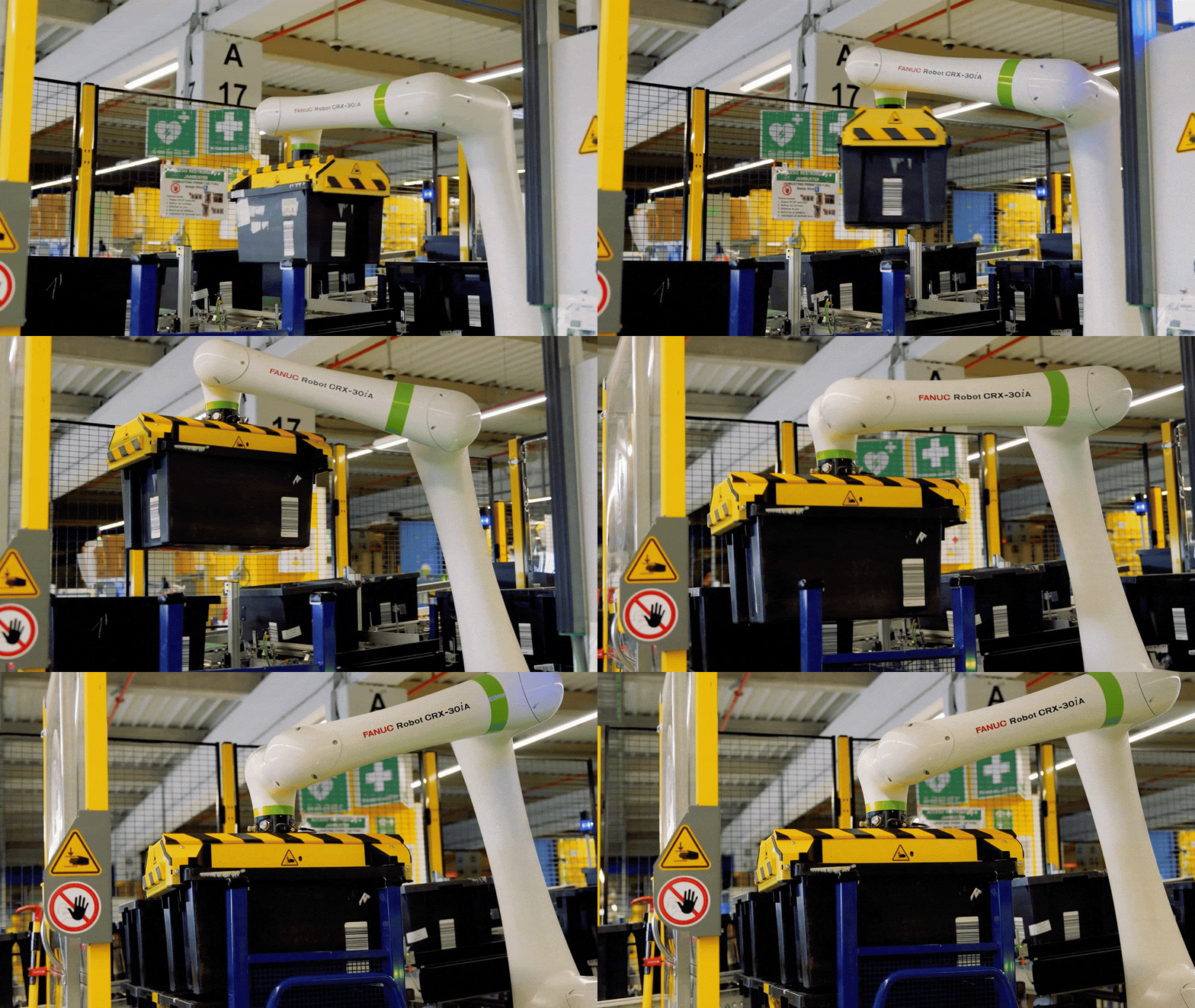
Amazon announced a major €10 billion investment to expand and modernize its European fulfillment network.
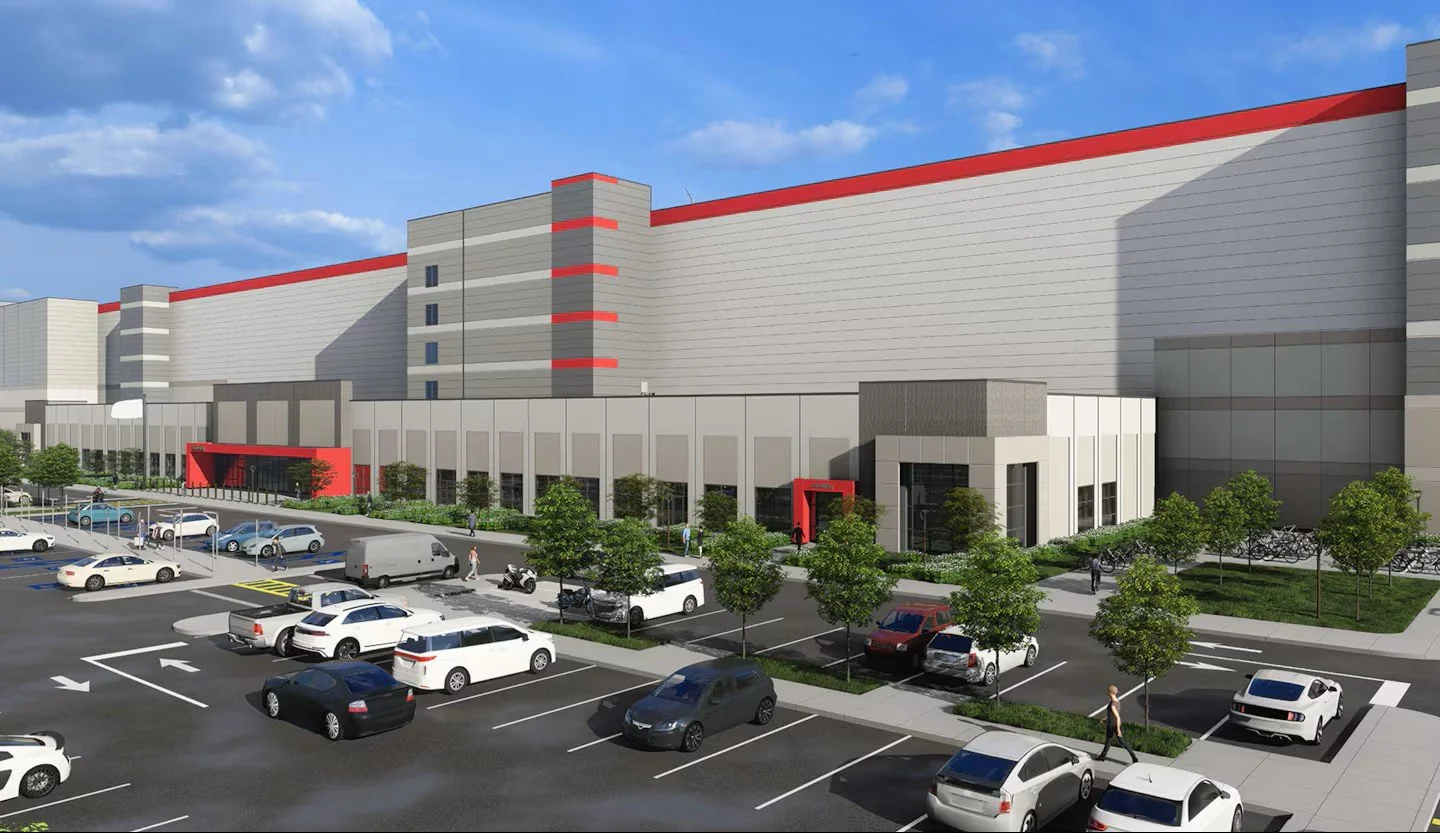
Amazon is dismantling part of its largest facility under construction in Ottawa — a rare move that suggests a shift in how the site is being designed and automated.
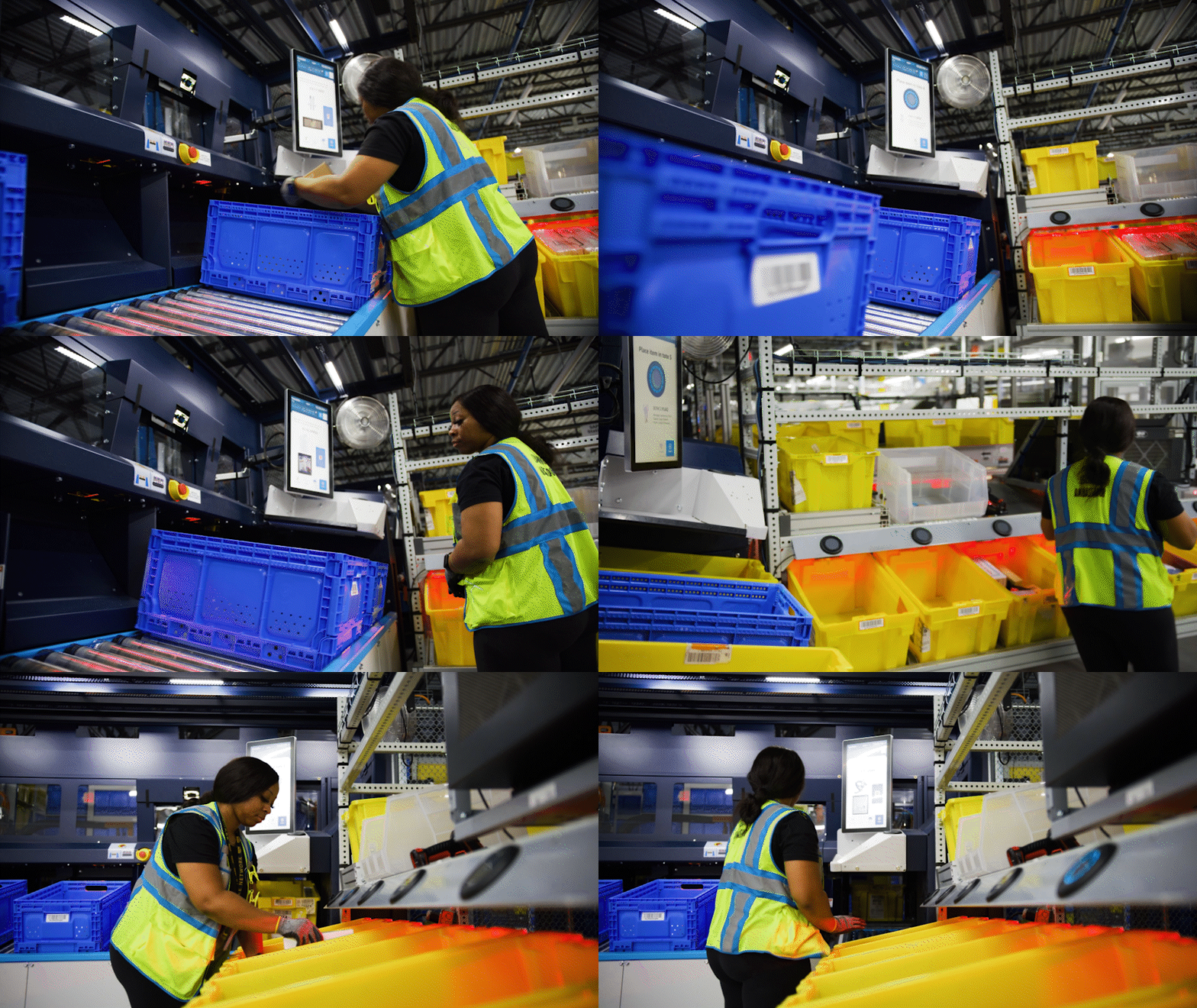

Amazon is essentially "franchising" its fulfillment infrastructure to solve the rural density problem.
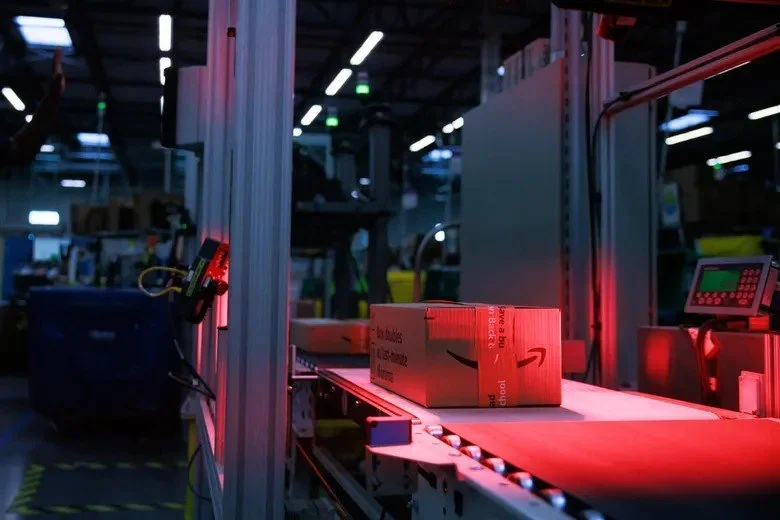
The robots inside Amazon's Kent Fulfillment Center are getting smarter — and the company is pressing forward with new technology.
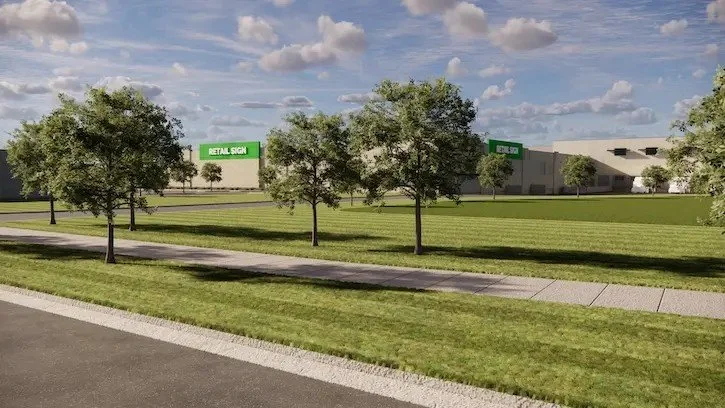
What the Orland Park retail proposal reveals about Amazon’s push into Walmart-scale physical retail

The model is specifically built for single-item, impulse, and urgent purchases, a category with high repeat potential and strong margin dynamics once density is optimized.

Amazon has opened a new kind of warehouse in Elkhart, Indiana — one that challenges nearly every convention in logistics facility design.
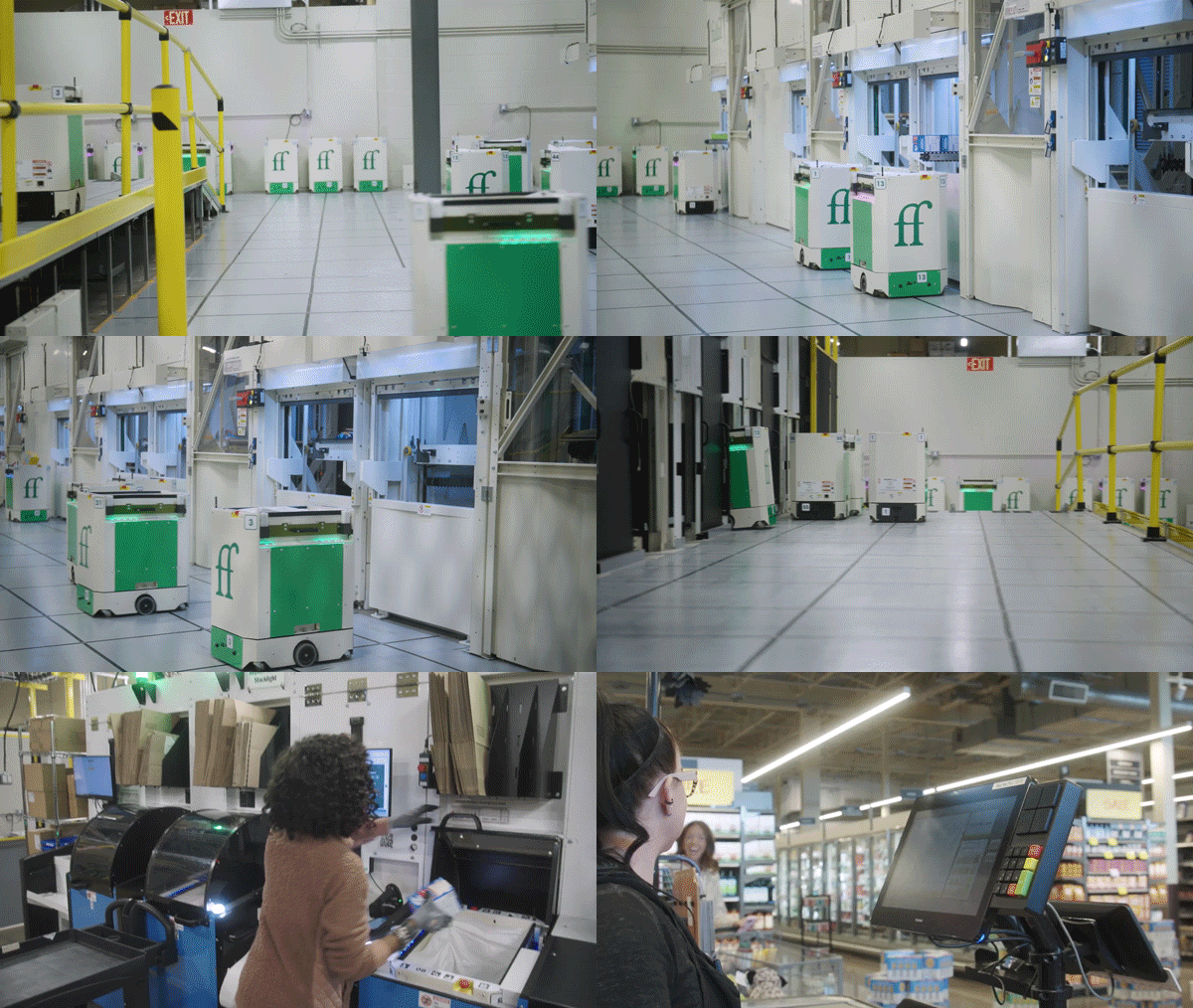
Amazon has built a 10,000-sq-ft automated micro-fulfillment center inside Whole Foods — where customers can scan, order, and pick up items in minutes.

These smaller, high-velocity facilities store frequently purchased products—from fresh food and groceries to personal-care items and small electronics.

Meet Sparrow, Cardinal and Proteus. They’re the robots that, step by step, are replacing human workers in the company’s warehouses.
Amazon Robotics' Chief Technologist discusses his journey to helping the world's largest retailer deploy one million robots.

Amazon’s new smart glasses bring AI and computer vision directly into the delivery workflow.

Amazon is taking steps to address how artificial intelligence and automation is changing its workforce.

It’s built to do something no other Amazon robot has done before — perform multiple tasks at once.

The offer builds on Amazon fulfillment service for merchants on other sales channels, including eBay, Etsy, Temu and TikTok Shop.

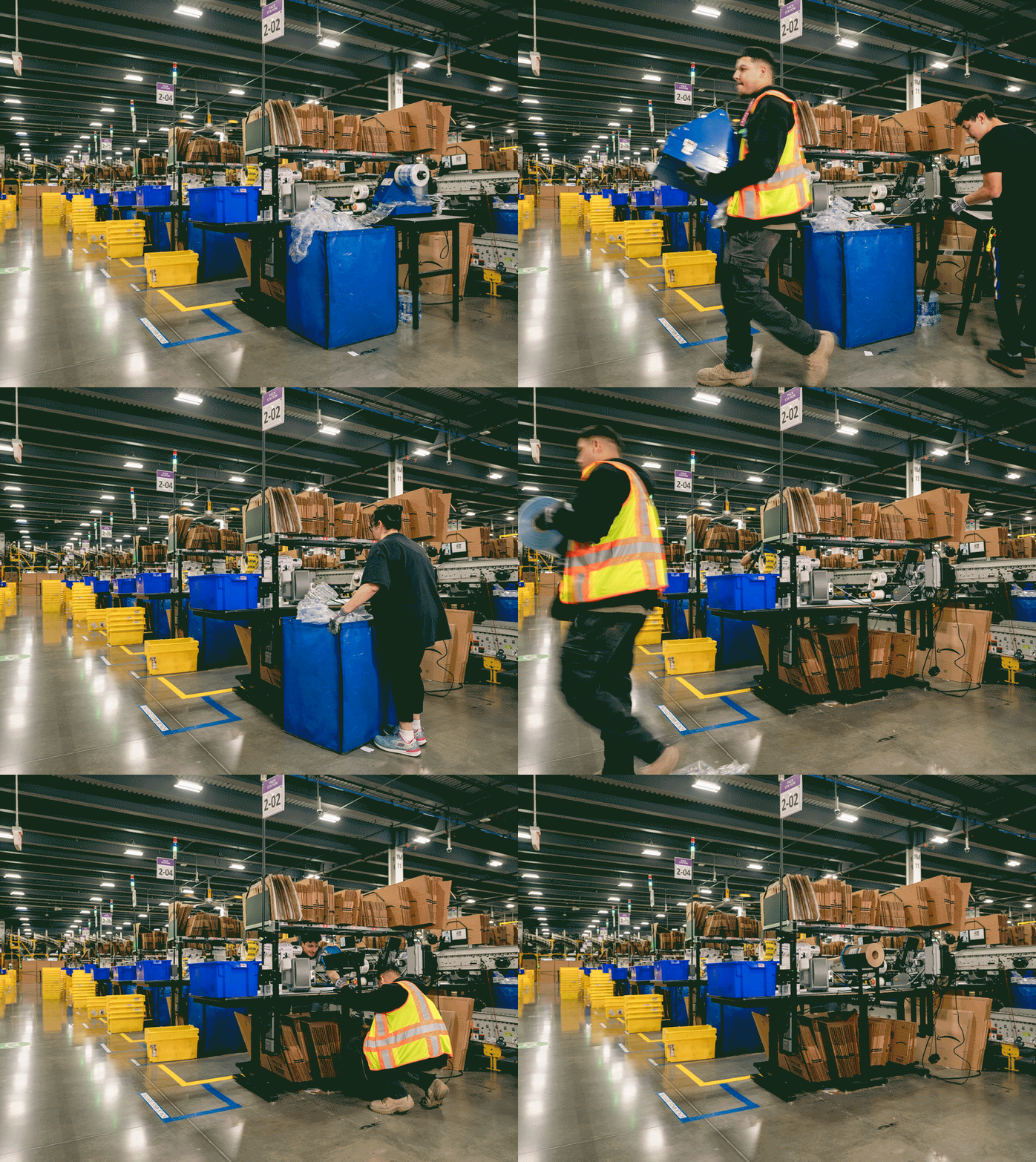
Amazon’s Ohio facility was its first U.S. center to eliminate plastic delivery packaging,

A worker loads a truck for shipment at the Amazon MCO-01 robotic fullfillment center in Orlando.
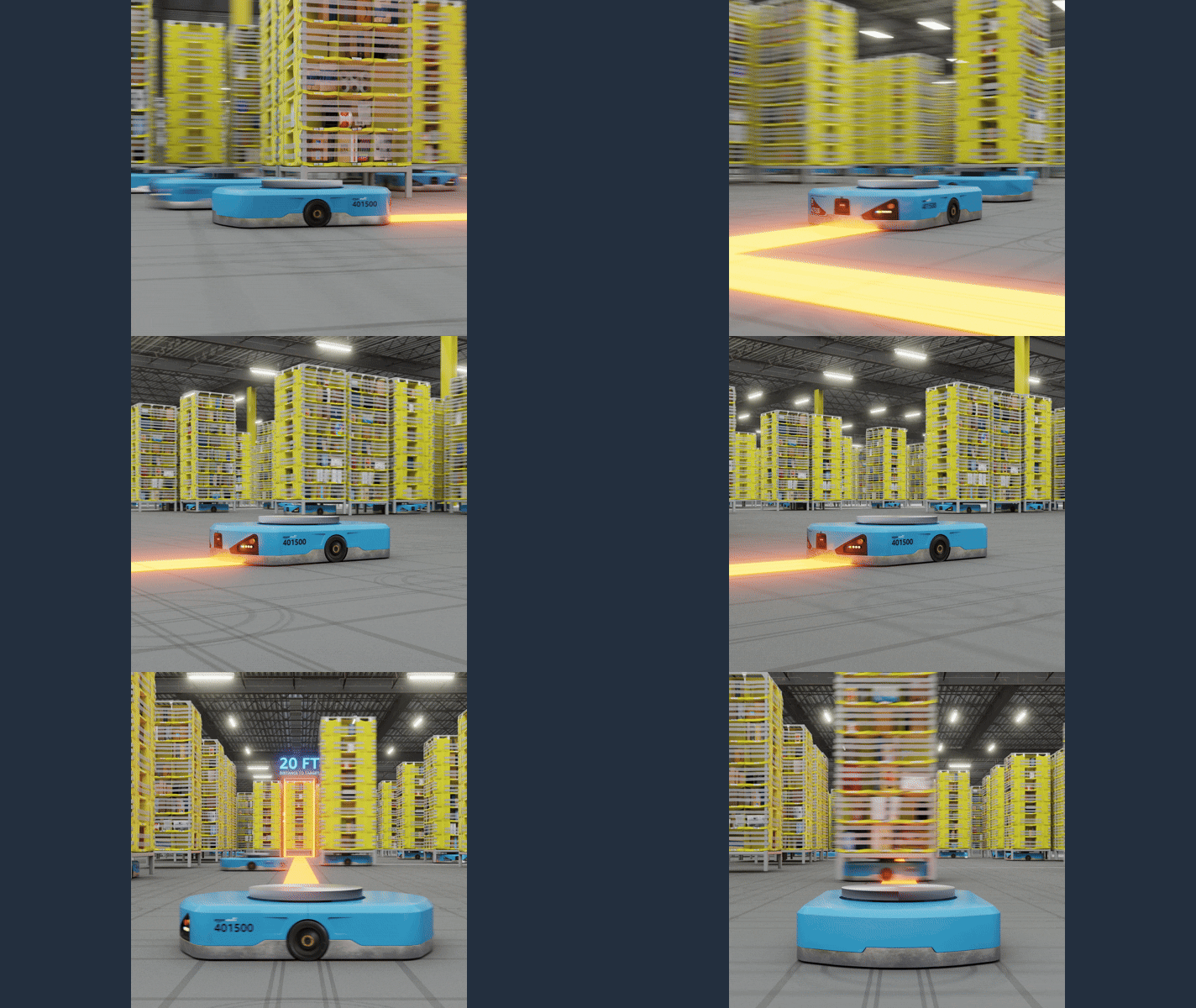
Amazon Robotics Vice President explains how robots are helping Amazon employees deliver on Prime Day.

Amazon UK has announced a national roll-out of its partnership with on demand delivery specialist Gopuff.

But for the right buyer, these assets could offer not just a salvage opportunity—but strategic leverage.

The retailer will soon use custom box-making technology to reduce waste from packaging across Europe.

It’s a testbed for the convergence of agentic AI and dynamic robotics—where hardware and software fuse to reimagine the last mile.

Amazon has been on a multi-billion dollar and decade-plus long crusade to be a leader in robotics.

Online retail giant provides “Buy with Prime” service for Prime subscribers who purchase Adidas goods stored in its DCs.
At Hannover Messe 2026, SAP and Vodafone showcased a pilot conducted at Vodafone’s warehouse in Duisburg,