
More than 50% of Walmart’s fulfillment is automated, twice as much as last year
Walmart’s automation boom means lower delivery costs and better careers, says CFO.
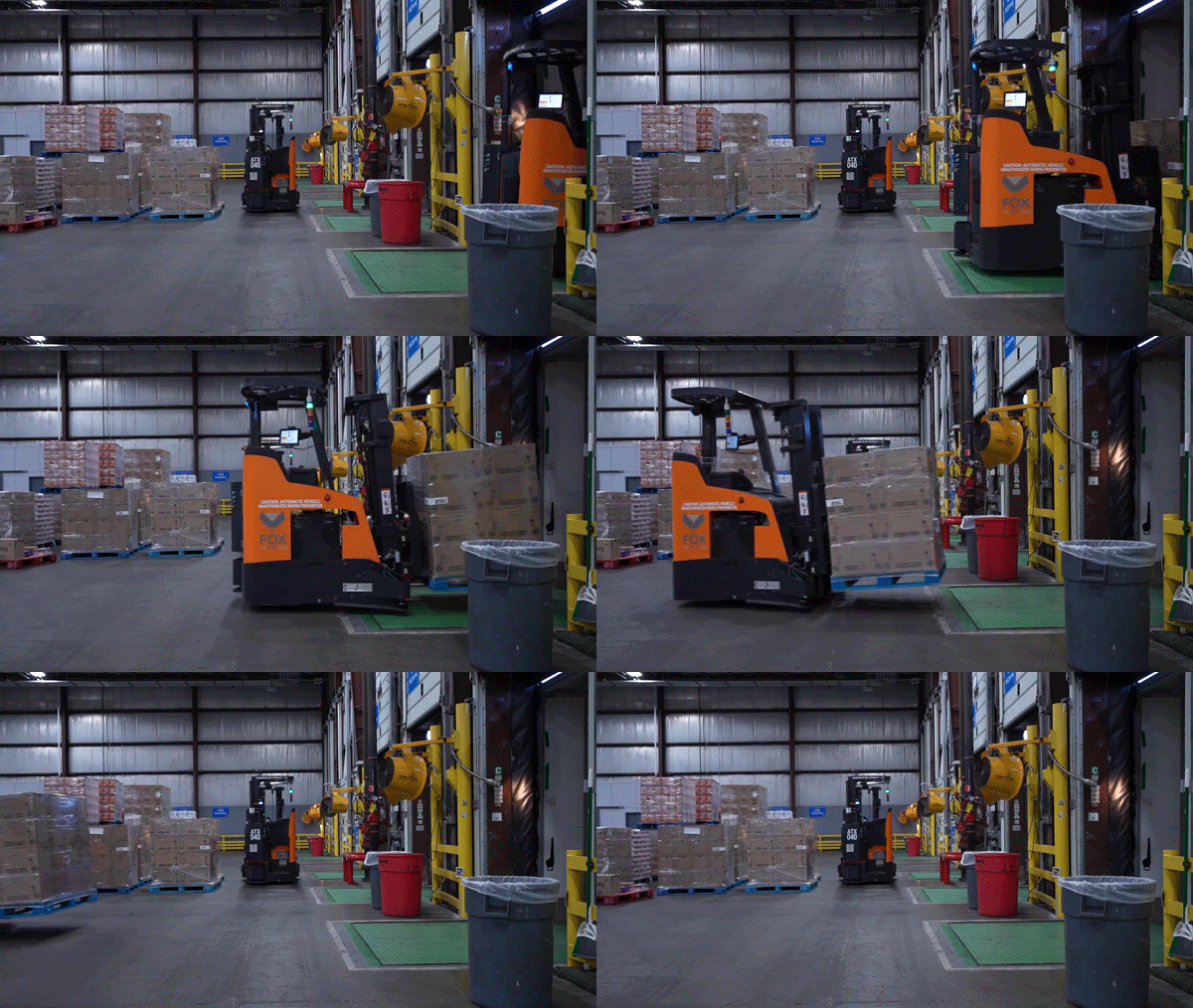

Walmart is betting on automation, AI, and the growth of emerging alternative revenue streams to usher the company into a tech-fueled future.
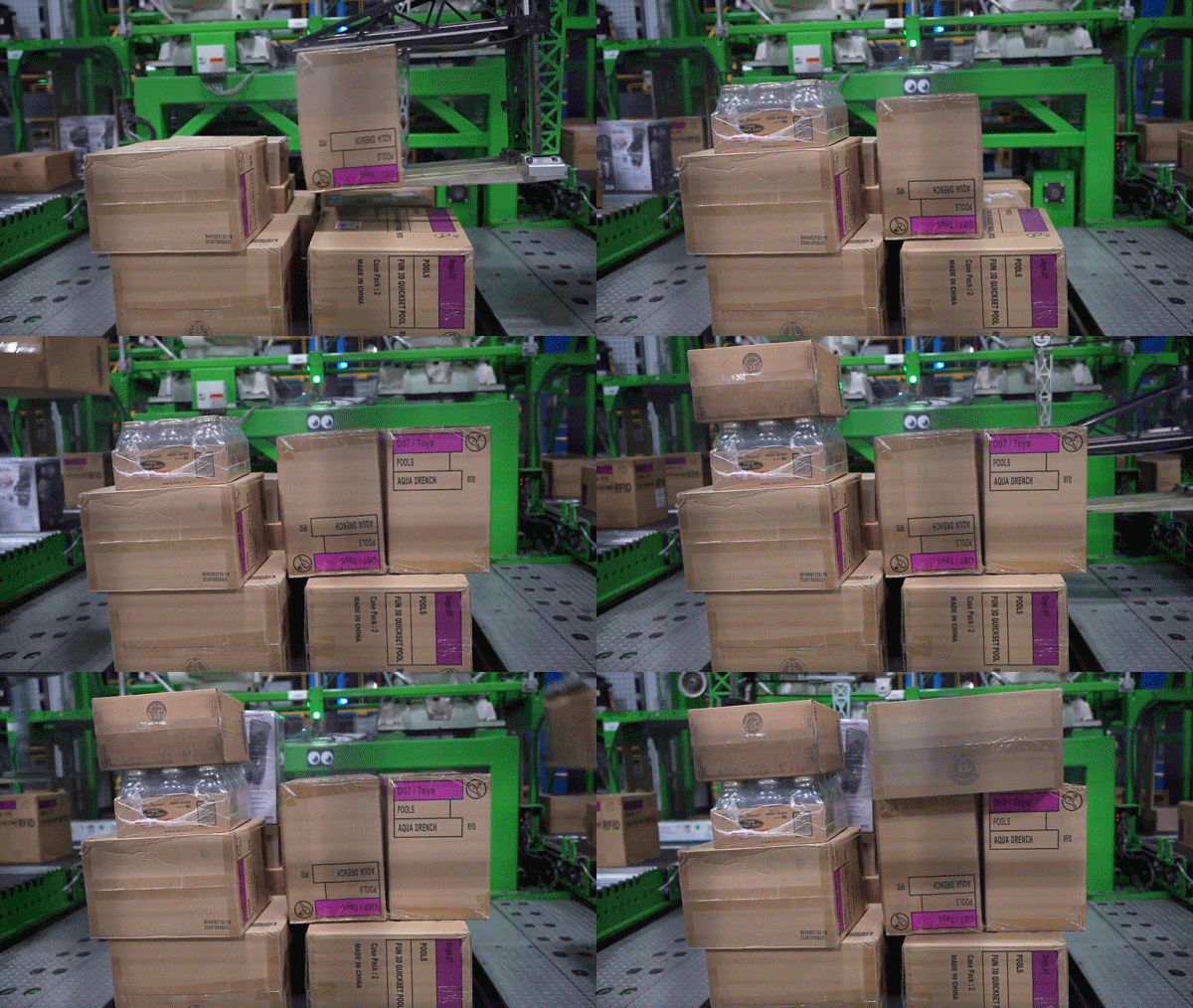
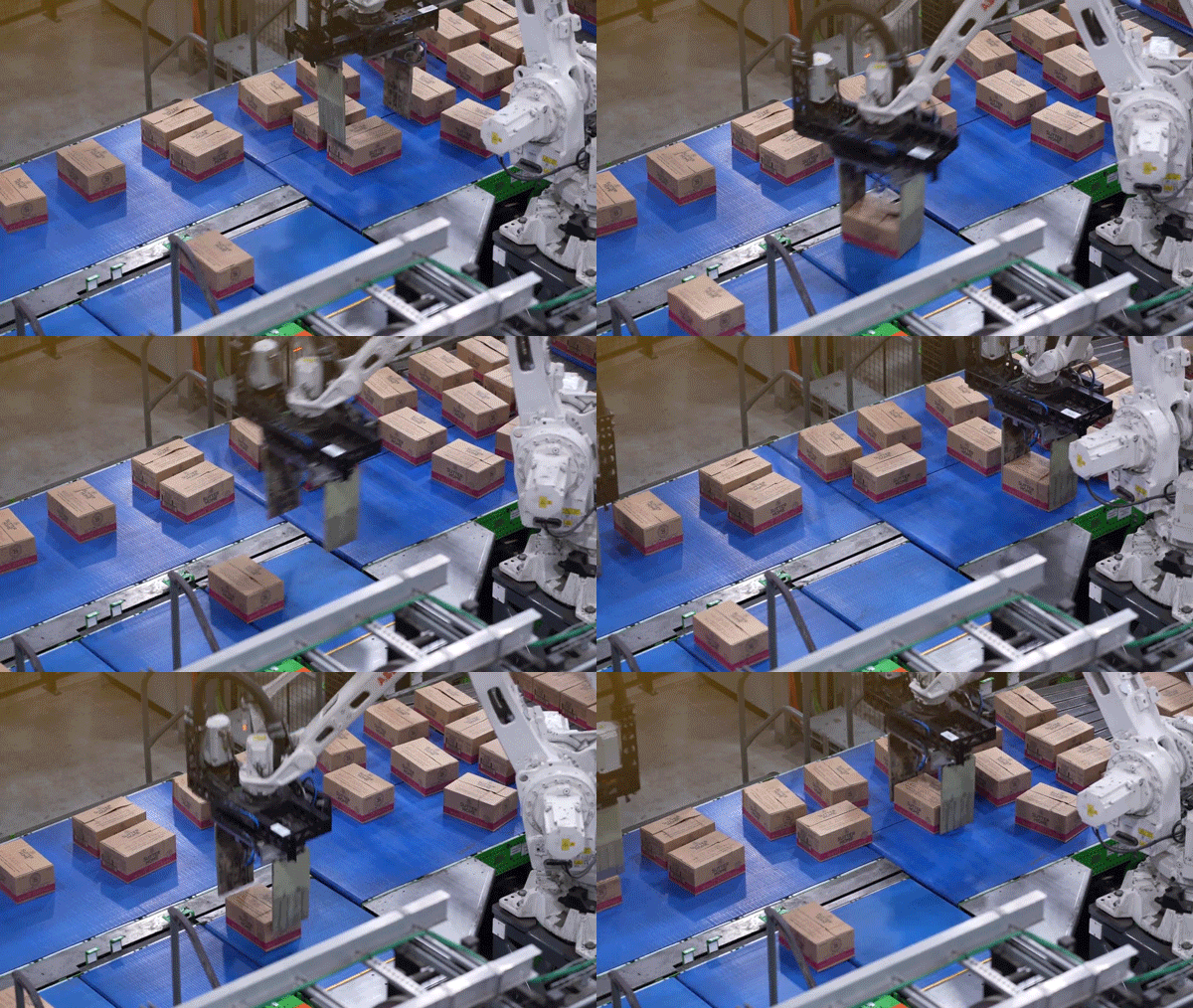
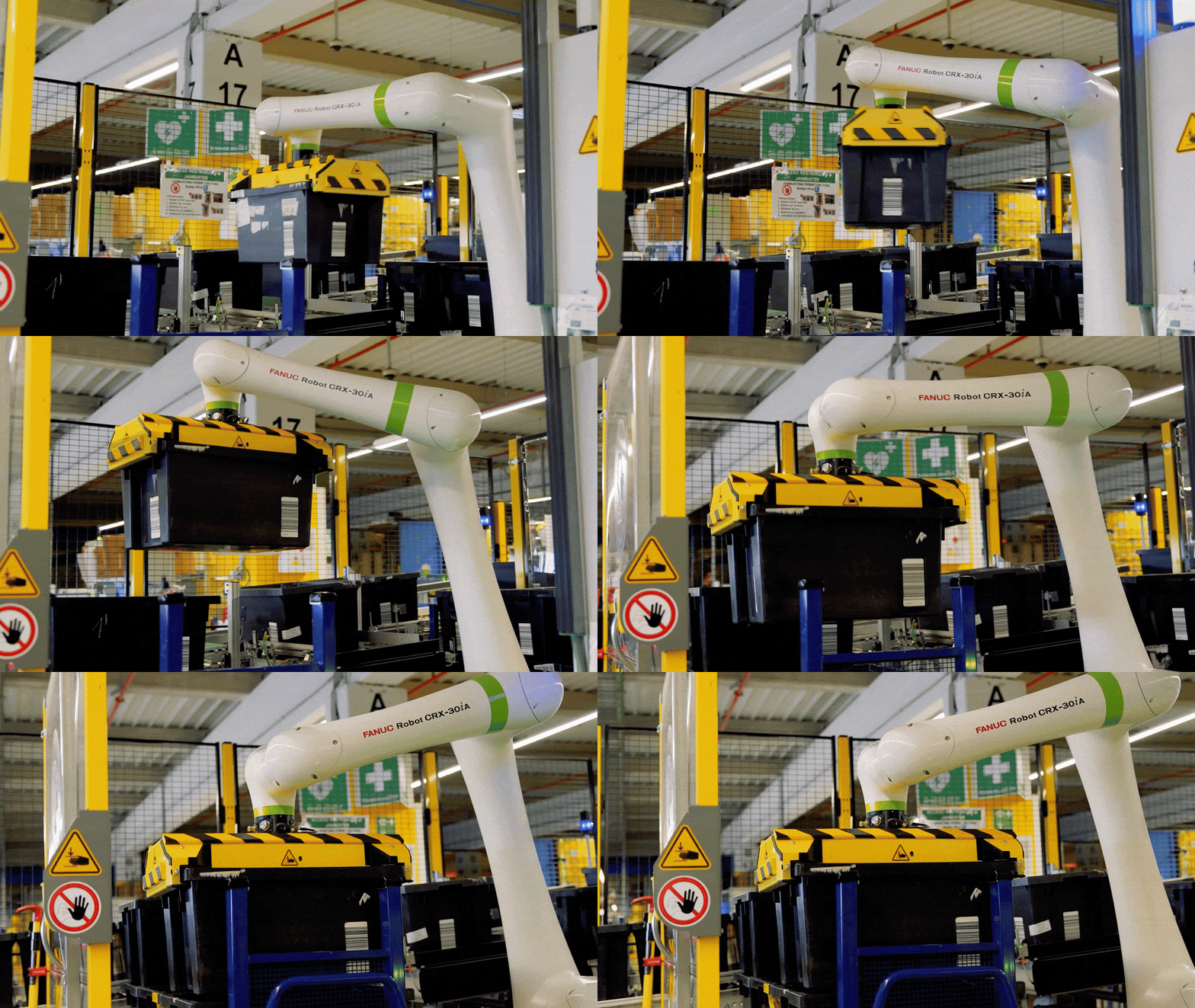
More than 50% of Walmart’s fulfillment center volume is automated, twice as much as this time last year, Walmart CFO John David Rainey said during the company’s fiscal third-quarter earnings call on Tuesday. “This has the obvious benefit of lowering per unit cost of delivery,” he said.
These factors contributed to the third consecutive quarter of approximately 40% reduction in U.S. net delivery costs per order, and customer net promoter scores for delivery reached all-time highs, Rainey said.
Some research points to employees' fear that automation will take jobs. Meanwhile, there’s also research that AI won’t take employees’ jobs if they know how to use it. I asked Rainey on Tuesday about what automation and AI will ultimately mean for workers.
“When we create new ways to serve customers, it often creates new jobs and career pathways for associates,” he said. The technology is allowing Walmart to evolve some of its physically demanding jobs into roles where associates are operating and maintaining high-tech systems, he explained.
“We’re designing new roles, such as automation equipment operator and equipping our associates with the skills to move into these in-demand positions that associates tell us are more enjoyable,” he said.
As part of this process, Walmart is turning its 42 regional distribution centers into high-tech facilities to increase its capacity and speed for sending merchandise to stores while reinventing manual jobs into those that offer new skills in robotics and technology, according to the company.
The retail giant, which ranks No. 1 in the Fortune 500, reported that revenue for the three-month period that ended Oct. 31 increased 5.5% year over year reaching $169.59 billion, beating Wall Street estimates. U.S. same-store sales grew 5.3%, compared with the year prior. Globally, e-commerce was up 27%, and in the U.S. specifically, it grew 22%. Global advertising grew 28% year over year, and membership income was up 22%.
E-commerce now makes up 18% of the business overall. That’s an area where Walmart has been investing and expecting profitability for the long term.
“When you look at the shape of the new income statement,” Walmart CEO Doug McMillon explained on the earnings call, “and you split it between the original income statement that looks like a store P&L and the new income statement that’s got membership, advertising, fulfillment services, data monetization, and maybe some other things in it, it’s more profitable.”
McMillon said the company will grow profit faster than sales, with e-commerce a part of the mix along with other aspects of its omnichannel strategy, which is underpinned by advanced technology.
For example, Walmart has developed a system of proprietary generative AI platforms, such as Wallaby—a series of retail-specific large language models that will primarily be used to create customer-facing experiences. Wallaby is trained with decades of Walmart data.
Walmart’s low prices continue to be a big draw for its customers of all incomes. However, households in the U.S. earning more than $100,000 a year accounted for 75% of Walmart's gains in Q3. The company will work on keeping low prices amid a potential increase in tariffs in 2025, according to Rainey.
Sheryl Estrada - sheryl.estrada@fortune.com

Amazon’s Project Tetromino Takes Aim at the Last Mile’s Hardest Automation Problem.
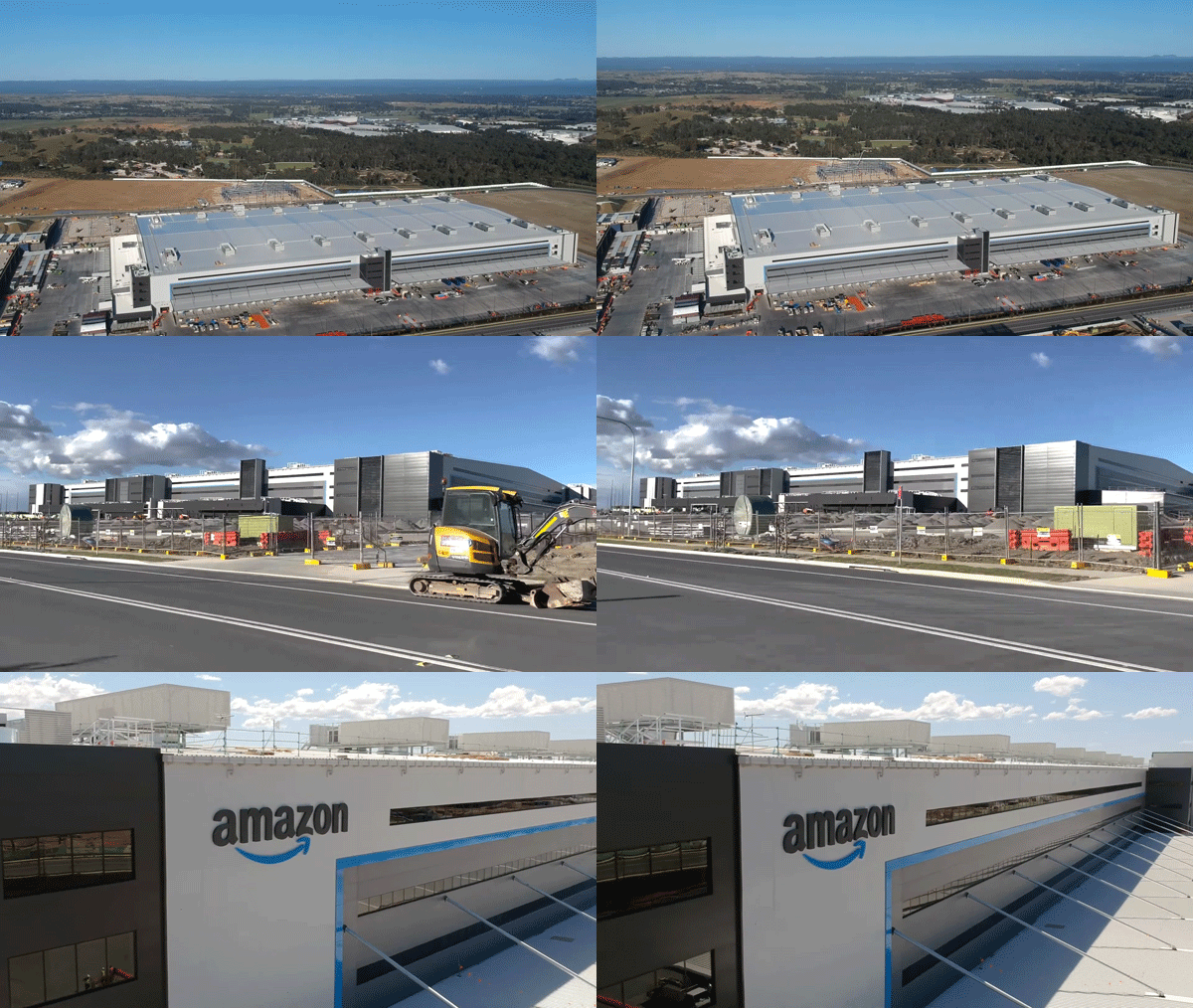
If you’ve ever wanted to see inside one of Amazon’s fulfilment centres, here’s your chance to see how your online shopping cart gets to your doorstep.
Amazon announced a major €10 billion investment to expand and modernize its European fulfillment network.
Amazon is dismantling part of its largest facility under construction in Ottawa — a rare move that suggests a shift in how the site is being designed and automated.

Amazon is essentially "franchising" its fulfillment infrastructure to solve the rural density problem.
The robots inside Amazon's Kent Fulfillment Center are getting smarter — and the company is pressing forward with new technology.
Amazon did not achieve this speed through a single breakthrough technology
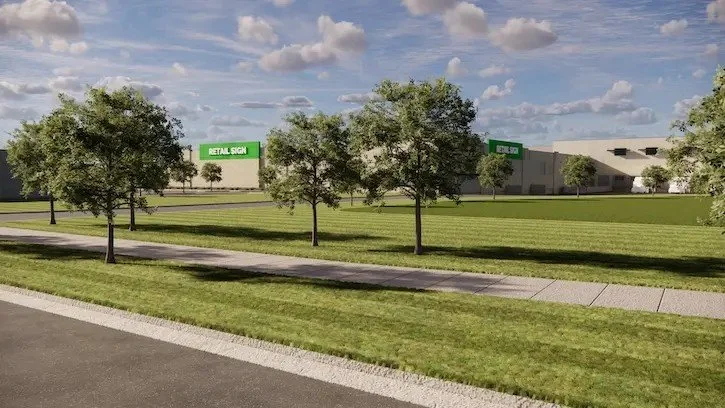
What the Orland Park retail proposal reveals about Amazon’s push into Walmart-scale physical retail

The model is specifically built for single-item, impulse, and urgent purchases, a category with high repeat potential and strong margin dynamics once density is optimized.

Amazon has opened a new kind of warehouse in Elkhart, Indiana — one that challenges nearly every convention in logistics facility design.
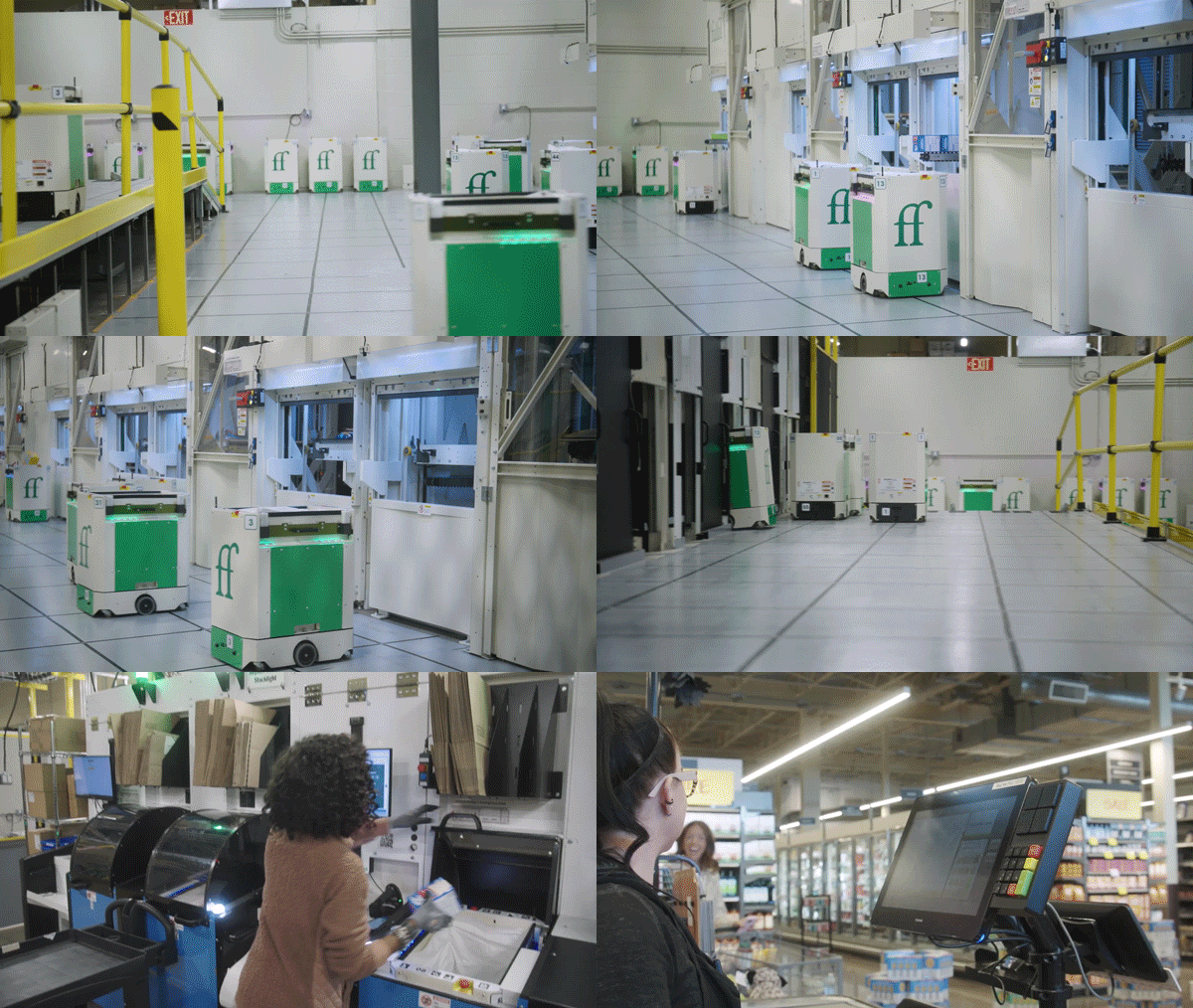
Amazon has built a 10,000-sq-ft automated micro-fulfillment center inside Whole Foods — where customers can scan, order, and pick up items in minutes.

These smaller, high-velocity facilities store frequently purchased products—from fresh food and groceries to personal-care items and small electronics.

Meet Sparrow, Cardinal and Proteus. They’re the robots that, step by step, are replacing human workers in the company’s warehouses.
Amazon Robotics' Chief Technologist discusses his journey to helping the world's largest retailer deploy one million robots.

Amazon’s new smart glasses bring AI and computer vision directly into the delivery workflow.

Amazon is taking steps to address how artificial intelligence and automation is changing its workforce.

It’s built to do something no other Amazon robot has done before — perform multiple tasks at once.

The offer builds on Amazon fulfillment service for merchants on other sales channels, including eBay, Etsy, Temu and TikTok Shop.

Ever wondered how that Amazon package arrives on your doorstep with remarkable speed?
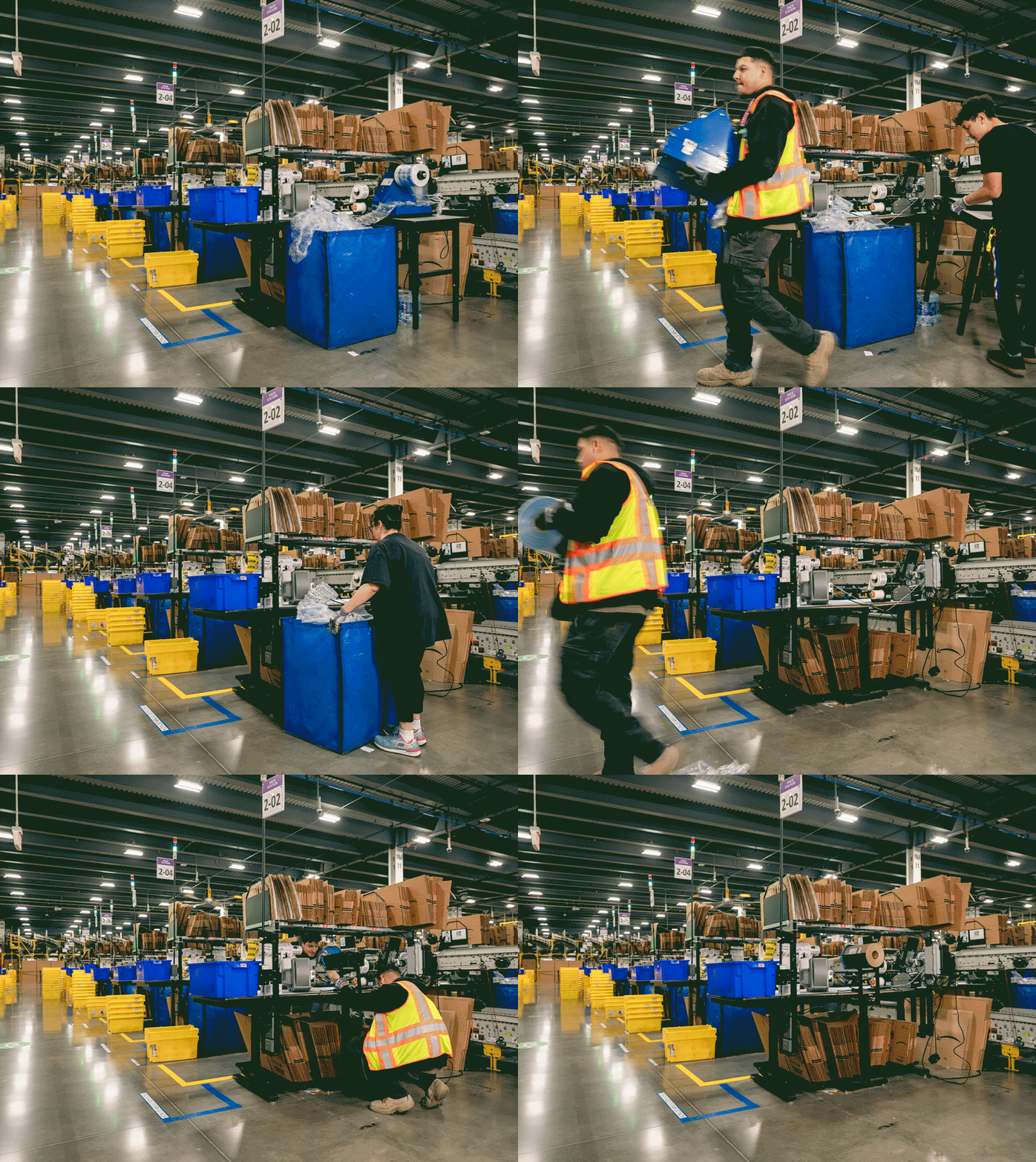
Amazon’s Ohio facility was its first U.S. center to eliminate plastic delivery packaging,

A worker loads a truck for shipment at the Amazon MCO-01 robotic fullfillment center in Orlando.
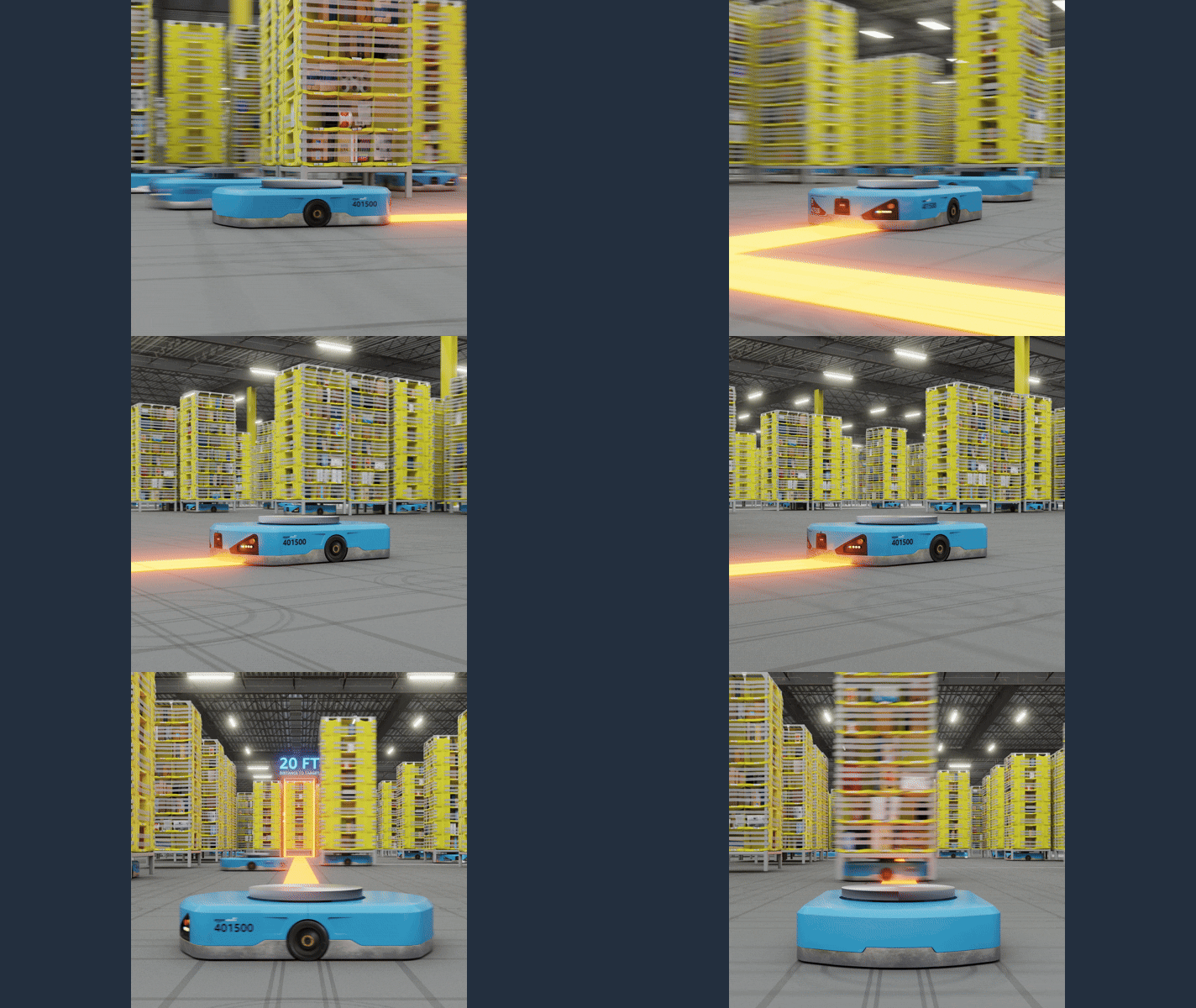
Amazon Robotics Vice President explains how robots are helping Amazon employees deliver on Prime Day.

Amazon UK has announced a national roll-out of its partnership with on demand delivery specialist Gopuff.

But for the right buyer, these assets could offer not just a salvage opportunity—but strategic leverage.

The retailer will soon use custom box-making technology to reduce waste from packaging across Europe.

It’s a testbed for the convergence of agentic AI and dynamic robotics—where hardware and software fuse to reimagine the last mile.

Amazon has been on a multi-billion dollar and decade-plus long crusade to be a leader in robotics.

Online retail giant provides “Buy with Prime” service for Prime subscribers who purchase Adidas goods stored in its DCs.

Amazon just announced the expansion of one-hour and three-hour delivery across the U.S.