
New Drone Facility in Tokyo Set to Change Logistics in Japan
A gigantic logistics facility housing a research and development center for next-generation drone technology is now open in Itabashi Ward, Tokyo. The facility’s completion ceremony was on Oct. 2.
MFLP/LOGIFRONT Tokyo Itabashi was jointly developed by Mitsui Fudosan Co. and Nippon Steel Kowa Real Estate Co. on the site where a Nippon Steel Corp. factory once stood. The six-story, seismically isolated building boasts a total floor space of 256,000 square meters — the largest in Tokyo. The building is reportedly almost fully leased, with Yamato Transport Co. among others having moved in.

The facility is a 10-minute walk from a Toei Subway station and about three kilometers, or a 10-minute drive, from a Metropolitan Expressway entrance.
The most notable feature of the facility is the Itabashi Drone Field, a site for research and development. As a rare permanent drone test site in Tokyo’s 23 wards, the environment of a spacious site by a river combined with the capital’s largest logistics facility allows for various experiments and research to be carried out. Last-mile drone deliveries to the upper floors of high-rise apartments, joint transport with unmanned vehicles and using ports where drones take off and land automatically are among the tests that can be conducted on the field.
The drone facility is managed and operated by the Japan UAS Industrial Development Association (JUIDA), a general incorporated association that works on the industrial promotion of next-generation mobile systems, and Blue innovation Co., a leading company in the drone industry.

By creating a cooperation system with various companies and organizations, they aim to solve social issues such as labor shortages due to the so-called 2024 logistics problem and natural disaster response through experiments and research.
The facility opened to nearby residents on Oct. 26. The drone pilot workshop was particularly popular among visitors. Many people queued up to participate and had fun using the drones to pick up snacks.
“I play a lot with a mini drone at home, but here I got to [use a drone to] pick up sweets, and it was so much fun. I want to try it again,” said a 7-year-old boy who walked from a nearby apartment with his father to visit the facility.

The father, a company employee in his 40s, said, “Since this is a logistics facility, I’m a little worried as the truck traffic may increase, but I’m looking forward to things like drone delivery experiments.”
The facility also houses the Itabashi Ward disaster delivery station, which serves as a hub for delivering goods to evacuation centers in the event of a disaster, and a green space is also available for the local community.


Amazon’s Project Tetromino Takes Aim at the Last Mile’s Hardest Automation Problem.
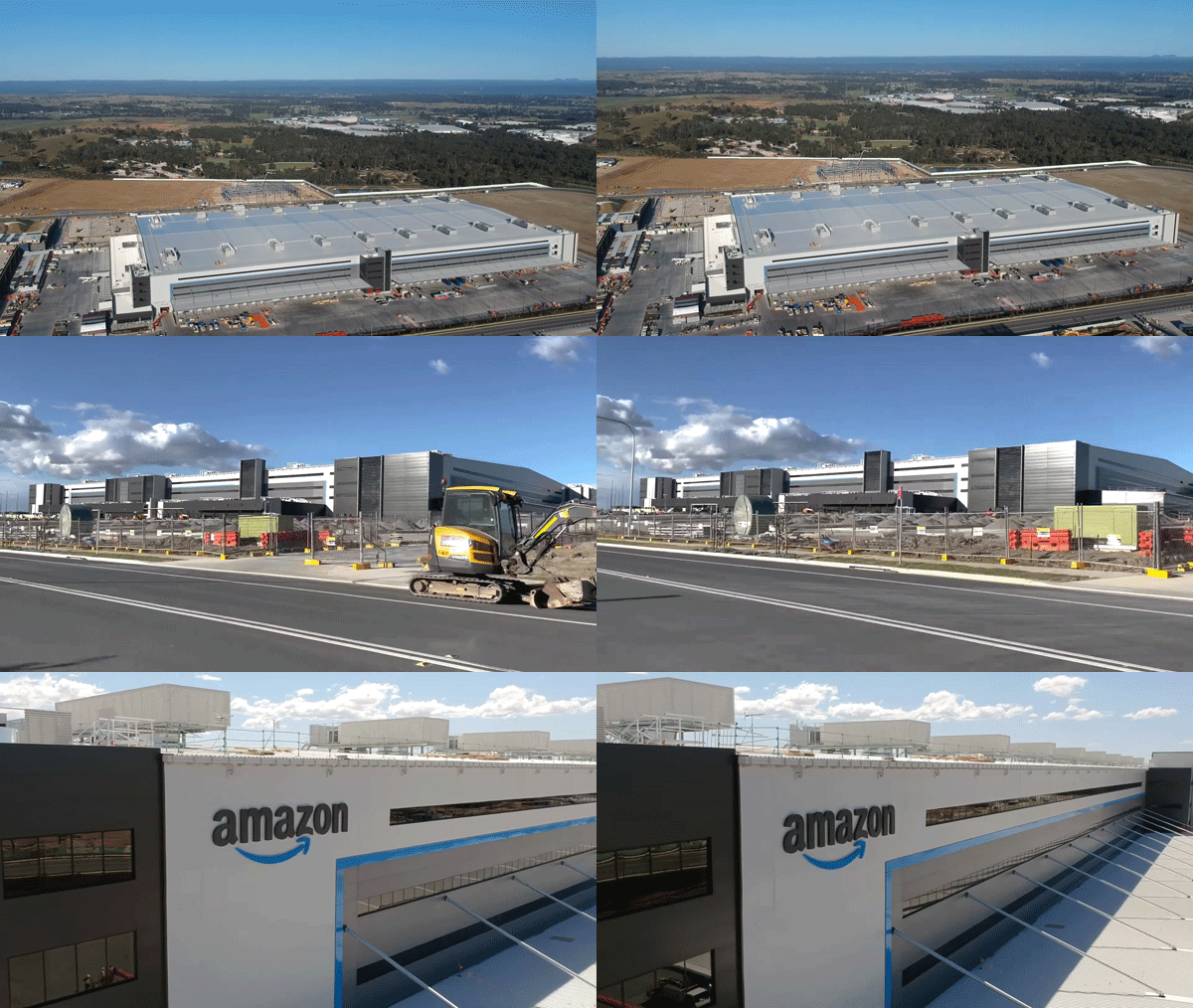
If you’ve ever wanted to see inside one of Amazon’s fulfilment centres, here’s your chance to see how your online shopping cart gets to your doorstep.
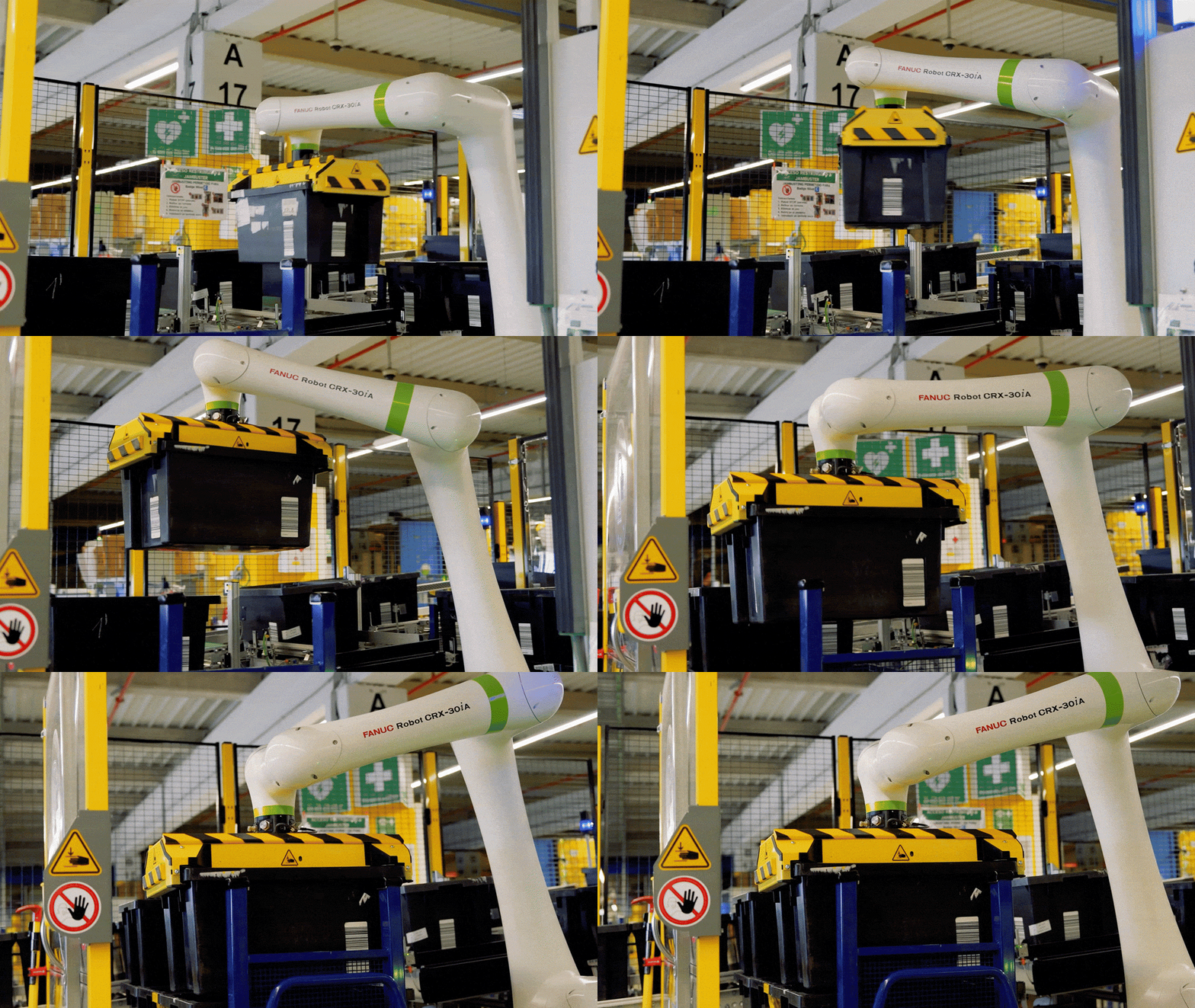
Amazon announced a major €10 billion investment to expand and modernize its European fulfillment network.
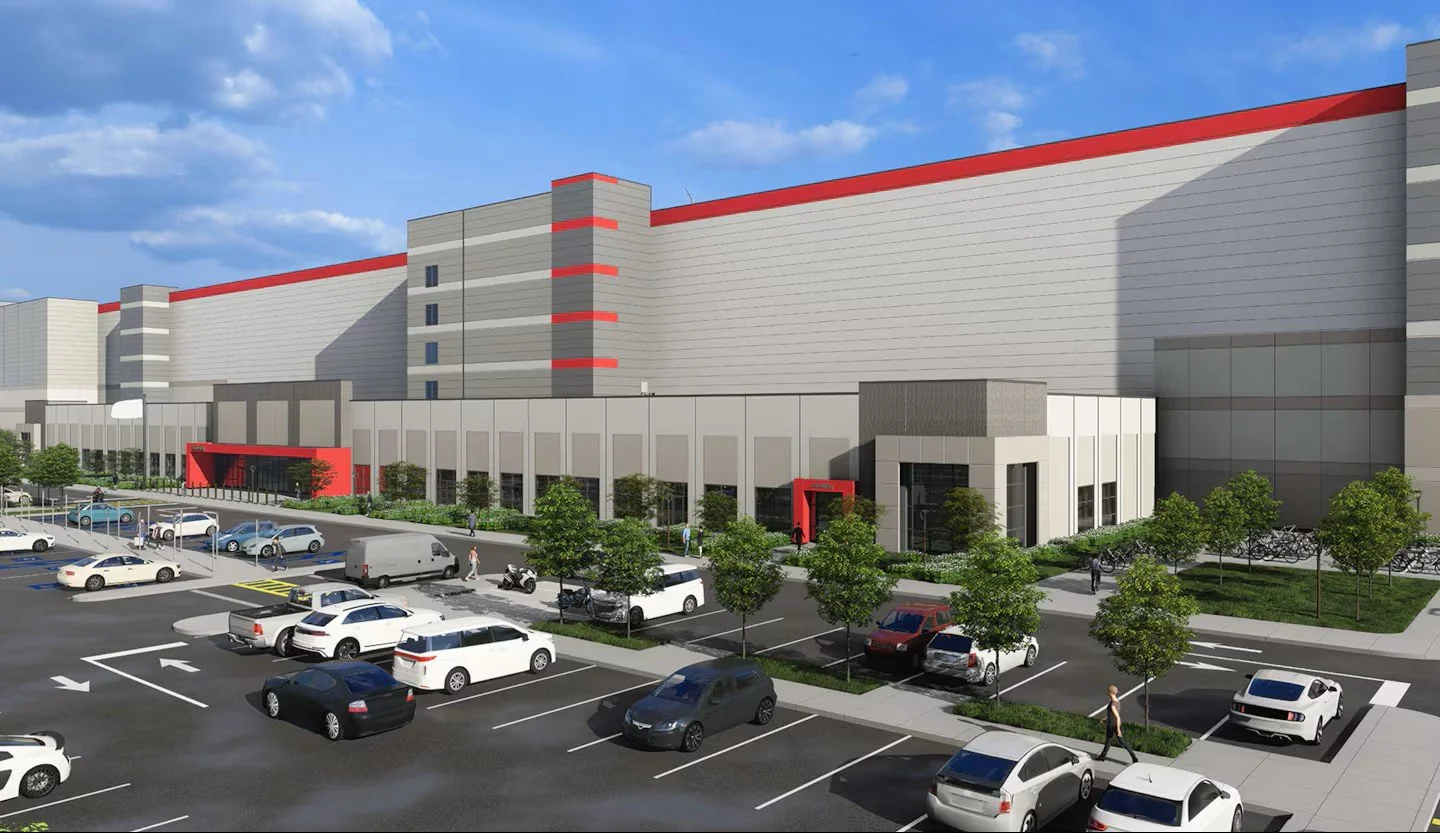
Amazon is dismantling part of its largest facility under construction in Ottawa — a rare move that suggests a shift in how the site is being designed and automated.

Amazon is essentially "franchising" its fulfillment infrastructure to solve the rural density problem.
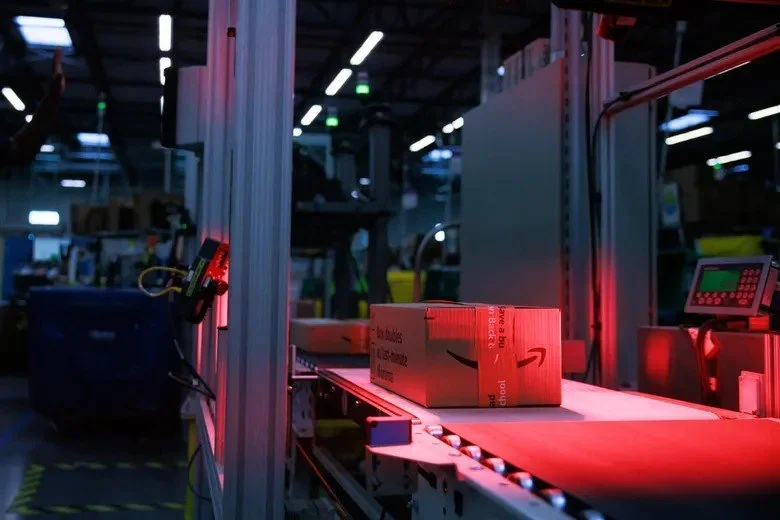
The robots inside Amazon's Kent Fulfillment Center are getting smarter — and the company is pressing forward with new technology.
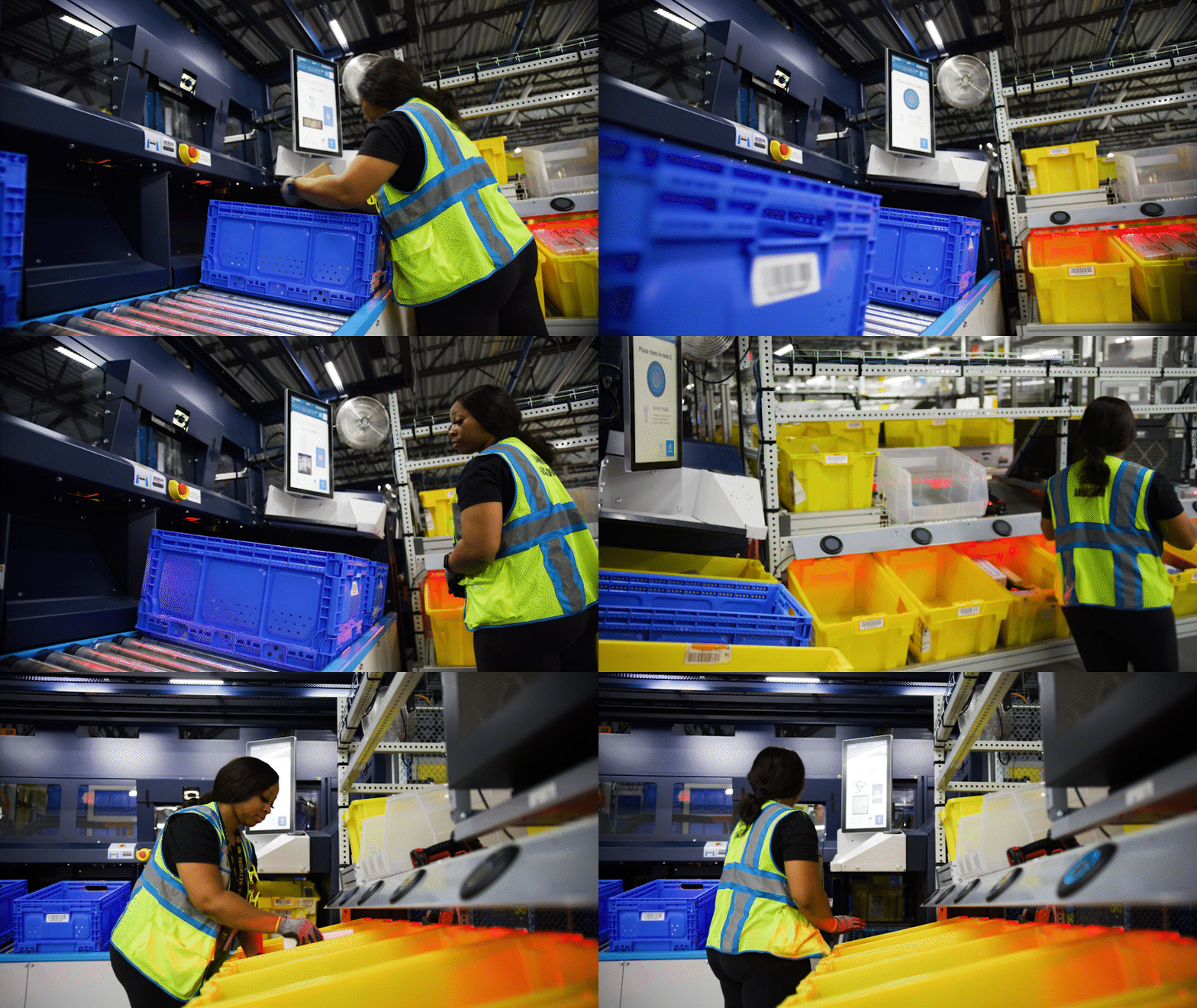
Amazon did not achieve this speed through a single breakthrough technology
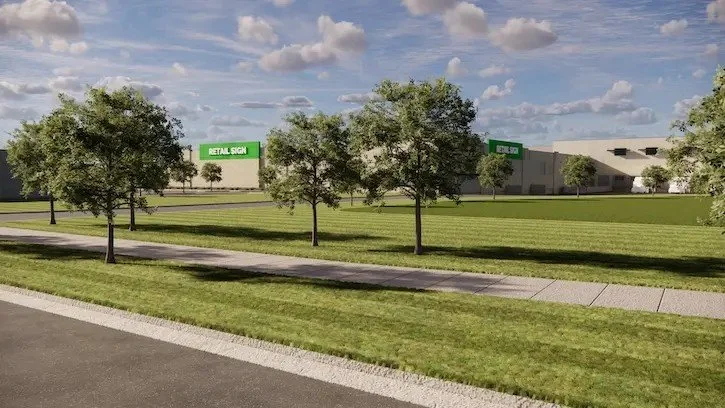
What the Orland Park retail proposal reveals about Amazon’s push into Walmart-scale physical retail

The model is specifically built for single-item, impulse, and urgent purchases, a category with high repeat potential and strong margin dynamics once density is optimized.

Amazon has opened a new kind of warehouse in Elkhart, Indiana — one that challenges nearly every convention in logistics facility design.
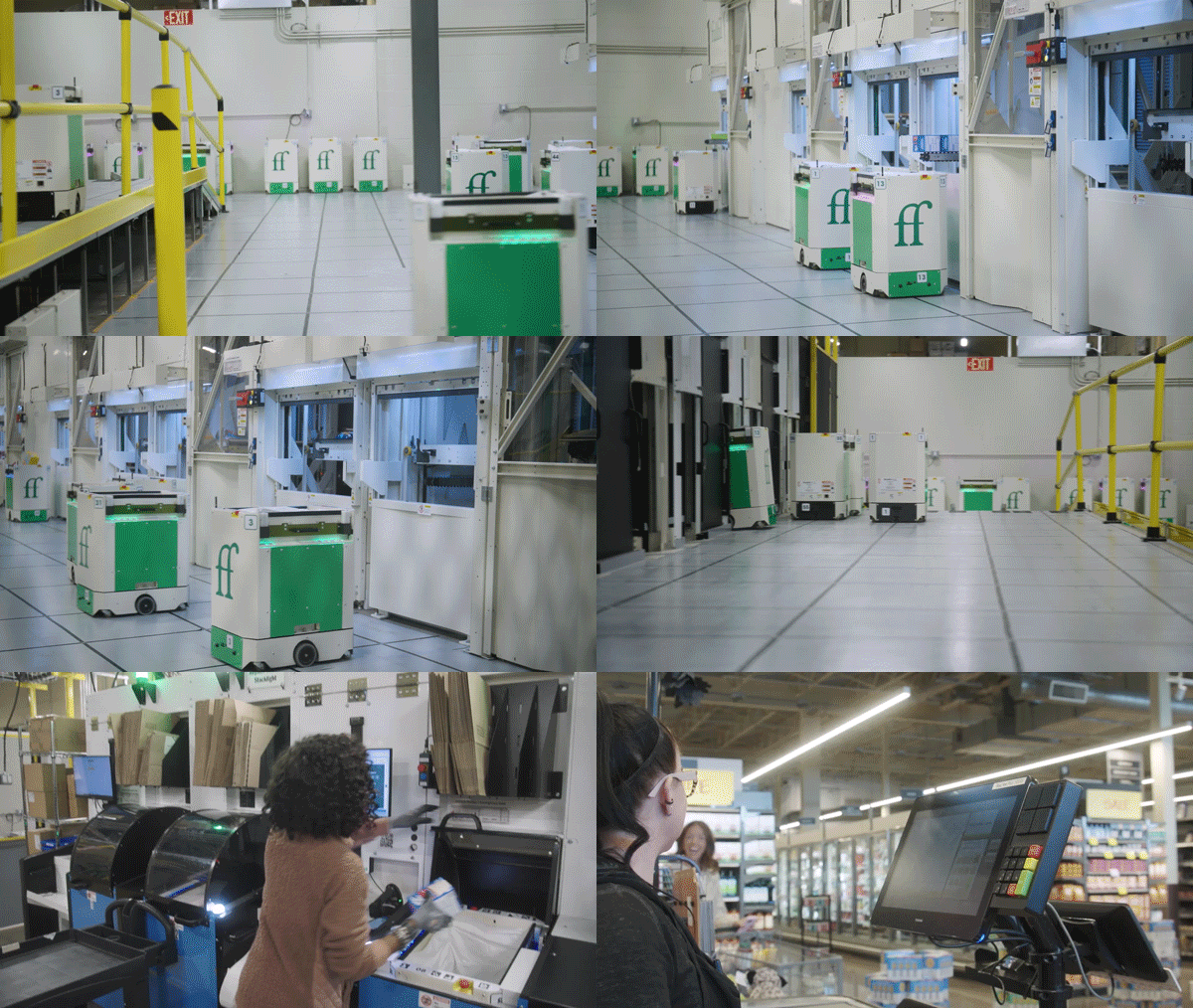
Amazon has built a 10,000-sq-ft automated micro-fulfillment center inside Whole Foods — where customers can scan, order, and pick up items in minutes.

These smaller, high-velocity facilities store frequently purchased products—from fresh food and groceries to personal-care items and small electronics.

Meet Sparrow, Cardinal and Proteus. They’re the robots that, step by step, are replacing human workers in the company’s warehouses.
Amazon Robotics' Chief Technologist discusses his journey to helping the world's largest retailer deploy one million robots.

Amazon’s new smart glasses bring AI and computer vision directly into the delivery workflow.

Amazon is taking steps to address how artificial intelligence and automation is changing its workforce.

It’s built to do something no other Amazon robot has done before — perform multiple tasks at once.

The offer builds on Amazon fulfillment service for merchants on other sales channels, including eBay, Etsy, Temu and TikTok Shop.

Ever wondered how that Amazon package arrives on your doorstep with remarkable speed?
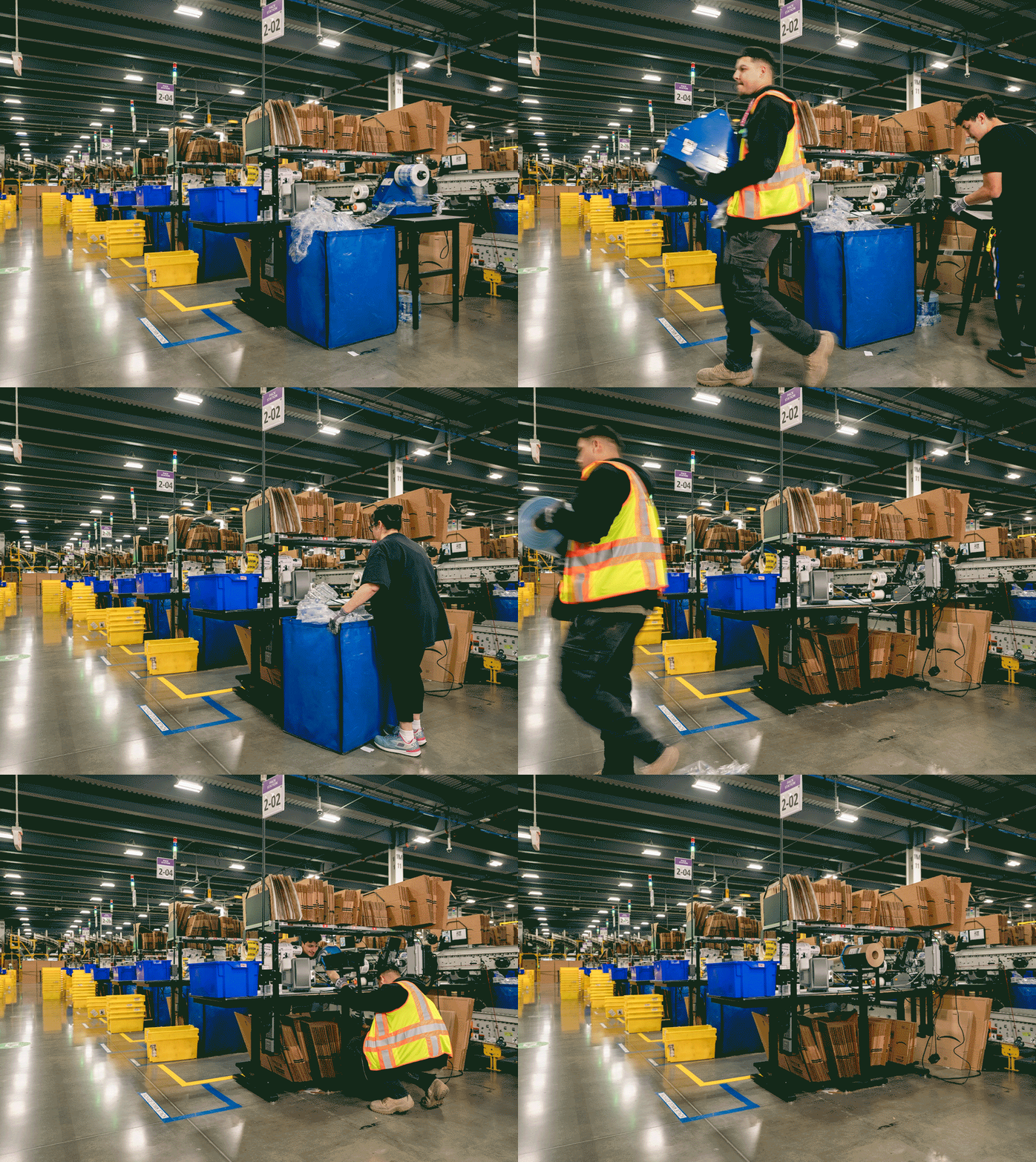
Amazon’s Ohio facility was its first U.S. center to eliminate plastic delivery packaging,

A worker loads a truck for shipment at the Amazon MCO-01 robotic fullfillment center in Orlando.
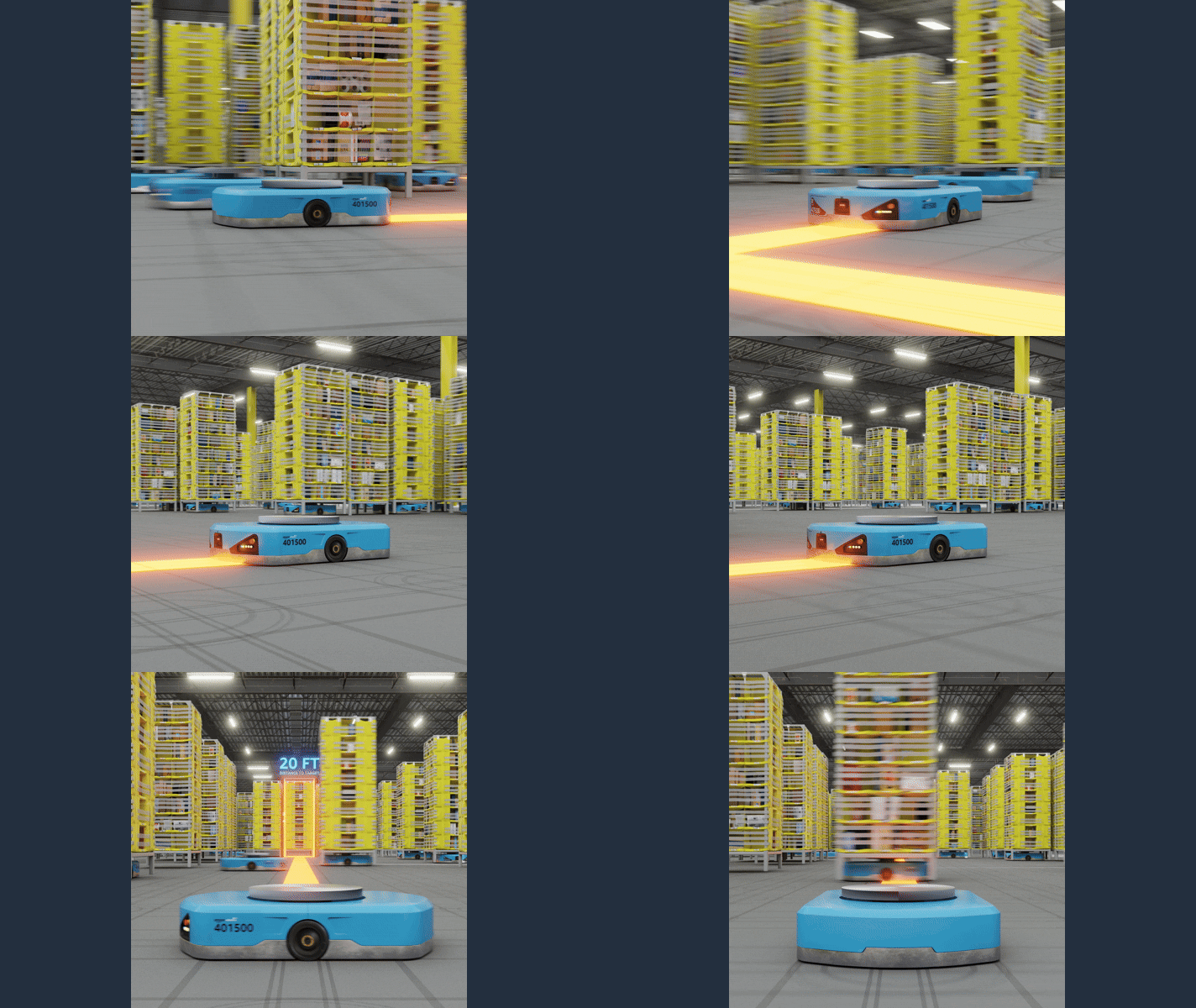
Amazon Robotics Vice President explains how robots are helping Amazon employees deliver on Prime Day.

Amazon UK has announced a national roll-out of its partnership with on demand delivery specialist Gopuff.

But for the right buyer, these assets could offer not just a salvage opportunity—but strategic leverage.

The retailer will soon use custom box-making technology to reduce waste from packaging across Europe.

It’s a testbed for the convergence of agentic AI and dynamic robotics—where hardware and software fuse to reimagine the last mile.

Amazon has been on a multi-billion dollar and decade-plus long crusade to be a leader in robotics.

Online retail giant provides “Buy with Prime” service for Prime subscribers who purchase Adidas goods stored in its DCs.

Amazon just announced the expansion of one-hour and three-hour delivery across the U.S.