
Patrolling Humanoid Robot Falls Down Staircase at Hong Kong Airport
A robot accident at Hong Kong International Airport offers an important lesson about mobile robot safety, commissioning and operational readiness.
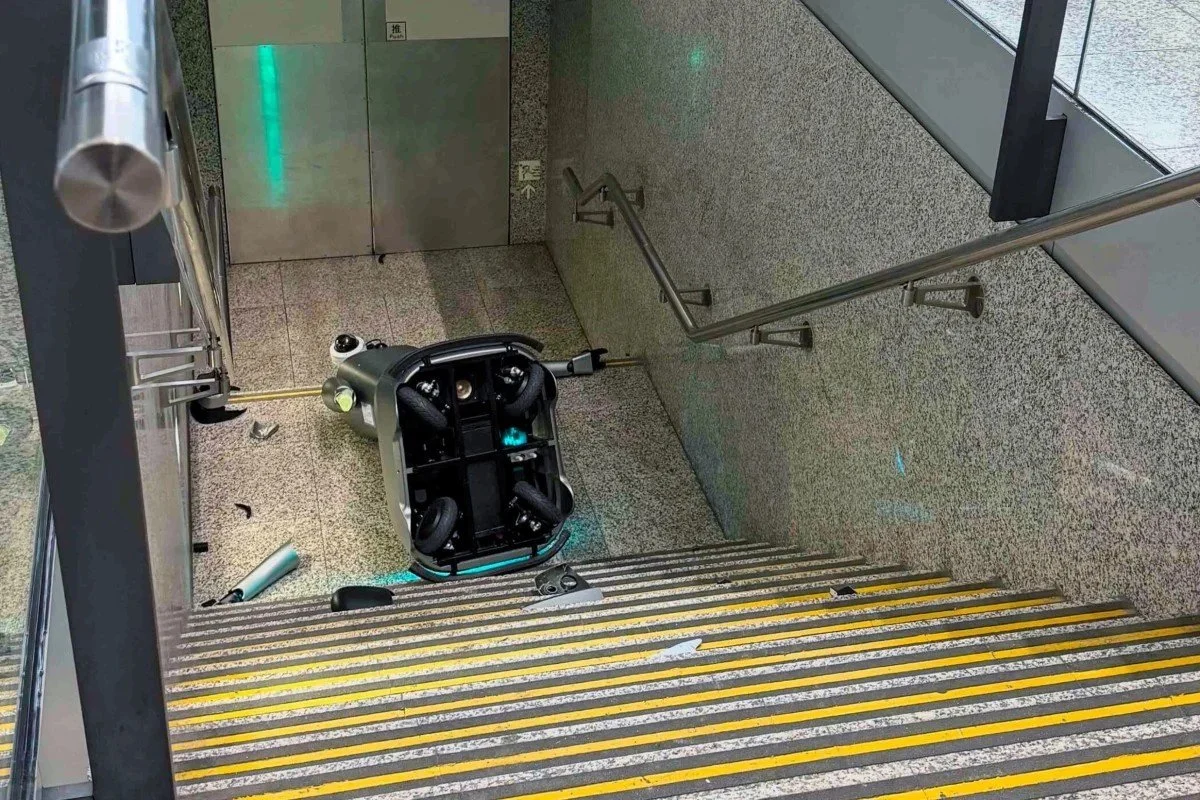
A wheeled patrol robot with a humanoid upper body recently fell down a staircase during a trial at Hong Kong International Airport. The robot was partially damaged, but fortunately the test was being supervised in a non-public area and no one was injured.
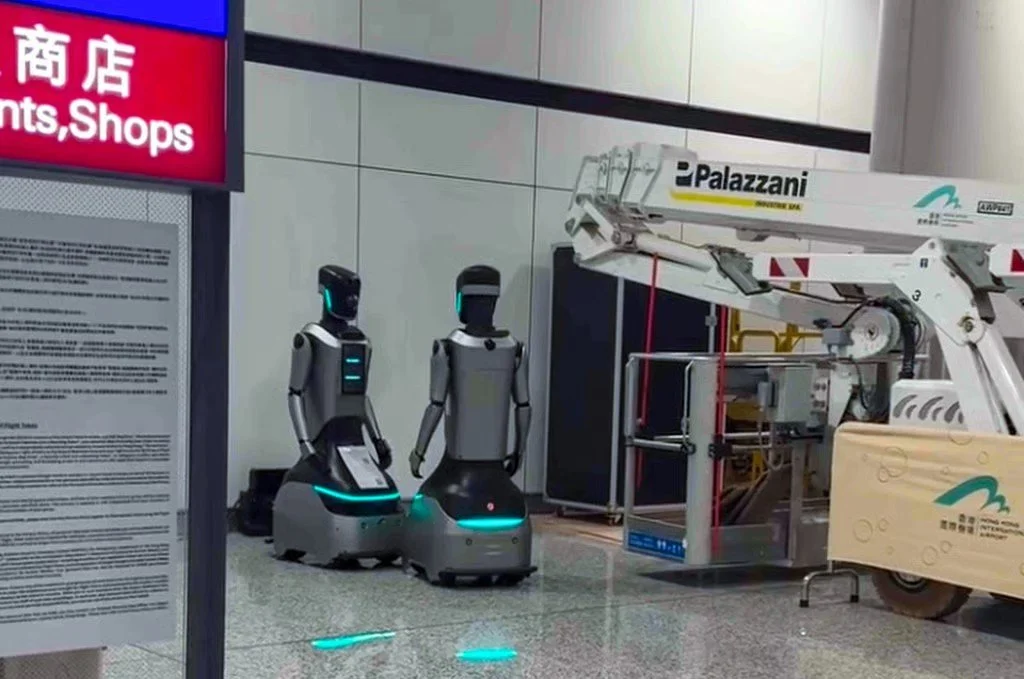
Although some reports described the machine as a humanoid robot, it was not a bipedal robot walking on two legs. It was a mobile service robot operating on a wheeled base, with a human-like head, torso, arms and hands.
That distinction matters. This was not primarily a failure of humanoid balance or locomotion. It appears to have been a failure involving autonomous mobile navigation—an issue already familiar to the warehouse automation industry.
The cause remains under investigation, and it would be premature to attribute the incident to the robot, its navigation software, the facility map, the operating procedures or human intervention. The more useful question is what the incident reveals about the difference between technical capability and operational readiness.
Capability Is Not the Same as Readiness
A robot can demonstrate autonomous navigation, object detection and human interaction without being ready for unrestricted operation in a complex facility.
Operational readiness requires the complete system to perform safely not only during normal operation, but also when conditions deviate from what was expected. A temporary obstruction, localization error, configuration change, sensor limitation or communications interruption can expose risks that may never appear during a controlled demonstration.
According to additional reporting, the airport robot had reportedly been under trial for approximately four months and had previously operated normally. That does not make the event insignificant. It illustrates why hours of successful operation alone do not prove that every material failure mode has been addressed.
Low-frequency events often reveal the difference between a promising pilot and a production-ready system.
The Operating Environment Is Part of the Automation System
Mobile robot performance cannot be evaluated independently from the facility in which the robot operates.
The operating environment includes routes, intersections, doors, elevators, ramps, stairs, floor openings, pedestrian traffic and temporary work areas. In a warehouse, the equivalent hazards may include loading docks, mezzanine edges, conveyor interfaces, pallet-transfer points, fire doors and maintenance zones.
These are not secondary facility details. They are part of the automation design.
Current mobile robot safety frameworks reflect this systems-based approach. ISO 3691-4 addresses driverless industrial trucks and autonomous mobile robots as systems, while ANSI/A3 R15.08 separates the responsibilities associated with the robot, its integration and its use. Both reinforce the importance of considering the deployed operating environment rather than evaluating the robot in isolation.
Human-Like Appearance Can Create the Wrong Expectations
The Hong Kong airport robot attracted attention because its upper body looked human. However, its mobility remained that of a wheeled robot.
A human-like head and arms may improve interaction, visibility or user acceptance, but they do not give a wheeled platform the mobility of a person. The robot cannot step over a threshold, recover its balance or recognize every architectural hazard simply because it resembles a human.
This is increasingly relevant as manufacturers combine humanoid features, artificial intelligence and autonomous navigation in a single product. The appearance of intelligence can easily become confused with proven operational capability.
For executives evaluating robotics, the important questions remain practical:
What operating conditions has the system actually been validated against?
Which hazards are excluded through software, physical protection or both?
Who owns the facility map, route permissions and configuration changes?
What happens when the robot loses localization or confidence in its surroundings?
How are abnormal events detected, escalated and recovered?
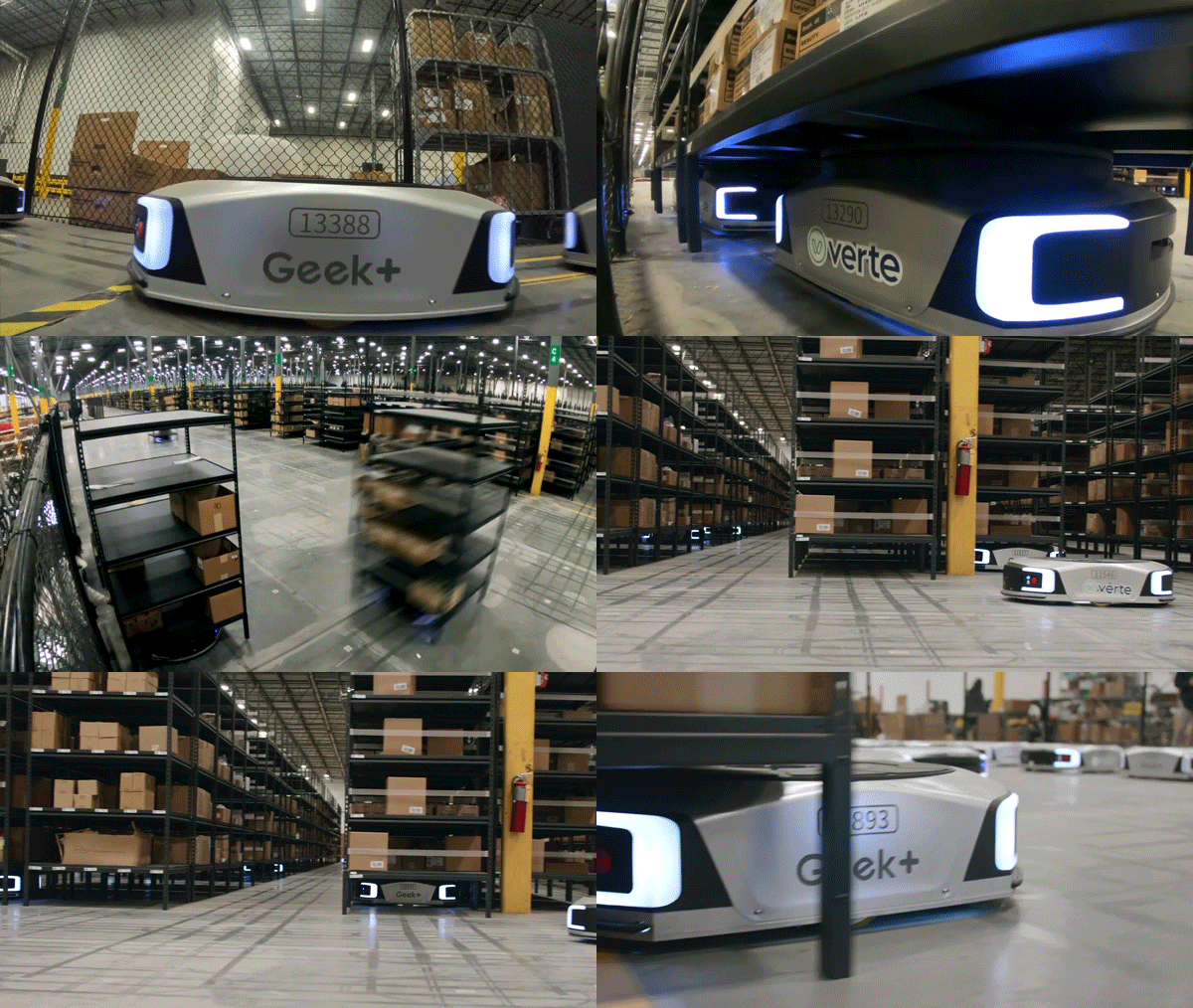
These questions are just as relevant to an AMR fleet in a distribution centre as they are to a service robot in an airport.
A Successful Pilot Should Expose Weaknesses
The purpose of a pilot is not to produce a flawless demonstration. It is to identify limitations before the system is exposed to employees, customers or critical operations.
In that respect, the airport trial did what a controlled trial is supposed to do: it exposed a potentially serious failure without causing an injury. The value of the trial will depend on whether the incident leads to a clear root-cause analysis, corrective action and broader validation of the robot’s operating environment.
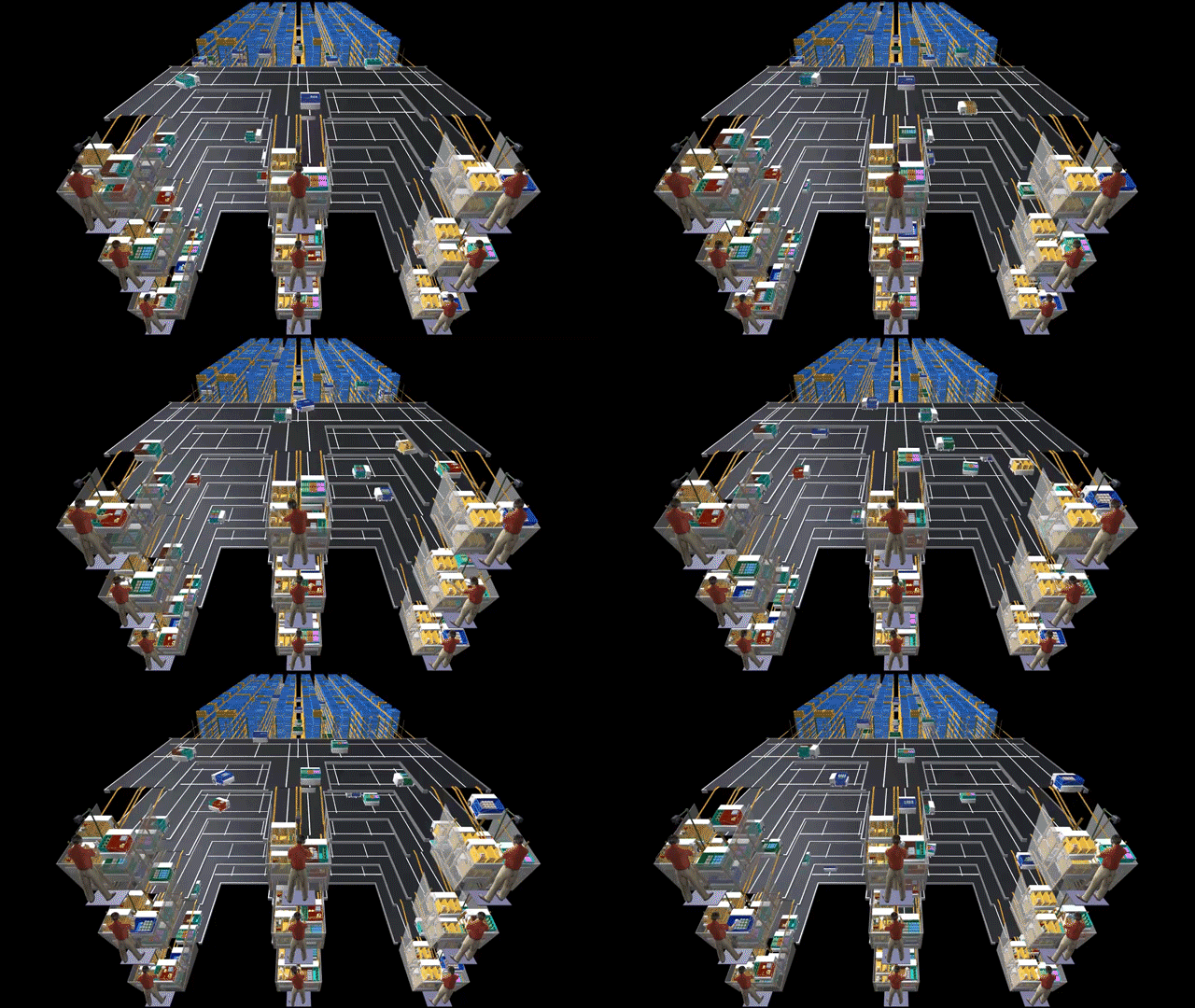
Simulation and digital twins can help identify many risks before equipment is deployed, but they cannot replace disciplined site testing. Commissioning should include abnormal conditions, recovery procedures, loss of communications, changing traffic patterns and foreseeable modifications to the facility.
The same discipline must continue after go-live. Routes change, layouts evolve, temporary obstructions appear and software is updated. Operational readiness is therefore not a one-time acceptance milestone; it must be maintained throughout the system’s lifecycle.
The Broader Lesson for Warehouse Automation
The most important question is not whether a robot is sophisticated enough to perform its assigned task.
The question is whether the complete automation system—including the robot, navigation software, facility design, safety controls, operating procedures and human oversight—is ready for the environment in which it will operate.
That is the difference between an impressive robotic demonstration and dependable automation.




At Hannover Messe 2026, SAP and Vodafone showcased a pilot conducted at Vodafone’s warehouse in Duisburg,