
What Does the US Ban on Foreign Robotics Mean for Warehouse Automation?
The FCC’s new restrictions extend beyond humanoid robots and could affect warehouse AMRs, AMR-based ASRS and grid-based robotic storage systems.
On July 28, 2026, the U.S. Federal Communications Commission added foreign-produced “advanced robotic devices” to its national-security Covered List. The decision generally prevents covered new robot models from receiving the FCC equipment authorization required for importation, marketing and sale in the United States.
For the warehouse-automation industry, the most important detail is that the FCC’s definition expressly includes autonomous mobile robots. The restriction is not limited to humanoid robots and four-legged robot dogs—and it is not limited to products manufactured in China.
Depending on how the definition is applied, the action could affect foreign-produced warehouse AMRs, goods-to-person robots, autonomous forklifts, pallet-transport robots and several categories of robotic automated storage and retrieval systems.
The restriction could be especially consequential for Chinese AMR-based ASRS solutions in which hundreds or thousands of autonomous mobile robots operate as integral components of a proprietary rack and storage system.
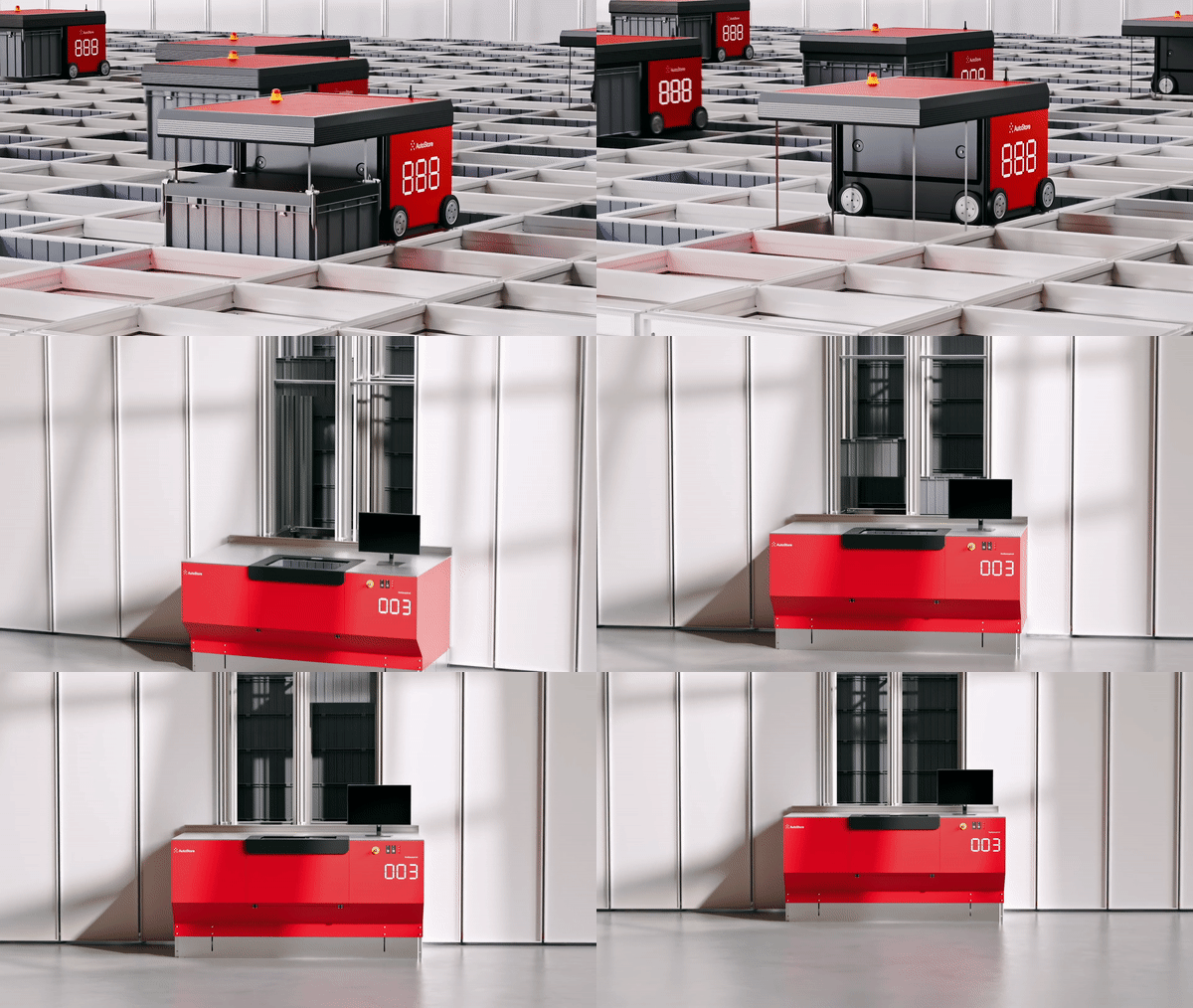
Grid-based robotic storage systems, including systems in which hundreds of robots travel across the top of a three-dimensional storage grid, also require careful consideration. Although these robots appear to satisfy several elements of the FCC definition, it remains unclear whether some could fall within the exclusion for vehicles operating only on a rail line.
Fixed industrial robots, including articulated, delta, Cartesian, gantry and SCARA robots, are specifically excluded.
The decision does not prohibit warehouse operators from continuing to use robots they already own. Previously FCC-authorized models may also continue to be imported, marketed and sold. The immediate concern is therefore primarily new models, future robot generations and products that have not previously received FCC authorization.
What Has the United States Actually Restricted?
The FCC added the following category to its national-security Covered List:
“Foreign-produced advanced robotic devices, except advanced robotic devices which have been granted a Conditional Approval by DoW.”
Equipment placed on the Covered List cannot obtain a new FCC equipment authorization. Because connected electronic equipment generally requires this authorization before it can be imported, marketed or sold in the United States, the decision effectively blocks covered new foreign-produced robot models from entering the U.S. market.
The restriction applies based on where the device is produced, not solely on the nationality of the manufacturer. It could therefore potentially apply to both Chinese and non-Chinese warehouse robots manufactured outside the United States.
The restriction does not currently prohibit:
Continued use of robots that have already been purchased.
Importation or sale of models that previously received FCC authorization.
Fixed industrial robots covered by the FCC’s stated exclusion.
Foreign-produced devices that receive Conditional Approval.
Purchases or use by U.S. federal agencies.
The action is therefore not a blanket prohibition against every foreign robot currently operating in the United States. Its immediate effect is primarily on new models and products that have not already received the necessary FCC authorization.
How Does the FCC Define an “Advanced Robotic Device”?
The FCC follows the definition established in the underlying National Security Determination.
To qualify as an advanced robotic device, a machine must be a mobile mechanical device—including an autonomous mobile robot, humanoid robot or quadruped—that meets all the following conditions:
It can move on the ground or perform locomotion, navigation or obstacle avoidance.
It can operate at a distance from a human operator or supervisor, either in response to commands, sensor data or a combination of both.
The robot, including its ground station or docking station when applicable, has a combined weight greater than 4.4 pounds, or approximately 2 kilograms.
It contains all three of the following technological elements:
A sensor capable of perceiving the surrounding environment.
Wired or wireless network connectivity capable of at least 200 kilobits per second in either direction.
Locally or remotely operated software—including firmware, artificial intelligence or machine-learning models—that controls navigation, movement, perception, data collection or remote command and control.
This is a broad definition. It is not limited to general-purpose AI robots, humanoids or experimental machines.
A conventional industrial AMR equipped with LiDAR, cameras or other navigation sensors, Wi-Fi connectivity, autonomous navigation software and a charging or docking station could appear to satisfy these criteria.
What Types of Robots Are Excluded?
The FCC definition contains several important exclusions.
The action does not include:
Connected road vehicles covered by separate U.S. regulations.
Vehicles that operate exclusively on rail lines.
Uncrewed aircraft and drone systems.
Unmanned underwater vehicles.
Medical devices regulated under the Federal Food, Drug, and Cosmetic Act, including certain surgical equipment and mobility-assistance devices.
Fixed, stationary and non-mobile industrial or medical robots.
The last exclusion is particularly important for industrial automation. It includes:
Articulated robot arms.
Parallel and delta robots.
Cartesian and gantry robots.
Selective Compliance Assembly Robot Arms, commonly known as SCARA robots.
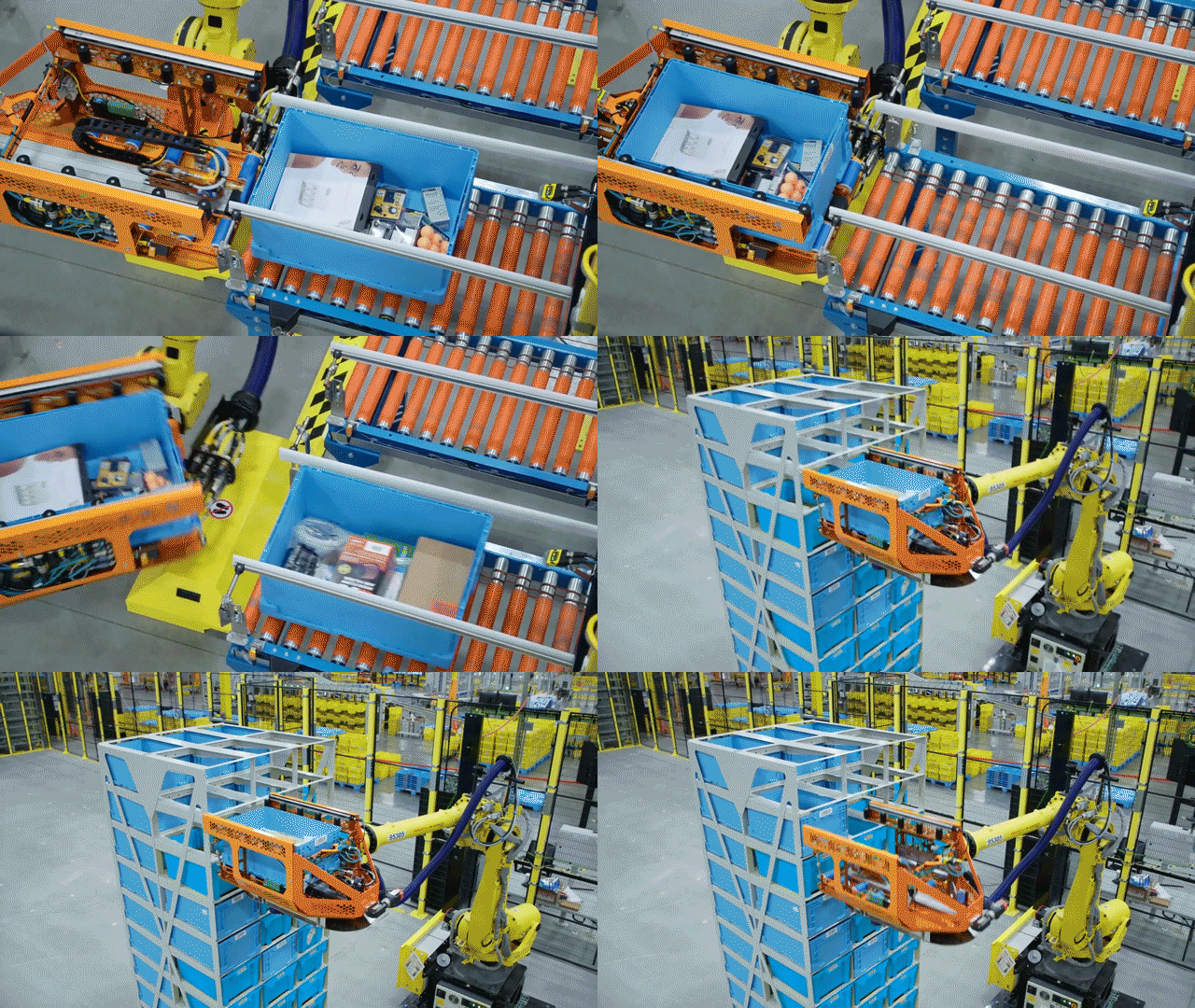
Consequently, a foreign-produced fixed robotic arm used for palletizing, depalletizing, picking, welding or machine tending appears to fall outside this particular FCC restriction.
A mobile robot carrying that same robotic arm through a warehouse, however, could potentially fall within the definition.
Which Warehouse Robots Could Be Affected?
The FCC’s explicit inclusion of autonomous mobile robots may be the most consequential part of the announcement for warehouse automation.
Potentially affected equipment could include:
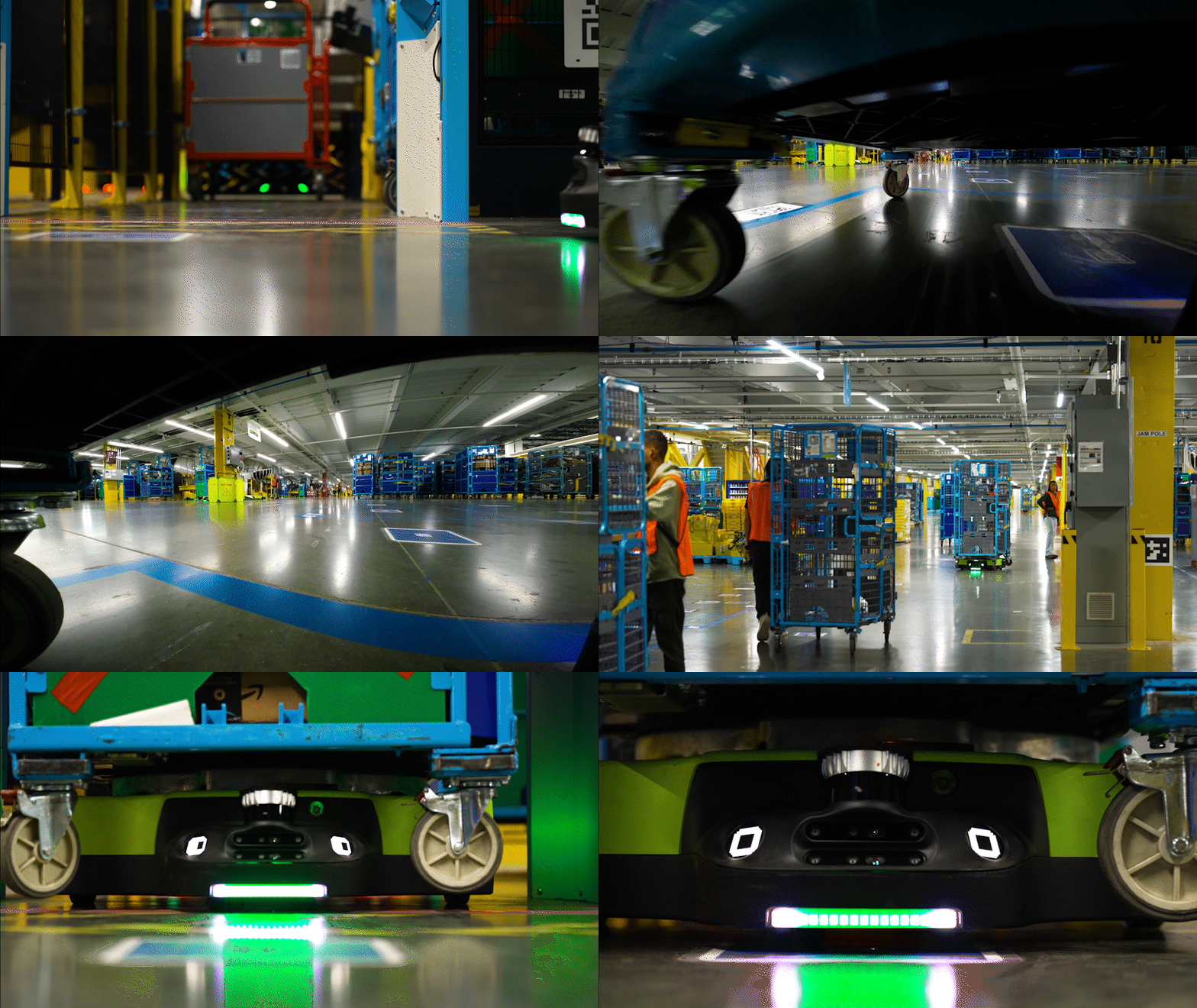
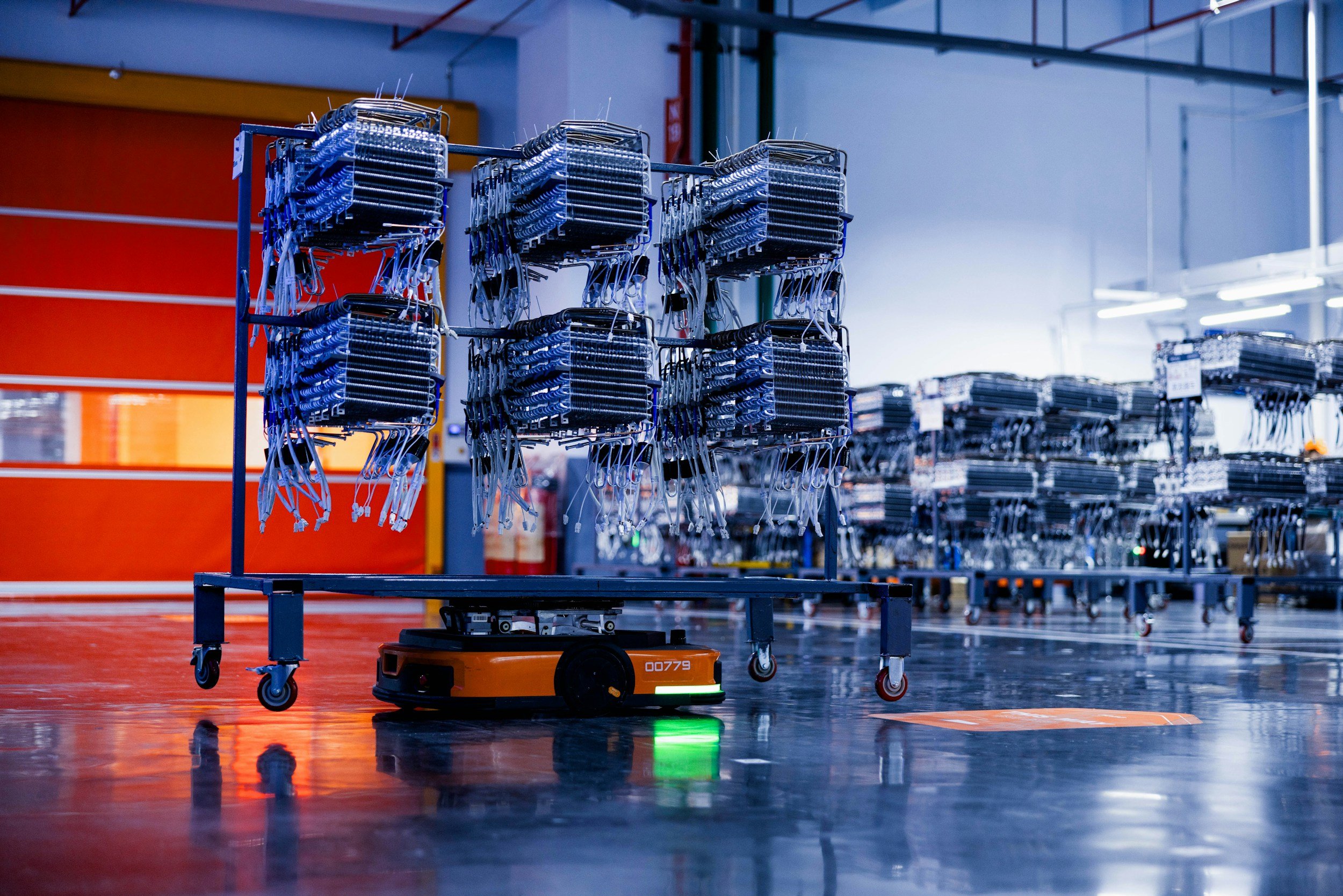
Autonomous mobile robots used to transport totes and cartons.
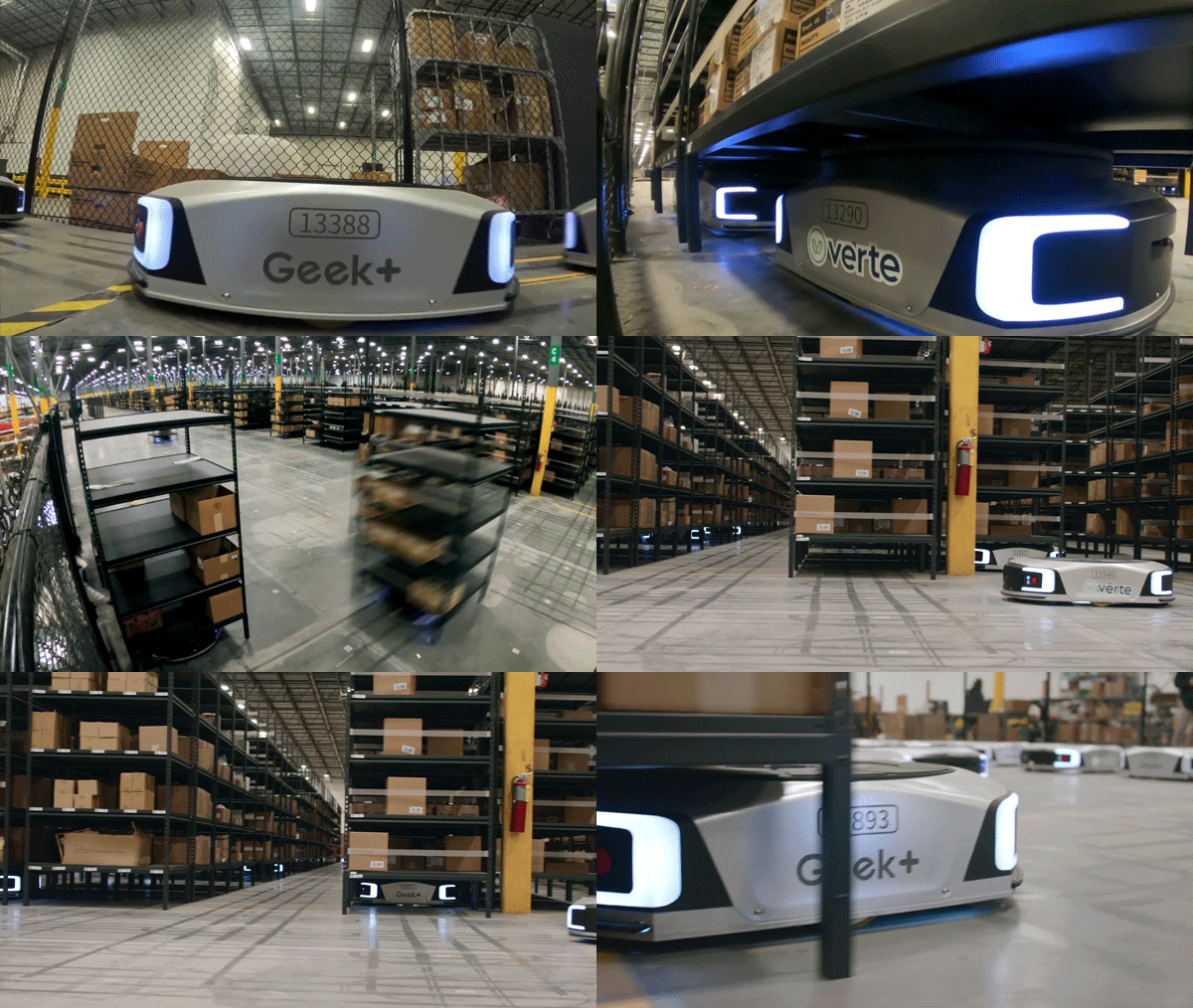
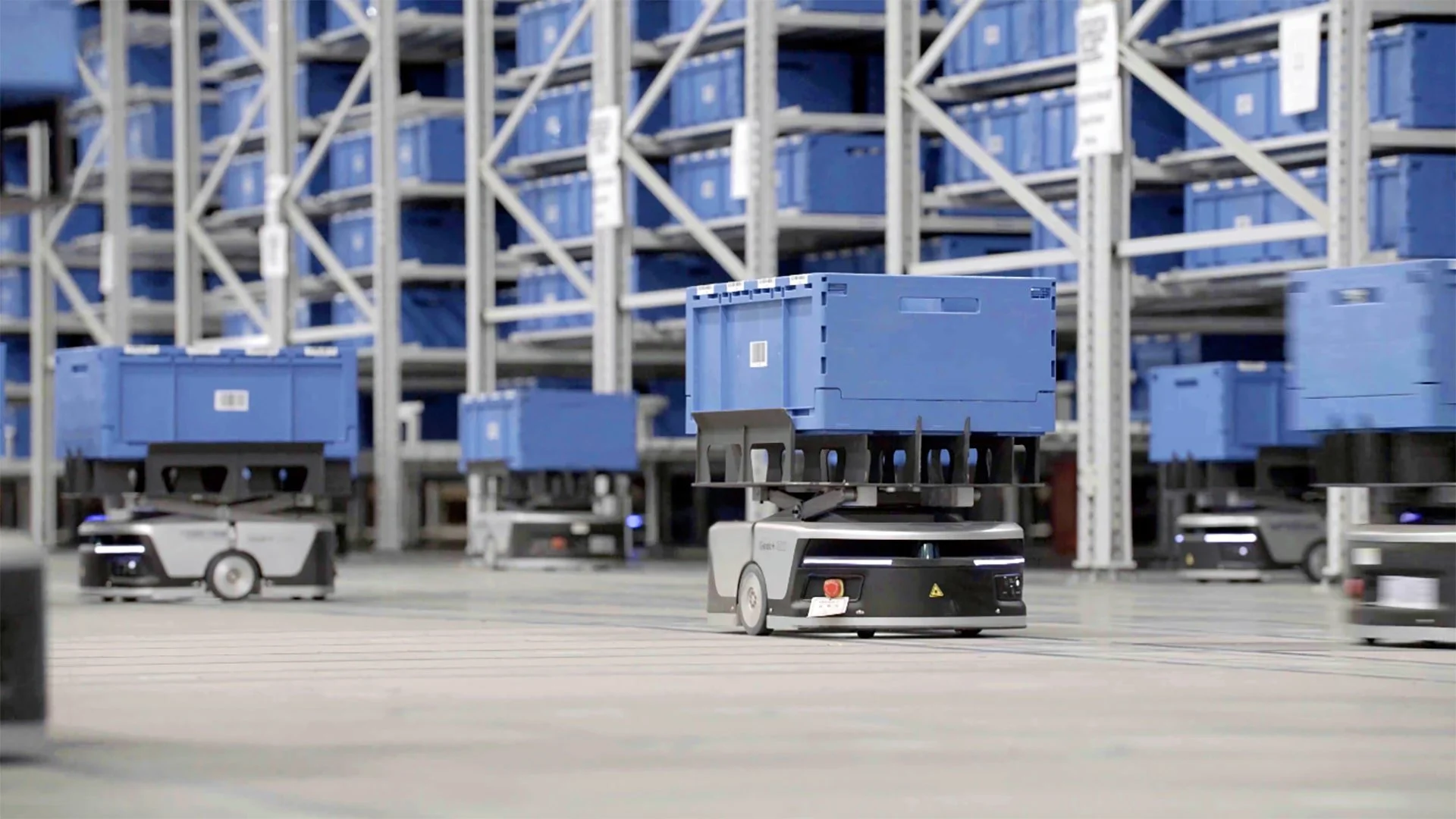
Goods-to-person mobile robots that travel beneath racks or shelving.
Pallet-transport AMRs.
Autonomous forklifts and pallet jacks.
Mobile manipulation systems combining an AMR with a robotic arm.
Inventory-scanning robots.
Security and facility-monitoring robots.
Autonomous cleaning and maintenance robots.
Mobile sorting and order-fulfilment robots.
Rack-access robots used within AMR-based ASRS solutions.
Robots operating across the top of grid-based storage systems.
The actual treatment of an individual product will depend on its mechanical design, functions, country of production, prior FCC authorization and whether the manufacturer receives Conditional Approval.
Companies should not assume that every foreign-produced mobile robot is automatically prohibited. They also should not assume that equipment is exempt simply because its supplier describes it as an ASRS, shuttle, grid robot or warehouse machine rather than an AMR.
The deciding factors are likely to include the equipment’s mobility, sensing capabilities, network connectivity, autonomous or remote operation, software and combined weight with its applicable docking or ground station.
AMR-Based ASRS Systems Could Be Directly Affected
One of the most significant implications for warehouse automation concerns AMR-based automated storage and retrieval systems.
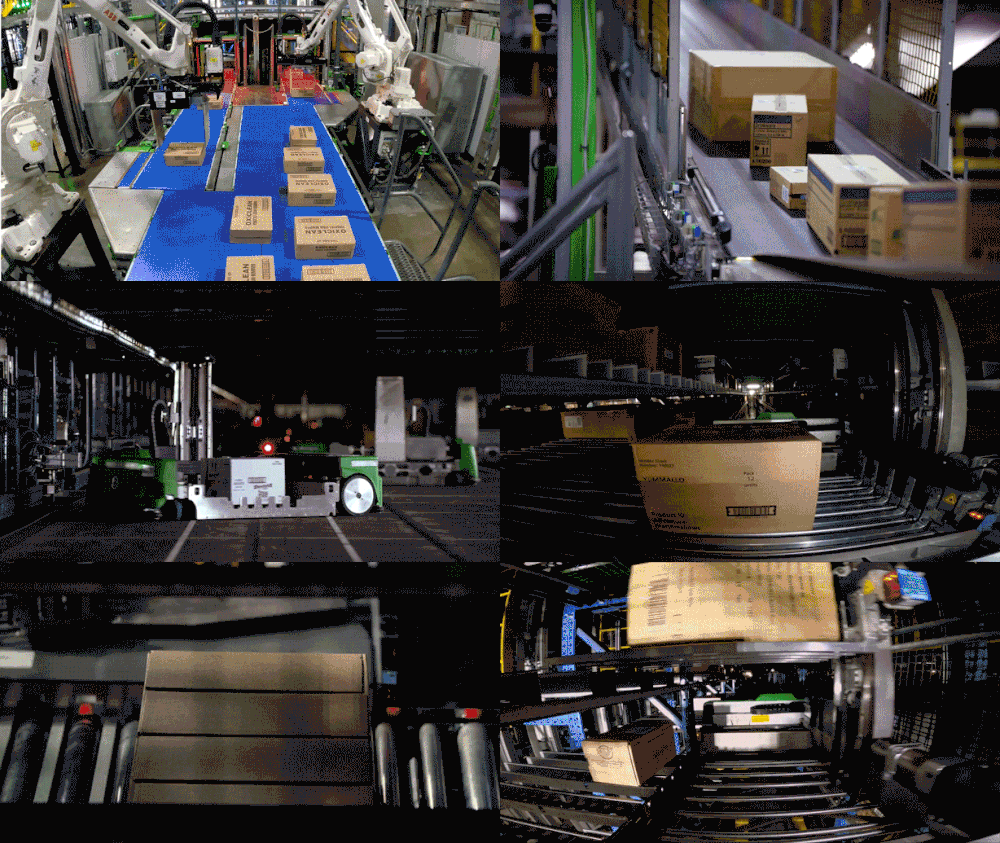
Several Chinese robotics manufacturers have developed goods-to-person systems that integrate hundreds—or potentially thousands—of autonomous mobile robots within a high-density rack structure.
Depending on the system design, these robots may:
Travel beneath storage racks.
Move portable shelving to picking stations.
Navigate within rack aisles.
Retrieve totes or cases from multiple storage levels.
Climb vertically within high-density rack structures.
Transfer loads between robots, lifts and conveyors.
Deliver inventory to goods-to-person workstations.
Operate as coordinated fleets controlled by proprietary software.
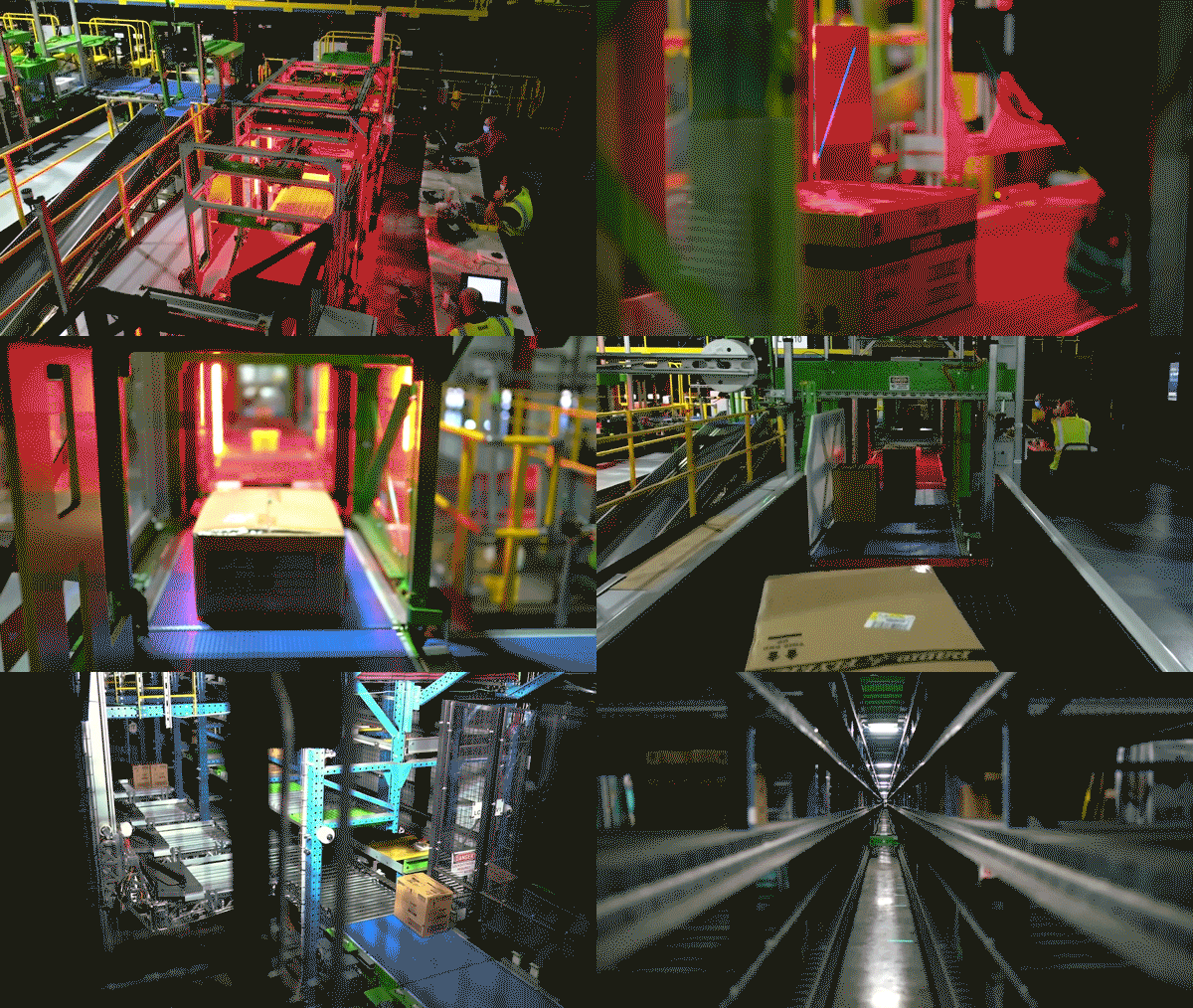
Typical AMR-based ASRS architectures may include:
Floor-based robots travelling beneath movable storage racks.
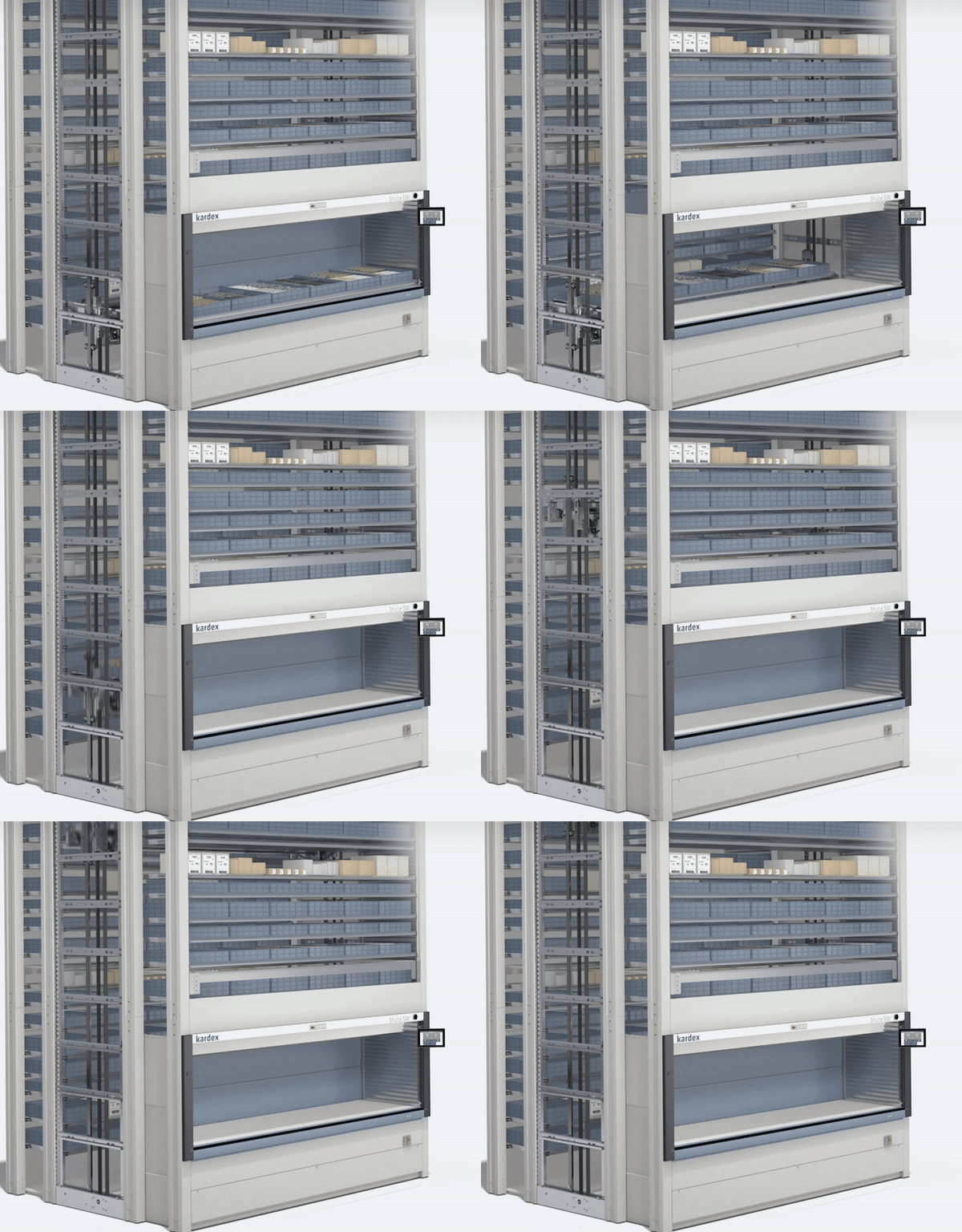
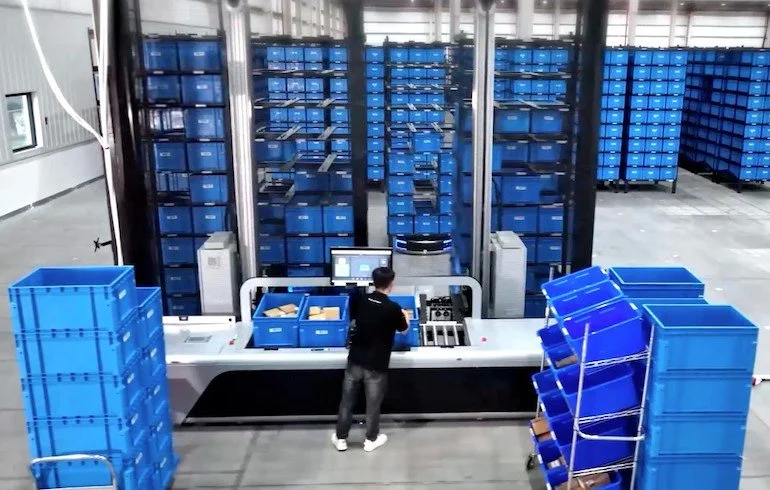
Tote-handling robots that retrieve containers from multiple rack levels.
Case-handling mobile robots operating within high-bay storage structures.
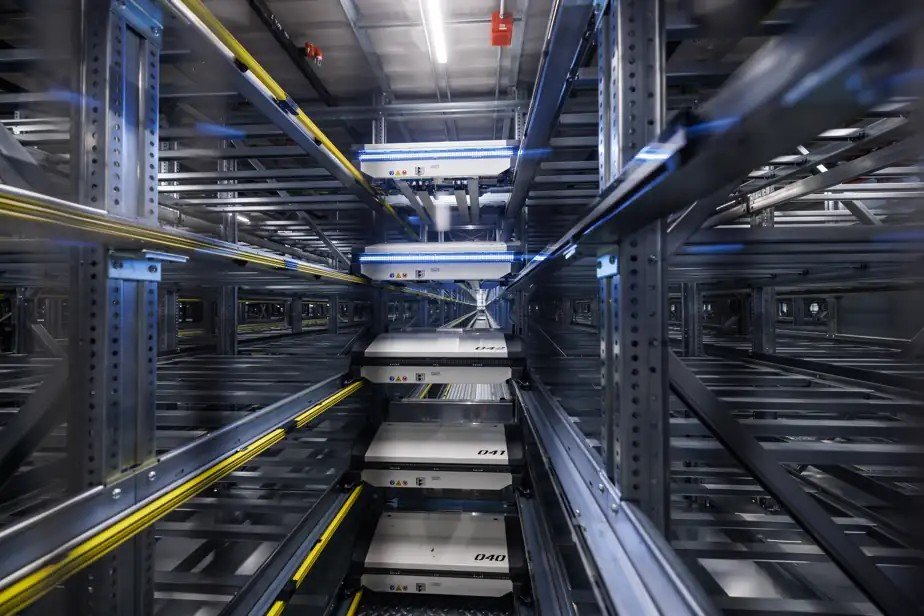
Climbing robots capable of moving vertically and horizontally within a rack.
Three-dimensional storage systems using coordinated fleets of mobile robots.
Hybrid systems combining rack-access robots, floor-based AMRs, lifts, conveyors and workstations.
These are not traditional storage racks supported by a few peripheral transport robots. The autonomous mobile robots are the fundamental operating technology of the ASRS. Without them, the system cannot retrieve, transport or sequence inventory.
Many of these robots appear particularly relevant to the FCC action because they commonly:
Perform autonomous locomotion and navigation.
Operate at a distance from human supervisors.
Respond to software commands and sensor data.
Use onboard sensors to perceive their surroundings.
Communicate continuously with fleet-management and warehouse-control software.
Depend on local or remote software for navigation, perception and movement control.
Exceed the FCC’s 4.4-pound weight threshold.
Based on the FCC definition, many of these robots could appear to qualify as advanced robotic devices. The fact that they operate within, beneath or alongside a rack structure does not automatically remove them from the definition.
Why the Risk Extends Beyond the Individual AMRs
For an AMR-based ASRS, the concern is not limited to whether an individual robot can be imported into the United States.
The commercial and operational viability of the complete storage system may depend on the continued availability of proprietary, compatible robots. If a future robot model cannot obtain FCC authorization, an operator could face difficulty:
Expanding the system’s throughput capacity.
Adding robots to accommodate higher order volumes.
Replacing damaged or obsolete robots.
Obtaining a newer robot generation after the original model is discontinued.
Relocating or replicating the system at another U.S. facility.
Upgrading wireless communications or onboard control hardware.
Maintaining fleet compatibility over the expected system life.
Supporting the system if the manufacturer withdraws from the U.S. market.
A large AMR-based ASRS may represent a multimillion-dollar investment with an expected operating life of 10 to 20 years. The rack structure may remain physically serviceable for decades, but its value could be substantially reduced if compatible robots, fleet controllers or communications components are no longer available.
This creates a potentially greater long-term risk than purchasing a smaller fleet of general-purpose transport AMRs.
A warehouse can sometimes replace standalone transport AMRs with equipment from another supplier. Replacing the robots inside a proprietary AMR-based ASRS may require substantial reengineering—or replacement—of the complete storage and retrieval system.
Chinese AMR-Based ASRS Suppliers Require Particular Review
Although the FCC restriction applies to qualifying robots produced in any foreign country, Chinese manufacturers are likely to receive particular attention because China has become a major supplier of AMR-based warehouse storage and goods-to-person technologies.
Many Chinese systems rely on large, centrally coordinated robotic fleets operating within proprietary rack structures. These systems may also depend on the manufacturer’s:
Fleet-management software.
Warehouse control system.
Warehouse execution software.
Remote-support platform.
Cloud-connected analytics.
Proprietary communications architecture.
System-specific charging and docking equipment.
For U.S. warehouse projects, purchasers should determine:
Whether each mobile robot model has an existing FCC authorization.
Whether the authorization applies to the exact robot and wireless configuration being proposed.
Whether docking stations, chargers and fleet controllers are covered by the applicable authorization.
Whether a new robot generation will require a separate authorization.
Whether the manufacturer intends to seek Conditional Approval.
Whether replacement robots can continue to be supplied throughout the system’s expected life.
Whether the rack and workstation infrastructure could support robots from another manufacturer.
Whether the purchaser will receive access to system interfaces, operational data and technical documentation.
Whether the system can operate without continuous access to a foreign-hosted cloud platform.
What remedies are available if the supplier can no longer legally import additional robots.
These questions should be addressed before a warehouse operator commits to a proprietary AMR-based ASRS.
What About Grid-Based Robotic Storage Systems?
Grid-based robotic storage systems represent another major area requiring clarification.
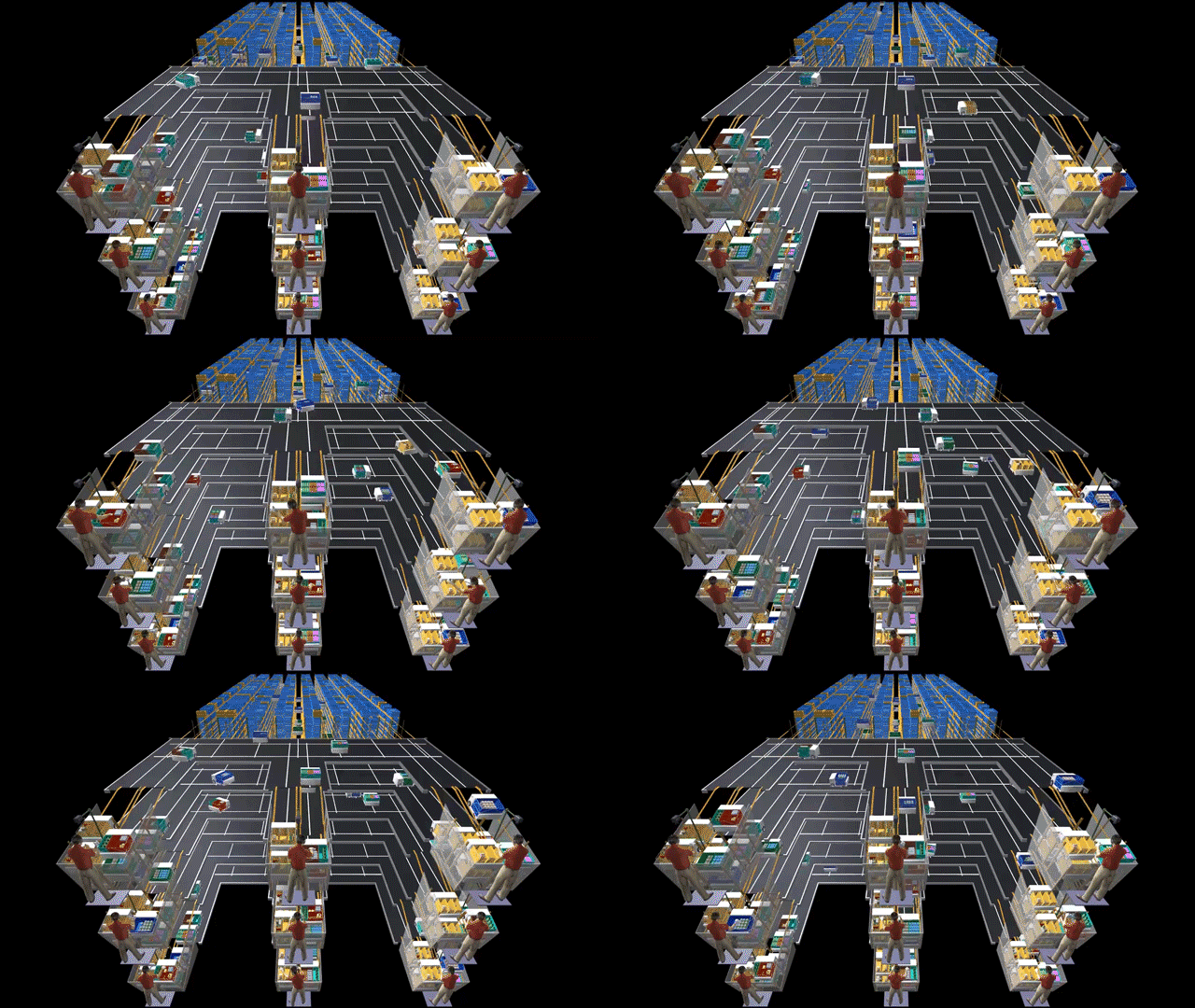
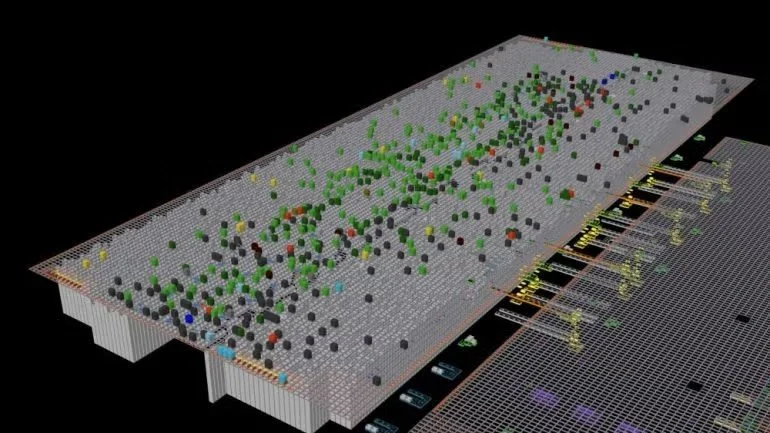
These systems can deploy hundreds of independently controlled robots travelling across the top of a three-dimensional storage grid. The robots retrieve containers stored vertically inside the grid and deliver them to picking, replenishment and other workstations.
Grid-based robots appear to satisfy several parts of the FCC definition. They are generally:
Mechanical and mobile.
Capable of independent movement.
Operated at a distance from human supervisors.
Controlled in response to software commands and sensor data.
Equipped with sensors for positioning, movement and collision avoidance.
Connected to controllers and fleet-management software through wireless networks.
Well above the 4.4-pound weight threshold.
However, their regulatory classification may not be straightforward.
Unlike conventional warehouse AMRs, grid-based robots do not navigate freely throughout a warehouse. They operate exclusively on top of a purpose-built grid and move along defined horizontal pathways. Their location, direction of travel and operating environment are constrained by the grid structure.
The FCC definition excludes vehicles that operate only on a rail line. An important unresolved question is whether a robot operating exclusively on a warehouse storage grid could qualify for that exclusion or whether the FCC would classify it as an autonomous mobile robot.
A storage grid is not necessarily equivalent to a conventional rail line. Grid robots may choose among multiple travel routes and move independently in two horizontal directions. They may also use sensors and fleet-management software to avoid collisions and respond dynamically to congestion.
Consequently, warehouse operators should not assume that grid-based robots are excluded simply because they operate on a fixed structure.
Why the FCC Action Matters for Grid-Based Systems
The consequences could extend well beyond the purchase of individual grid robots.
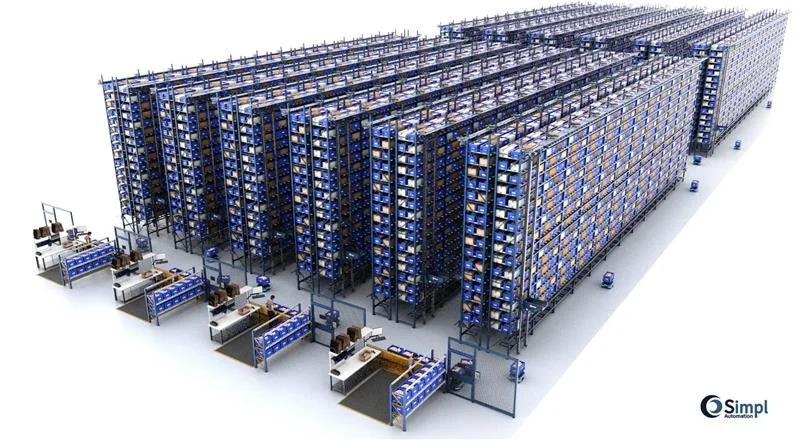
A large grid-based ASRS may contain hundreds of robots and tens of thousands—or hundreds of thousands—of storage bins. The grid, ports, controls, chargers, software and robots form an integrated proprietary ecosystem.
If future robot models cannot obtain FCC authorization, an existing U.S. operator could potentially face difficulty:
Expanding the robot fleet to increase throughput.
Replacing aging or damaged robots.
Migrating to a newer robot generation.
Adding compatible chargers or communications equipment.
Expanding the storage grid.
Replicating the system at another U.S. location.
Maintaining the system over its expected operating life.
Purchasing robots for a relocated used system.
Previously authorized robot models can currently continue to be imported, marketed and sold. However, that protection may become less valuable if the manufacturer eventually discontinues an authorized model and replaces it with a new generation requiring another FCC authorization.
For a grid-based ASRS expected to operate for 15 to 20 years, continued access to compatible robots is fundamental to the value of the complete installation.
Are Rail-Guided and Shuttle-Based Systems Excluded?
The FCC definition excludes a vehicle that operates only on a rail line. However, warehouse operators should not assume that every rack-based or structure-guided robot qualifies for this exclusion.
Warehouse ASRS designs can include:
Conventional shuttles operating exclusively on fixed rails.
Multi-level shuttles that transfer between aisles using lifts.
Mobile robots that enter and leave rack structures.
Climbing robots that move vertically and horizontally.
Robots travelling across the top of a storage grid.
Hybrid systems combining fixed lifts, shuttles and mobile robots.
The regulatory classification may depend on the specific design.
A conventional fixed shuttle that operates only on a defined rail may fall within the rail-line exclusion. A robot that leaves the rack and travels autonomously across the warehouse floor would be more likely to meet the advanced-robot definition.
A climbing robot moving both horizontally and vertically within a rack may require further interpretation. A robot travelling across multiple intersecting pathways on top of a storage grid may also differ from a vehicle operating exclusively along a conventional rail line.
A hybrid ASRS could therefore contain both excluded fixed equipment and covered mobile robotic devices.
Each system needs to be evaluated according to its actual mechanical and software architecture rather than the terminology used by its supplier.
Existing Warehouse Installations Are Not Automatically Prohibited
Companies currently operating foreign-produced AMRs are not required by this announcement to remove or stop using those systems.
According to the FCC, the change does not prohibit the continued use of previously purchased equipment. Previously authorized models may also continue to be imported, marketed and sold under the current action.
The FCC has not ordered U.S. warehouses to shut down existing foreign-produced mobile robotic fleets or ASRS installations.
However, the distinction between an existing authorized model and a materially changed new model could become important.
Changes to communications hardware, sensors, control systems or other product components may require a new equipment authorization or a change to an existing authorization. New generations of an existing robot could also require separate approval.
This could create uncertainty regarding:
Future fleet expansions.
Replacement of damaged or obsolete robots.
Migration to a newer robot generation.
Hardware upgrades.
Changes to wireless communications components.
Long-term availability of compatible replacement equipment.
Expansion into additional U.S. facilities.
A warehouse operator may therefore be permitted to continue using an existing fleet while facing restrictions on purchasing a newer or substantially modified version of the same robot.
Why Did the FCC Take This Action?
The FCC acted following national-security determinations made by a White House-convened interagency body.
The stated concerns include:
U.S. dependence on foreign robotics supply chains.
Cybersecurity vulnerabilities created by connected robotic systems.
Collection and potential extraction of operational or environmental data.
Surveillance of people and critical infrastructure.
Manipulation of a robot’s data or physical operation.
The possibility that a connected robot could be remotely commandeered.
Disruption of critical infrastructure or strategically important industries.
Modern warehouse robots routinely collect detailed information about their surroundings. Depending on the application, this information could include:
Facility layouts.
Storage and production locations.
Inventory movements.
Material flows.
Employee activity.
Operational performance.
Images and environmental data.
Connections to warehouse and enterprise systems.
Robotic systems may also connect to cloud services, fleet-management platforms, warehouse control systems, warehouse execution systems, warehouse management systems and enterprise networks.
These capabilities make cybersecurity, remote access and control of operational data legitimate considerations when selecting and deploying robotic equipment.
Conditional Approval Provides a Possible Exemption
The FCC restriction includes a process through which foreign manufacturers can request Conditional Approval.
For advanced robotic devices, the U.S. Department of War can determine that a particular device—or a class of devices—does not present the unacceptable risks identified in the National Security Determination.
If that determination is transmitted to the FCC, the affected equipment can be exempted from the Covered List restriction and remain eligible for FCC equipment authorization.
This means the long-term effect may vary considerably by manufacturer and product.
Some foreign manufacturers may receive approval based on factors such as:
Corporate ownership and control.
Manufacturing location.
Component supply chains.
Cybersecurity safeguards.
Software architecture.
Cloud-hosting arrangements.
Remote-access controls.
Data storage and transmission.
Software-update procedures.
Relationships with foreign governments or military organizations.
The FCC action could also encourage foreign robotics manufacturers to move part of their production or final assembly to the United States. However, manufacturers would still need to establish whether their equipment qualifies as domestically produced under the applicable requirements.
What Should Warehouse Operators Do Now?
Organizations planning U.S. warehouse-automation projects involving foreign-produced robots should add FCC authorization status to their technical, commercial and legal due-diligence process.
At a minimum, purchasers should ask prospective suppliers:
Is the exact robot model being proposed already authorized by the FCC?
What is the model’s FCC identification number?
Where is the robot considered to be produced?
Does the authorization cover the exact communications configuration being proposed?
Does the authorization include the robot’s docking or charging station?
Will planned hardware, sensor or communications changes require a new authorization?
Is the proposed robot a previously authorized model or a new product generation?
Has the manufacturer applied for or received Conditional Approval?
Could replacement robots or future fleet expansions be affected?
Can the system operate without dependence on foreign-hosted cloud services?
Where is operational data stored and processed?
Who can remotely access the robots?
Who controls the robot software and future updates?
What happens if the supplier can no longer legally import additional robots?
Can the system accept robots or components from another manufacturer?
What contractual protection is available if authorization problems delay or prevent delivery?
Warehouse operators should consider requiring suppliers to warrant that the proposed equipment complies with all applicable FCC requirements.
Contracts should also address responsibility for:
Authorization-related delays.
Product substitutions.
Increased equipment costs.
Inability to expand the robot fleet.
Inability to supply replacement robots.
Required changes to communications hardware.
Cybersecurity and remote-access compliance.
Long-term software and spare-parts support.
Loss of support caused by a manufacturer’s withdrawal from the U.S. market.
These protections are particularly important for AMR-based and grid-based ASRS solutions expected to operate for 10 to 20 years.
What Does This Mean for Warehouse Automation?
The immediate effect is not the removal of existing foreign-produced robots from American warehouses. The more significant issue is what happens next.
Warehouse operators may face fewer choices when evaluating new mobile robotic systems, particularly when the proposed model has not already received FCC authorization. Existing customers may also encounter uncertainty when expanding fleets, replacing older robots or upgrading to a new product generation.
The restriction could influence:
Availability of new foreign-produced AMRs in the United States.
Availability of Chinese AMR-based ASRS systems.
Regulatory treatment of grid-based storage robots.
Pricing and competition among mobile-robot suppliers.
Delivery schedules for planned automation projects.
Replacement and expansion options for existing fleets.
Long-term availability of compatible robots and components.
Supplier decisions about manufacturing or assembling robots in the United States.
Cybersecurity, data-control and remote-access requirements included in automation contracts.
AMR-based and grid-based ASRS solutions may present the greatest long-term exposure because the complete storage installation depends on a continuing supply of proprietary, compatible robots.
If replacement or expansion robots cannot receive FCC authorization, the value, capacity and useful life of the entire storage system could be affected.
The FCC announcement is being widely presented as a ban on foreign humanoid robots. Its potential effect on warehouse automation may be considerably broader.
By expressly including autonomous mobile robots, the definition reaches directly into one of the fastest-growing areas of material-handling automation.
Companies planning U.S. warehouse projects should now confirm the FCC authorization, country of production and long-term regulatory status of proposed mobile robots before committing to a particular supplier or proprietary system architecture.




At Hannover Messe 2026, SAP and Vodafone showcased a pilot conducted at Vodafone’s warehouse in Duisburg,