
Sky-High Warehouses: Chicago's Bold Multistory Pioneers
The 1.2 million-square-foot Chicago project began in August 2022 on speculation, or without leases signed in advance.
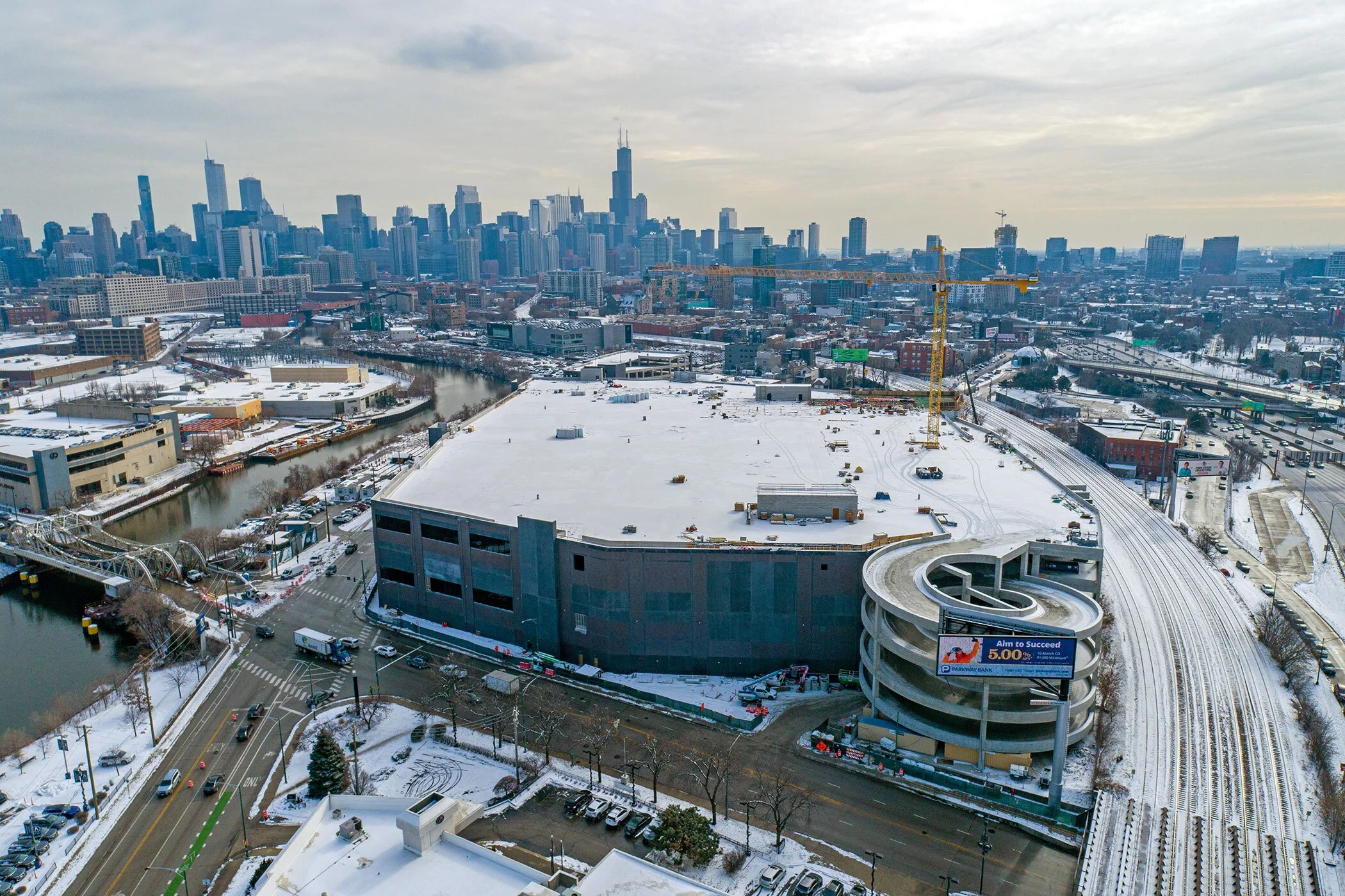
As Logistics Property Co. closed in on a deal to buy land near Chicago’s Goose Island in 2022, the firm had one major complaint: The well-located site wasn’t big enough to hold more than one big warehouse — or so they thought.
Turns out, it could contain more than one huge storage space, once the Chicago-based developer opted to essentially develop two distribution centers atop one another at 1237 W. Division St.
In the first project of its kind in the city, Logistics Property is in the late stages of constructing a modern, vertical warehouse supported by a series of ramps big enough to accommodate cars, delivery vans and trucks, and even full-sized semis — on more than one floor. The move throws down the architectural gauntlet to rival area developers, raising the bar on what can be done with warehouses.
Just months before the project is completed, and with no tenants signed yet, the fate of the vertical warehouse project is sure to be closely watched by rival developers, in Chicago and across the country. An expected completion in September comes as demand for U.S. industrial space remains far above typical levels, but below record levels seen earlier in the pandemic.
“It’s a collaborative market where you spend a lot of time with competitors,” said Aaron Martell, a founding partner and executive vice president at Logistics Property. “Everyone has a dog in the fight. Our dog is the biggest dog in the fight. I think people want to see it succeed because they want to see more of it.”
Multistory distribution centers are a phenomenon seen for decades in densely populated areas of Asia and Europe, but only in the past few years has it reached U.S. cities such as Seattle, New York and San Francisco.
The Chicago developer, which last year closed a $1.8 billion fund for projects throughout the country, decided to try its first vertical project on an 11.5-acre site it bought near a Kennedy Expressway interchange and the Chicago River. The firm said there are $2 billion in annual online purchases within a 5-mile radius of the site, an enticement for retail tenants to use such space to distribute orders onto trucks for delivery to doorsteps.
The 1.2 million-square-foot Chicago project began in August 2022 on speculation, or without leases signed in advance. Martell said interest from tenants has been strong, with e-commerce or other consumer products companies, grocers, package delivery companies and even movie production companies as potential tenants.
When completed, it will be the largest industrial space close to both the Loop business district and densely populated North Side neighborhoods.
Aside from the sheer size, the developer is betting that other attributes, including clear ceiling heights up to 36 feet and room for large vehicle fleets, will cause the facility — a pair of connected structures with two levels for product storage and five levels of parking connected to ramps — to stand out, particularly compared with older, smaller facilities on space-constrained Goose Island just across the river.
The Chicago project is nearing completion amid 6% overall vacancy nationally, far above the all-time low of 3.9% in mid-2022 but still well under the 20-year average of 7.3%, according to CoStar data.

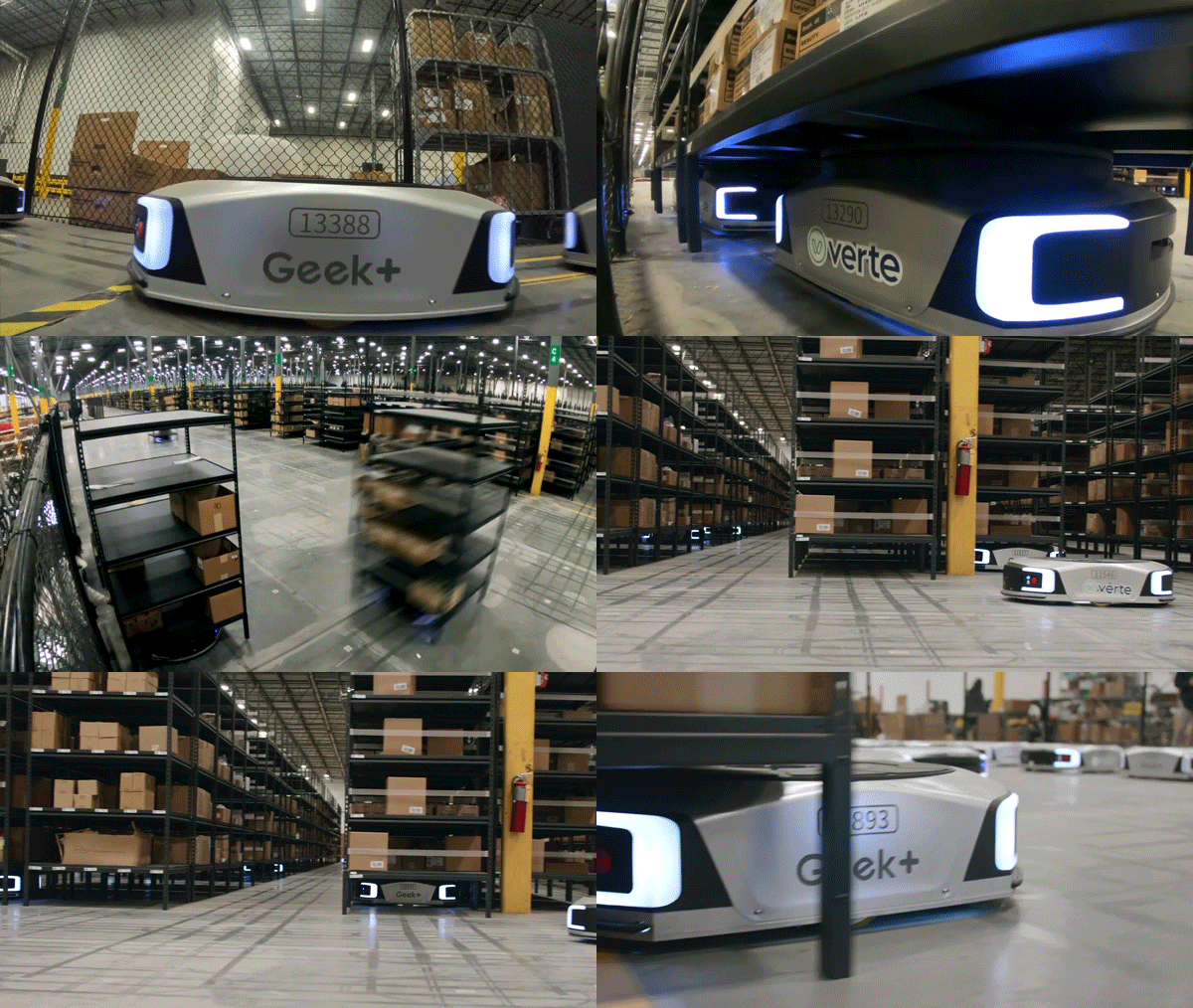
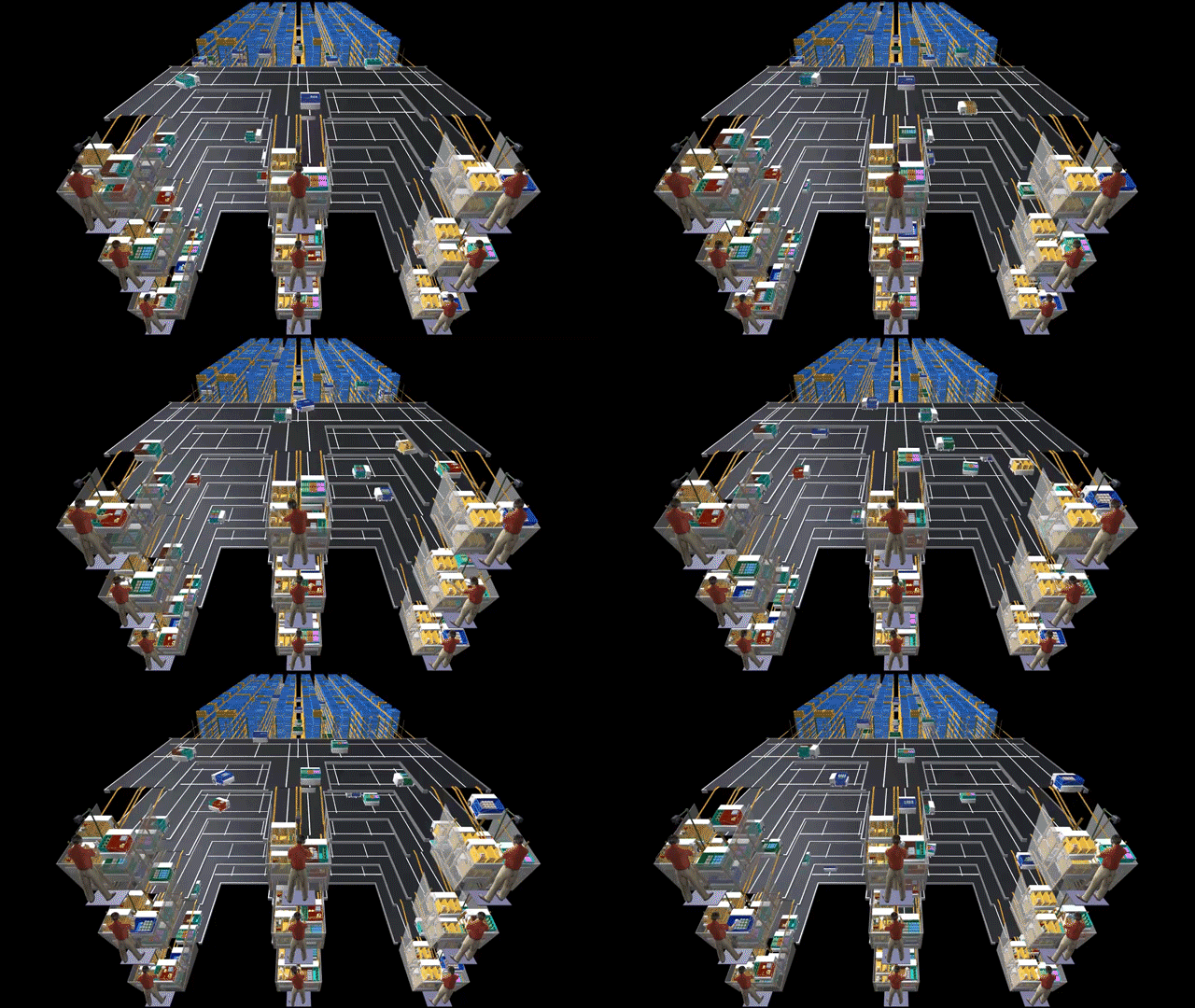
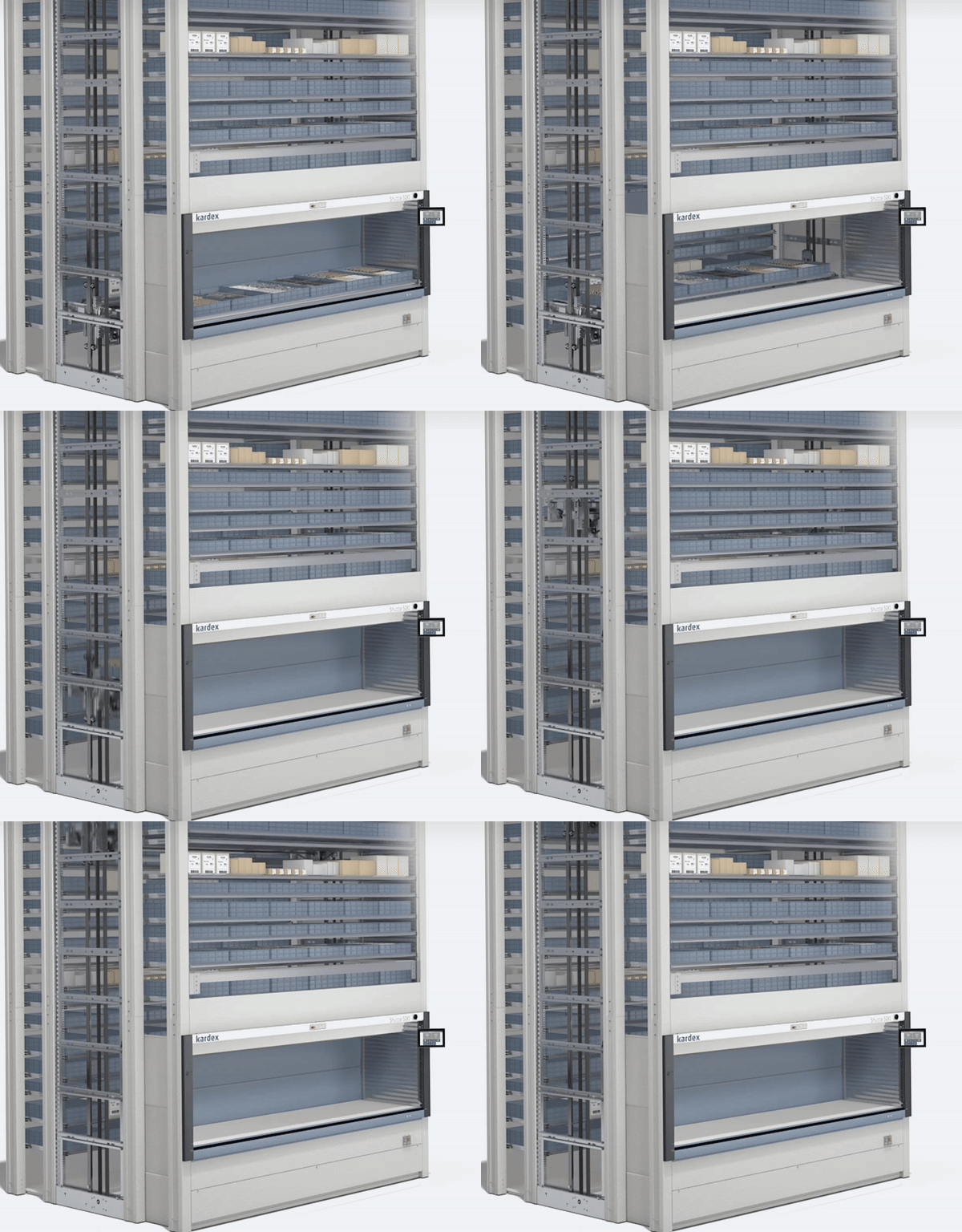





At Hannover Messe 2026, SAP and Vodafone showcased a pilot conducted at Vodafone’s warehouse in Duisburg,