The Future Of Online Shopping
CNBC Marathon explores how companies like Amazon, Walmart and their competitors are shifting their marketing and business strategies to compete in today’s economy.
Quietly launching its app in September 2022, it only took Temu a few weeks to top app store charts, edging out Amazon, Walmart and even fast-fashion brand Shein. By February 2023, the 5-month-old company made its TV debut during Super Bowl LVII, airing two commercial spots totaling an estimated $14 million. With an annual advertising budget of about $1.4 billion, Temu is focused on aggregating a user base of nearly 100 million people by year-end.
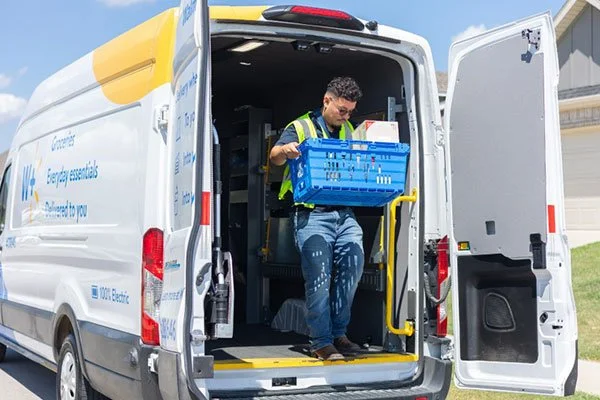
Walmart employs more people than any other company in the world and is the country’s largest grocer. But when it comes to e-commerce, Amazon is the clear leader, with 39.5% of the market share compared to Walmart’s 7%. Now Walmart has ambitious new plans, and new leadership, to try and catch up.
Livestream shopping took China by storm during the pandemic, growing into an estimated $423 billion market in 2022. The trend has caught on more slowly in the U.S., but now Amazon, TikTok, YouTube and Shopify are making big investments in hopes it takes off. CNBC goes behind the scenes with creators like Myriam Sandler to find out what it’s like to sell via livestream, and what it’ll take for the emerging model to become a mainstream way that U.S. consumers shop.
Automated Fulfillment Networks Don’t Always Expand Gracefully
Gartner forecasts that fewer than 100 companies will move humanoid robots beyond proof-of-concept.
Automation alone does not deliver sustainable performance or return on investment.
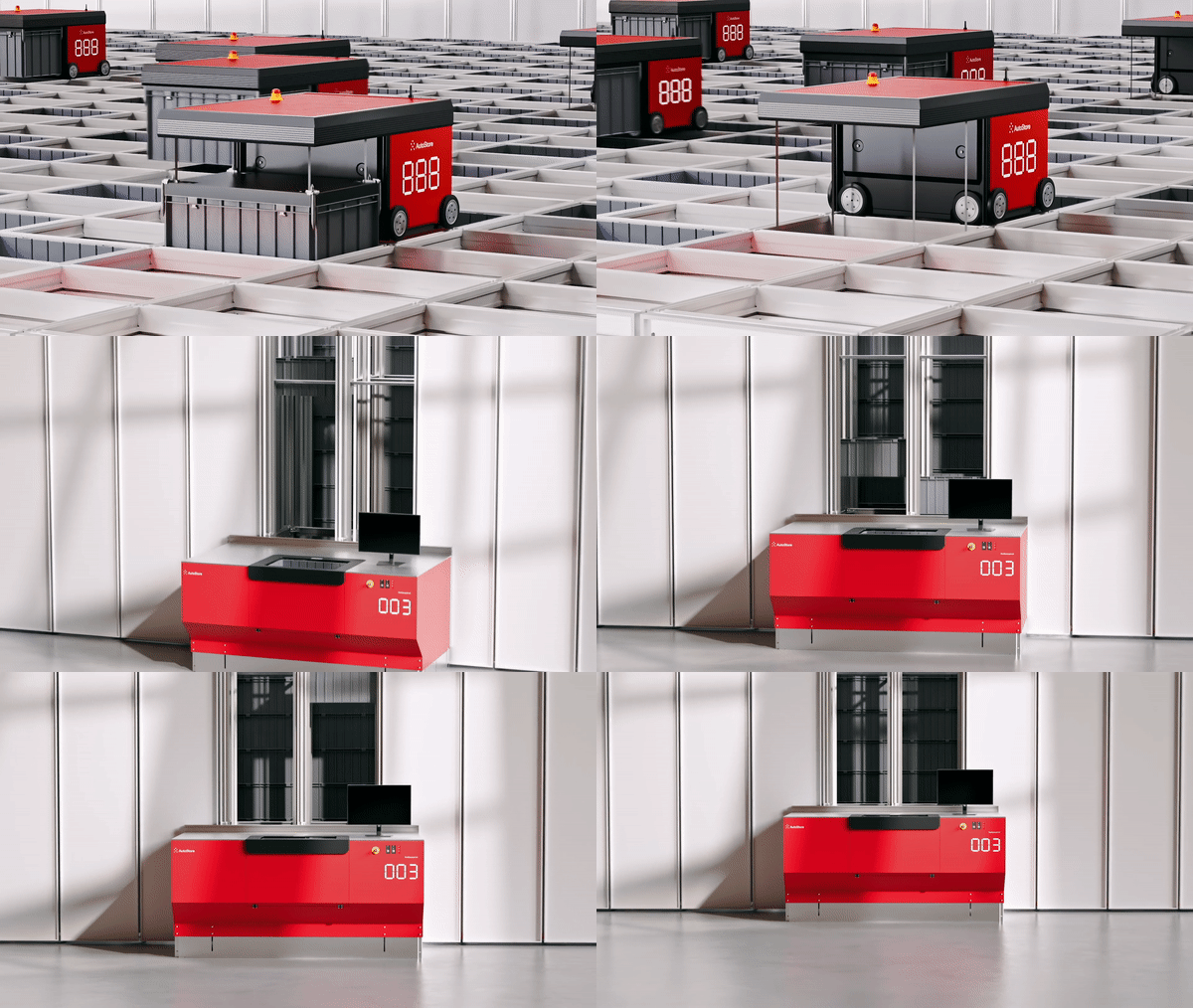
AutoStore has been positioned as the most space-dense ASRS solutions available. The claim has been repeated so often that it is rarely questioned.
The German online fashion retailer said activities at the Erfurt fulfilment site will end by September 2026.
How One Black Swan Event Ends the ASRS Speed Debate
The Simulated Frontier: How Physical AI Breaks the Automation Vicious Cycle
For years, cube-based ASRS systems — most notably AutoStore — have been positioned as the most space-dense storage solutions available. The claim has been repeated so often that it is rarely questioned.
Before You Replace Your WMS, Make Sure It Can Run Unified Commerce.
AutoStore and the Assumptions Behind Centralized Grocery Fulfillment.
The Simulated Frontier: How Physical AI Breaks the Automation Vicious Cycle
UPS Buys Hundreds of Robots to Unload Trucks in Automation Push.
Zebra Technologies is winding down its autonomous mobile robot (AMR) business, built around its $290 million acquisition of Fetch Robotics in 2021.
Kroger has announced a brand-new, $391 million automated distribution center in Franklin, Kentucky.
Kroger has taken another decisive step away from the automated fulfillment strategy it launched with Ocado in 2018.
The site in Wilcza Góra was taken from groundbreaking to operational readiness in roughly a year — significantly faster than the large Ocado CFCs launched elsewhere.
Offering high performance and excellent payload capacities, these robots makes the perfect solution for a multitude of high-payload applications.
Kroger cancels plans for additional CFCs, to pay $350M to Ocado.
Walmart is using next-gen automation to cut a 12-step process to five and challenge Amazon on delivery speed.
Walmart’s engineers are moving away from writing every line of code and toward guiding AI-driven processes.
Watch how a full-store inventory scan can now be completed by one person in 18 minutes or less, with 100% accuracy.
Walmart’s leadership credits its momentum to one thing: using data aggressively.
The AI-supported system factors in live traffic and driver location to give customers a more accurate delivery timetable.
Why is automation underperforming? DHL’s latest data reveals the core issues.
Ocado Responds to Kroger’s CFC Closures — What Their New Statement Reveals (and What It Doesn’t).
Kroger announced that it will close three of its Ocado-powered CFCs — as it restructures its e-commerce operations.
DHL’s Insight 2030 report provides one of the most comprehensive snapshots of how supply chain leaders in North America view the next five years.
The first shipment of Locus Robotics’ new Locus Array robots has officially reached a DHL facility in Columbus, Ohio.
The super-deduction consists of a set of enhanced tax incentives meant to encourage productivity improvements, including automated and robotic equipment.
Global logistics giant DHL has opened a $90 million health logistics warehouse in Auckland.