
Unloading Robot Launches in Europe at Hermes Fulfilment
Otto Group has become the first company in Europe to deploy the mobile case handling robot Stretch, which unloads floor-loaded trailers and containers.
Stretch supports associates by lifting and lowering heavy inbound cases, and frees them up to focus on other valuable work in the logistics center.
When retail and logistics giant Otto Group set out to strengthen its operational efficiency and safety, it turned to robotics and automation. The team needed a robust solution for its Hermes Fulfilment site in Haldensleben, Germany, where as many as 40,000 cartons of goods move through on peak days. Here, the Otto Group has become the first company in Europe to deploy the mobile case handling robot Stretch, which unloads floor-loaded trailers and containers.
Europe Premiere: Otto Group Deploys Unloading Robot "Stretch"
Read the press release
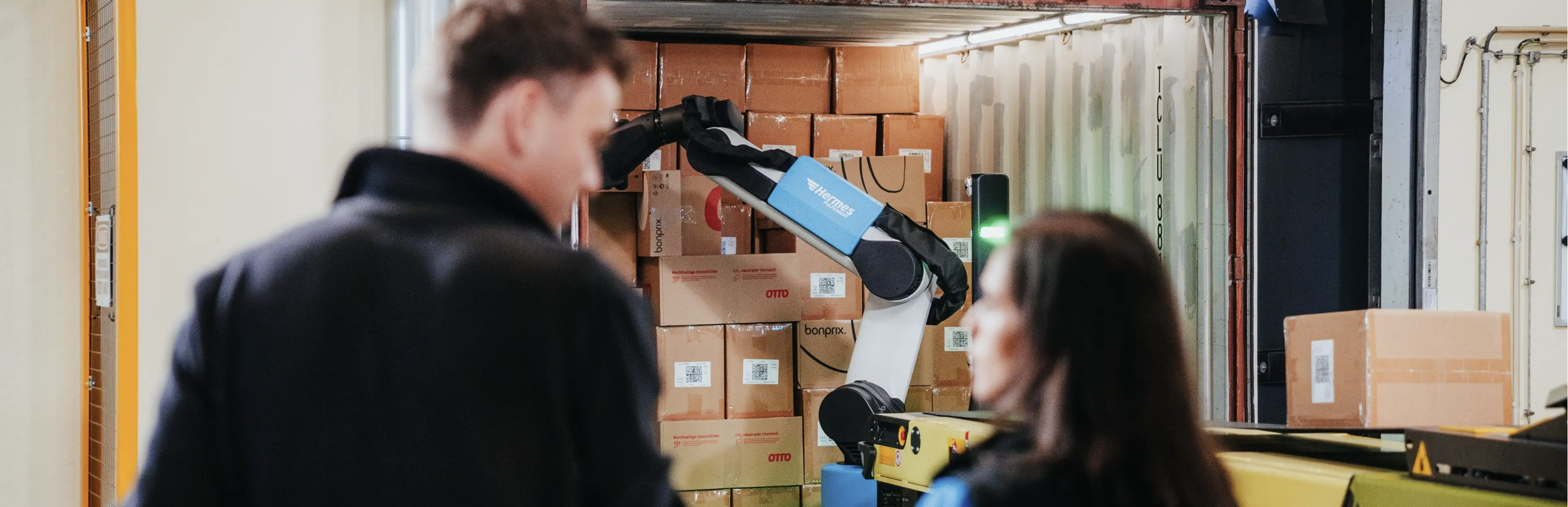
Seven o'clock in the morning at the Haldensleben shipping center. At this time, the incoming goods area is bustling. Numerous swap bodies and sea freight containers arrive daily, loaded with T-shirts, sweaters, blouses, shirts, pants, shoes – basically everything that can be ordered in fashion from bonprix and OTTO. On peak days, up to 40,000 cartons of new goods are delivered, unloaded, and stored – a demanding job that requires a lot of muscle power and full concentration. Since early August, employees in the incoming goods area have had a new "colleague" who actively supports them: "Stretch" is his name, weighing 1,300 kilograms and being an AI-supported robot. His task: to grasp cartons, place them on the conveyor belt, and relieve the employees.
Last year, the Otto Group formed a strategic partnership with Boston Dynamics, one of the world's leading robotics providers. This includes deploying Stretch at several logistics locations within the group. In this context, the Otto Group is now integrating the first Stretch in Europe into its logistics processes. The choice fell on Haldensleben in Saxony-Anhalt because the shipping center there has been the heart of logistics for the Otto Group for 30 years. The site specializes in the logistical handling of small-volume assortments, primarily clothing and shoes.
The Hub for Otto Group's E-Commerce
With state-of-the-art technology, Hermes Fulfilment, the logistics service provider belonging to the group, handles warehousing, packs parcels and bags with items ordered online, manages Europe-wide shipping, and restocks goods returned due to dissatisfaction. Up to 300,000 shipments leave the site daily. The shipping center is one of the largest in Europe and has become the hub for Otto Group's e-commerce.
To maintain this status, significant investments have recently been made in digitization and the use of AI-supported technologies. Stretch is a mobile, autonomous robot. It can handle cartons of various sizes weighing up to 23 kilograms. The unloading rate is around 500 packages per hour, referred to as "Kolli" in logistics.

Movable platform of the Stretch
Sophisticated Interaction of Cameras and Sensors
Simply put, Stretch consists of a robotic arm with a gripping tool and a swiveling "perception mast." Both elements are mounted on a mobile platform about one square meter in size. The "perception mast" houses various cameras and sensors. They enable the robot to have a 360-degree view of its surroundings, orient itself, and precisely recognize objects. "The special thing is the sophisticated interaction of cameras and sensors," explains Tomek Pauer. The project manager in the Supply Chain Management of the Otto Group has been leading the strategic partnership for two years and is responsible for the introduction of the new technology as the program manager. The differentiated system for environmental perception works closely with the robotic arm. It has seven axes and a reach of up to 3.2 meters vertically and nearly two meters horizontally. At its end is a swiveling vacuum gripper with 50 rectangularly arranged suction cups.
With the help of pneumatic control and sensors, Stretch can recognize a wide range of carton types and sizes and grasp them from various angles thanks to the tool's mobility. Even cartons that slip or fall during unloading pose no problem: "Depending on the position of the carton, the robot autonomously decides whether to pick up the fallen package first or continue the unloading process in the container," reports Tomek. If cartons block the way, Stretch navigates around them. Extensive programming before use is not required. "The robot needs to be configured once, for example, by familiarizing it with the gates and the installed equipment. The rest is handled by the trained algorithm that the robot relies on during unloading," explains Tomek.
Stretch will initially be deployed in the pilot phase at a gate in the incoming goods area of the Haldensleben shipping center. Structural changes were necessary for this. To enable the 1.3-ton robot to enter the container to unload the cartons, the loading ramp had to be hydraulically reinforced. Additionally, extra scanners were installed in the incoming goods conveyor system. They check the cartons placed by Stretch for damages from six sides. If a package is torn or dented, it is automatically ejected in the incoming goods area before being transported to the high-bay warehouse via conveyor belts. The high-bay warehouse is the heart of the shipping center: it stores up to 1.2 million cartons of goods. If all the packages were laid out end to end, they would span a length of about 600 kilometers, which corresponds to the direct distance between Hamburg and Munich.

JoJo Windsor, Staff Project Engineer at Boston Dynamics and Tomek Pauer, Program Lead at the Otto Group in front of Stretch
Innovative Approaches in Daily Work
Because the packages are heavy, unloading is one of the toughest jobs in the shipping center. Additionally, containers and swap bodies can heat up in the sun during summer, while it can be very cold inside the boxes in winter. Stretch is intended to relieve employees in the incoming goods area from now on. The robot will improve working conditions by taking on part of the heavy physical work. In the future, they can assume more complex, value-adding tasks in the shipping center. With the investment in AI-based robotic solutions, it becomes clear once again that the Otto Group is actively preparing for the future.
To meet the growing demands of online commerce and continuously improve service, the Otto Group relies on a strong interplay between people and technology. There are hardly any fears among the staff. On the contrary: the curiosity and anticipation of employees for relief from the new "colleague" are high. "The combination of human expertise and technological innovations is an important building block to meet the growing market demands and further improve service for our customers," emphasizes Kay Schiebur, the Otto Group's Executive Board member responsible for Services.
For Stretch not only relieves employees and optimizes the working environment, but also improves the efficiency of logistical processes. The robot's reliable performance over a long period enhances planning, especially during high order volumes – such as on Black Friday or during the Christmas season – and increases the availability of goods in the shipping center. Thus, the deployment of robots also contributes to an improved shopping experience.
After successfully completing the pilot phase at the Haldensleben shipping center with initially one Stretch robot and four more in the coming months, the Otto Group plans to roll out the robotic solution to other locations in its logistics network. Additionally, further applications such as palletizing or loading containers are being developed through joint research and development.
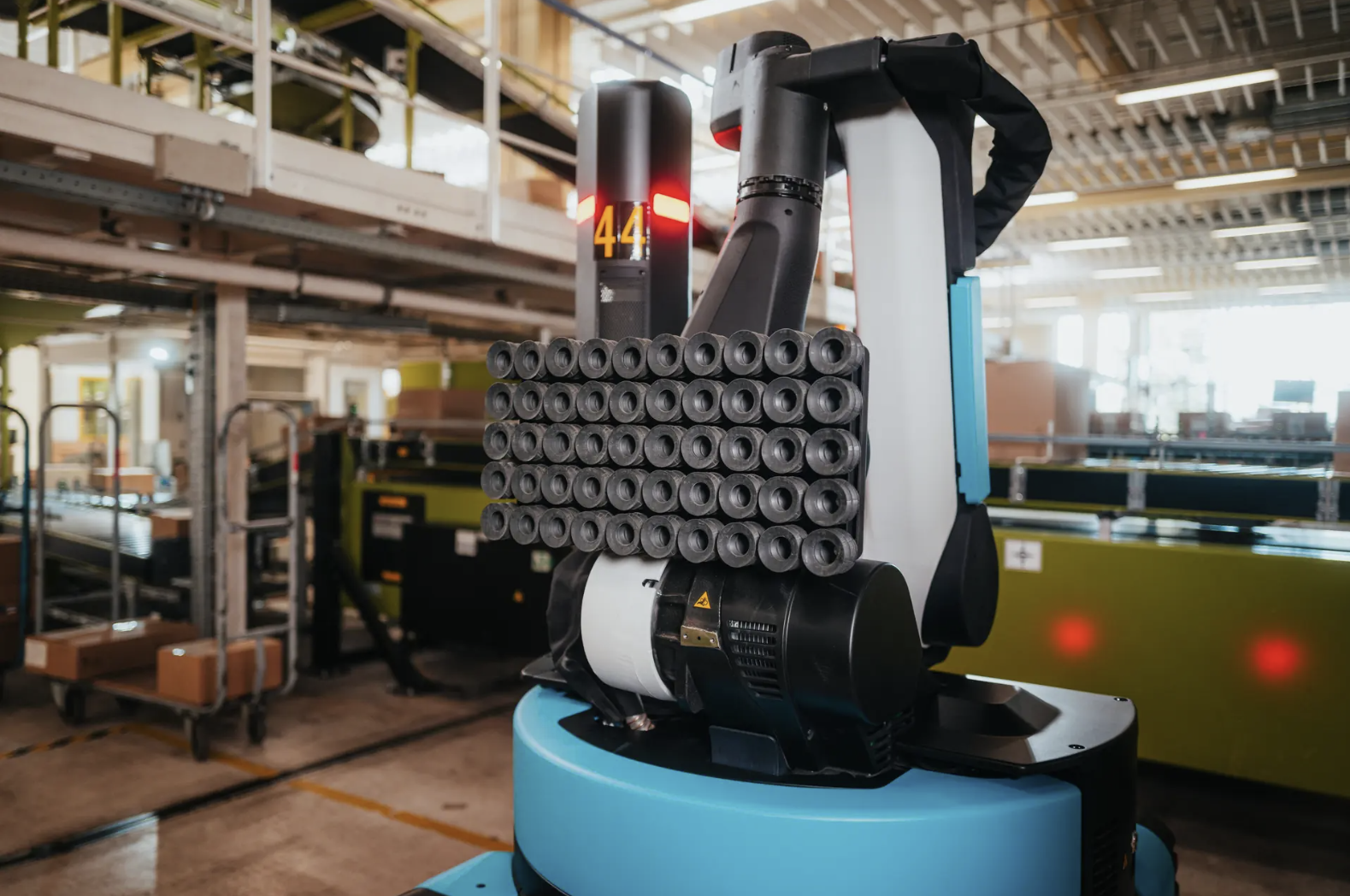
Swivel vacuum gripper with suction cups
Long-term, Scalable Technology Solutions
Stretch and its first deployment in a shipping center in Europe is an example of how the Otto Group continuously shapes the future of logistics. "The Otto Group is actively shaping the future of logistics. With the introduction of AI robotics, the openings of the innovative shuttle warehouse in Altenkunstadt, and the new European flagship in fulfillment, the logistics center in Ilowa, we maintain a high pace and invest a medium three-digit million amount in improving the customer experience," emphasizes Kay Schiebur. "Investments in technology are not a short-term trend, but part of a long-term strategy to create scalable processes that go far beyond individual applications."
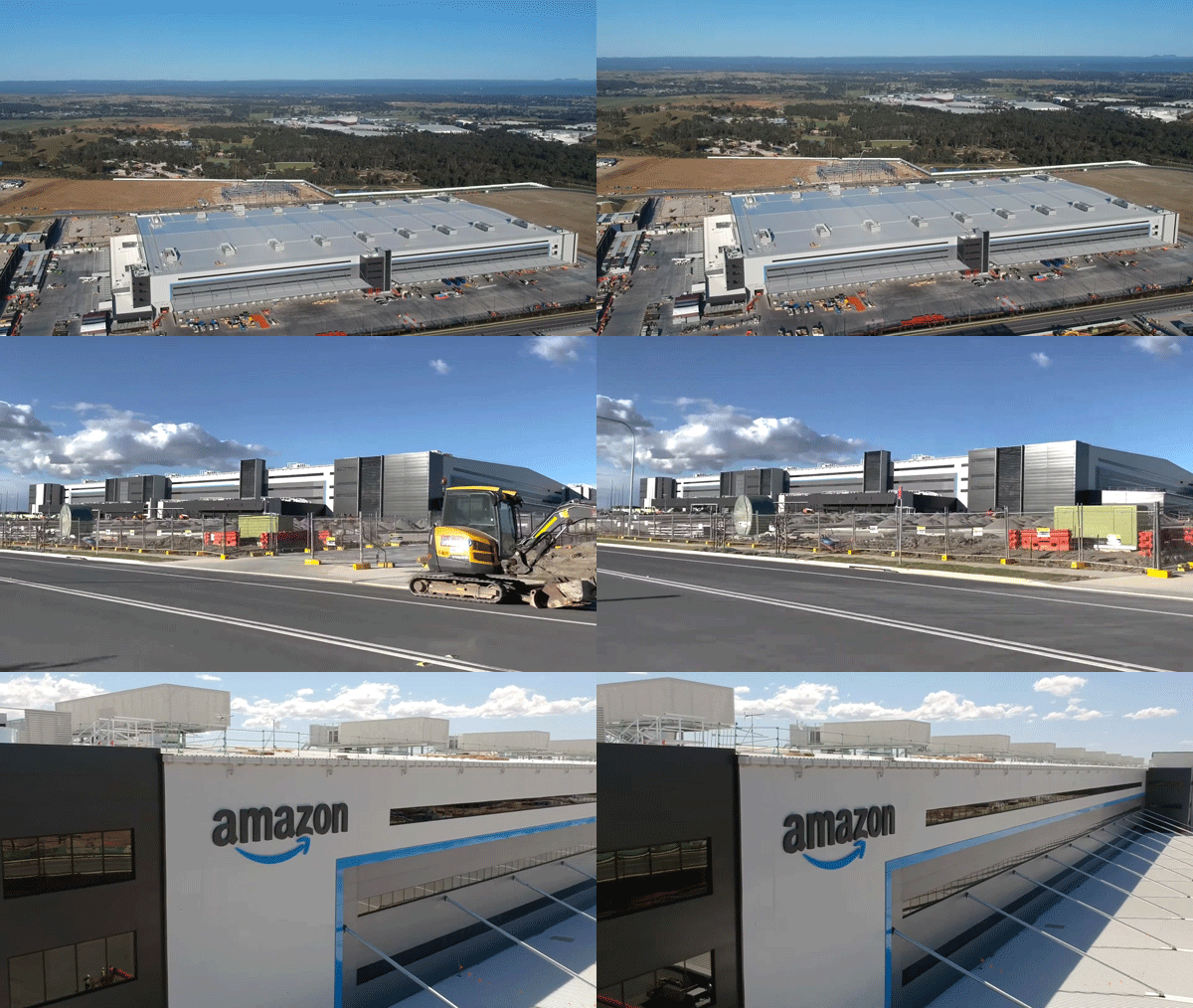
Amazon’s newest 585,000-square-foot building will not be filled with books, televisions, clothing, groceries or millions of other products waiting to be shipped to customers.

Amazon’s Project Tetromino Takes Aim at the Last Mile’s Hardest Automation Problem.
If you’ve ever wanted to see inside one of Amazon’s fulfilment centres, here’s your chance to see how your online shopping cart gets to your doorstep.
Amazon announced a major €10 billion investment to expand and modernize its European fulfillment network.
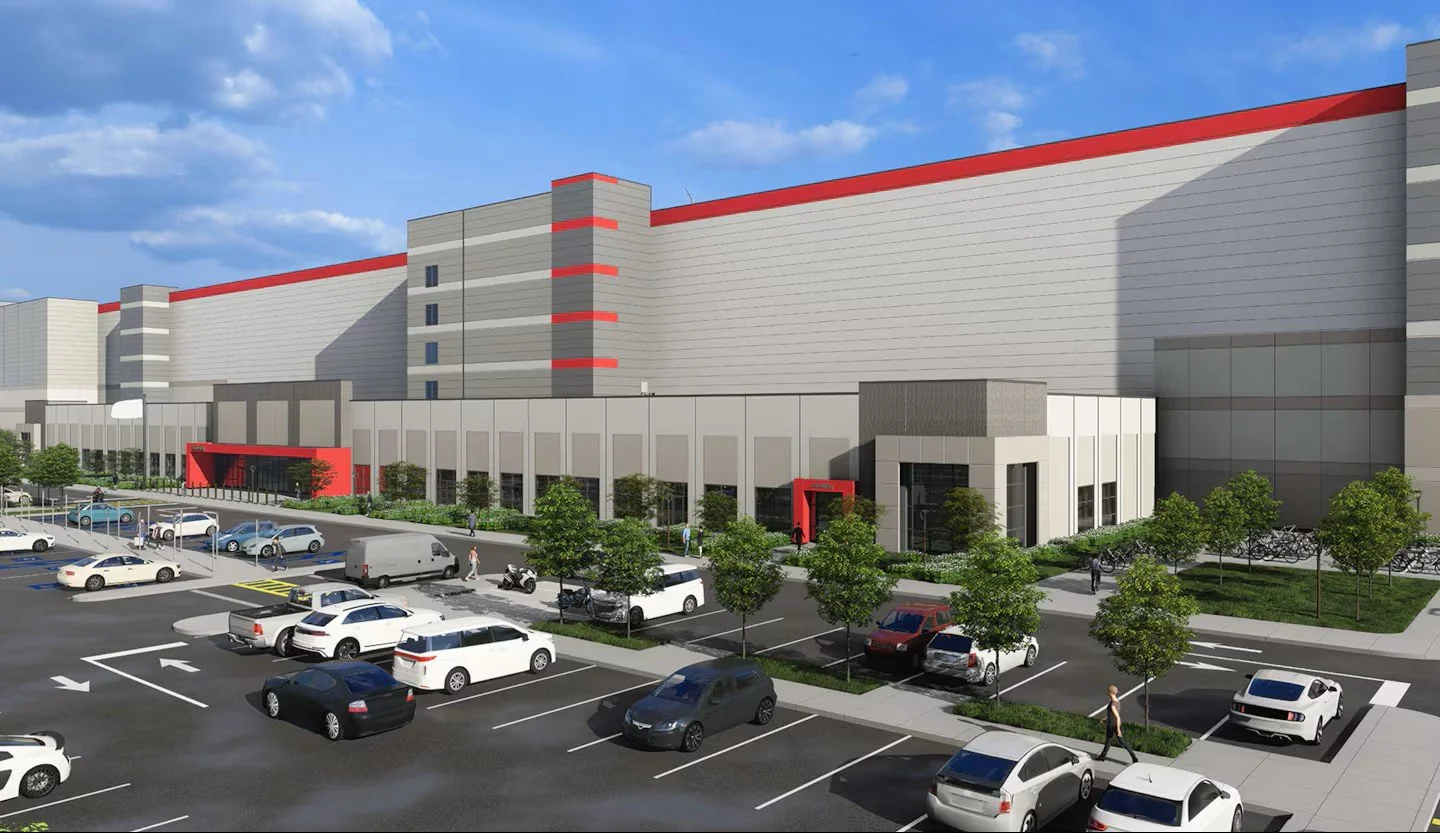
Amazon is dismantling part of its largest facility under construction in Ottawa — a rare move that suggests a shift in how the site is being designed and automated.

Amazon is essentially "franchising" its fulfillment infrastructure to solve the rural density problem.
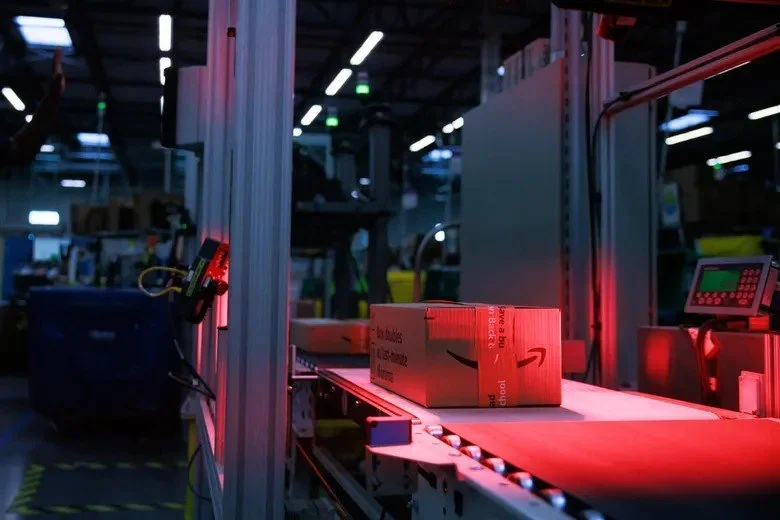
The robots inside Amazon's Kent Fulfillment Center are getting smarter — and the company is pressing forward with new technology.
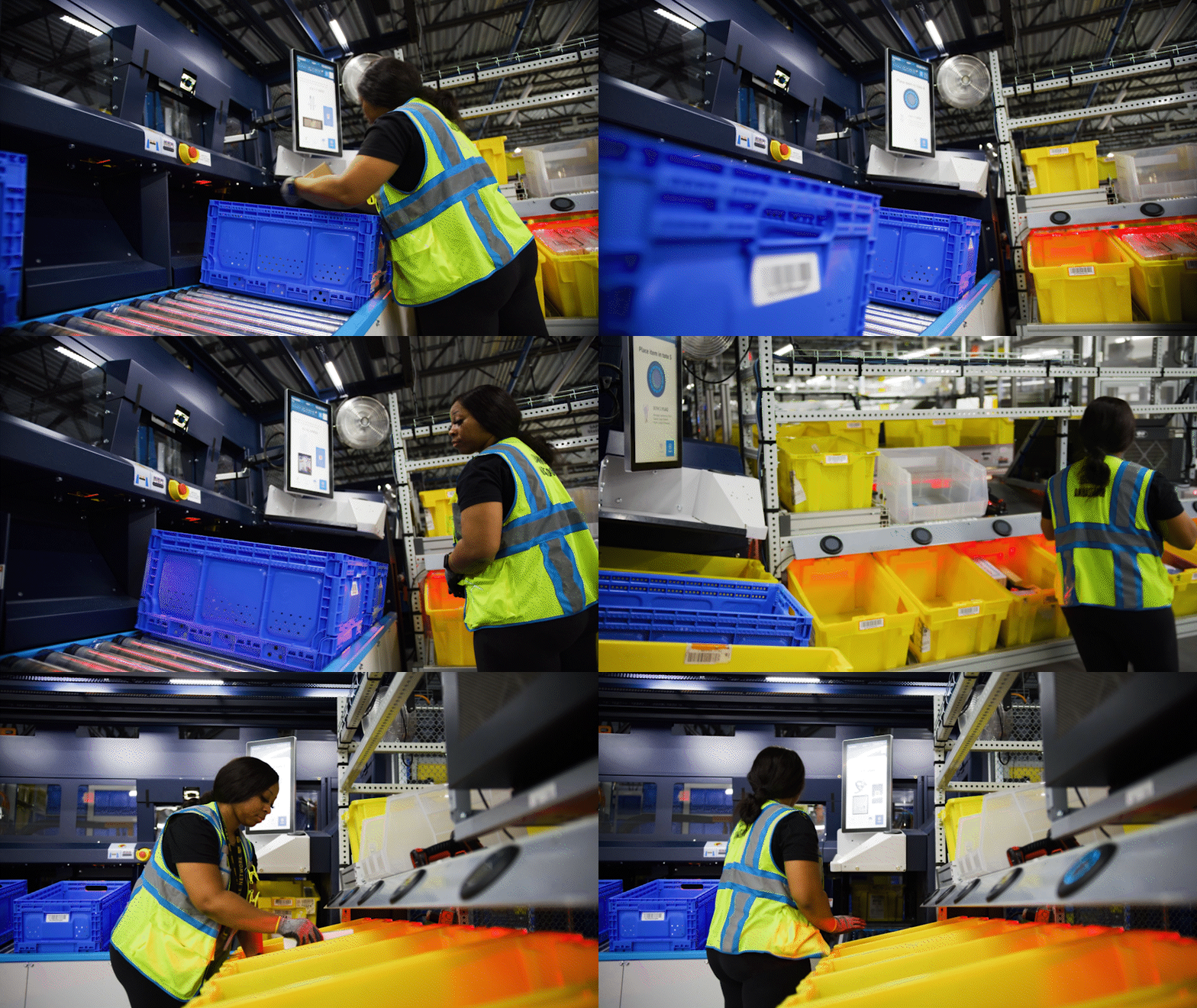
Amazon did not achieve this speed through a single breakthrough technology
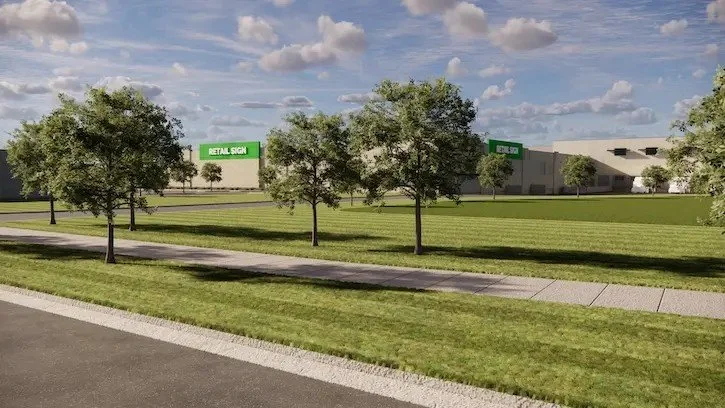
What the Orland Park retail proposal reveals about Amazon’s push into Walmart-scale physical retail

The model is specifically built for single-item, impulse, and urgent purchases, a category with high repeat potential and strong margin dynamics once density is optimized.

Amazon has opened a new kind of warehouse in Elkhart, Indiana — one that challenges nearly every convention in logistics facility design.
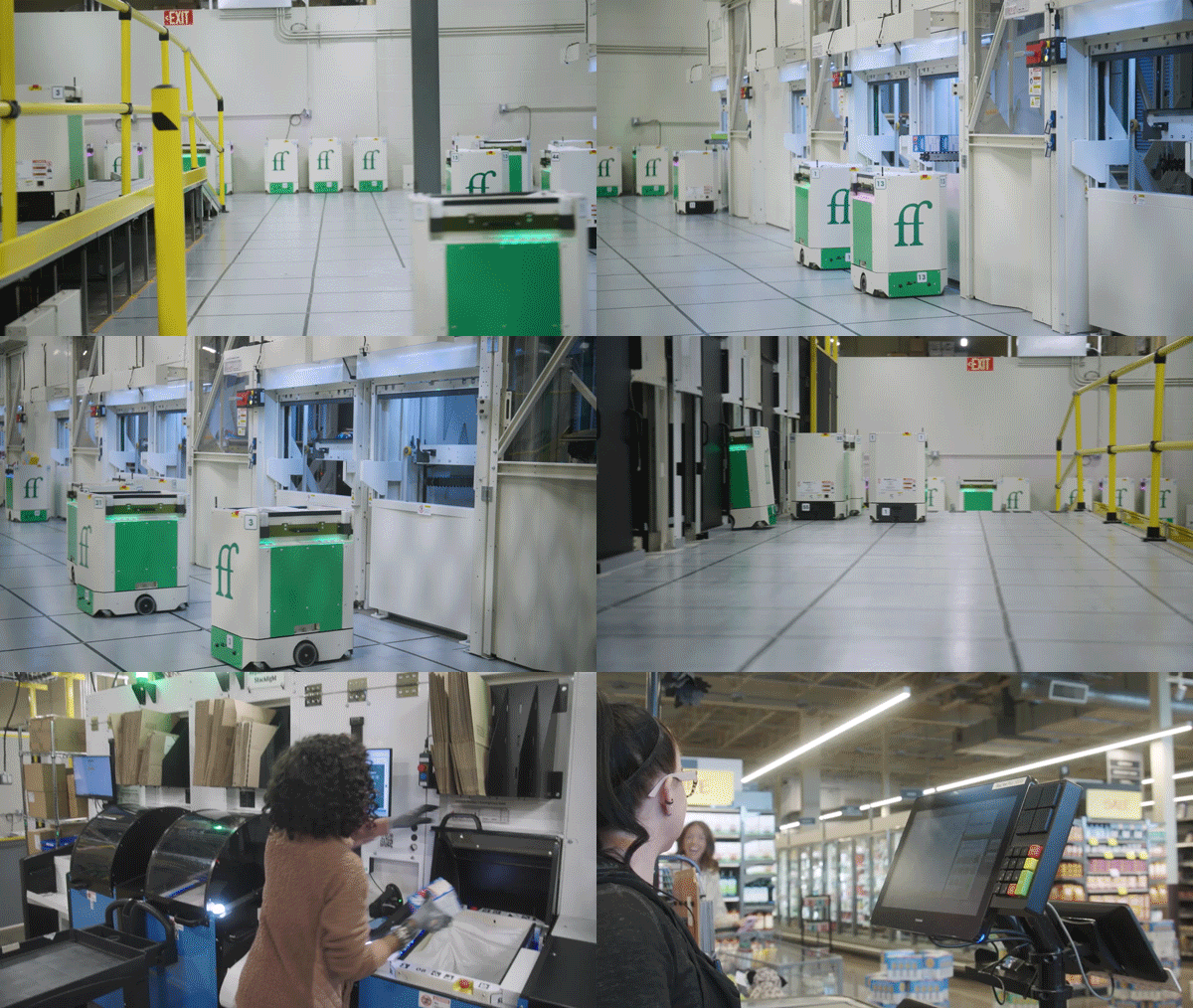
Amazon has built a 10,000-sq-ft automated micro-fulfillment center inside Whole Foods — where customers can scan, order, and pick up items in minutes.

These smaller, high-velocity facilities store frequently purchased products—from fresh food and groceries to personal-care items and small electronics.

Meet Sparrow, Cardinal and Proteus. They’re the robots that, step by step, are replacing human workers in the company’s warehouses.
Amazon Robotics' Chief Technologist discusses his journey to helping the world's largest retailer deploy one million robots.

Amazon’s new smart glasses bring AI and computer vision directly into the delivery workflow.

Amazon is taking steps to address how artificial intelligence and automation is changing its workforce.

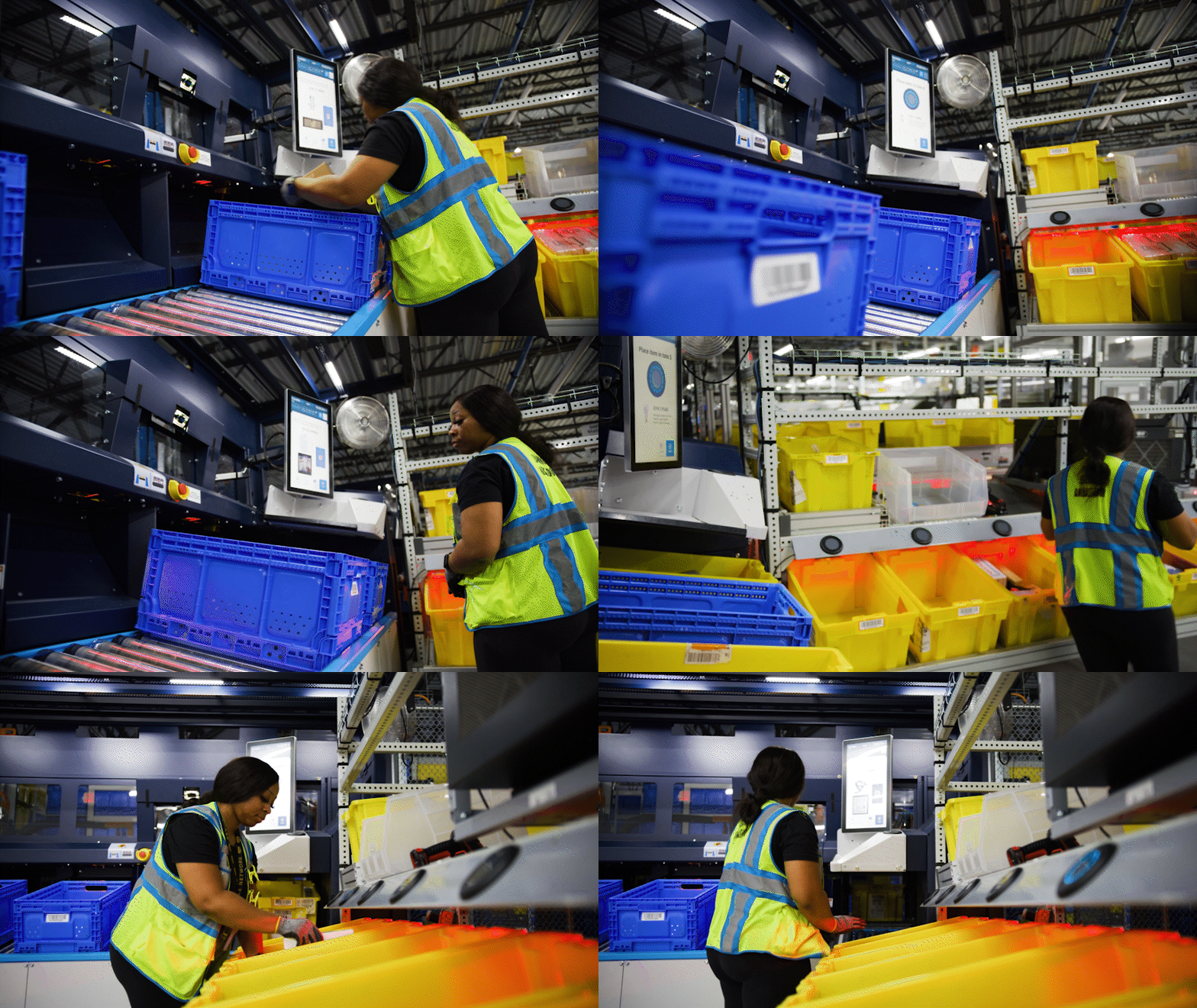
It’s built to do something no other Amazon robot has done before — perform multiple tasks at once.

The offer builds on Amazon fulfillment service for merchants on other sales channels, including eBay, Etsy, Temu and TikTok Shop.

Ever wondered how that Amazon package arrives on your doorstep with remarkable speed?
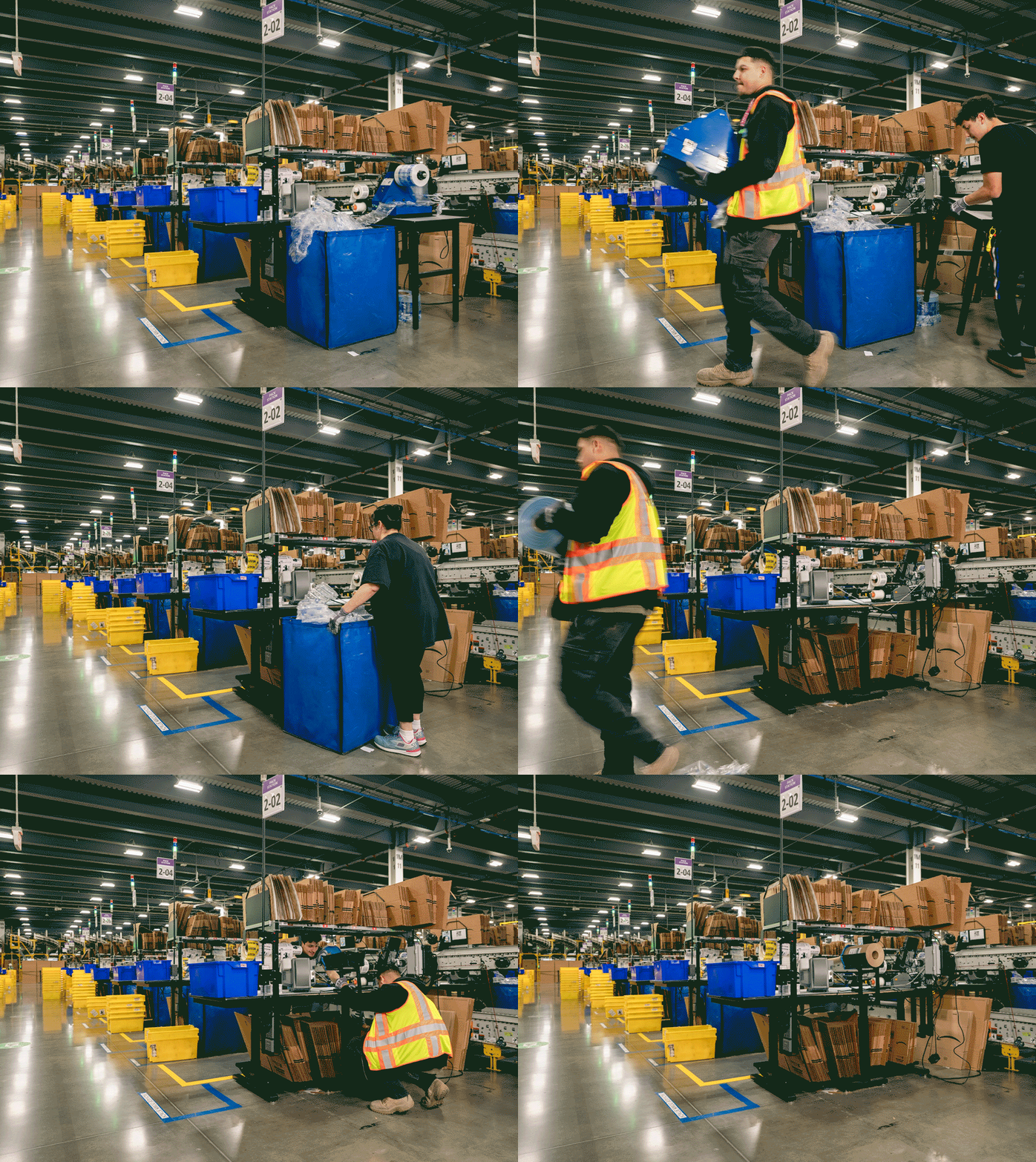
Amazon’s Ohio facility was its first U.S. center to eliminate plastic delivery packaging,

A worker loads a truck for shipment at the Amazon MCO-01 robotic fullfillment center in Orlando.
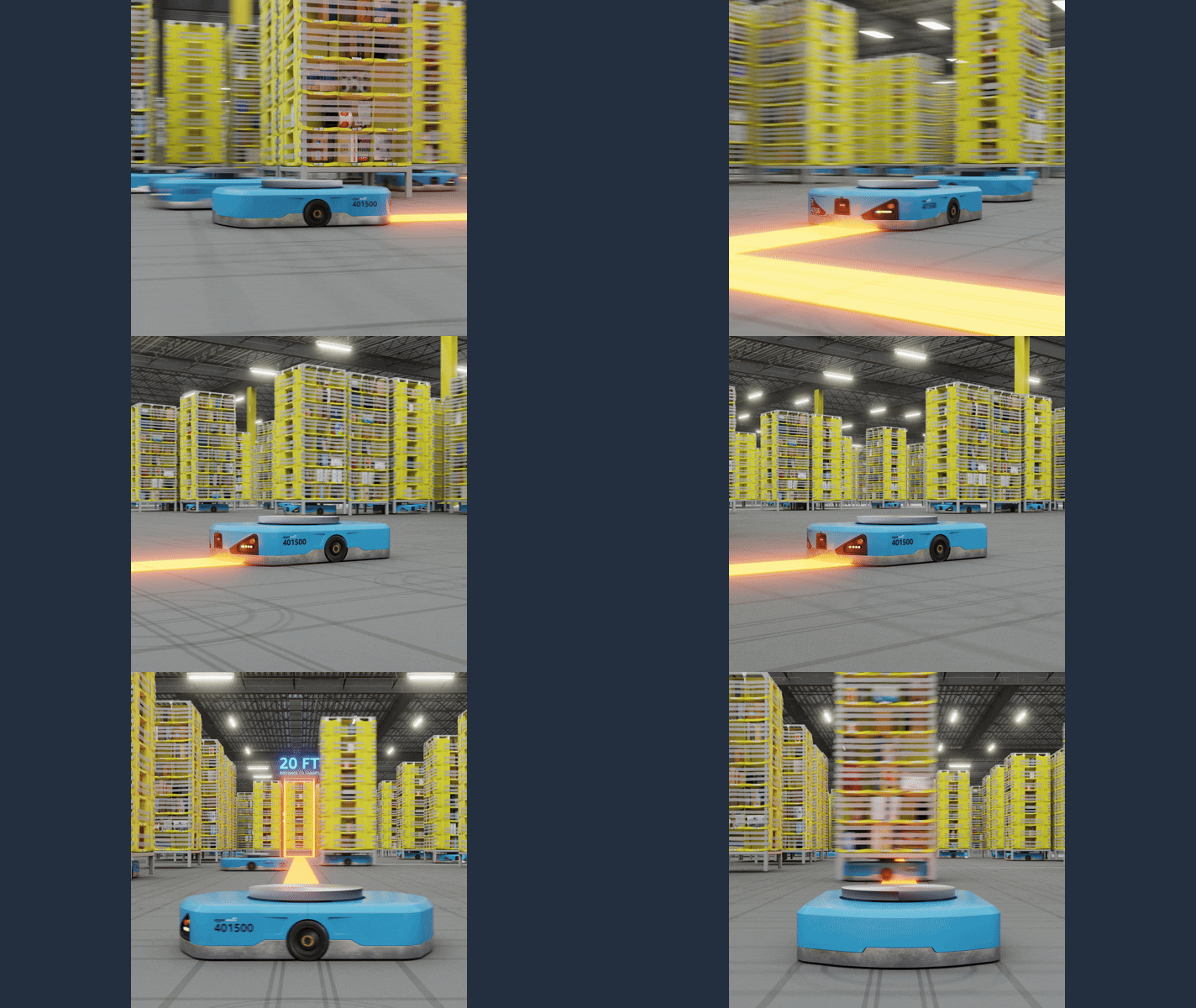
Amazon Robotics Vice President explains how robots are helping Amazon employees deliver on Prime Day.

Amazon UK has announced a national roll-out of its partnership with on demand delivery specialist Gopuff.

But for the right buyer, these assets could offer not just a salvage opportunity—but strategic leverage.

The retailer will soon use custom box-making technology to reduce waste from packaging across Europe.

It’s a testbed for the convergence of agentic AI and dynamic robotics—where hardware and software fuse to reimagine the last mile.

Amazon has been on a multi-billion dollar and decade-plus long crusade to be a leader in robotics.

Pattison Food Group Modernizes Langley Distribution Centre with Advanced Grocery Automation.
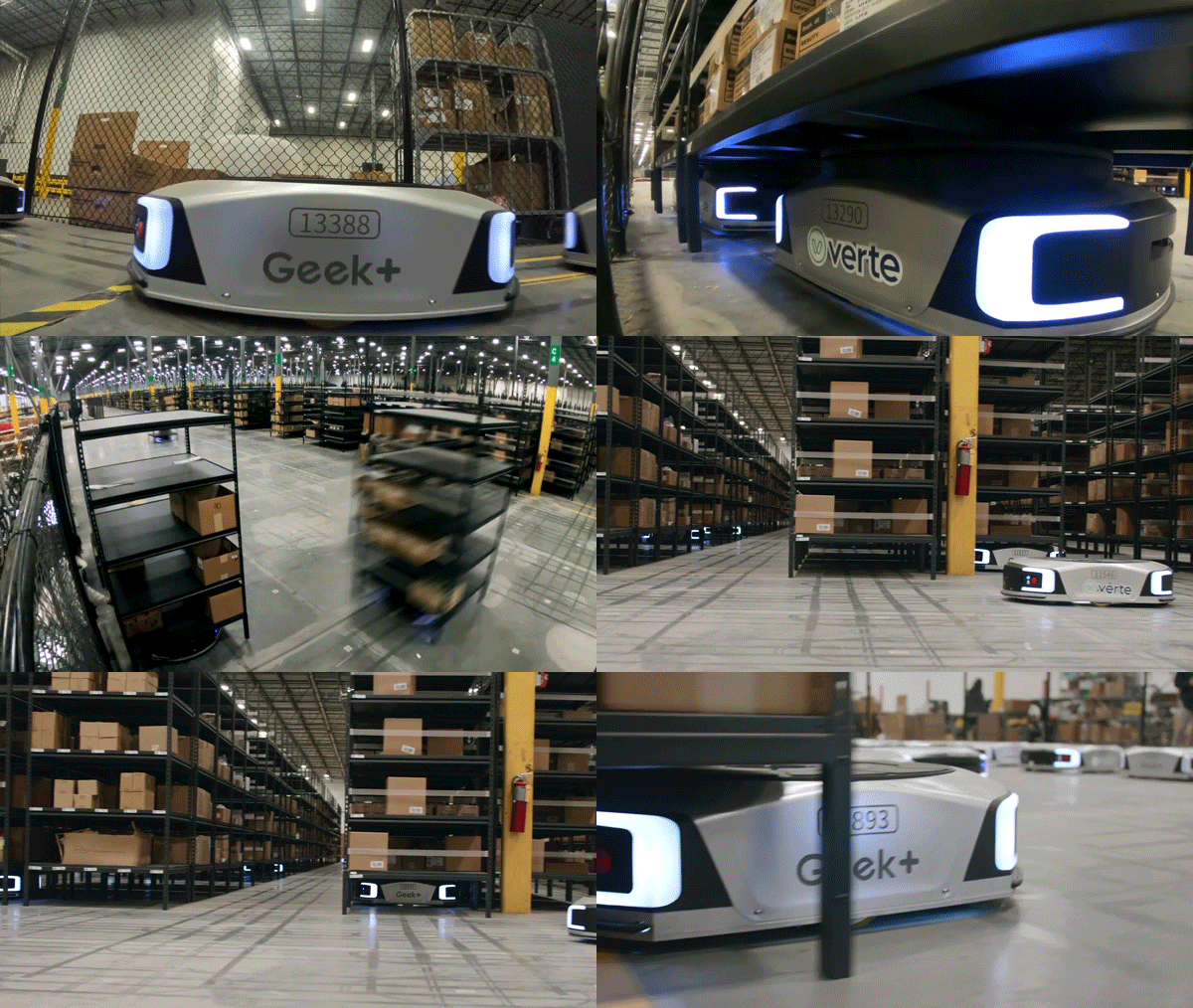
As part of an ongoing warehouse automation modernization project, a fleet of pre-owned ASRS robots is available for purchase.
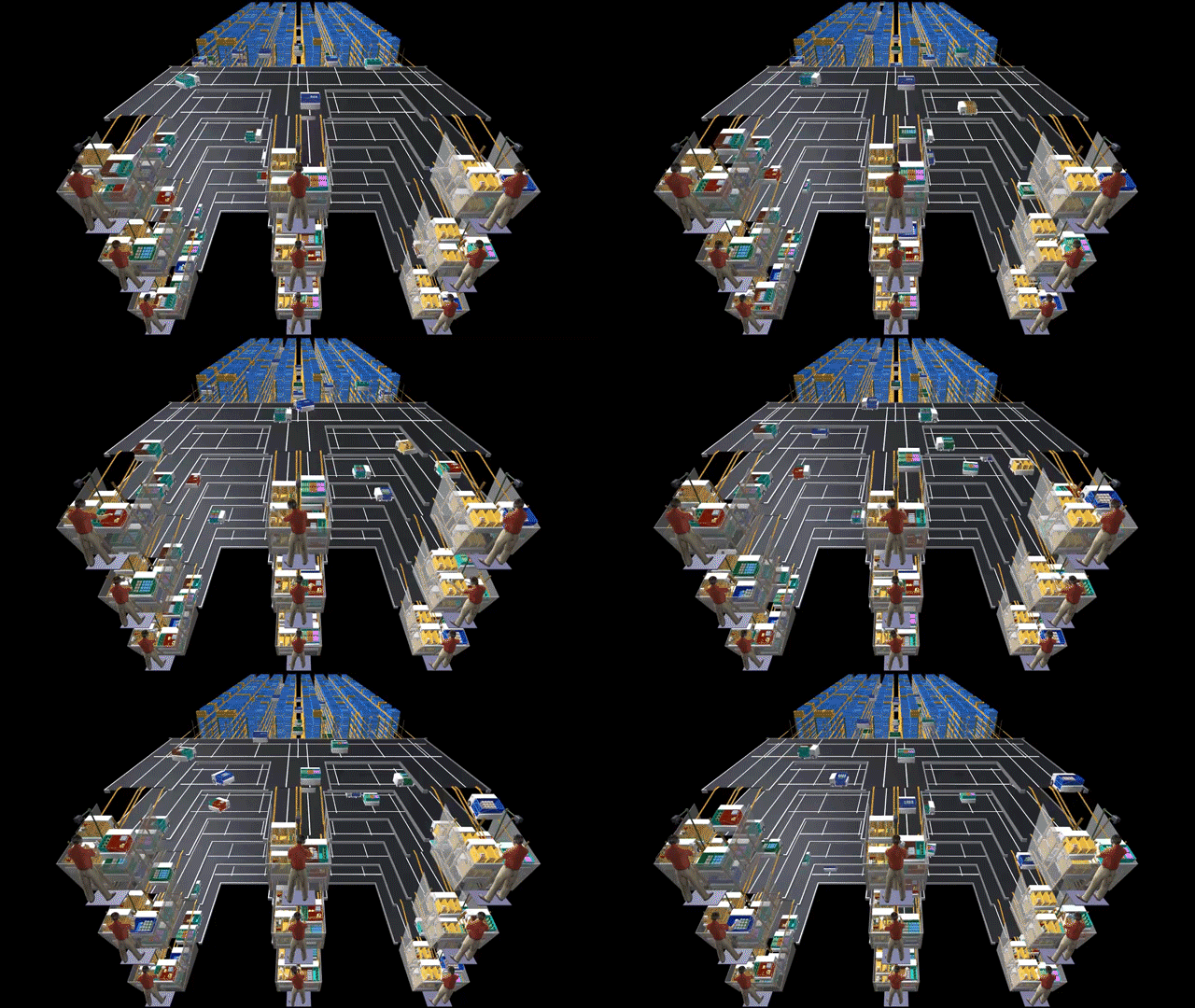
Symbotic’s new SymMicro system begins its first in-store installation, with the potential to expand to 400 Walmart locations.
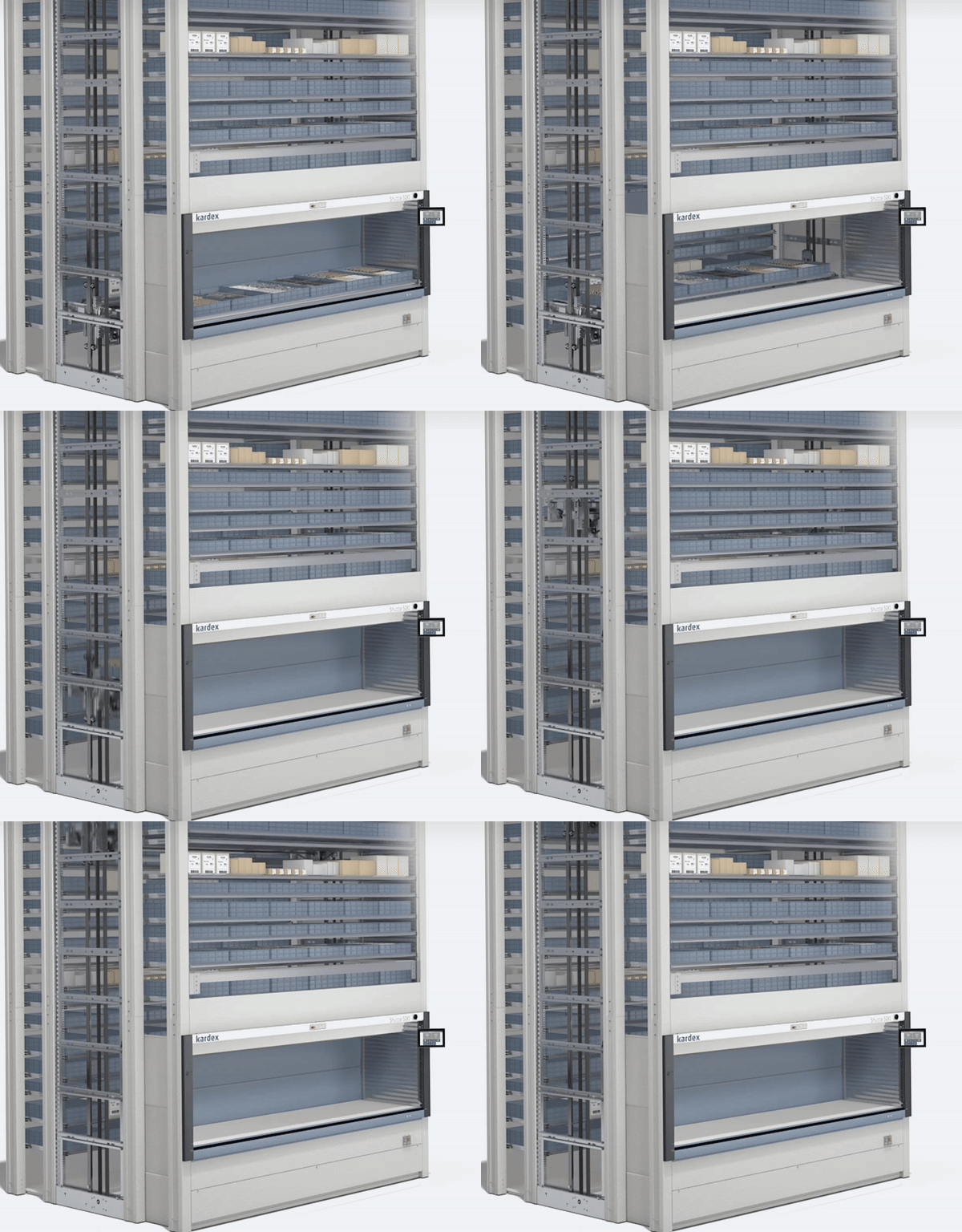
Two brand-new Kardex Shuttle XP 500 vertical lift modules are available for immediate delivery.
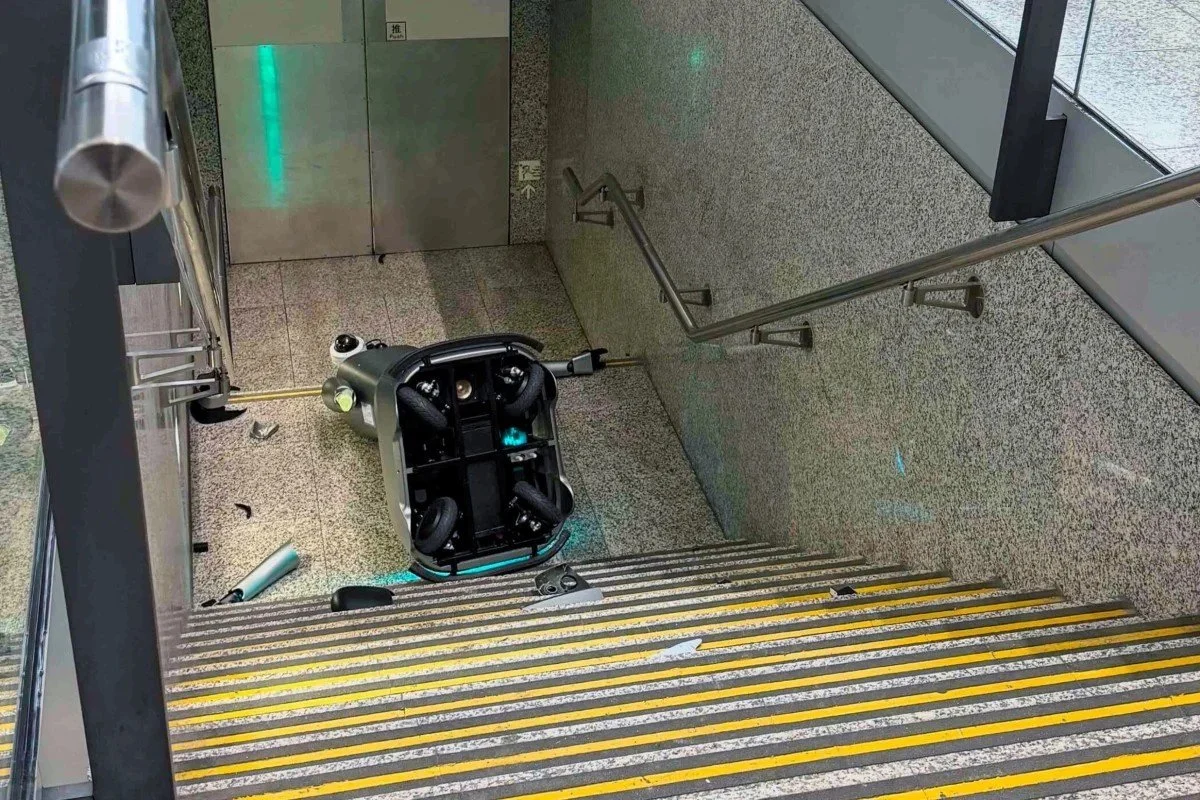
A robot accident at Hong Kong International Airport offers an important lesson about mobile robot safety
Recent Updates to FCC Covered List Regarding Foreign-Produced Advanced Robotic Devices
There is another major advantage of automation that is often overlooked.
S&S Activewear is one of the more technology-forward apparel companies in North America’s branded-apparel distribution market.

Situated in Arvin, California, the new 700,000 square foot facility is described as its largest and most technologically sophisticated distribution center to date.
SoftBank is reportedly selling its remaining 9.65% stake in Boston Dynamics to Hyundai Motor Group for US$325 million.
The company had automation. It had robotics. It had government support, customer momentum, press attention, and a massive facility.
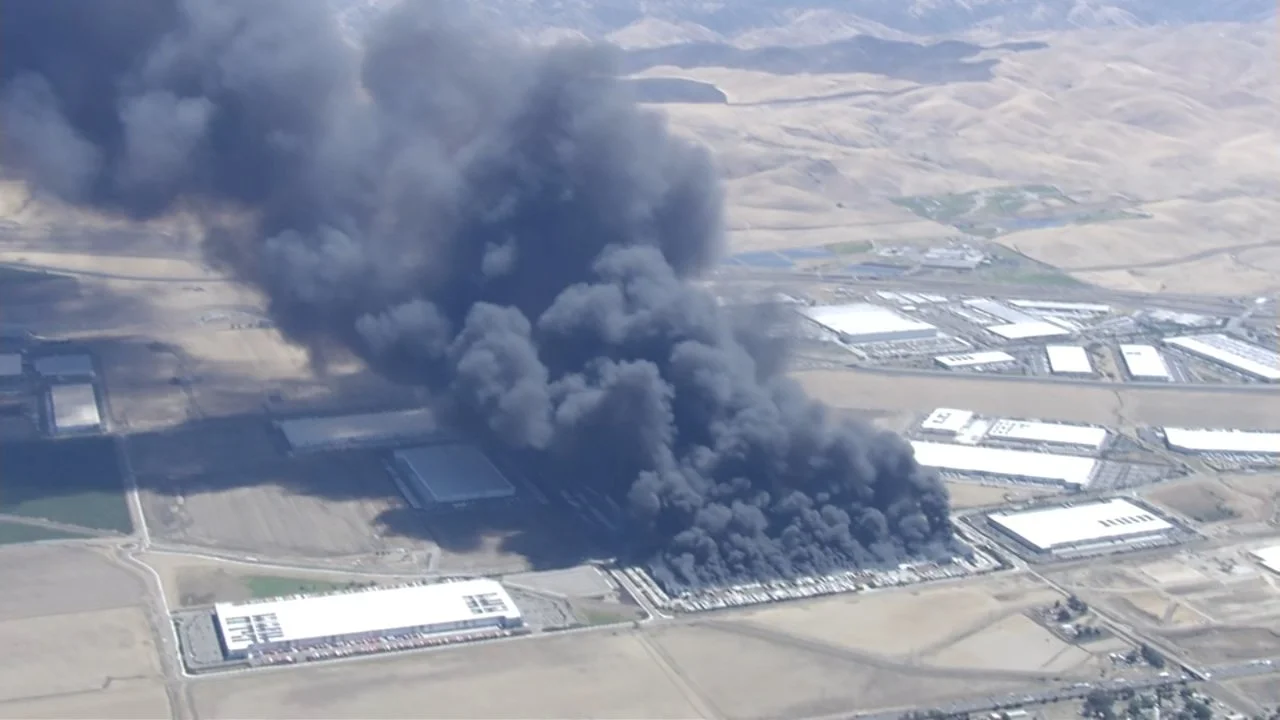
Massive fire destroys 1 million-square-foot Tracy Medline Industries distribution facility
Artificial Intelligence and LLMs are currently being pushed aggressively into logistics, warehouse operations, robotics, and supply chain execution.
Walmart’s latest comments around same-day fulfillment, 30-minute delivery windows, AI-driven inventory positioning, and supply chain automation should be a wake-up call for the entire retail industry.
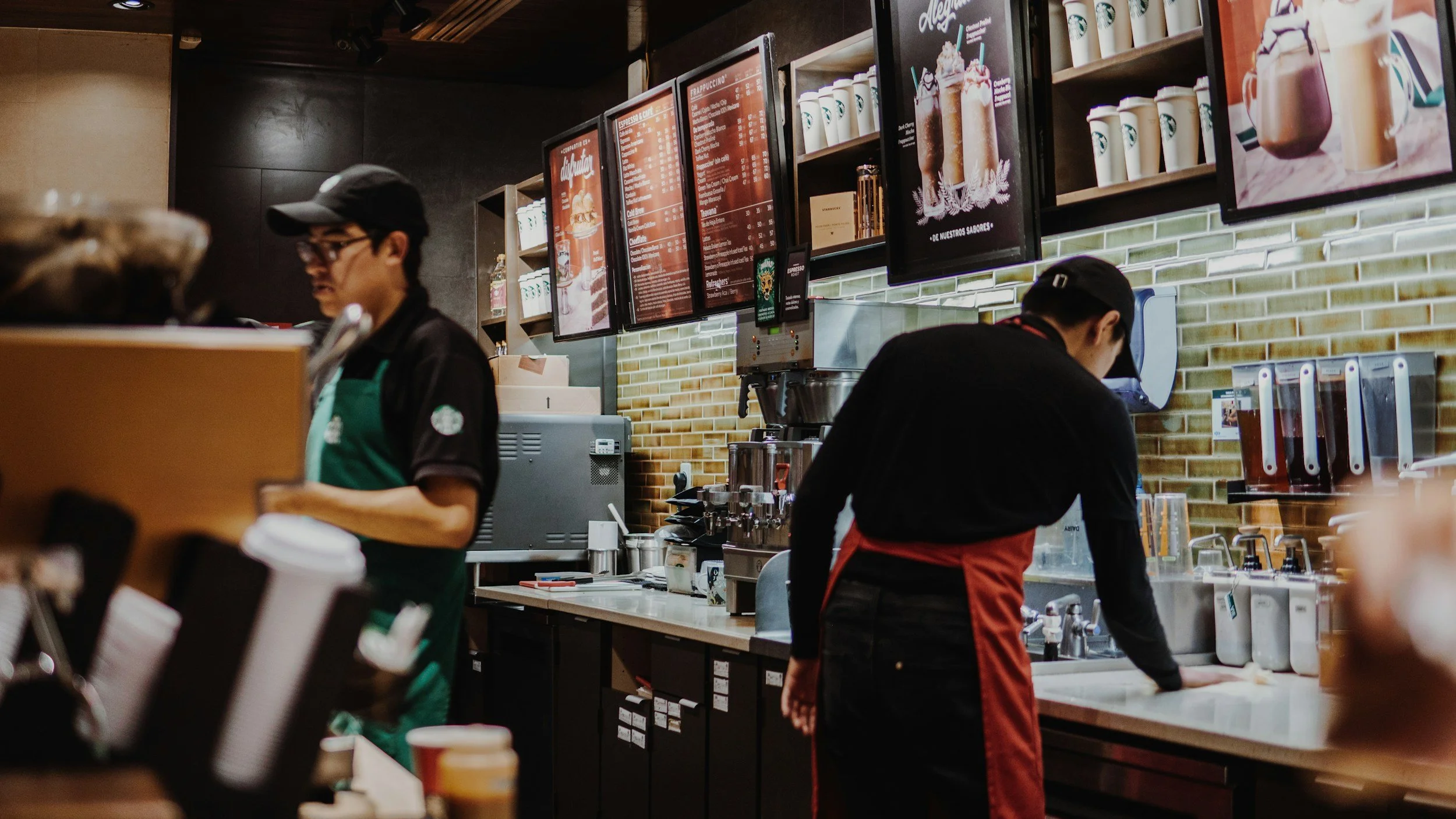
The promise made to Starbucks CEO Brian Niccol was enticing. To eliminate persistent product shortages that hurt sales, the company deployed an automated counting system.
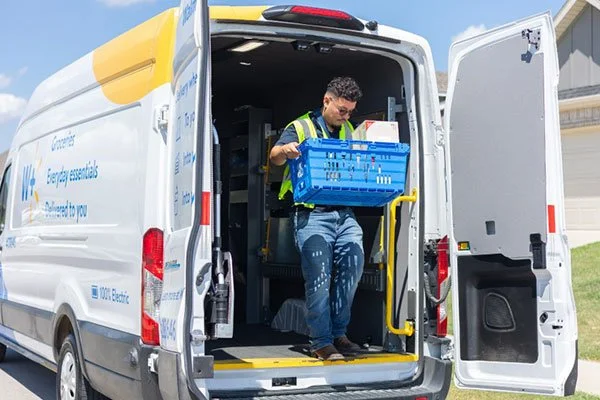
The retail giant is using unlikely spaces to push against Amazon’s recent strategies to capture more customers.

Traditional WMS lacks the real-time visibility into the availability of automated materials handling equipment that a WES brings to the table.
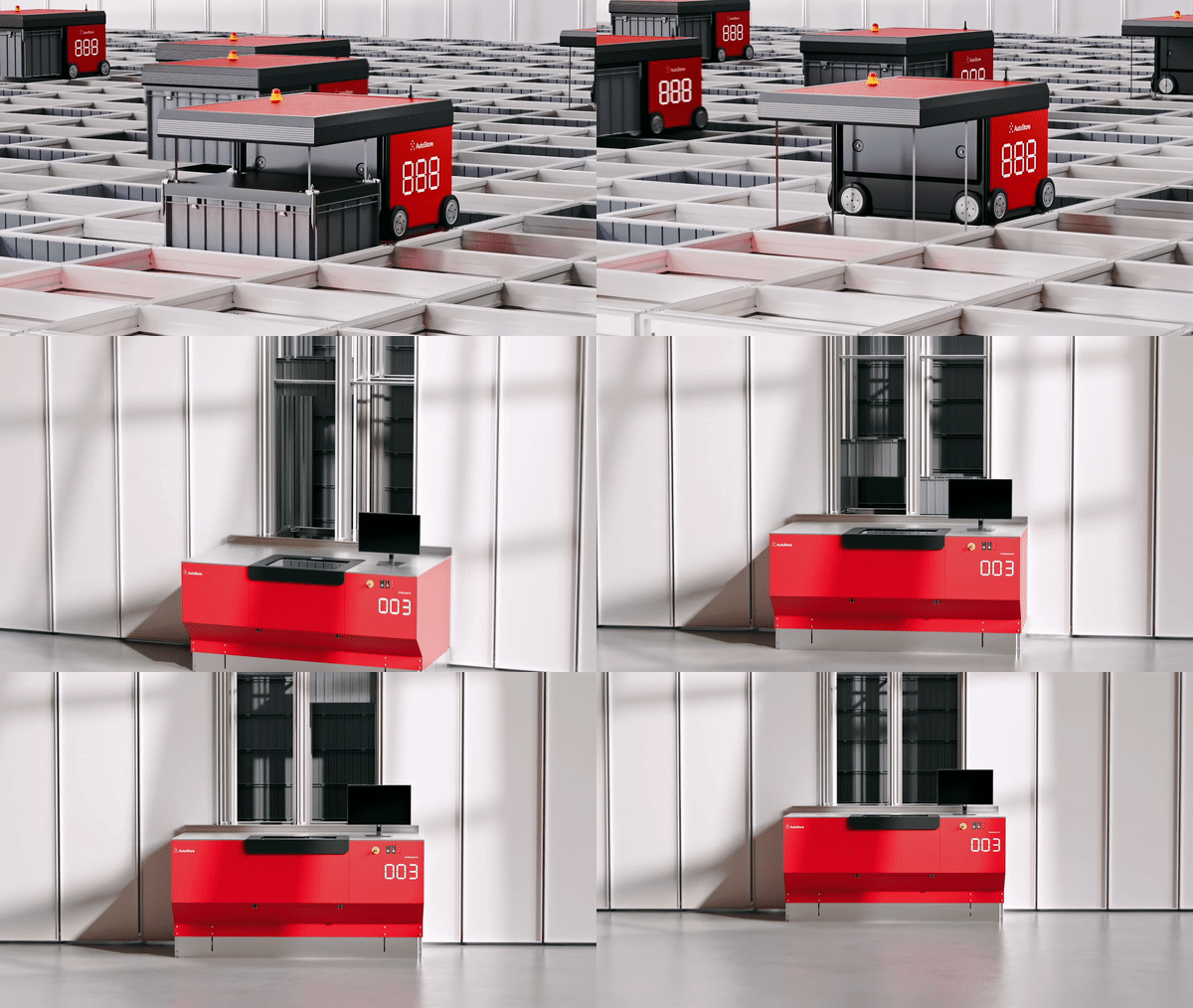
Ulta Beauty has selected AutoStore technology for its new Utah regional distribution hub supporting both stores and growing e-commerce fulfillment.
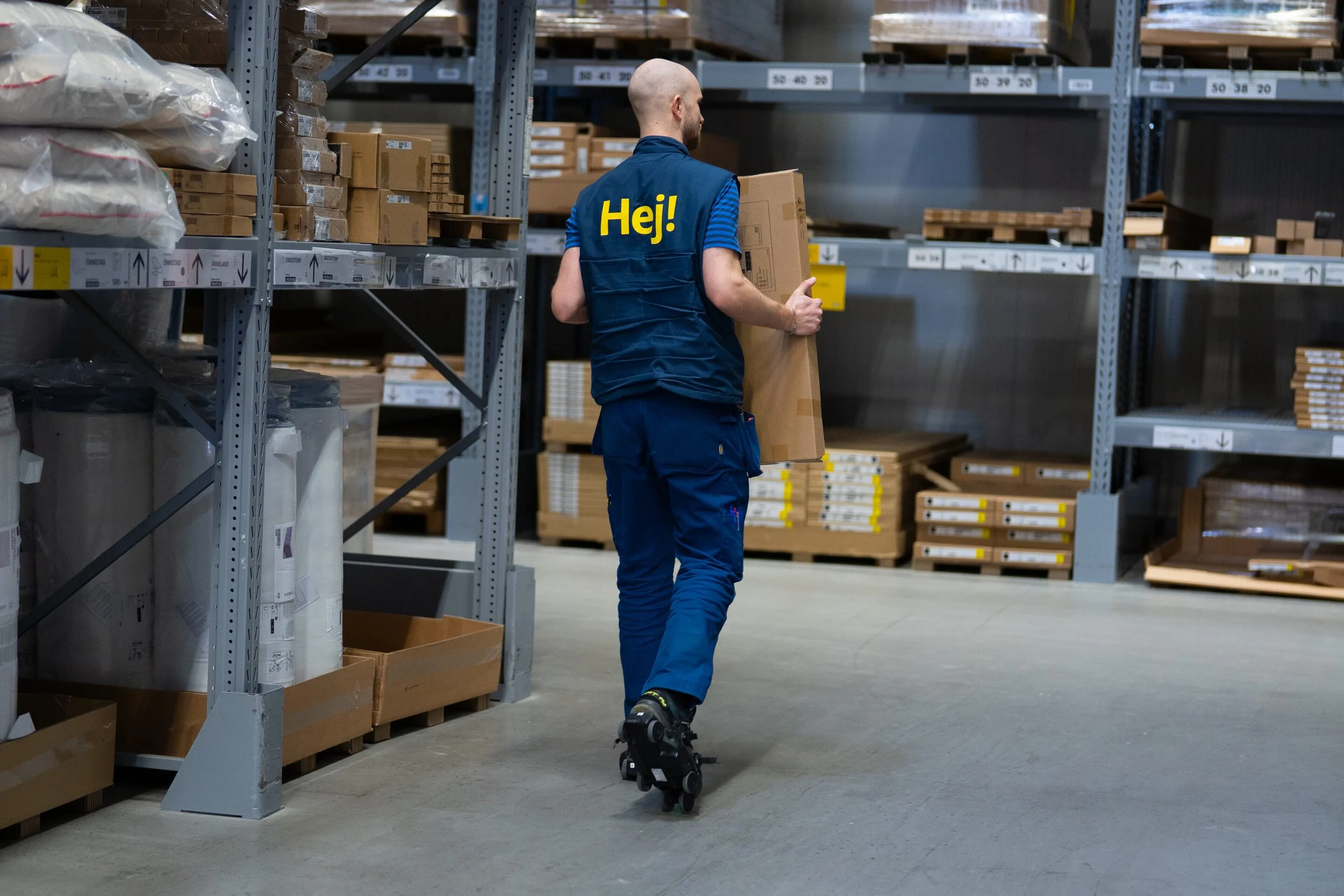
Ikea is testing robotic boots in Helsingborg, Sweden, to speed up order picking and reduce physical strain. Initial measurements showed that employees walked up to twice as fast, and average hourly picking productivity increased by 16%.
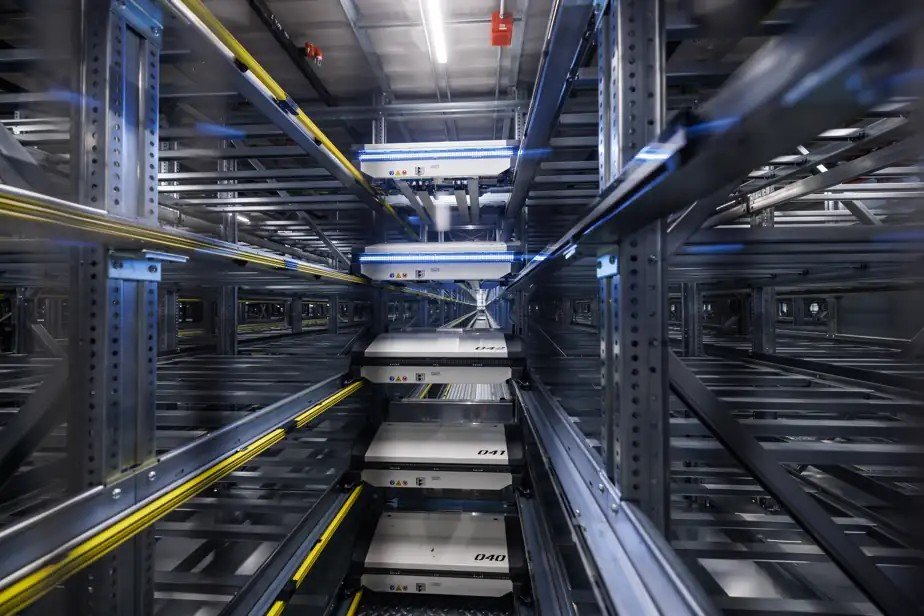
The cost of the SAQ's automated distribution center project, scheduled to begin operations next year, has gone from $48.5 million to $300 million in four years.
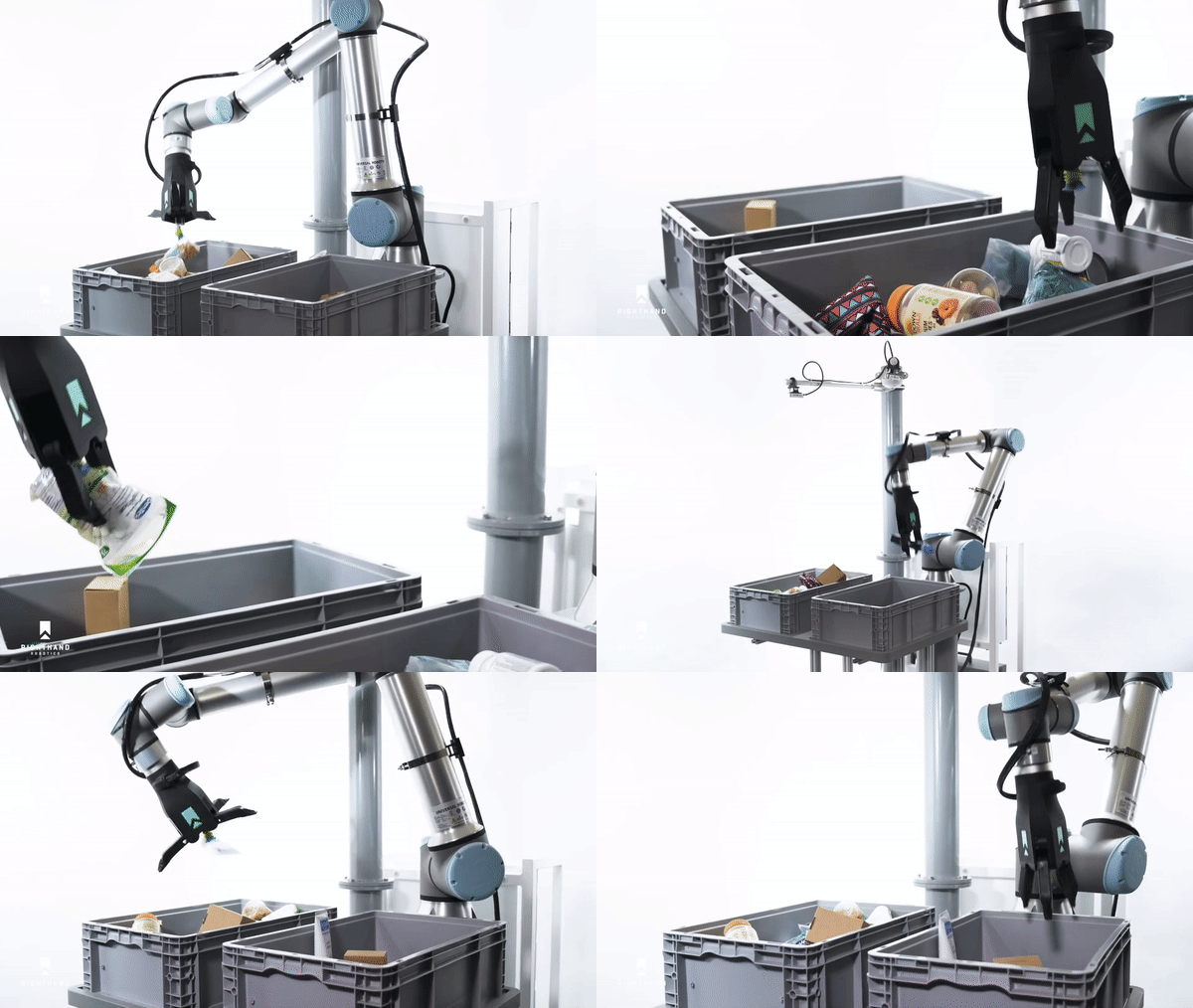
Piece-picking robots are currently one of the hottest solutions in warehouse automation
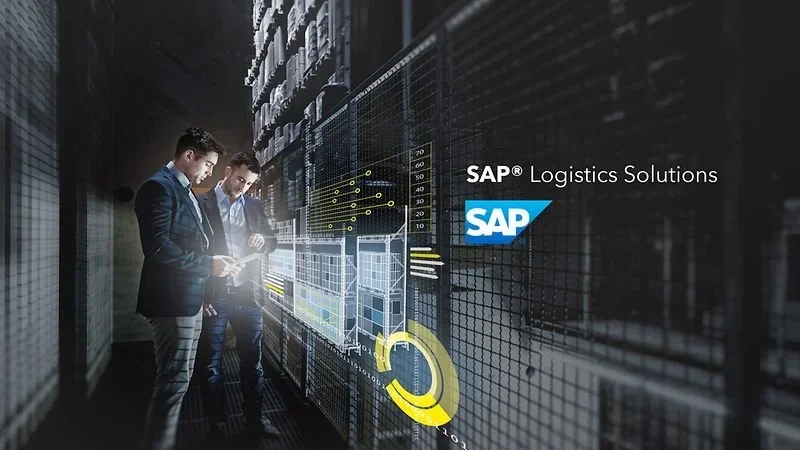
At Hannover Messe 2026, SAP and Vodafone showcased a pilot conducted at Vodafone’s warehouse in Duisburg,
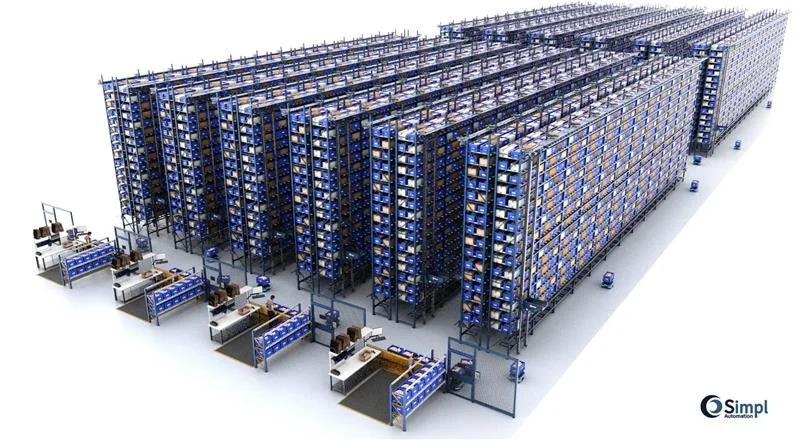
Home Depot acquires warehouse tech firm to boost fulfillment strategy
The Surrey facility will primarily serve British Columbia, while Calgary will cover Alberta, Saskatchewan, and surrounding regions.
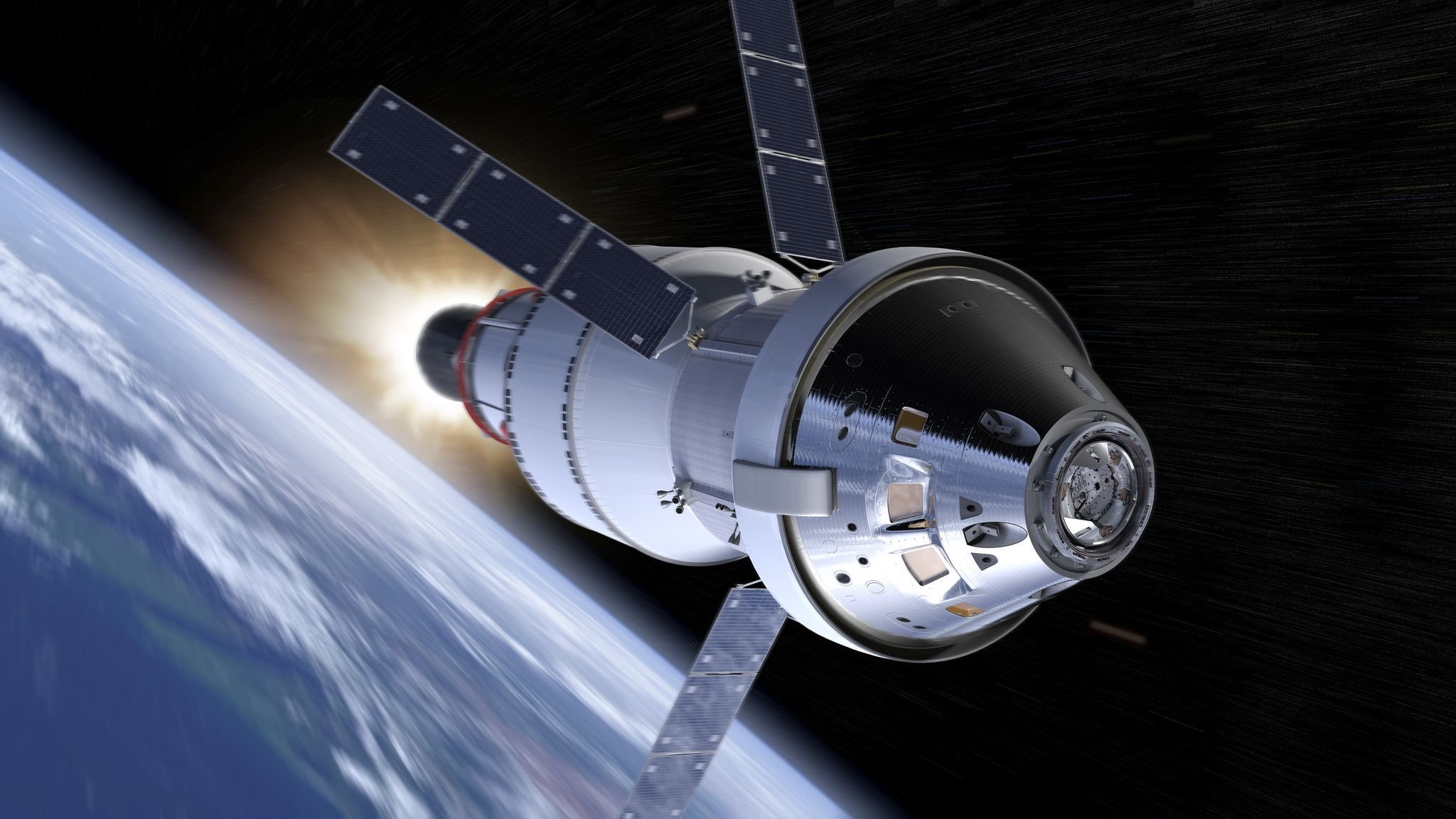
How Canadian Robotics Forced NASA to Give Us a Seat on the Moon Mission
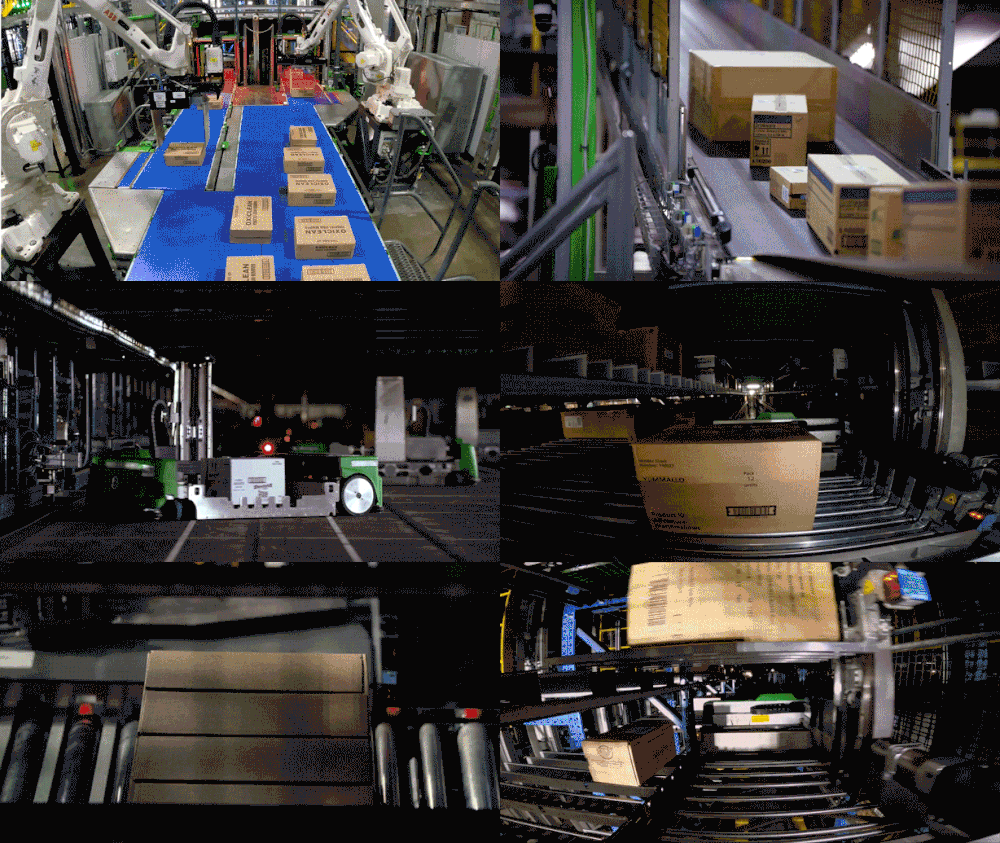
Today, a new layer is beginning to appear in highly automated facilities: the Warehouse Operating System (WOS).
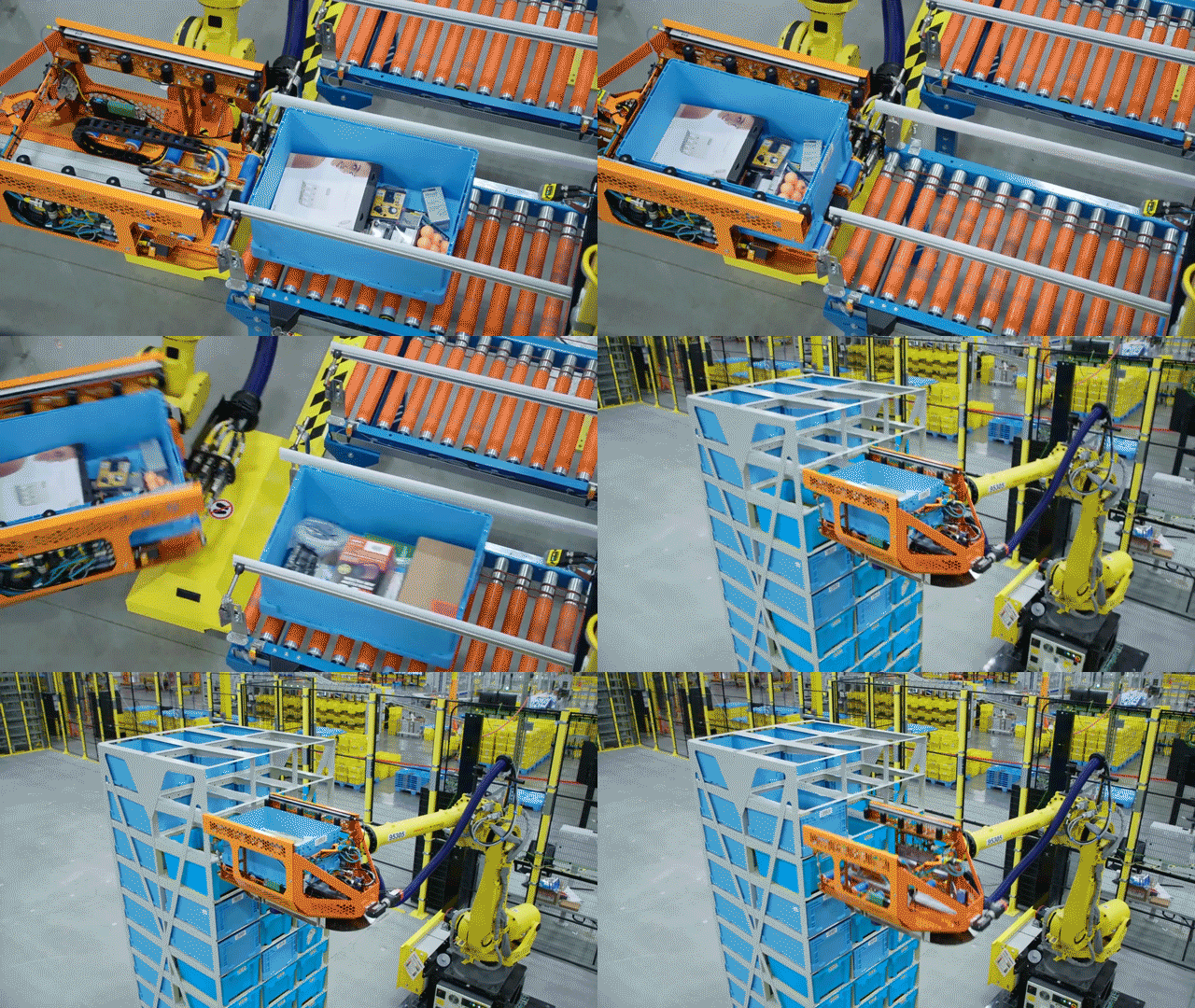
Cainiao plans to build a large-scale global network of robotic warehouses in 2026 as it expands local fulfilment and delivery operations tied to cross-border eCommerce.
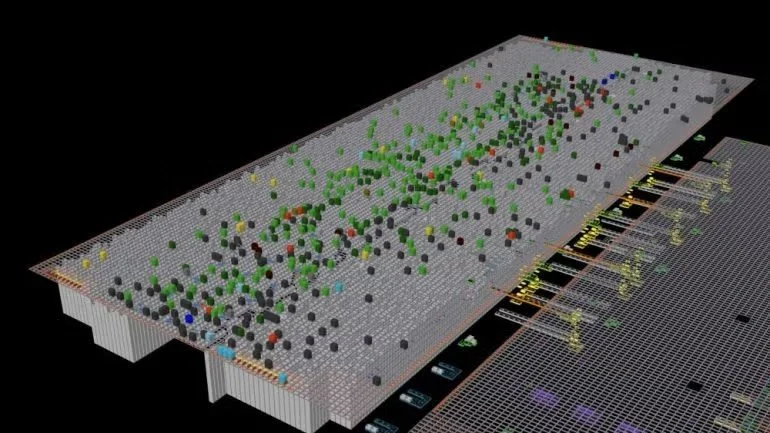
Ocado has delivered a cube-based automation system for McKesson Canada, representing a continued expansion of its technology beyond e-commerce grocery fulfilment.
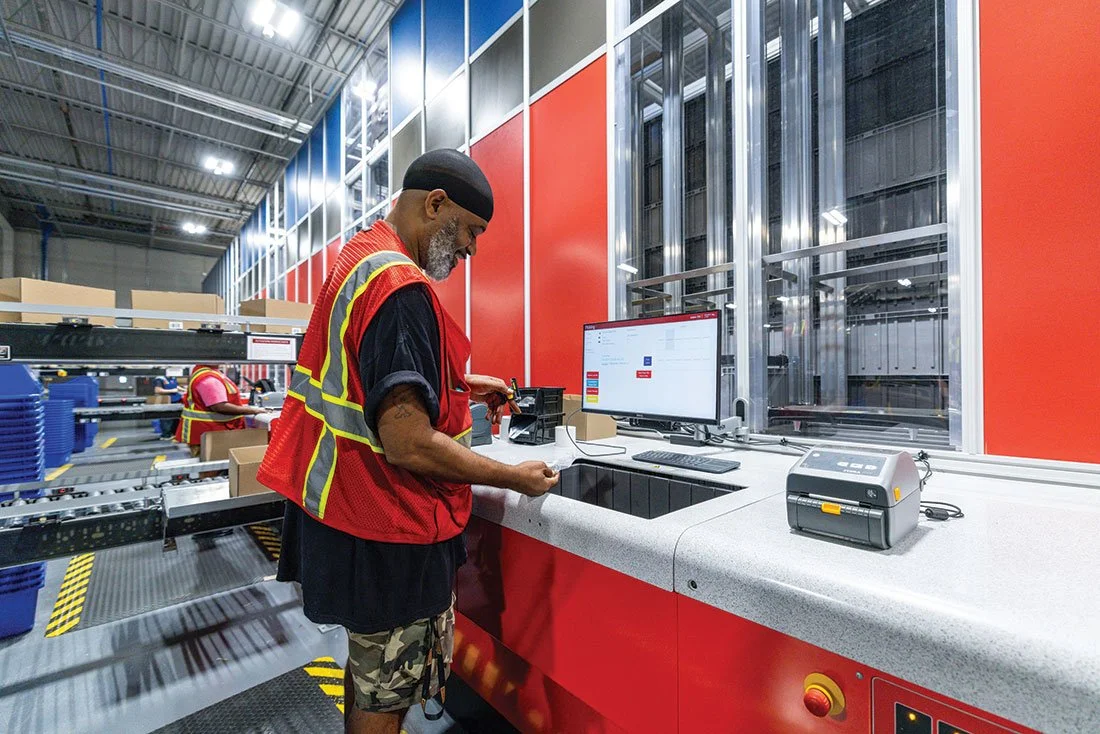
AutoStore reported its 2025 results this week, outlining a year that moved from early caution to clear second-half acceleration.
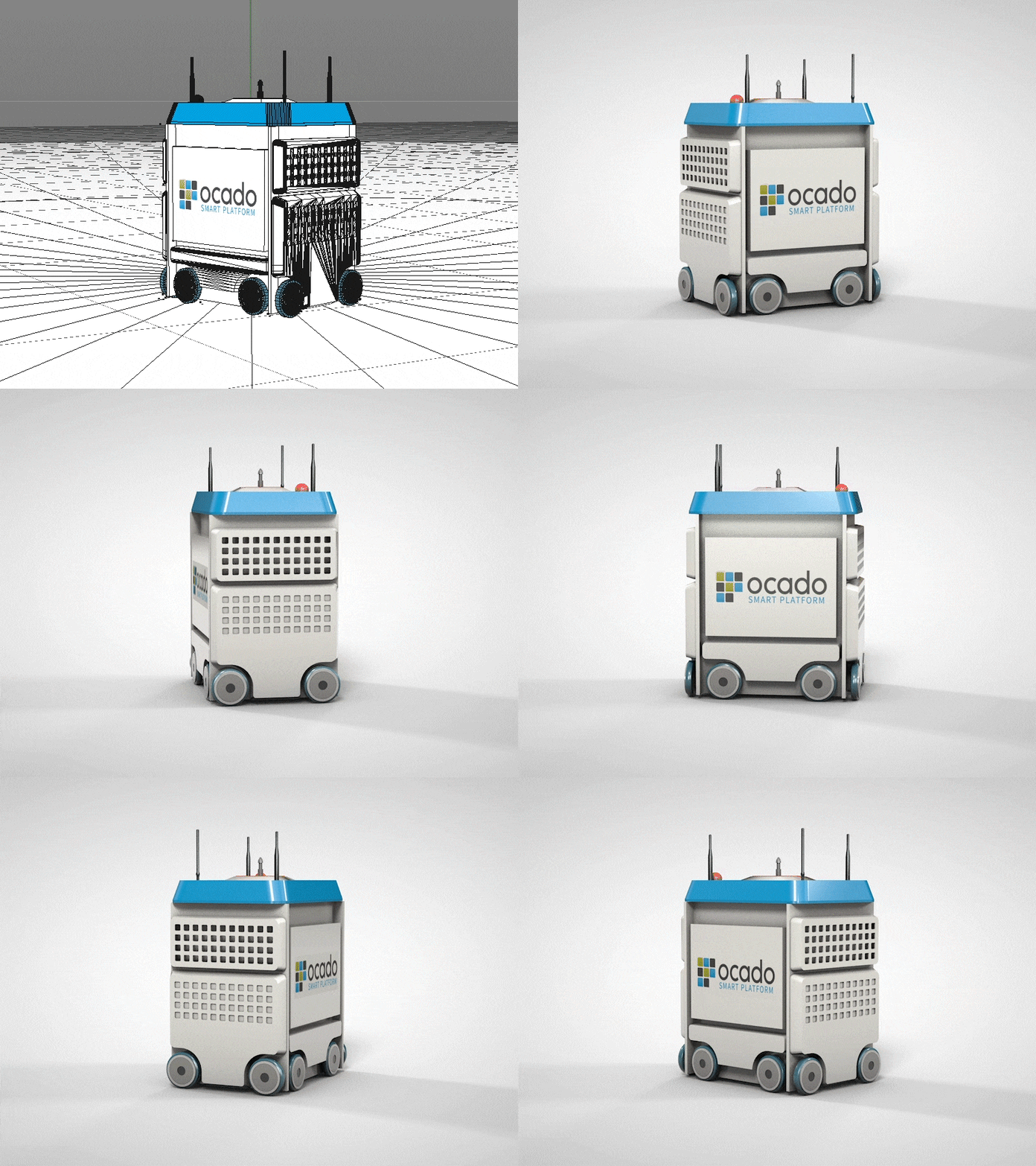
Ocado is facing reports of up to 1,000 job cuts

Amazon just announced the expansion of one-hour and three-hour delivery across the U.S.